Artwork
The Annunciation
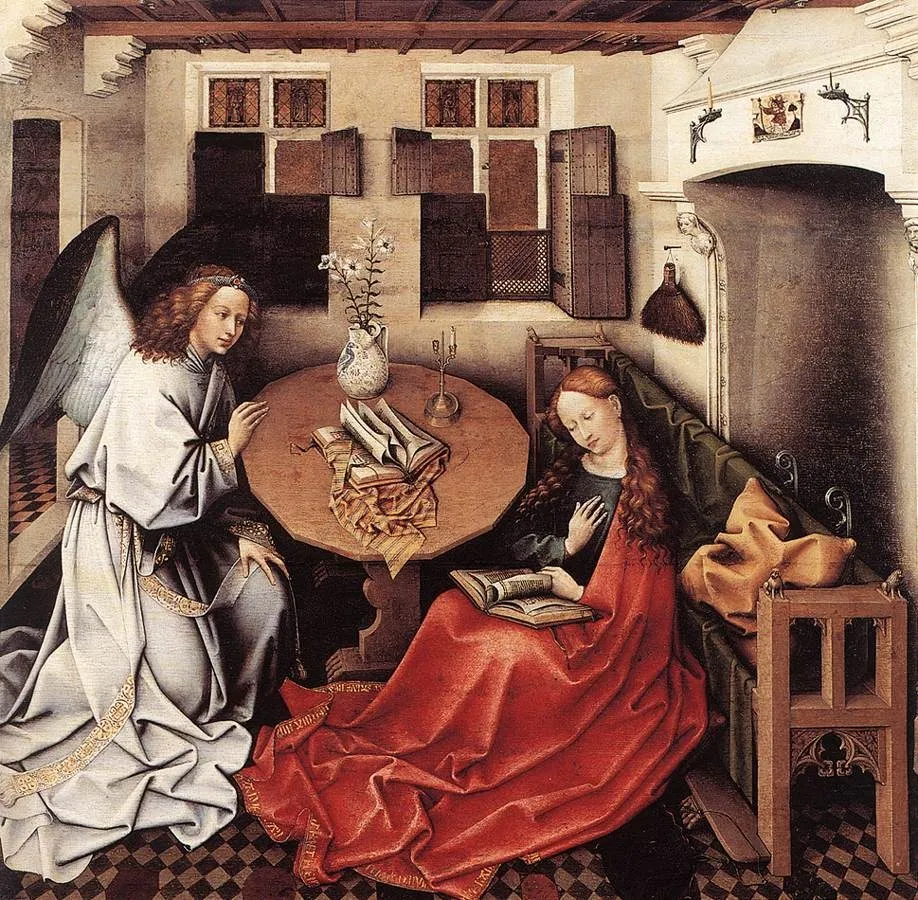
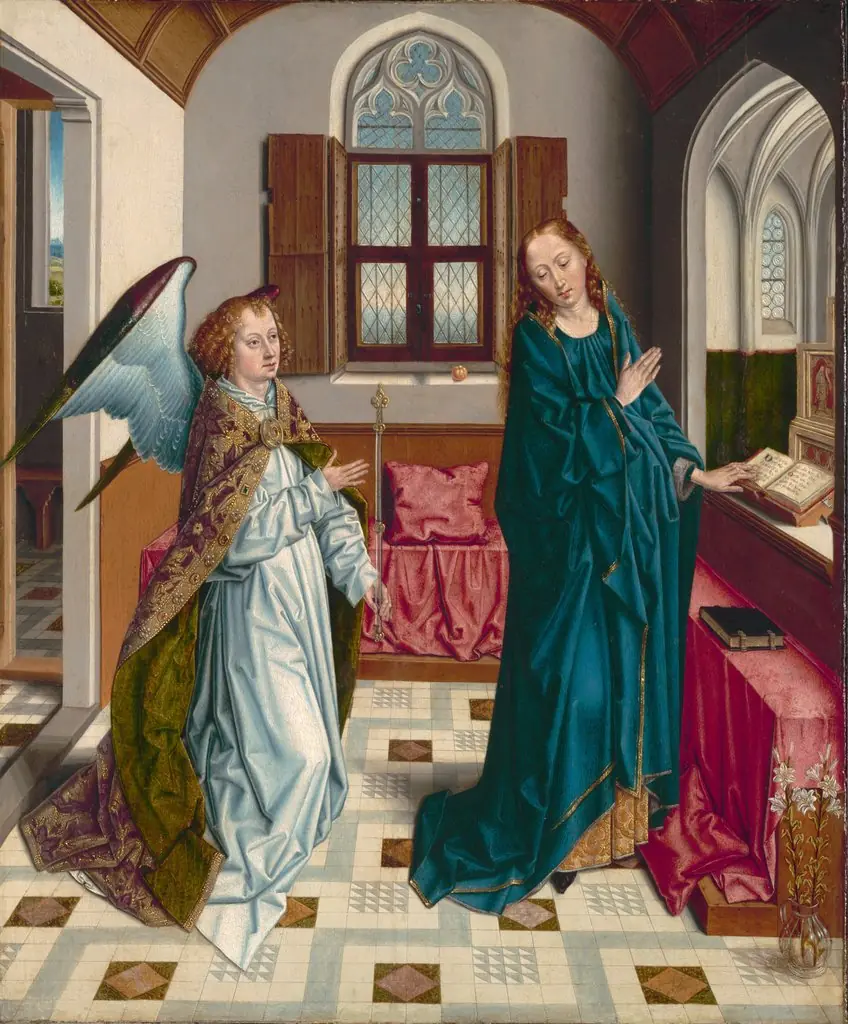
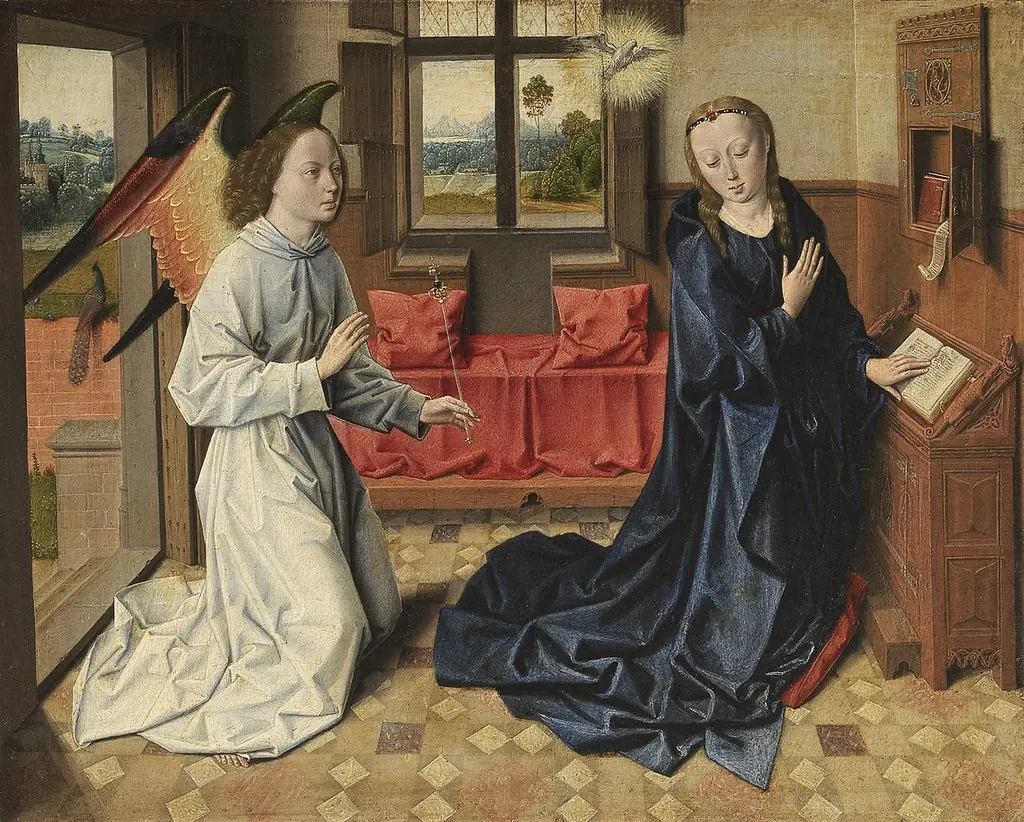
The Annunciation is an oil painting by the Northern Renaissance artist Robert Campin. It dates from 1420 and is held in the collection of the Royal Museums of Fine Arts of Belgium.
About this work
Overview
The painting entered the collection of the Royal Museums of Fine Arts of Belgium in 1910 and is currently housed at the Oldmasters Museum in Brussels.
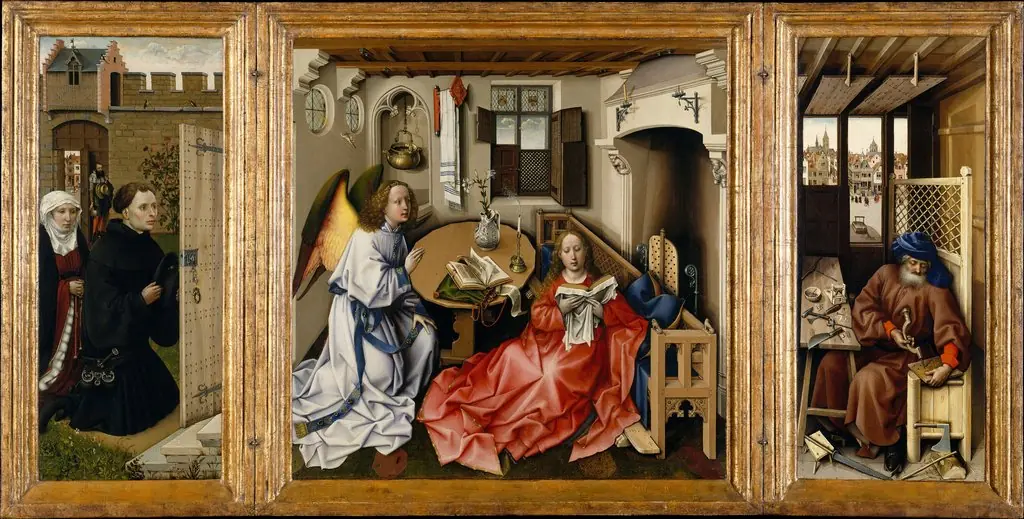
The Annunciation is an Early Netherlandish religious painting created by Robert Campin, also historically identified as the Master of Flémalle, around 1415 to 1425. Executed in oil paint on an oak panel, the work measures 61 by 63.7 centimeters. It depicts the biblical scene of the Archangel Gabriel announcing to the Virgin Mary that she will bear the son of God. The painting entered the collection of the Royal Museums of Fine Arts of Belgium in 1910 and is currently housed at the Oldmasters Museum in Brussels. The composition is closely related to the central panel of the famous Mérode Altarpiece, now in the Metropolitan Museum of Art in New York, serving as a significant variant of that original concept by the artist.
Subject & Meaning
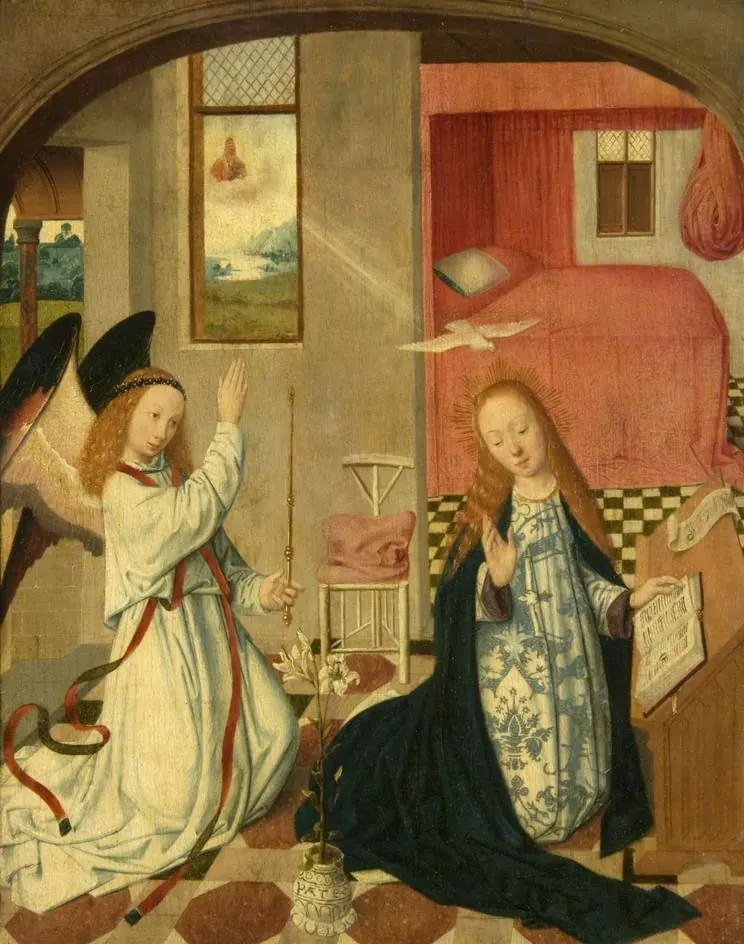
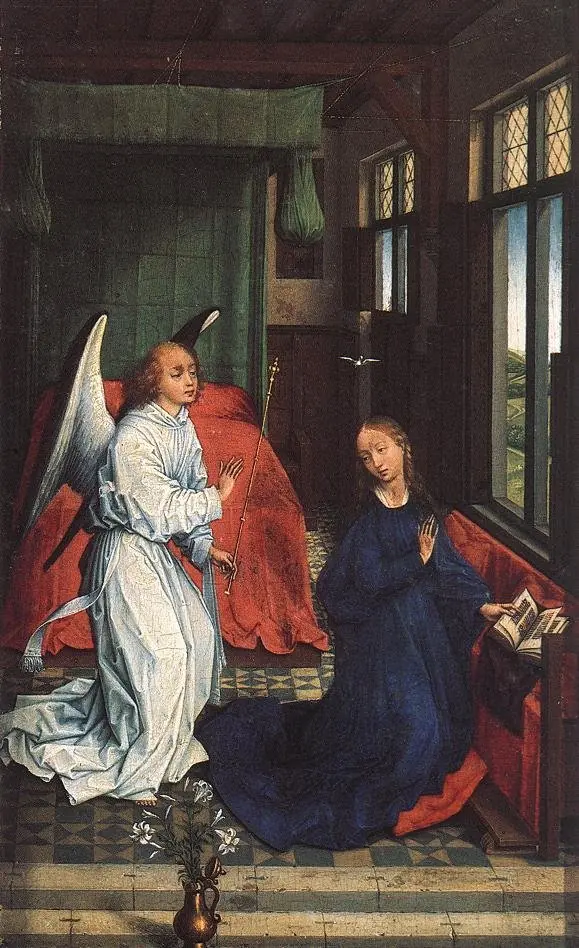
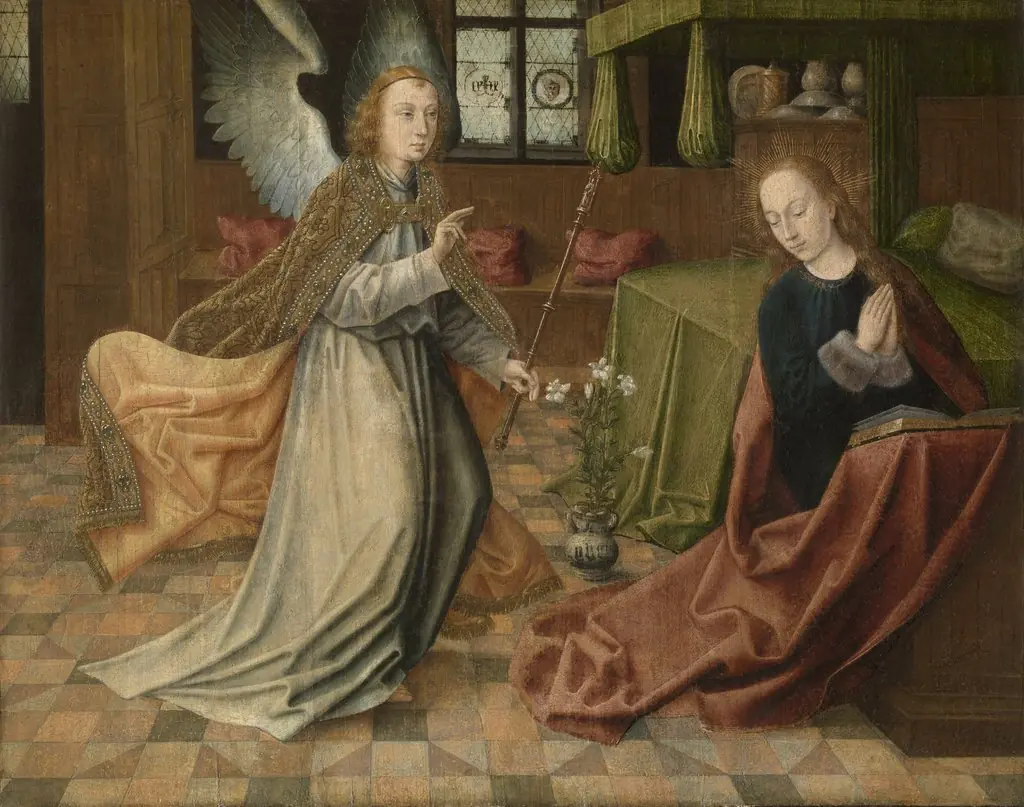
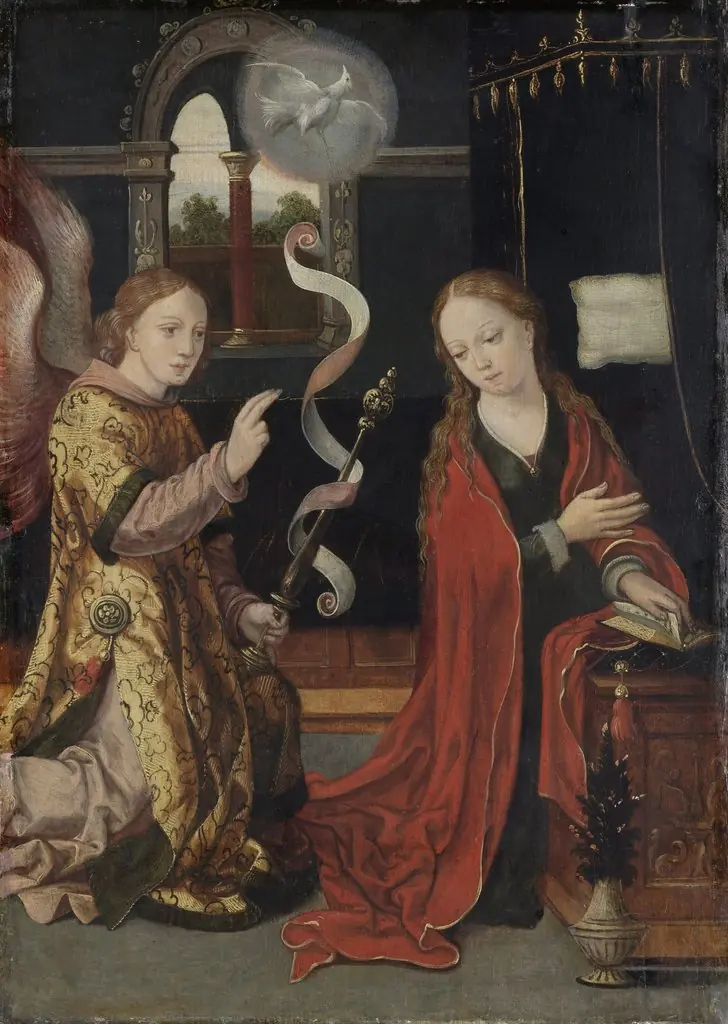
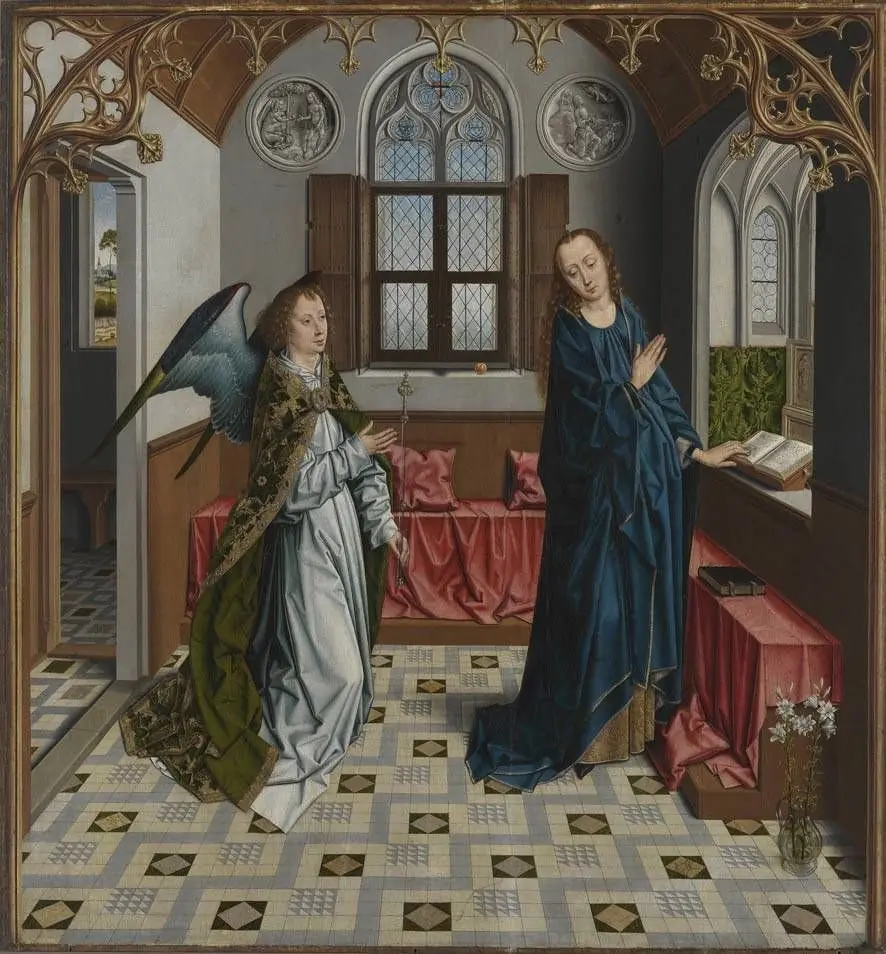
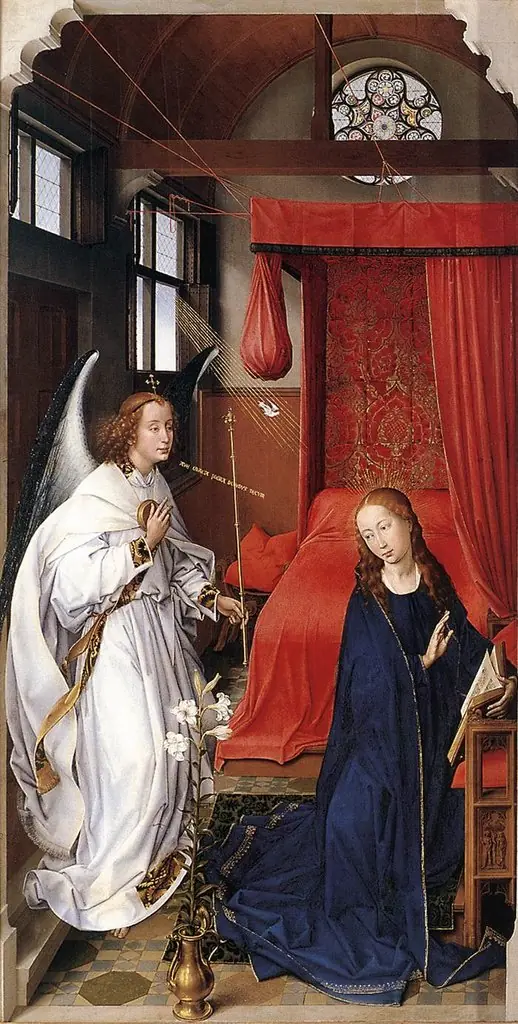
The painting captures the moment the Archangel Gabriel, kneeling in the left quarter of the composition with one hand raised in blessing, interrupts Mary reading in her home. Mary sits on the floor, a posture symbolizing her humility, with her back to a hearth, her right hand placed on her chest and her eyes cast downward to indicate her modest acceptance of her divine role. A Latin inscription on the border of her mantle references the Salve Regina hymn. The setting is a contemporary domestic interior rather than the traditional church setting, an innovation for its time. The scene is rich with symbolism: white lilies in a vase on a round wooden table signify her purity, while two open books, one on her lap, represent her devotion and the Hebrew Bible. The seat behind her features small lion ornaments at the corners, referencing the Throne of Solomon and associating Mary with divine wisdom and righteous judgment.
Technique & Style
Robert Campin rendered this scene using oil paint on an oak panel support. The composition features a saturated palette of deep reds, blues, and greens set against warm browns and creams. The surface displays smooth, detailed brushwork, particularly evident in the careful rendering of fabrics, architectural elements, and the delicate lily flowers. Light falls evenly across the interior space, creating soft shadows. The artist meticulously described the domestic space, including a checkered floor of dark and light tiles, exposed wooden ceiling beams, a canopied bed with green and gold bedding, and a wall niche holding a small hanging brush. Two windows with open wooden shutters reveal darkness beyond. Attribution to the Master of Flémalle, generally identified as Robert Campin, is based on stylistic analysis of these precise formal qualities.
History & Provenance
Created between approximately 1415 and 1425, the painting has been part of the collection of the Royal Museums of Fine Arts of Belgium since 1910. It remains conserved at the Oldmasters Museum in Brussels. The work is understood to be a copy of an original composition by Campin, closely echoing the central panel of the Mérode Altarpiece held in New York.
Context
The Annunciation was a highly favored theme in art from early Christian times through the late Middle Ages, with countless versions produced, including well known frescoes by Fra Angelico. By the late medieval period, artists typically relied on the Gospel of Luke for the narrative rather than earlier apocryphal texts. Campin's version stands out in the history of the subject for relocating the event from a traditional ecclesiastical setting to a contemporary bourgeois dwelling. The inclusion of the Latin inscription on Mary's mantle and the domestic interior were notable innovations in early 15th-century Netherlandish painting, reflecting a broader cultural shift toward integrating sacred narratives within the tangible, observable world of the viewer.
Artist & collection
Artist
Robert Campin (Valenciennes (France) c. 1375 - Tournai (Belgium) 26 April 1444) now usually identified with the Master of Flémalle (earlier the Master of the Merode Triptych, before the discovery of three other similar…

Museum
Royal Museums of Fine Arts of Belgium
Continue through works from the same source collection.