Artwork
The Lamentation
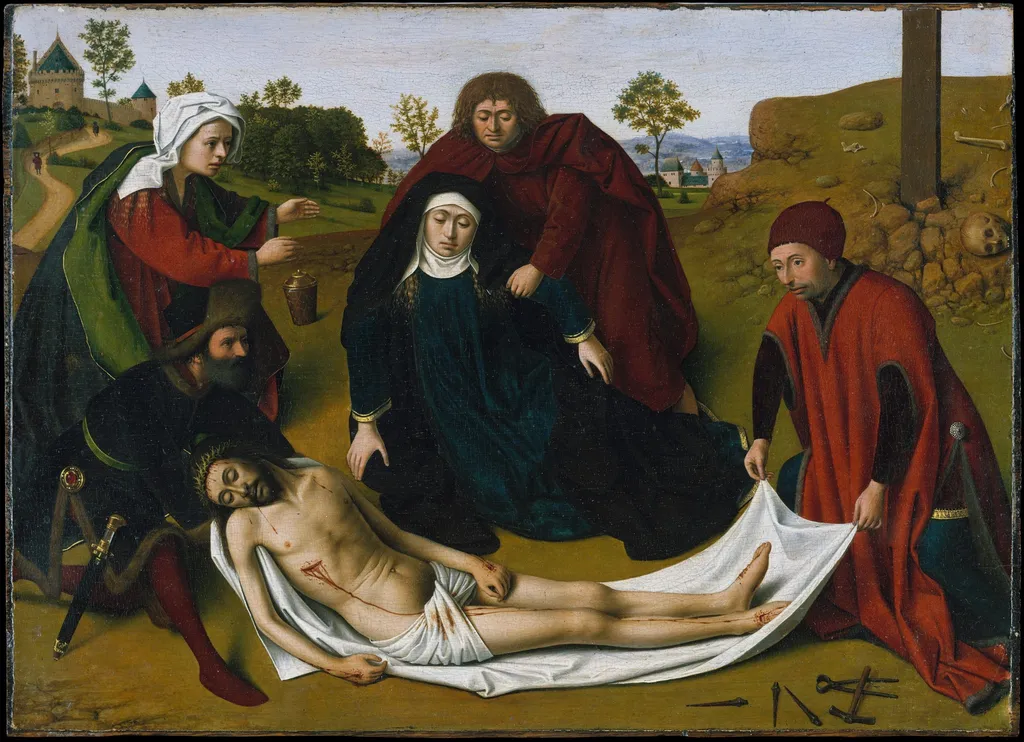
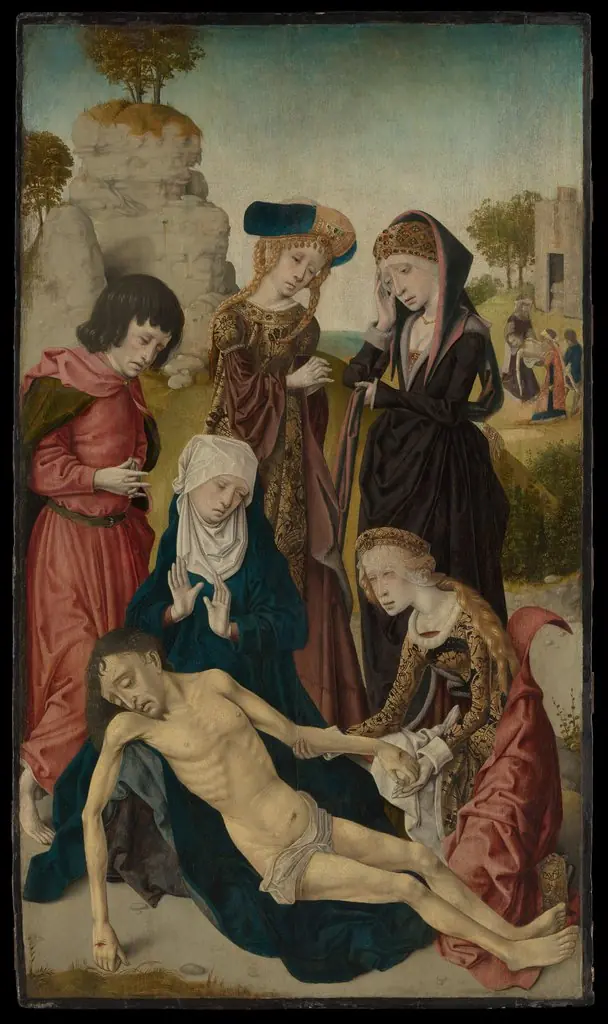
The Lamentation is an oil painting by the Northern Renaissance artist Petrus Christus. It dates from 1450 and is held in the collection of the Metropolitan Museum of Art.
About this work
Joseph of Arimathea and Nicodemus lift Christ's body from a shallow grave in this Bruges panel by Petrus Christus, painted around 1450. Barely ten by fourteen inches, the oil-on-wood work was made for private devotion, its mourners dressed in contemporary clothes. The Virgin Mary sinks in a faint that theologians read as co-suffering. The Met acquired it in 1890.
Subject & Meaning
The painting depicts the Lamentation of Christ, a late Passion narrative occurring after the Descent from the Cross and before the Entombment.
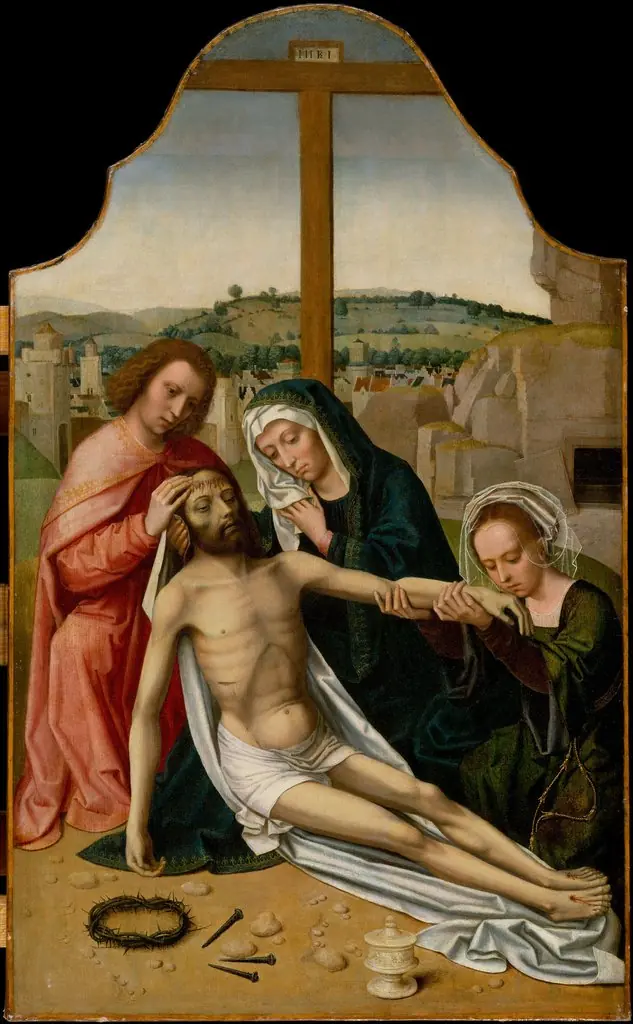
The painting depicts the Lamentation of Christ, a late Passion narrative occurring after the Descent from the Cross and before the Entombment. Following the Gospel of John, it shows Joseph of Arimathea and Nicodemus supporting Christ's body, while Mary Magdalene and John the Evangelist steady the grieving Virgin Mary. Christus's composition visually echoes the Virgin's pose with that of her crucified son, reinforcing themes of compassion and co-redemption, the Virgin empathetically shares Christ's suffering and redemptive role.
The intimate, close-up arrangement invites the viewer to identify with Nicodemus, transforming the scene into a devotional tableau. Small and private in scale, the work was likely intended for personal devotion, emphasizing empathetic engagement with Christ's passion.
Technique & Style
The Lamentation is executed in oil on an oak panel, a small work measuring approximately 21.6 x 35.9 cm (or 25.4 x 34.9 cm in other records). Infrared reflectography reveals an underdrawing composed of tightly spaced parallel hatching, a technique characteristic of Petrus Christus around 1450 and indicating a date before his Berlin panels, which employed cross-hatching for volume. The panel was subsequently cut down at the top, likely when it was inserted into a new frame, a modification that occurred early enough to be reflected in sixteenth-century copies.
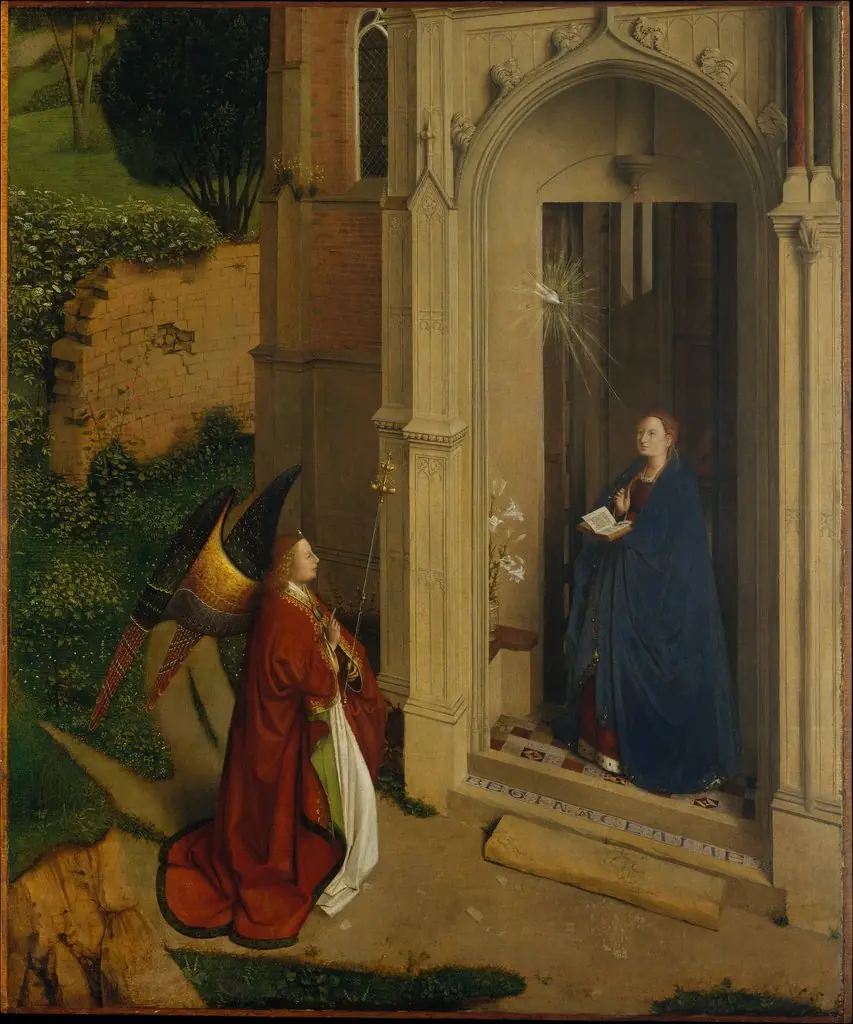
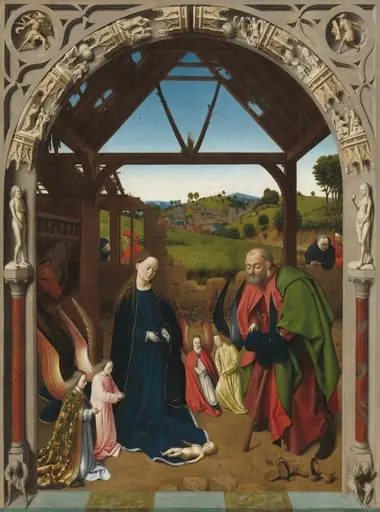
Stylistically, the composition is intimate and close-up, with figures arranged in a compact oval group, lacking elaborate spatial depth, a quality that creates a tableau vivant effect. The figure types, facial features, and drapery folds closely resemble those in Christus's Annunciation and Nativity panels of 1452 in Berlin. The influence of Jan van Eyck is present but subtle in this work.
History & Provenance
Petrus Christus painted The Lamentation around 1450, based on infrared reflectography revealing his characteristic tight parallel hatching, which dates it before panels now in Berlin (1452). Its small size (approx. 21.6 × 35.9 cm) suggests it was created for private devotion, though it may have originally been part of a larger Passion cycle retable. At some early point, likely when it was fitted into a new frame, the oak panel was trimmed at the top, as copies from the early 16th century already show this cropped format.
No original commission or subsequent ownership record is documented in the sources; however, the existence of early copies from the workshop of Adriaen Isenbrandt or Ambrosius Benson indicates the composition had some diffusion by the 1500s.
Context
Scholarship on Petrus Christus's The Lamentation (c. 1450) has focused on its dating and artistic influences. Infrared reflectography suggests a date around 1450, but art historians have proposed dates from 1440 to 1460 based on style. Charles Sterling linked the composition to the Turin-Milan Hours, implying an earlier date (1433–1435) and indicating van Eyck's influence, though Sterling noted it is less pronounced here.
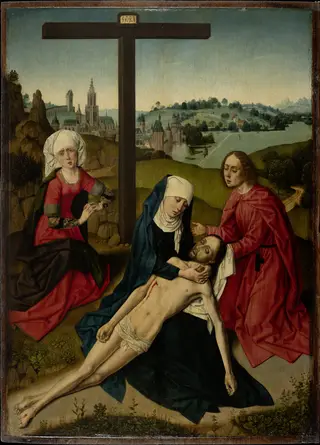
The small panel likely served private devotion but may have been part of a larger altarpiece. Its impact is evident in early 16th-century copies by Adriaen Isenbrandt and in a marble relief by Antonello Gagini (c. 1507) at Palermo Cathedral. Comparisons with Christus's other Lamentations, the Brussels version showing Rogier van der Weyden's influence and the Louvre Pietà with disputed attribution, underscore ongoing debates about Christus's stylistic evolution and his place within Early Netherlandish painting.
Legacy
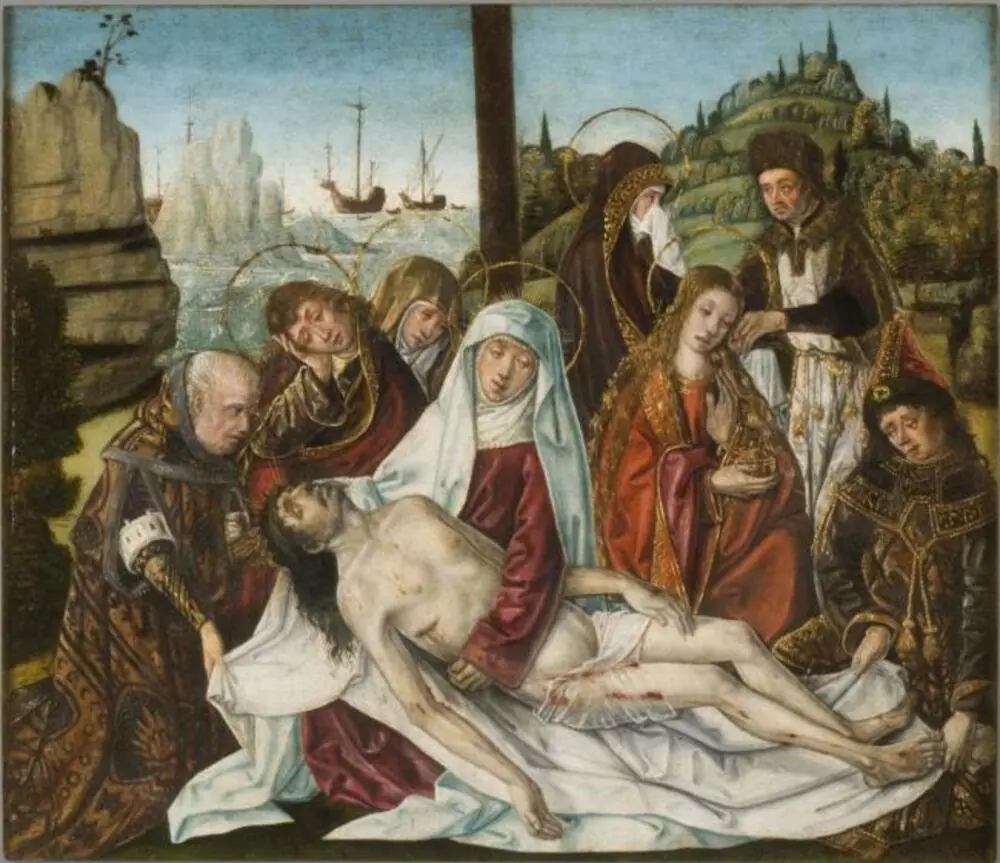
The painting's influence extended into the early sixteenth century: at least two copies were produced in the workshop of Adriaen Isenbrandt or Ambrosius Benson, one now in Las Hormazas, Spain, and another sold by Sotheby's in 1981. Additionally, the composition inspired a marble relief by Antonello Gagini (c. 1507) in Palermo Cathedral, suggesting the work had reached Italy. Gagini's Lamentation combined elements of this painting with Christus's Brussels version, attesting to its continued relevance beyond the Netherlands.
Overview
Petrus Christus's The Lamentation, painted around 1450, exemplifies Early Netherlandish oil painting. This small panel, measuring approximately ten by fourteen inches, depicts the aftermath of Christ's crucifixion. Created in Bruges, the work was likely commissioned for personal contemplation, inviting a single viewer to engage intimately with the somber scene of mourning. Its compact scale and detailed execution reflect the devotional practices of the era.
Own this work as a print
Artist & collection
Artist
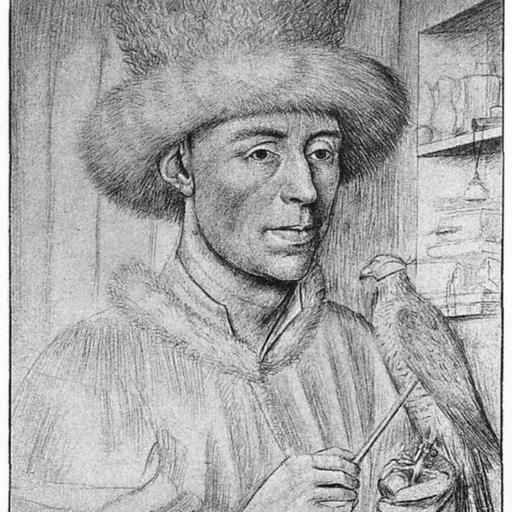
Petrus Christus (Dutch:; c. 1410/1420 – c. 1475/1476) was an Early Netherlandish painter active in Bruges from 1444, where, along with Hans Memling, he became the leading painter after the death of Jan van Eyck. He was…

 Studied in the Dutch Golden Age course