Artwork
Virgin and Child
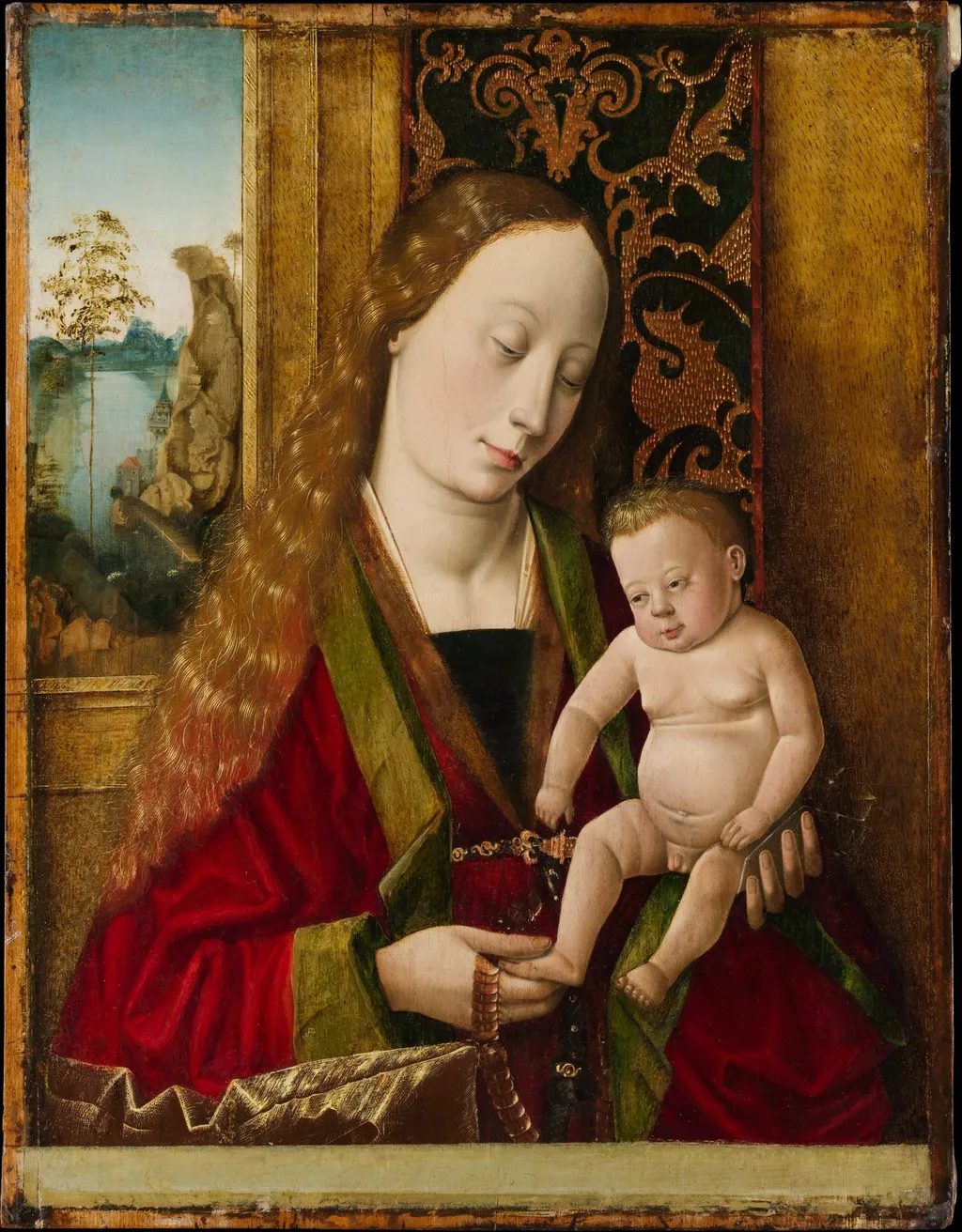
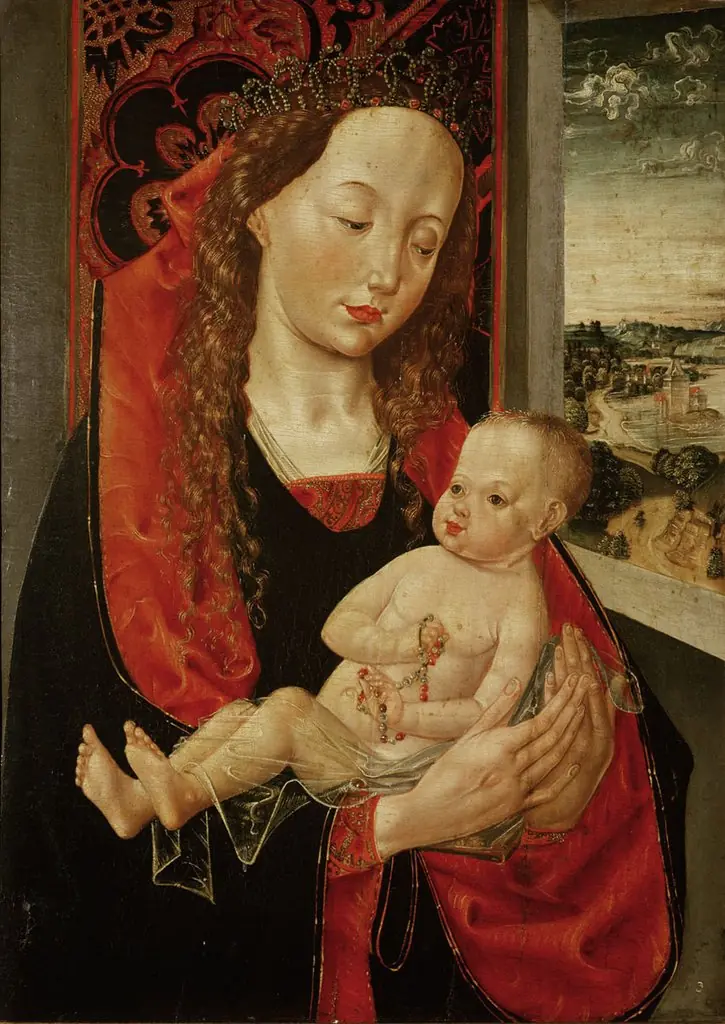
Virgin and Child is an oil painting. It dates from 1600 and is held in the collection of the Metropolitan Museum of Art.
About this work
Subject & Meaning
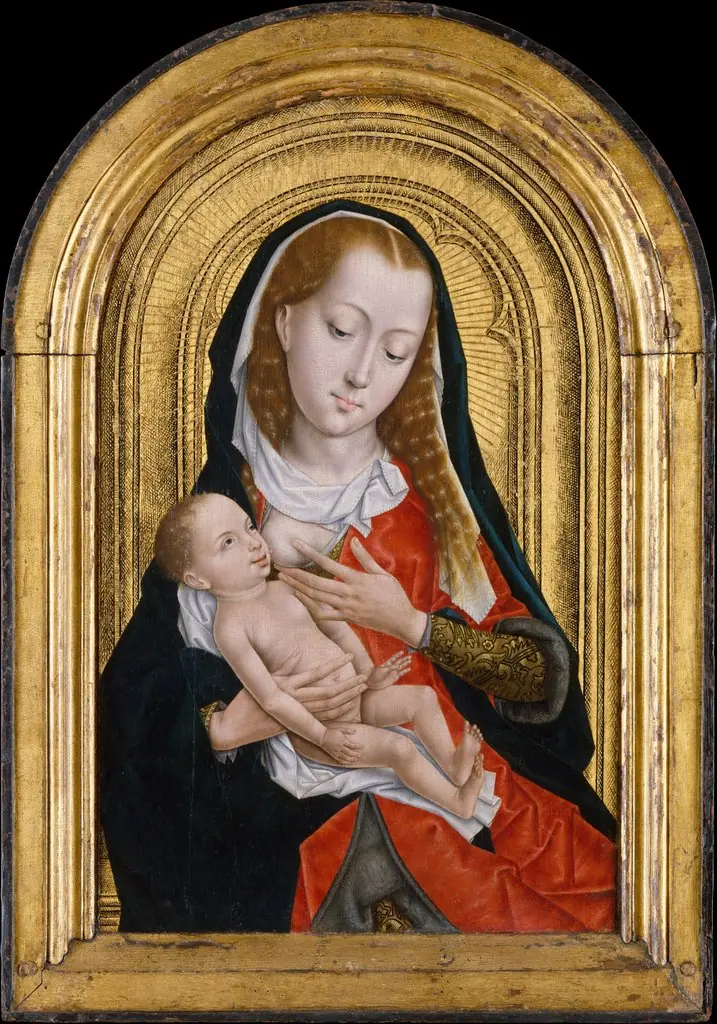
The use of gold leaf and silver accents conveys heavenly radiance and underscores the sacred status of the figures.
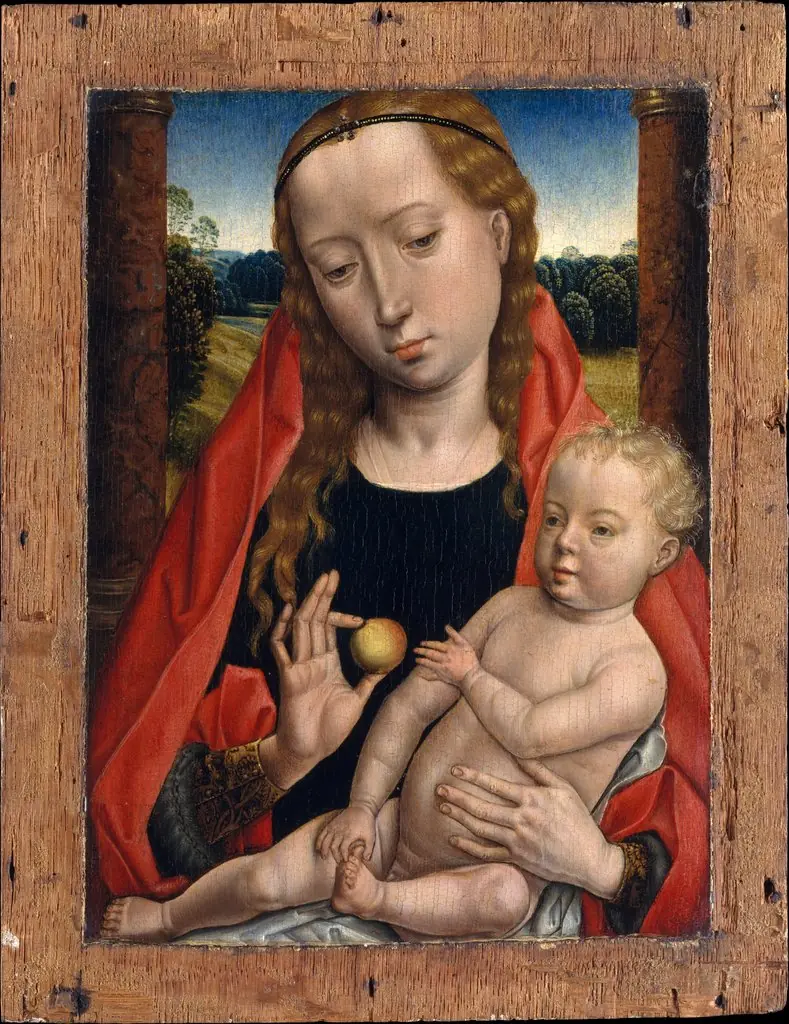
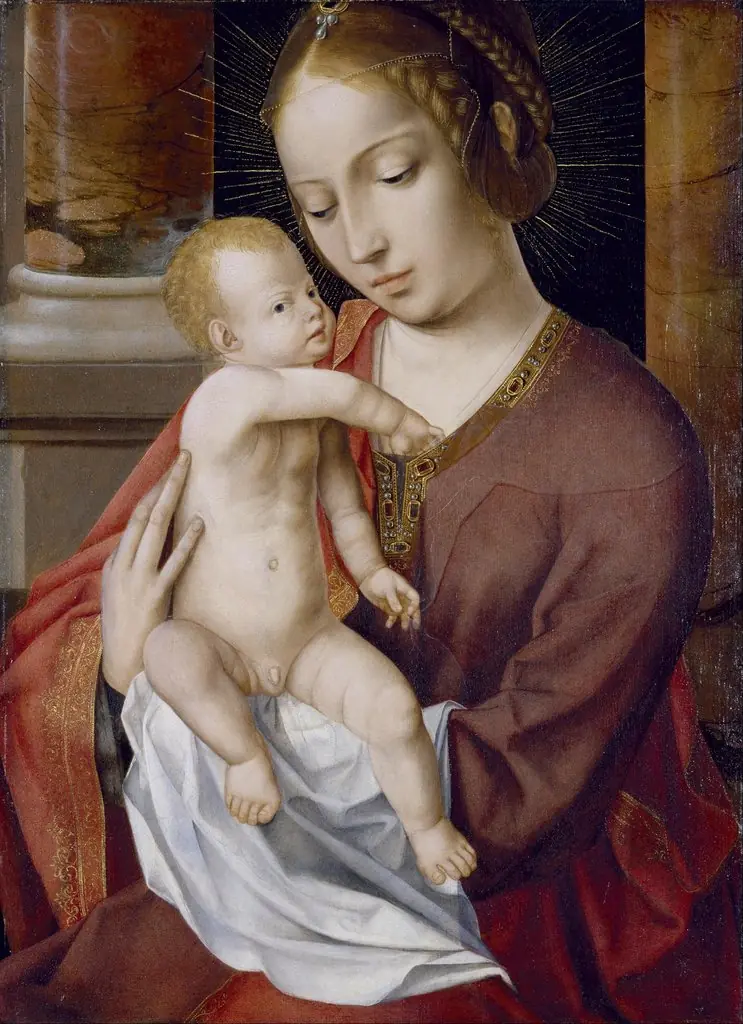
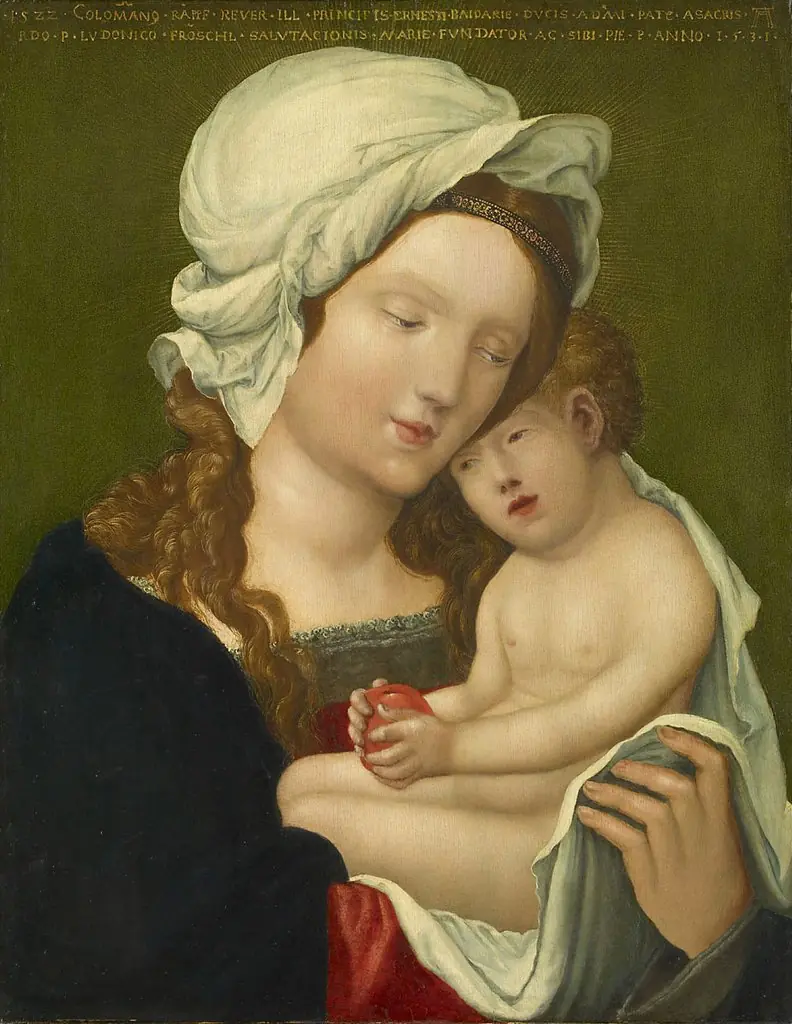
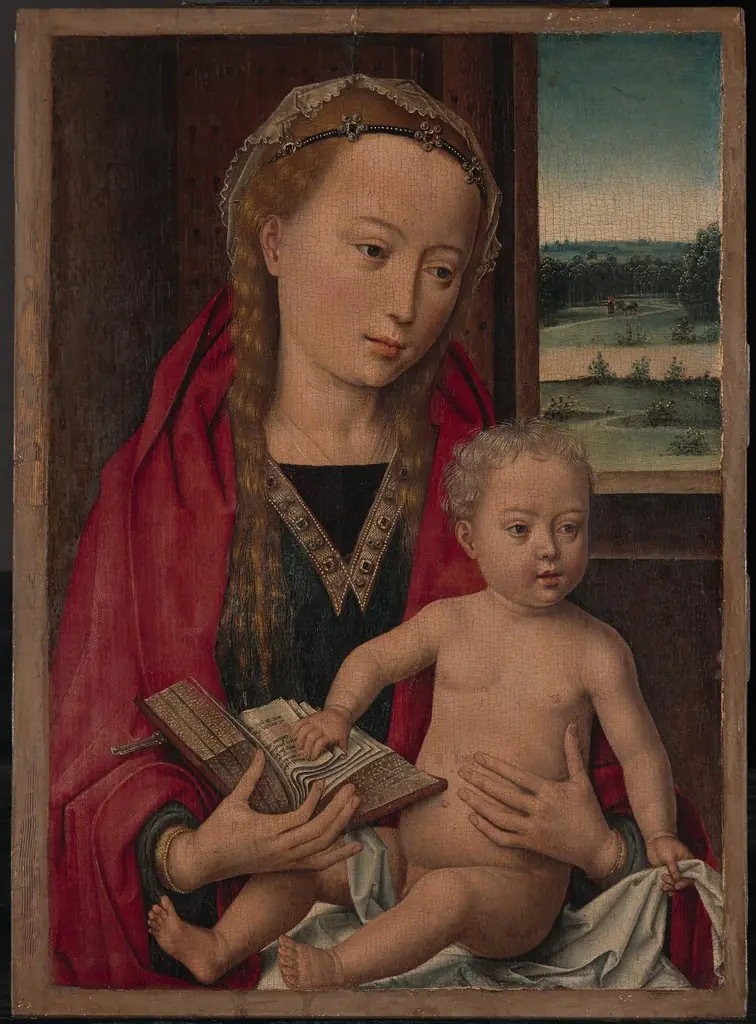
The painting portrays the Virgin Mary holding the infant Jesus, the standard iconographic motif of the Madonna and Child, which signifies the Incarnation and maternal intercession in Christian devotion. The composition is classified as religious art, reflecting its devotional function. The use of gold leaf and silver accents conveys heavenly radiance and underscores the sacred status of the figures.
This subject matter aligns with the broader tradition of Northern European religious painting, as documented in the Metropolitan Museum of Art's collection records.
Technique & Style
The Virgin and Child is an oil painting on a wooden support, executed around 1600, measuring 39.7 cm in height and 30.8 cm in width. The medium includes oil paint with gold leaf and silver employed for decorative or symbolic detailing, consistent with Northern European devotional practices. Stylistically, the work depicts the Madonna and Child within the religious genre, in a composition that emphasizes reverence and intimacy. The condition remains unspecified in the available records.
History & Provenance
The oil painting Virgin and Child, dated 1600, is attributed to the workshop or circle of Hans Traut. Executed with oil paint, gold leaf, and silver, it depicts the Madonna and Child within the religious genre. Its provenance includes ownership by James Broughton and George Grosvenor Thomas before the work entered the Metropolitan Museum of Art in New York.
At the Met it has been featured in exhibitions of early Netherlandish art, including "Medieval Art of the Northern Netherlands," "From Van Eyck to Bruegel: Early Netherlandish Painting in The Metropolitan Museum of Art," and "Van Eyck to Dürer."
Context
The painting, dated 1600, is attributed to the workshop of Hans Traut and is housed in the Metropolitan Museum of Art. Scholarship places it within early Netherlandish religious painting, reflecting the devotional emphasis of the period. Its iconography of the Madonna and Child, rendered with gold leaf and silver, aligns with contemporary devotional practices.
The work has been included in exhibitions tracing the development of Northern Renaissance art, such as those spanning van Eyck to Bruegel.
Overview
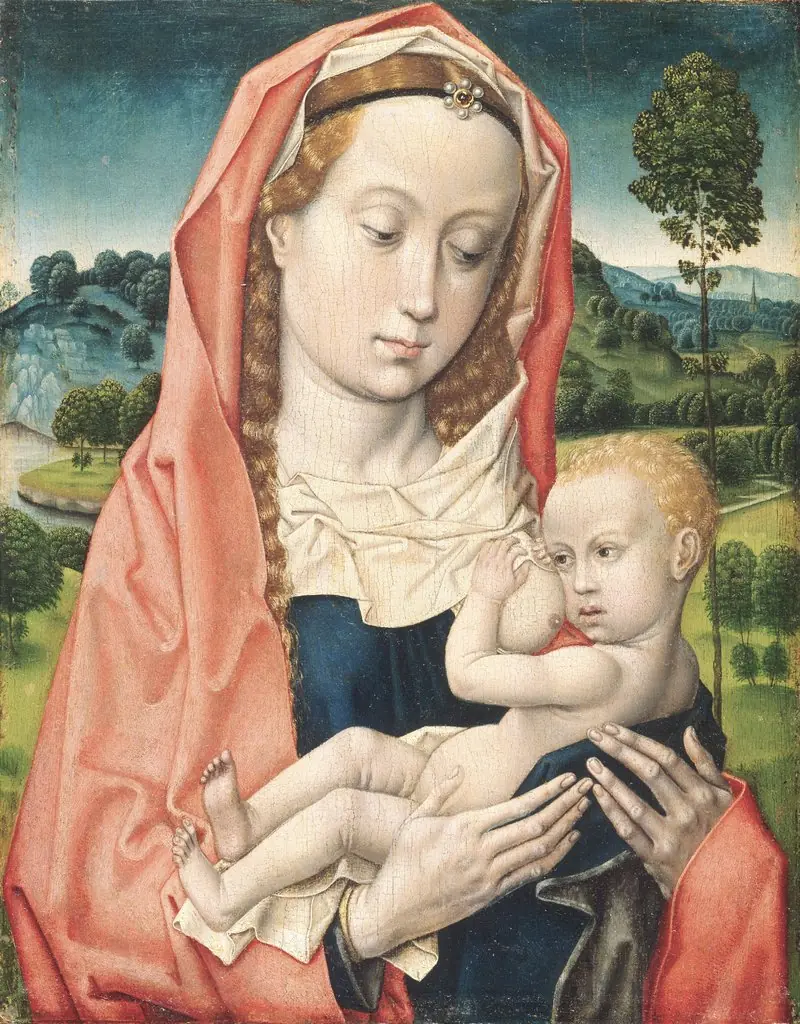
This oil painting, titled Virgin and Child, presents a tender depiction of a woman cradling an infant. The central figures are framed by a subtle gold border, drawing the viewer's eye to their intimate connection. The background recedes into a serene landscape featuring a winding river, lush trees, and a distant architectural structure, suggesting a blend of domesticity and the natural world. The artwork conveys a sense of quiet reverence and maternal affection.
Artist & collection