Artwork
Initial T with a group of Benedictine monks singing before an altar from which issues water
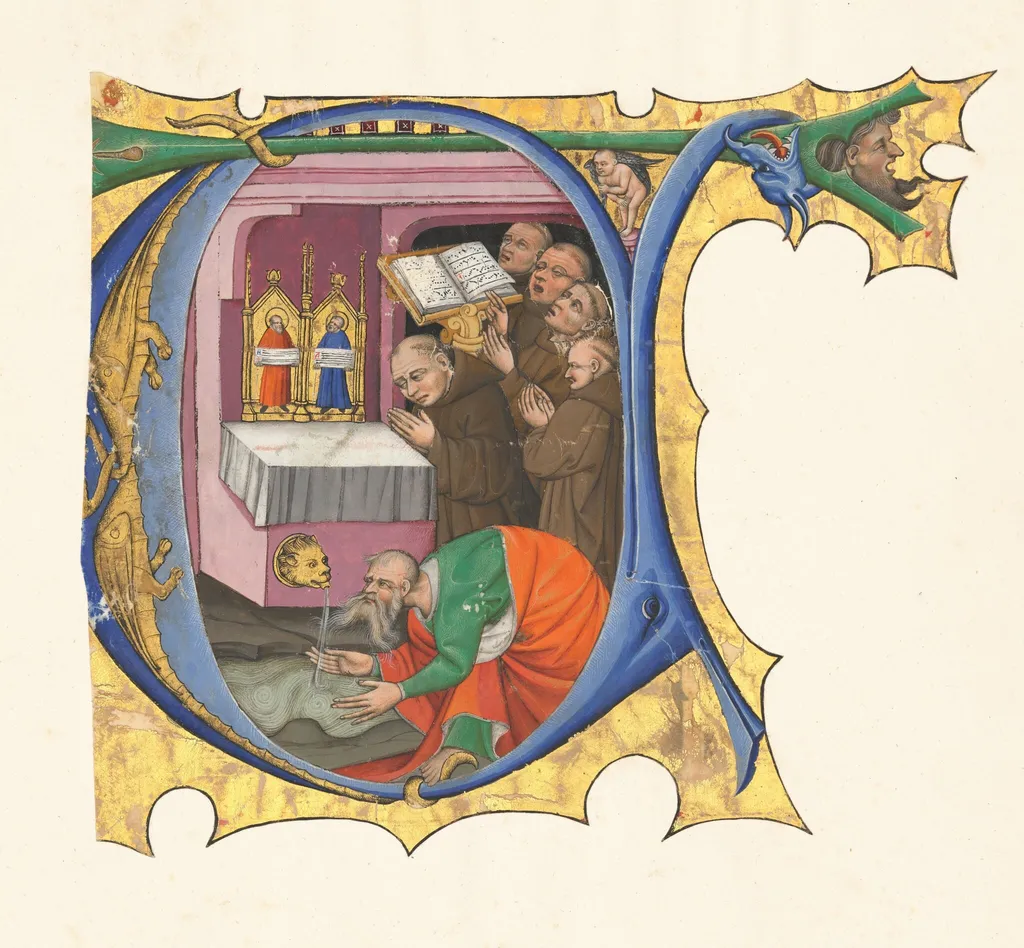
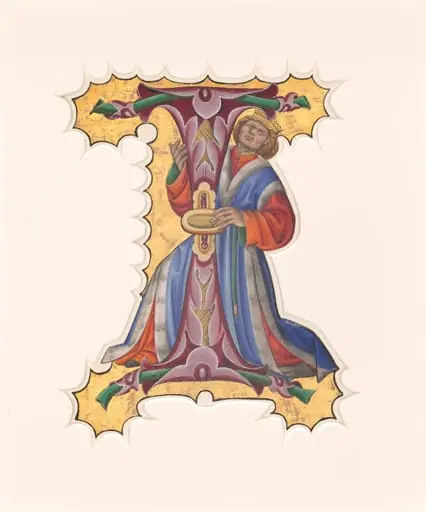
Initial T with a group of Benedictine monks singing before an altar from which issues water is a drawing by the Renaissance artist Master of the Cypresses. It dates from 1434 and is held in the collection of the National Gallery of Art. Created around 1434, this miniature on vellum presents an elaborate initial T framing a liturgical scene.
About this work
Subject & Meaning
A distinctive element of the scene is water issuing directly from the altar structure, a visual motif central to the depicted ritual.
Created in 1430 by the Master of the Cypresses, this vellum miniature illustrates a church consecration ceremony. The composition features a group of monks, identified in records as Hieronymites, gathered to sing before an altar. A distinctive element of the scene is water issuing directly from the altar structure, a visual motif central to the depicted ritual.
While the artwork's title references Benedictine monks, the specific iconographic classification associates the figures with the Hieronymite order, suggesting a specialized liturgical context or a conflation of monastic traditions within the manuscript illumination.
History & Provenance
The work was created around 1430 by the Master of the Cypresses as a miniature on vellum depicting a church consecration with a group of Benedictine monks singing before an altar issuing water. It entered the collection of Sir William Stirling-Maxwell in Madrid in 1849, later passing to Lessing J. Rosenwald before being gifted to the National Gallery of Art in 1964.
The drawing Initial T with a group of Benedictine monks singing before an altar from which issues water is held by the National Gallery of Art in Washington, D.C. It entered the collection through the acquisition of Sir William Stirling-Maxwell's library in 1849, was later purchased in 1960 by Lessing J. Rosenwald, and was gifted to the National Gallery of Art in 1964. The work is part of the Rosenwald Collection of drawings at the National Gallery of Art.
Context
The drawing depicts a consecration scene with Benedictine monks rendered by the Master of the Cypresses around 1430, reflecting manuscript illumination techniques of the period. Its composition captures a hieronymite monk in ritual context, aligning with scholarly analyses of early Netherlandish devotional art. The work's provenance traces from Sir William Stirling-Maxwell's collection to the National Gallery of Art through Rosenwald's stewardship, underscoring its significance within manuscript illumination studies.
Overview
Created around 1434, this miniature on vellum presents an elaborate initial T framing a liturgical scene. Benedictine monks are shown singing before an altar from which water flows, a visual reference to a consecration rite. The work exemplifies the manuscript illumination practice of early 15th‑century Spain and is presently housed in the National Gallery of Art, Washington.
Technique & Style
Executed in miniature on vellum, the piece employs fine brushwork to render delicate details such as the shimmering water and the soft, luminous colors reminiscent of stained‑glass light. The artist’s handling of space and figure reflects a synthesis of Italian compositional balance and early Netherlandish attention to surface texture.
Own this work as a print
Artist & collection

Artist
The Master of the Cypresses is a notname invented by the art historian Diego Angulo Íñiguez in 1928 for a painter and manuscript illuminator working in Seville around the years 1420–1440.

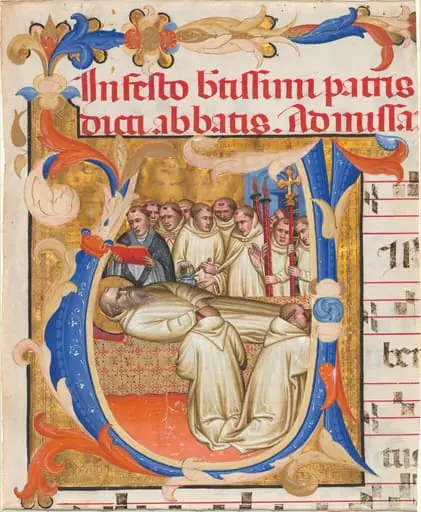 Death of Saint Benedict
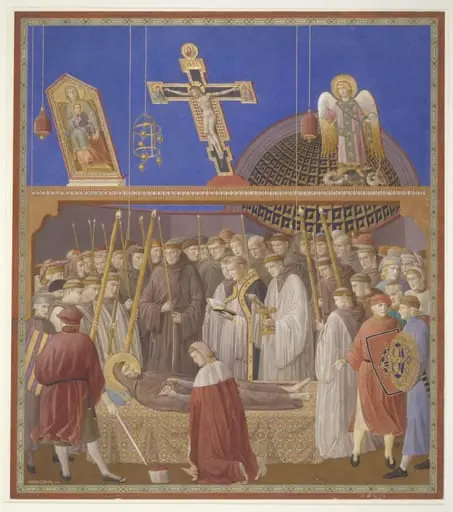 Copy after the painting Death of St Francis by the Master of the St Francis cycle in the Upper Church, San Francesco, Assisi
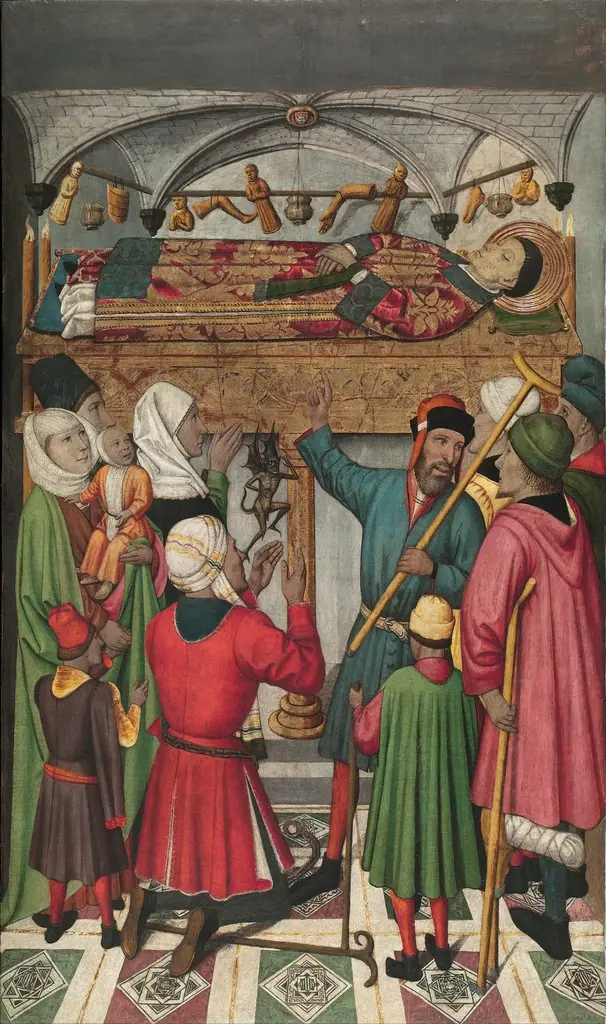 Posthumous Miracles by Saint Vincent
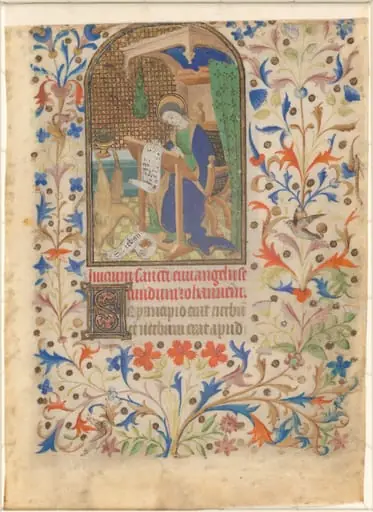 Saint John
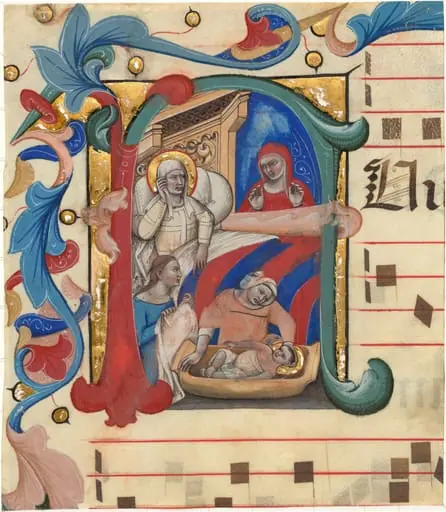 Birth of John the Baptist
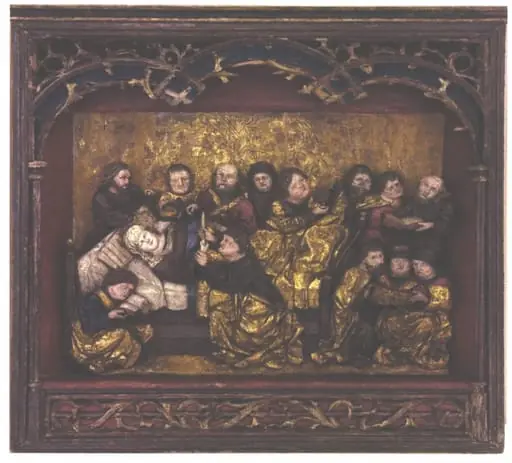 Adormirea Maicii Domnului
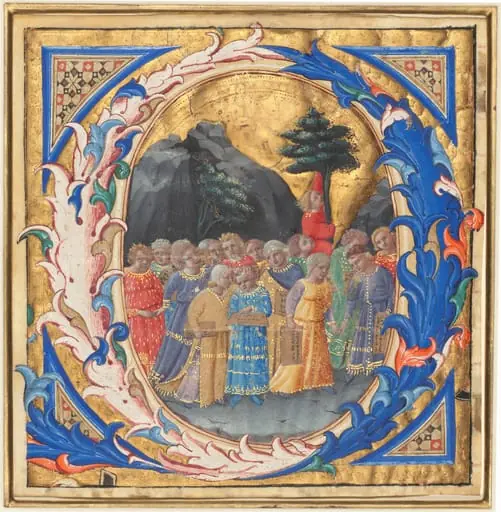 Initial Q with a Procession of Children
 Copy after the painting Death of the Knight of Celano by the Master of the St Francis cycle in the Upper Church, San Francesco, Assisi
 Gideon and the Fleece, with the Selection of Gideon's Army