Artwork
Saint Bartholomew Altarpiece: Saint John the Evangelist and Margaret
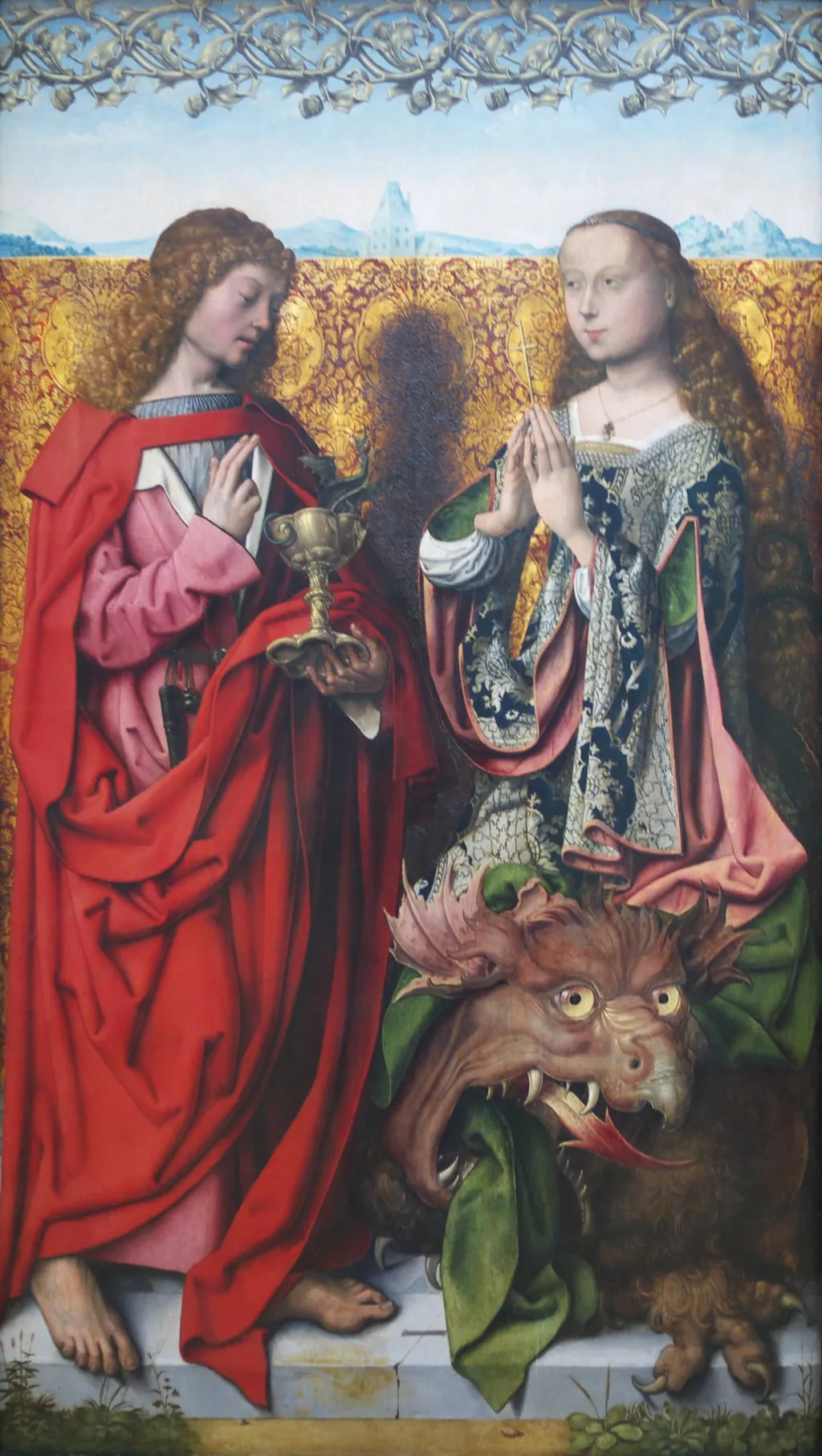
Saint Bartholomew Altarpiece: Saint John the Evangelist and Margaret is an oil painting by the Northern Renaissance artist Master of the Saint Bartholomew Altarpiece. It dates from 1503 and is held in the collection of the Bavarian State Painting Collections.
About this work
Subject & Meaning
Margaret the Virgin, also known as Saint Margaret of Antioch, is a Christian martyr and one of the most celebrated virgin martyrs in Western hagiography.
The painting depicts two saints: John the Evangelist and Margaret the Virgin. John the Evangelist, one of the four evangelists, is traditionally represented as an author of the Gospel. Margaret the Virgin, also known as Saint Margaret of Antioch, is a Christian martyr and one of the most celebrated virgin martyrs in Western hagiography.
The dual-saint format suggests a devotional function typical of altarpiece panels, where paired holy figures would have offered worshippers models of faith and intercessors. The religious genre and placement within the Saint Bartholomew Altarpiece indicate the work served liturgical and meditative purposes within a church setting, inviting contemplation of these saints' virtues and martyrdoms.
Technique & Style
The work is executed in oil paint on a wooden panel, a format typical for early 16th-century German religious paintings. The composition presents the figures of John the Evangelist and Margaret the Virgin within a tightly structured space, employing a restrained palette and clear outlines that emphasize the narrative clarity of the scene. Subtle gradations of light model the forms, while the figures’ gestures and gazes are arranged to guide the viewer’s eye toward the central interaction.
The handling of the paint reveals careful layering, producing a smooth surface that enhances the overall formal harmony of the altarpiece.
History & Provenance
The work was created in 1503 by the Master of the Saint Bartholomew Altarpiece, commissioned for the Saint Bartholomew Altarpiece. It was executed in oil paint on panel, measuring 128.4 cm in height and 73.3 cm in width. The painting depicts Saint John the Evangelist and Saint Margaret, and is part of the collection of the Bavarian State Painting Collections, currently housed in the Alte Pinakothek.
The work is held by the Bavarian State Painting Collections and is located at the Alte Pinakothek in Munich.
Its inventory number is not specified in the available sources.
The painting has no recorded exhibition history in the provided sources.
Legacy
The altarpiece established the Master of the Saint Bartholomew Altarpiece as a pivotal figure in early 16th-century German religious painting, influencing subsequent artists through its innovative composition and vivid portrayal of saints John the Evangelist and Margaret. Its integration of narrative clarity with emotive detail shaped the development of devotional imagery in southern Germany, securing the artist's reputation as a key contributor to the transition from late Gothic to Renaissance aesthetics. The work's enduring presence at the Alte Pinakothek continues to inform scholarly discourse on early Netherlandish influences in Bavarian art, underscoring its lasting impact on both artistic practice and museum curation.
Overview
Created in 1503, this oil painting is attributed to the anonymous Master of the Saint Bartholomew Altarpiece, an Early Netherlandish artist who worked in Cologne from the late 15th to early 16th century. The work belongs to the Northern Renaissance and is currently displayed in Munich’s Alte Pinakothek.
Context
The work reflects the devotional practices of the early 1500s in the Holy Roman Empire, where saints were frequently depicted together to encourage intercessory prayer. The inclusion of Margaret, a virgin martyr, alongside the evangelist underscores themes of purity and witness that were central to contemporary religious art.
Artist & collection
Artist
Master of the Saint Bartholomew Altarpiece
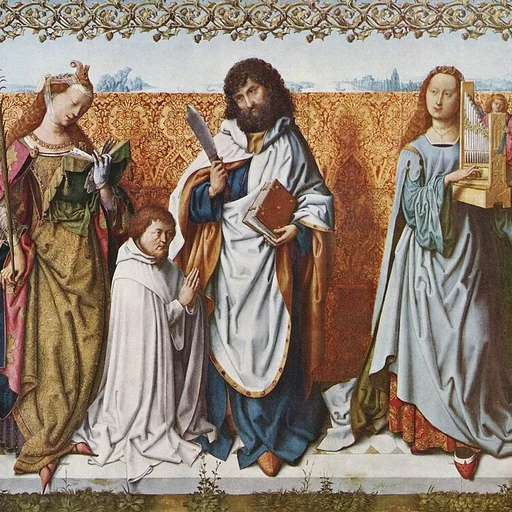
The Master of the Saint Bartholomew Altarpiece (sometimes called the Master of the Saint Bartholomew Altar) was an Early Netherlandish painter active in Germany, mostly Cologne, between 1475/1480 and 1510.

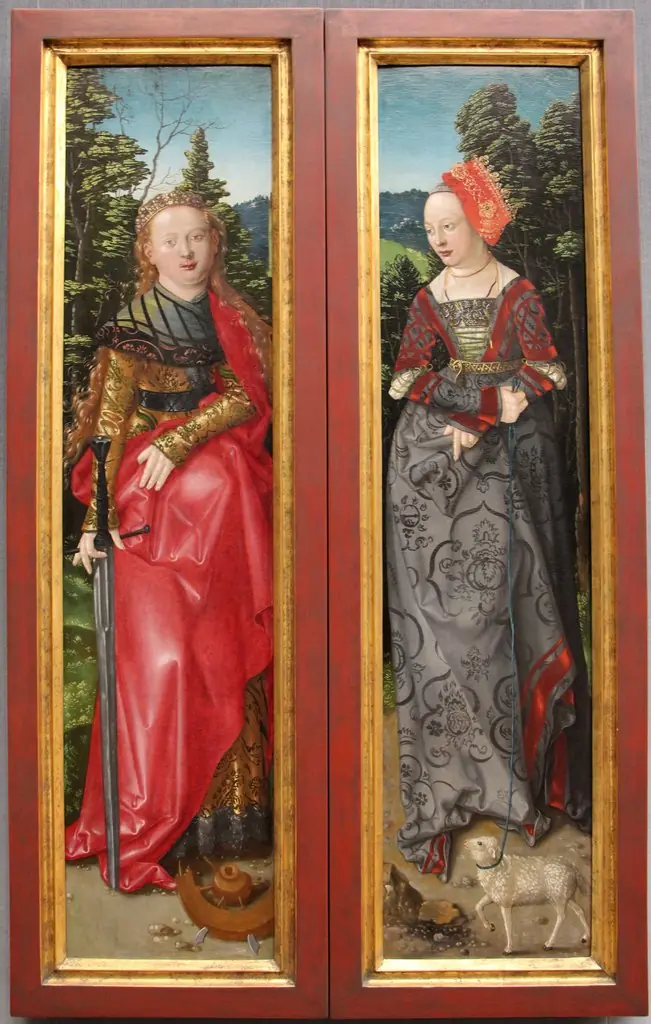
- Der Dreikönigsaltar Außentafeln: Die Heiligen Katharina und Agnes
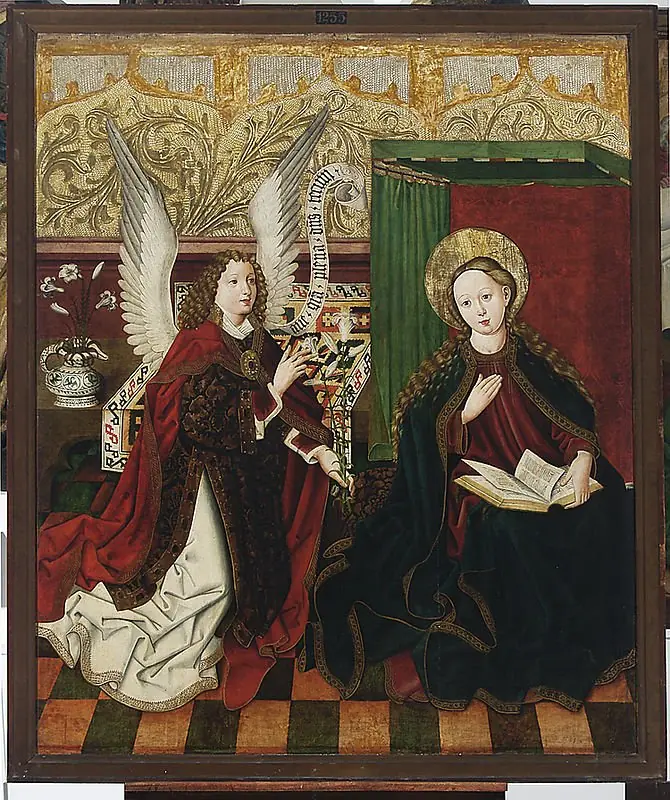 Legnica polyptych - left wing internal - upper panel - obverse: Annunciation; reverse: St Lawrence, St Vincent the Levite. St John the Baptist
 The Annunciation from the Church in Cięcina
 Saint Catherine
 The Annunciation
 The Annunciation
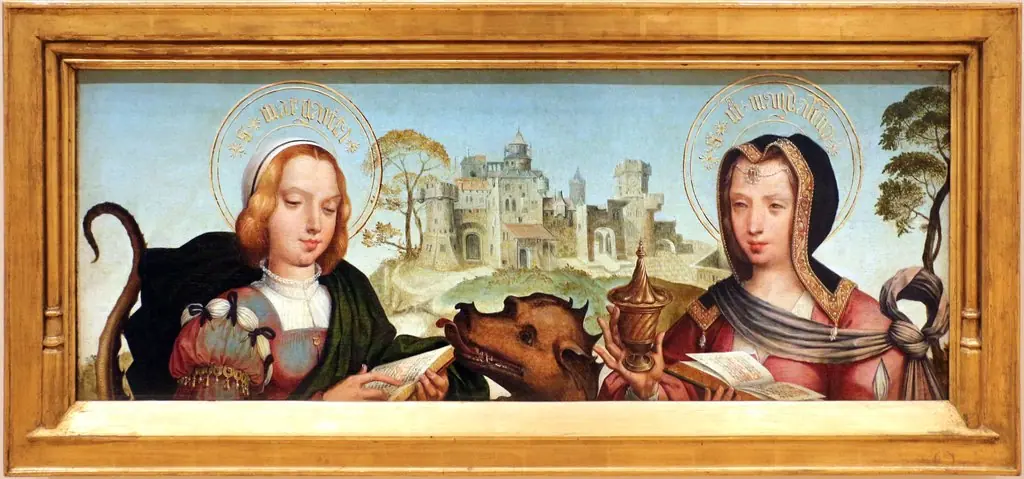 Santa Margarida e Santa Maria Madalena
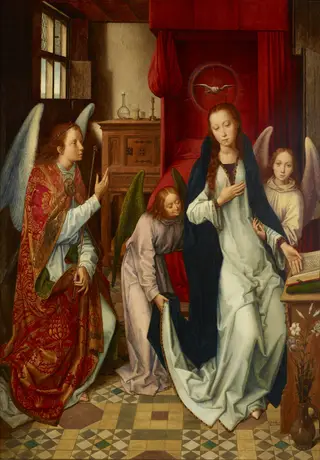 Christ's Bath
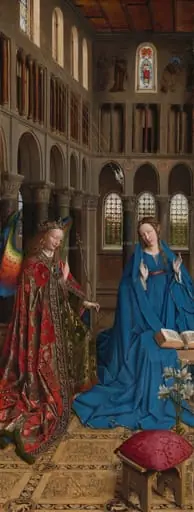 The Annunciation
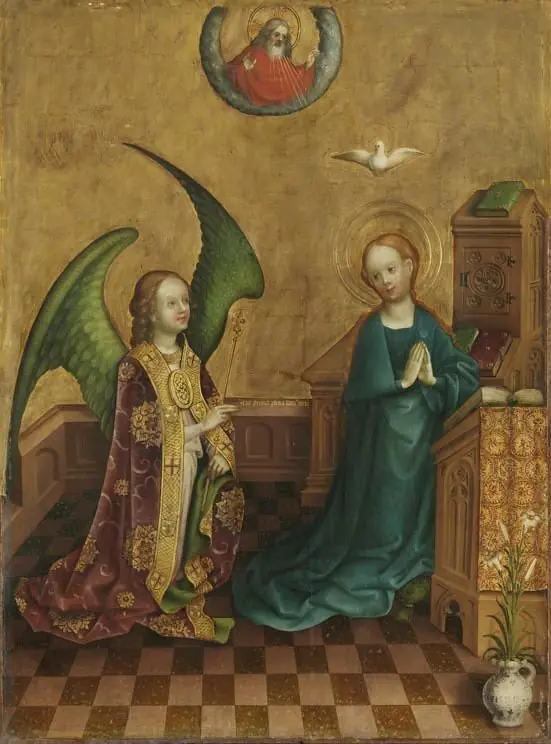 The Annunciation
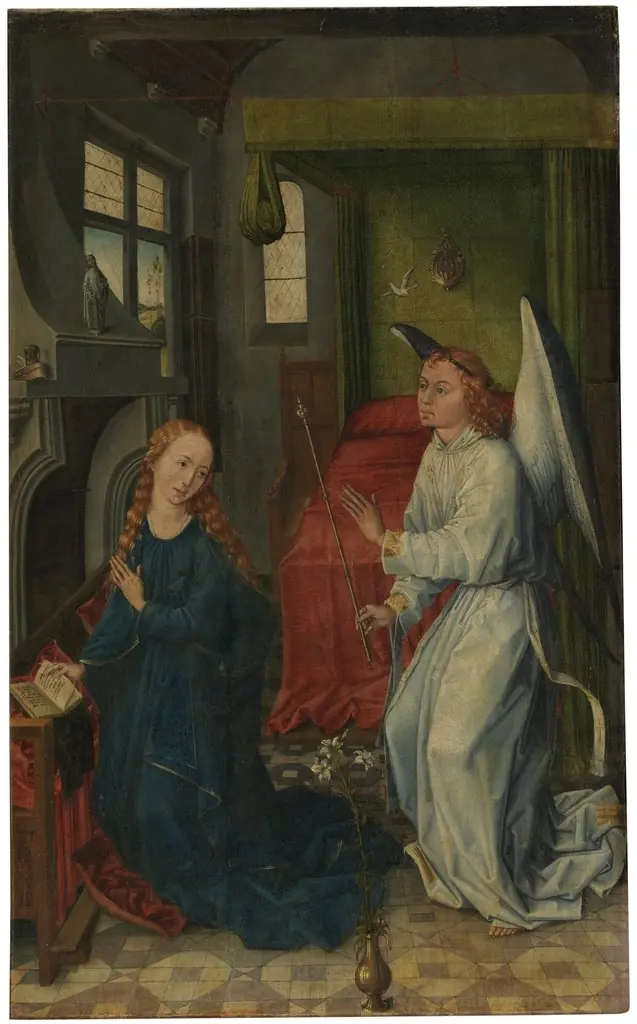 The Annunciation
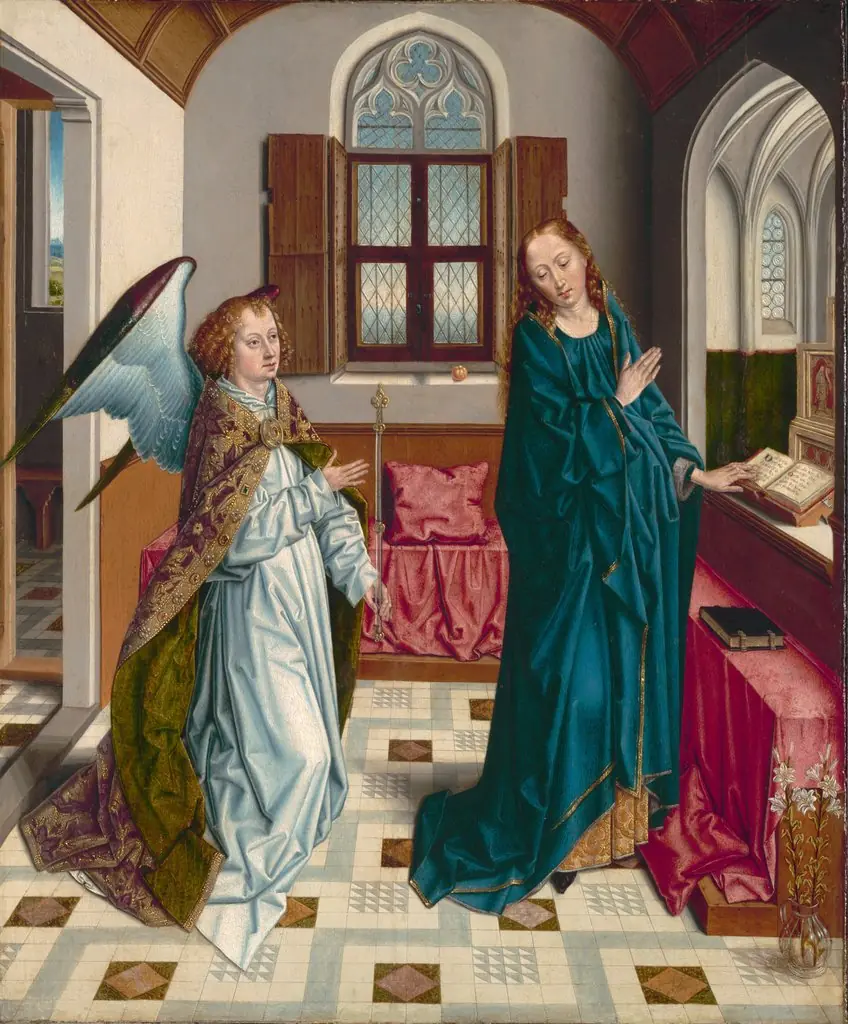 The Annunciation