Artwork
The Life and Miracles of Saint Godelieve
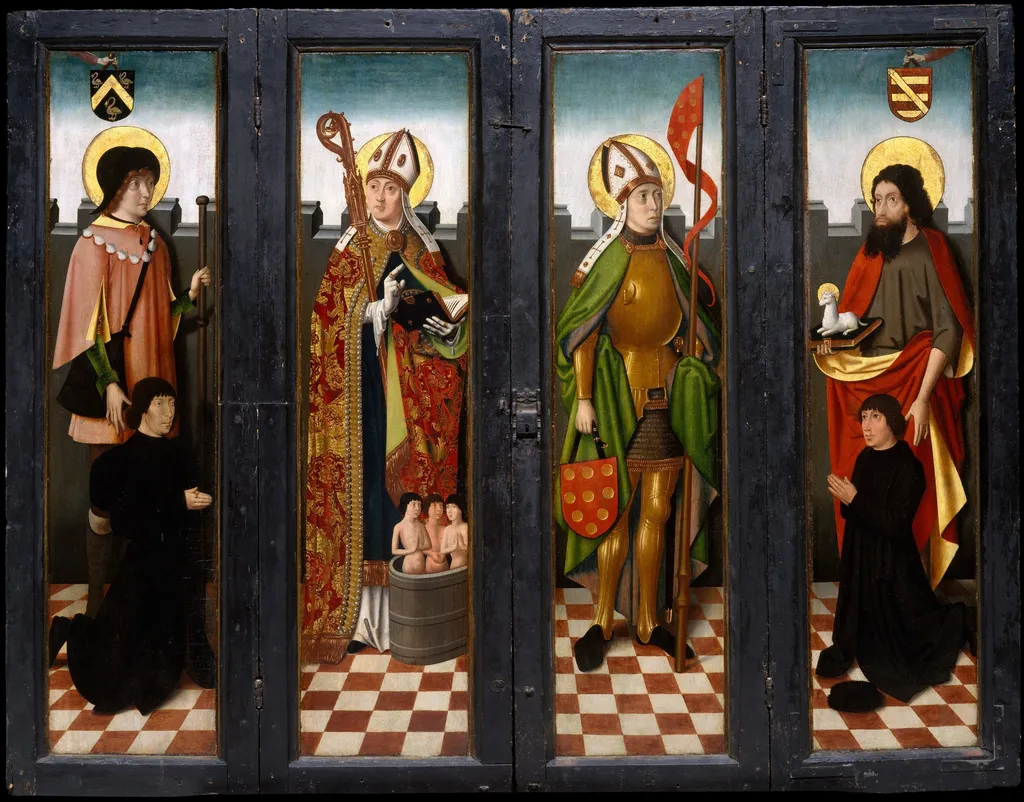
The Life and Miracles of Saint Godelieve is an oil painting by the Northern Renaissance artist Master of the Saint Godelieve Legend. It dates from 1500 and is held in the collection of the Metropolitan Museum of Art.
About this work
Subject & Meaning
The polyptych depicts episodes from the life and posthumous miracles of Saint Godelieve, a Flemish holy woman venerated in medieval Bruges.
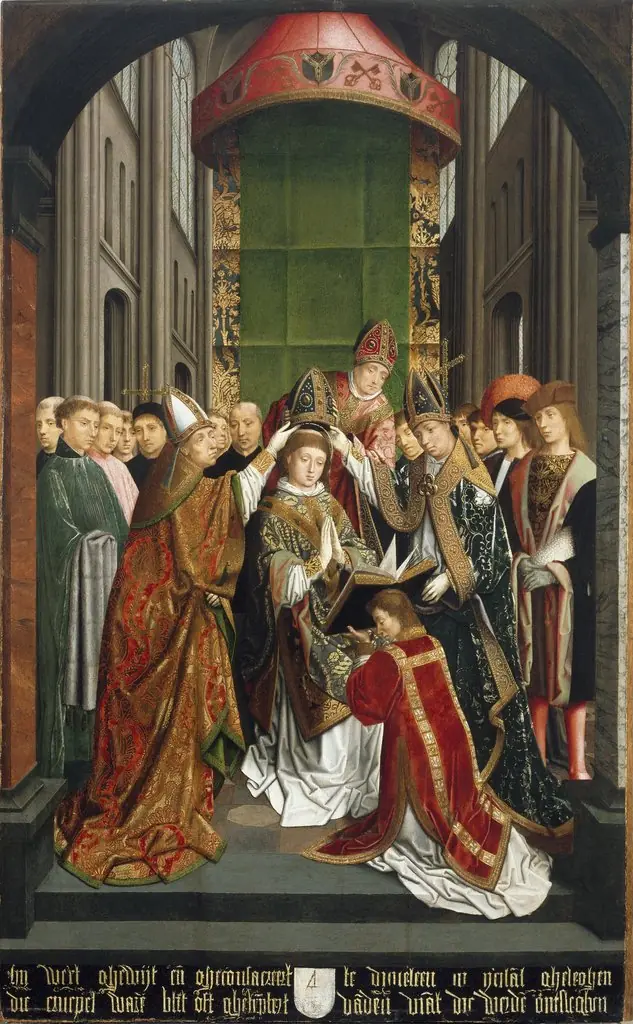
The polyptych depicts episodes from the life and posthumous miracles of Saint Godelieve, a Flemish holy woman venerated in medieval Bruges. One panel shows her forced marriage and subsequent flight to her parents’ home, while another illustrates her murder by her husband’s steward and her eventual canonization. The scenes employ contemporary Burgundian dress and architecture to render the saint’s suffering and posthumous intercessions as relatable to late fifteenth-century viewers. The work’s program underscores ideals of female sanctity through endurance and divine vindication.
Technique & Style
The Life and Miracles of Saint Godelieve is executed in oil on wood, characteristic of late fifteenth-century Flemish panel painting.
The work is a polyptych whose multiple painted panels depict narrative scenes from the saint’s life and posthumous miracles in a continuous sequence. Handling is meticulous, with fine brushwork used to render architectural details and textile patterns, and the application of translucent glazes to build luminous flesh tones and luminous drapery. The composition favors shallow, stage-like settings with low horizons and sharply receding orthogonals, typical of Bruges school practice.
The overall condition appears stable, with only localized wear to the paint layers and minor losses along panel joins; no structural deformation is reported.
History & Provenance
The polyptych The Life and Miracles of Saint Godelieve was likely commissioned by a craft guild in Bruges for the city’s Church of Our Lady and created around 1470–1480 by the anonymous Master of the Saint Godelieve Legend.
By the late 18th century the work remained in Bruges, displayed in a chapel until removed. It later entered the collection of Anselme de Peellaert, followed by Pierre Bortier, then Julius De Geyter. Afterward, it passed through A. Tollin and Jean Dollfus before entering the Metropolitan Museum of Art, New York, where it is now held.
The polyptych The Life and Miracles of Saint Godelieve is currently held by the Metropolitan Museum of Art in New York City. Historical records indicate the work was likely commissioned for the Church of Our Lady in Bruges, where it remained until the late 18th century. Prior to its acquisition by the museum, the painting passed through the collections of several private owners, including Anselme de Peellaert, Pierre Bortier, Julius De Geyter, A. Tollin, and Jean Dollfus.
The artwork was notably featured in the exhibition From Van Eyck to Bruegel: Early Netherlandish Painting in The Metropolitan Museum of Art. A separate copy of the work is held at the Stedelijk Museum in Bruges.
Context
The Life and Miracles of Saint Godelieve is attributed to an anonymous Flemish artist identified by the notname Master of the Saint Godelieve Legend, who is also linked to the Gesaltza Triptych in the Basque Country. The polyptych was likely commissioned by a Bruges craft guild for the city's Church of Our Lady, where it remained in a chapel until the late eighteenth century. The work was created around 1470 or 1480 and entered the Metropolitan Museum of Art, where it was featured in the exhibition From Van Eyck to Bruegel: Early Netherlandish Painting in The Metropolitan Museum of Art.
A copy of the painting is held by the Stedelijk Museum in Brugge, reflecting the work's enduring importance within Netherlandish devotional imagery.
Provenance traces the panel through owners including Anselme de Peellaert, Pierre Bortier, Julius De Geyter, A. Tollin, and Jean Dollfus before its arrival in New York.
Overview
Created around 1500 by the artist known as the Master of the Saint Godelieve Legend, this painted wooden panel illustrates key events from the life and posthumous miracles of Saint Godelieve. The work serves as a devotional narrative, presenting a series of episodes related to the Flemish saint. It is presently part of the collection at The Metropolitan Museum of Art.
Own this work as a print
Artist & collection
Artist
Master of the Saint Godelieve Legend
Master of the Saint Godelieve Legend is the conventional name given to an anonymous Early Netherlandish painter active around the end of the fifteenth century, probably in Bruges.

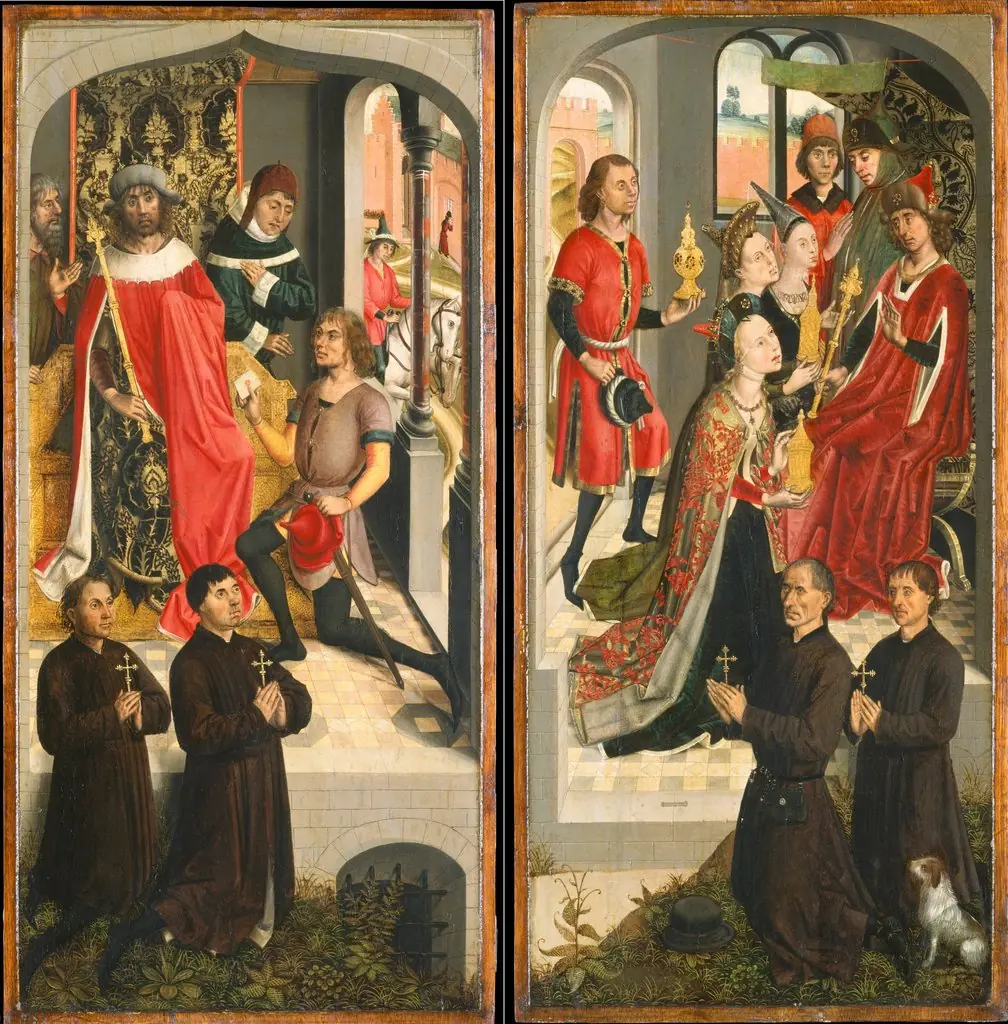
- Abner's Messenger before David (?); The Queen of Sheba Bringing Gifts to Solomon; (The Annunciation, on the reverse)
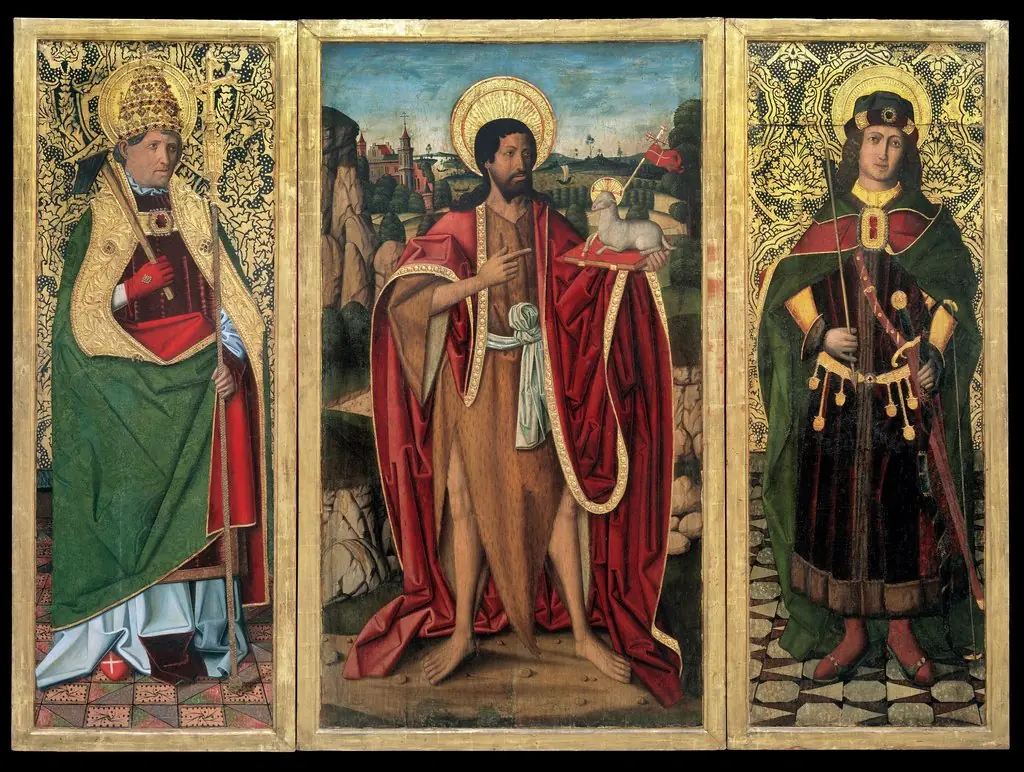 Saint John the Baptist, Saint Fabian and Saint Sebastian
 Die vierzehn Nothelfer
 Scenes from the Life of St Bertin
 Saint Donatian; Saint Victor Presenting a Donor
 The Members of the Guild of the Large Crossbow of Malines
 The Pérussis Altarpiece
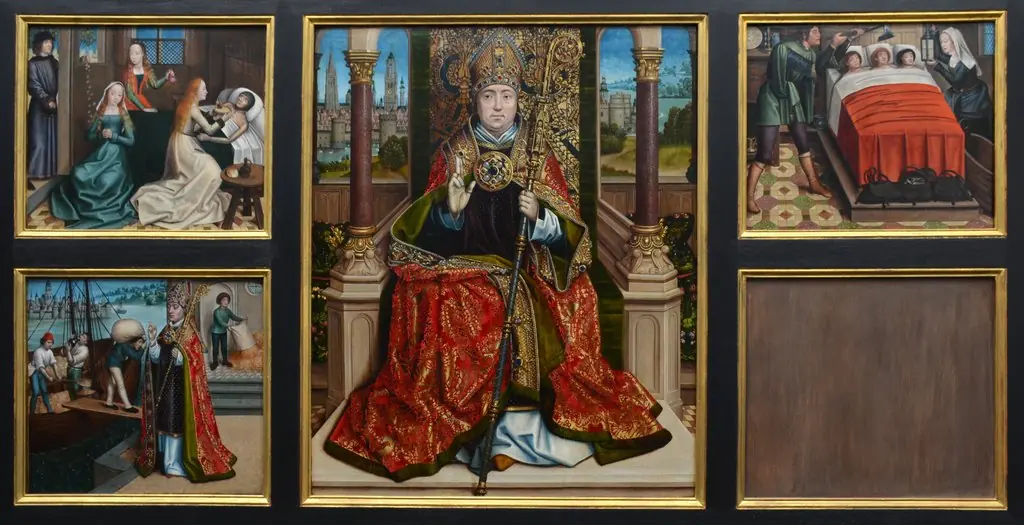 Altarpiece of St. Nicholas
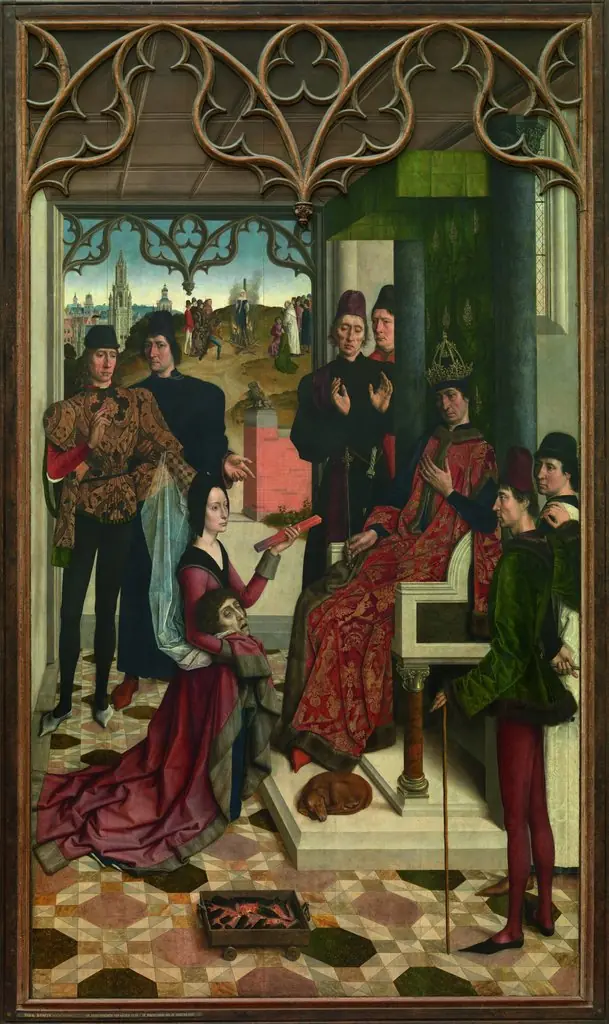 Justice of Emperor Otto III: The Trial by Fire
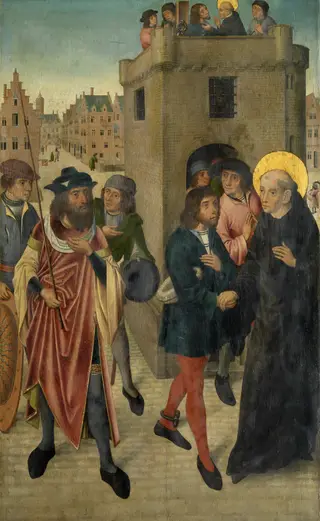 Saint Leonard Liberating Captives
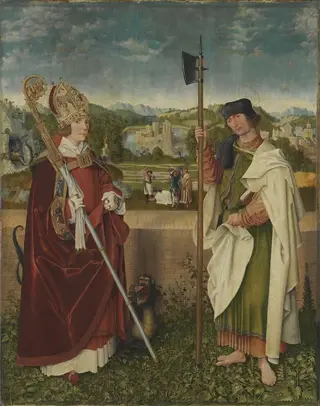 Universitätsaltar: Hll. Narzissus und Mathäus
 The Enthronement of Saint Romold as Bishop of Dublin