Artwork
Crucifixion
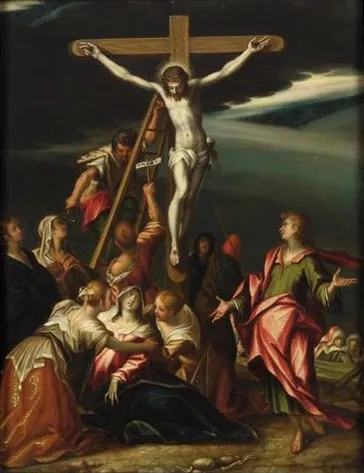
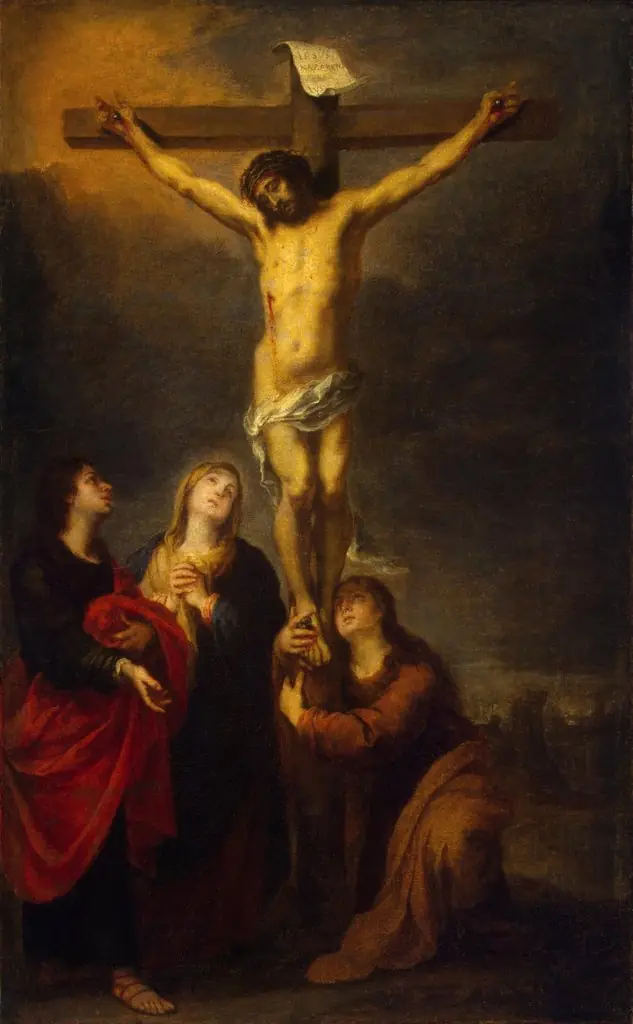
Crucifixion is a paint painting by the Early Baroque Italian artist Hans von Aachen. It dates from 1600 and is held in the collection of the Kunsthistorisches Museum.
About this work
Subject & Meaning
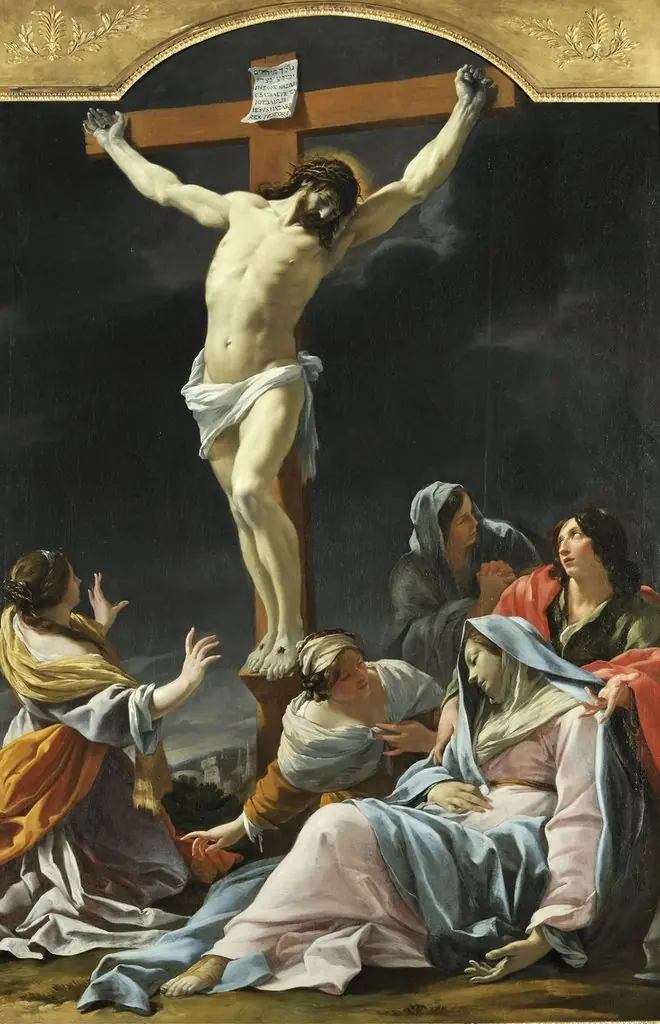
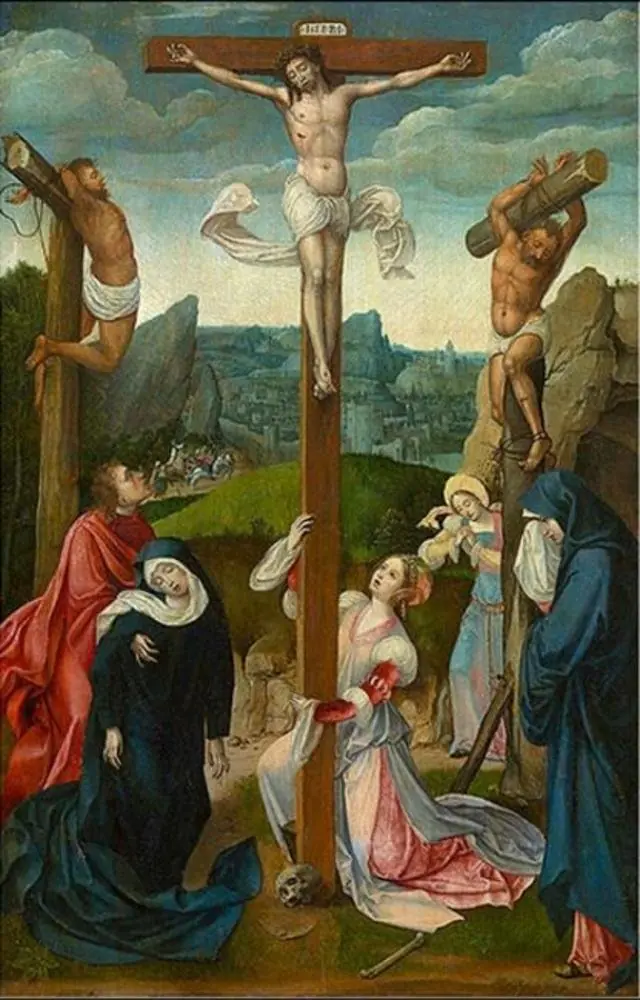
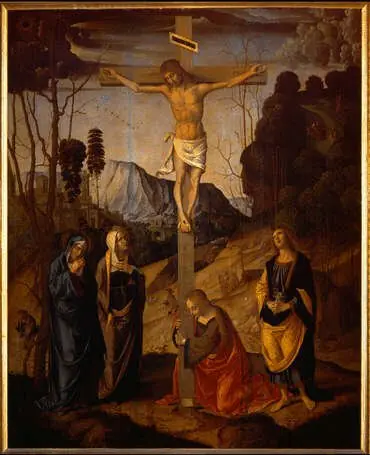
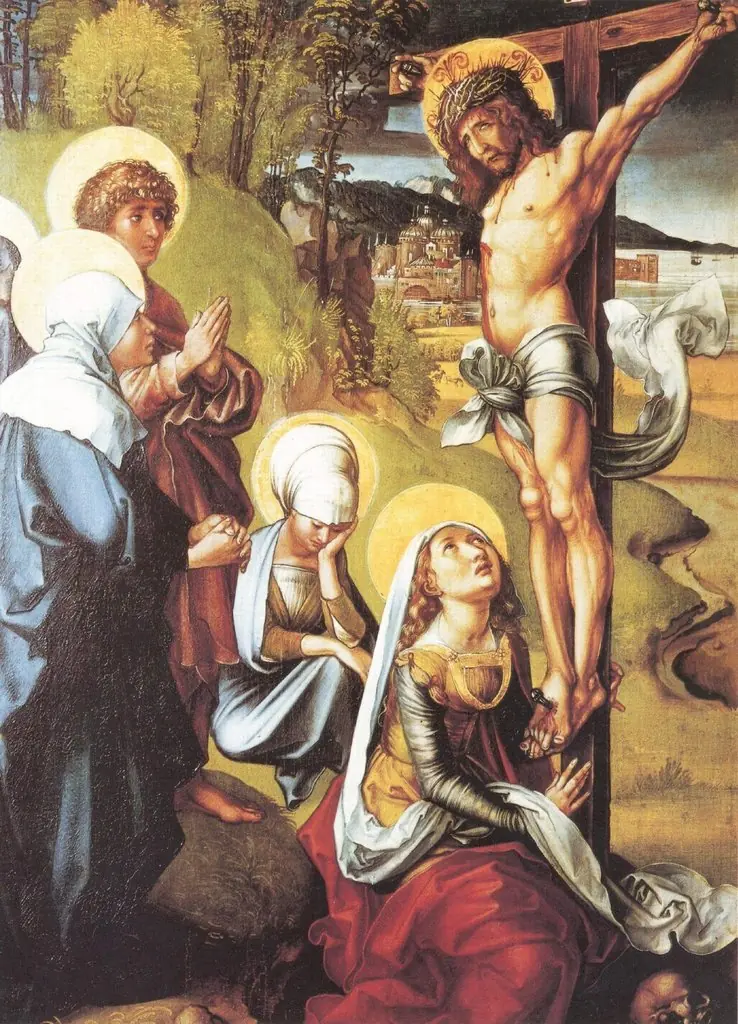
Hans von Aachen's 1600 copper painting depicts the crucifixion of Jesus Christ as its central subject.
Hans von Aachen's 1600 copper painting depicts the crucifixion of Jesus Christ as its central subject. Classified as a work of religious art, the composition focuses entirely on the figure of Jesus Christ on the cross, adhering to traditional Christian iconography regarding the Passion. The selection of copper as a support medium was characteristic of the period's devotional works, often intended to enhance the luminosity of the paint and the spiritual intensity of the scene.
As the main subject, the crucifixion represents the pivotal moment of sacrifice in Christian theology, serving as a focal point for meditation on suffering and redemption.
Technique & Style
Hans von Aachen's Crucifixion, dated to 1600, is executed as a painting on a copper support. The work utilizes oil paint applied directly to the metal panel, a medium choice that allows for fine detail and a luminous surface quality characteristic of the artist's style. The composition depicts the crucifixion of Jesus Christ, rendered with the precision expected of religious art from this period.
The painting measures 33 cm in height and 26 cm in width. This small-scale format suggests it was intended for private devotion or as a collector's object rather than a large-scale altarpiece. The copper ground contributes to the durability and visual intensity of the pigments, preserving the formal qualities of the religious scene.
History & Provenance
Hans von Aachen painted this Crucifixion in 1600 on a copper support. The work depicts the crucifixion of Jesus Christ and is classified as a religious painting.
The painting is held in the collection of the Kunsthistorisches Museum, where it remains located.
Hans von Aachen's painting Crucifixion, dated to 1600, is currently held in the collection of the Kunsthistorisches Museum. The work is executed on copper and depicts the crucifixion of Jesus Christ. While the provided sources confirm the museum's ownership and the artwork's creation date, they do not specify a unique inventory or accession number for the piece. Furthermore, the available documentation contains no record of the painting's exhibition history.
Context
Hans von Aachen's Crucifixion, painted on copper in 1600, represents a mature synthesis of late Renaissance religious imagery within the Northern European tradition. The work's intense emotionality and refined modeling reflect broader shifts in Counter-Reformation visual rhetoric, particularly in Viennese court patronage circles where the artist was active. Its inclusion in the Kunsthistorisches Museum collection underscores its significance as a representative example of late 16th-century devotional painting, bridging Mannerist compositional experiments and emerging Baroque spatial coherence.
Scholarship has emphasized its role in illustrating the artist's transition from Italianate influences toward a more personalized synthesis of Northern and Italian visual languages.
Overview
Hans von Aachen’s Crucifixion (1600) is a copper painting that presents the biblical scene of Christ on the cross. Executed in the Northern Mannerist style, the work is part of the Kunsthistorisches Museum’s holdings and reflects the artist’s engagement with religious subjects for elite patrons such as Emperor Rudolf II.
Artist & collection
Artist
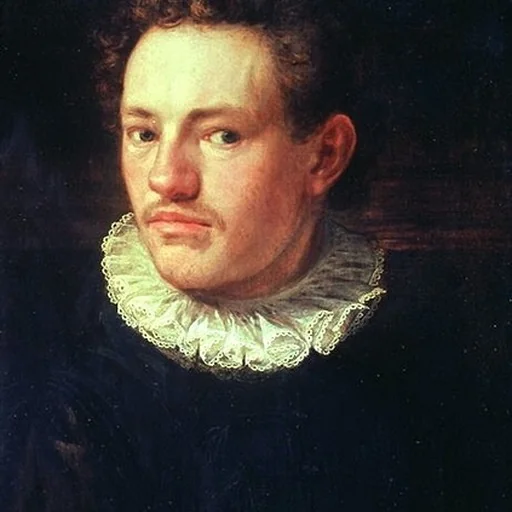
Hans von Aachen (1552 – 4 March 1615) was a German painter who was one of the leading representatives of Northern Mannerism.