Artwork
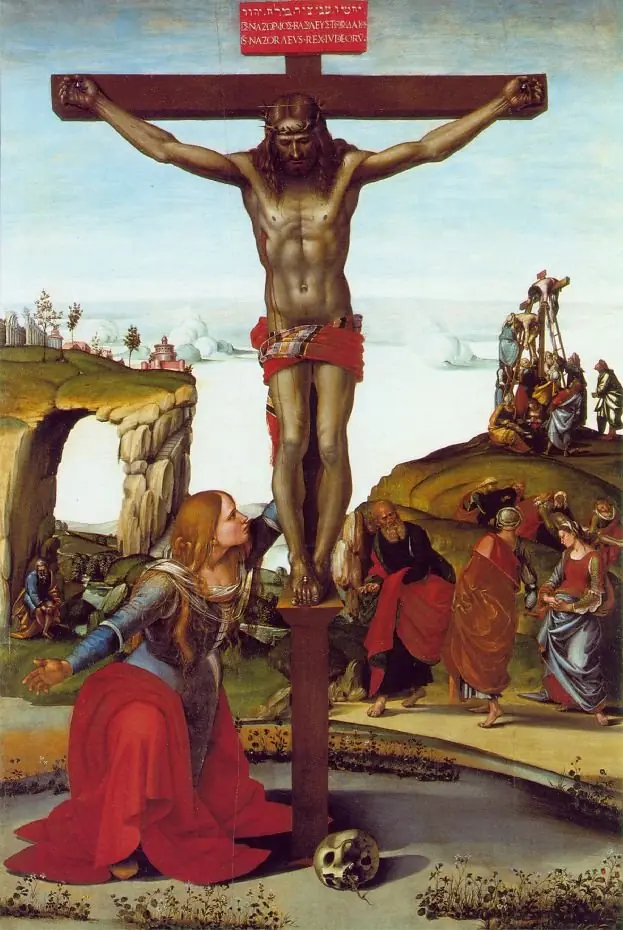
The Crucifixion with the Virgin, Saint John, Saint Jerome, and Saint Mary Magdalene [middle panel]
![The Crucifixion with the Virgin, Saint John, Saint Jerome, and Saint Mary Magdalene [middle panel], by Pietro Perugino, tempera, 1484](https://artifactworldgallery.com/img/pietro-perugino--the-crucifixion-with-the-virgin-saint-john-saint-jerome-and--a9b4c312771e3f71-w1024.webp)
The Crucifixion with the Virgin, Saint John, Saint Jerome, and Saint Mary Magdalene [middle panel] is a tempera painting by the Early Renaissance artist Pietro Perugino. It dates from 1484 and is held in the collection of the National Gallery of Art.
About this work
Subject & Meaning
This composition reflects the devotional focus of early Renaissance religious art, emphasizing both the historical event and its spiritual significance.
The Crucifixion with the Virgin, Saint John, Saint Jerome, and Saint Mary Magdalene portrays the crucifixion of Christ surrounded by the Virgin Mary, the beloved disciple John, the penitent Jerome, and the mourning Magdalene. Their presence follows established iconographic conventions in which Mary and John act as witnesses, Jerome embodies penitential contemplation, and Magdalene signifies devoted lamentation, together underscoring the redemptive meaning of the Passion and the intercessory role of the saints. This composition reflects the devotional focus of early Renaissance religious art, emphasizing both the historical event and its spiritual significance.
Technique & Style
Pietro Perugino executed this middle panel in 1483 as a religious work characteristic of the Umbrian school and Early Renaissance. The painting was originally created using oil on a wood panel, which was subsequently transferred to a canvas support. While one catalog entry notes the material as tempera on panel, the primary technical description identifies the medium as oil.
The work measures 101 cm in height and 56 cm in width. Its current presentation includes a modern frame, meaning any decorative coats-of-arms on the frame are unrelated to the painting's original provenance or history. The transfer from panel to canvas likely occurred during the work's long history, which included treatment by the French artist Baron François Xavier Fabre while in the possession of Dr. Buzzi.
These technical interventions and the change in support are critical factors in understanding the object's physical condition and handling history.
History & Provenance
Created in 1483 by Pietro Perugino, the painting was likely commissioned by Bartolommeo Bartoli, Bishop of Cagli, who subsequently gifted it to the church of San Domenico in San Gimignano. During the Napoleonic seizures of 1796–1797, the work was acquired by Dr. Buzzi and shortly sold to Prince Alexander Mikhailovich Galitzin, the Russian ambassador to Rome. It passed by inheritance to his son, Theodore Alexandrovich Galitzin, and later to his nephew, Sergei Mikhailovich Galitzin, before being displayed in the Prince's Moscow museum starting in 1865.
The Imperial Hermitage Gallery purchased the piece in 1886 as part of the Galitzin collection. In April 1931, Andrew W. Mellon acquired the work through a consortium of dealers including Matthiesen Gallery and Colnaghi. Mellon deeded it to his educational trust in June 1931, and it was finally gifted to the National Gallery of Art in 1937.
The Crucifixion with the Virgin, Saint John, Saint Jerome, and Saint Mary Magdalene [middle panel] is presently held by the National Gallery of Art in Washington, D.C., where it entered the collection as a 1937 gift from the Andrew W. Mellon Educational and Charitable Trust. Its provenance traces from a probable commission by Bishop Bartolommeo Bartoli, through Napoleonic seizure, acquisition by Dr. Buzzi, and successive ownership by the Galitzin family, culminating in its purchase by the National Gallery in 1886 and final transfer in 1937. The work was publicly exhibited in Moscow at the Museum of Western European Painting belonging to Prince S.M. Galitzin beginning in 1865.
Overview
This oil painting, titled The Crucifixion with the Virgin, Saint John, Saint Jerome, and Saint Mary Magdalene [middle panel], was created by Pietro Perugino around 1484. Originally executed on a wooden panel, the work has since been transferred to canvas. It represents a key example of religious art from the Early Renaissance period, depicting a pivotal moment in Christian theology with a characteristic blend of solemnity and compositional clarity.
Artist & collection
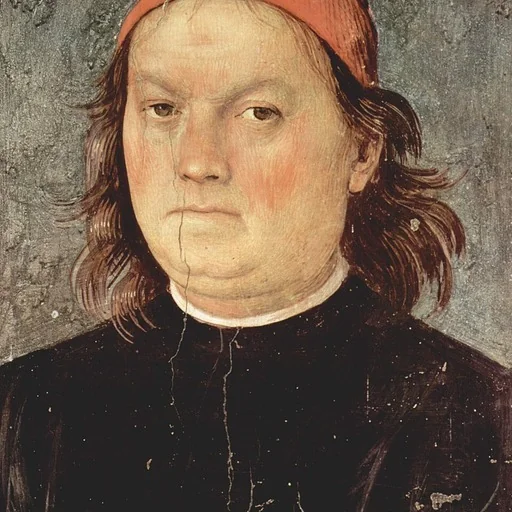
Artist
Pietro Perugino (US: PERR-ə-JEE-noh, -oo-; Italian:; born Pietro Vannucci or Pietro Vanucci; c.

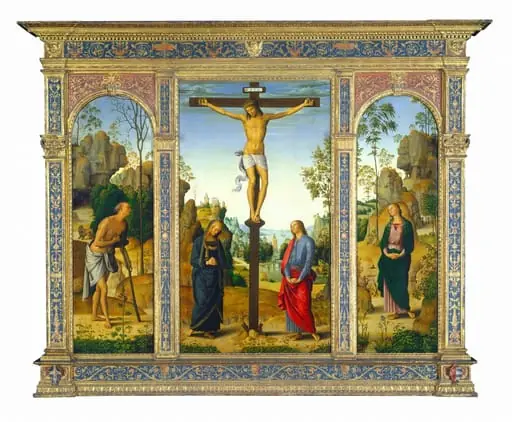 The Crucifixion with the Virgin, Saint John, Saint Jerome, and Saint Mary Magdalene
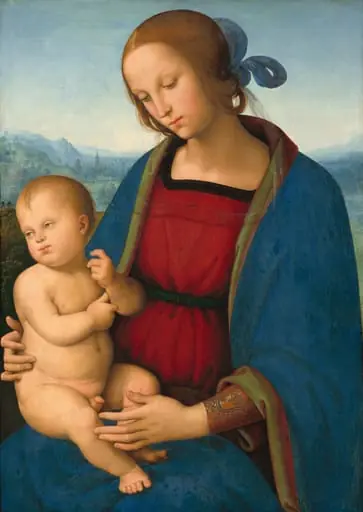 Madonna and Child
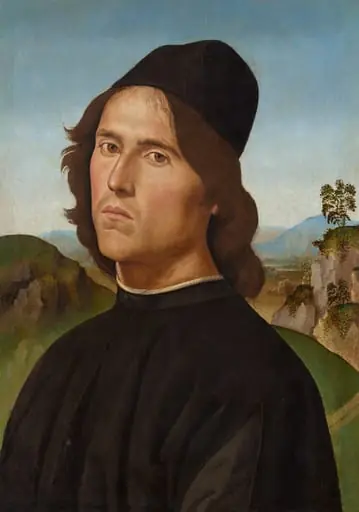 Portrait of Lorenzo di Credi
![The Crucifixion with the Virgin, Saint John, Saint Jerome, and Saint Mary Magdalene [right panel], by Pietro Perugino](https://artifactworldgallery.com/img/pietro-perugino--the-crucifixion-with-the-virgin-saint-john-saint-jerome-and--7d9a2b1f47b9fc9b-w320.webp) The Crucifixion with the Virgin, Saint John, Saint Jerome, and Saint Mary Magdalene [right panel]
The Crucifixion with the Virgin, Saint John, Saint Jerome, and Saint Mary Magdalene [right panel]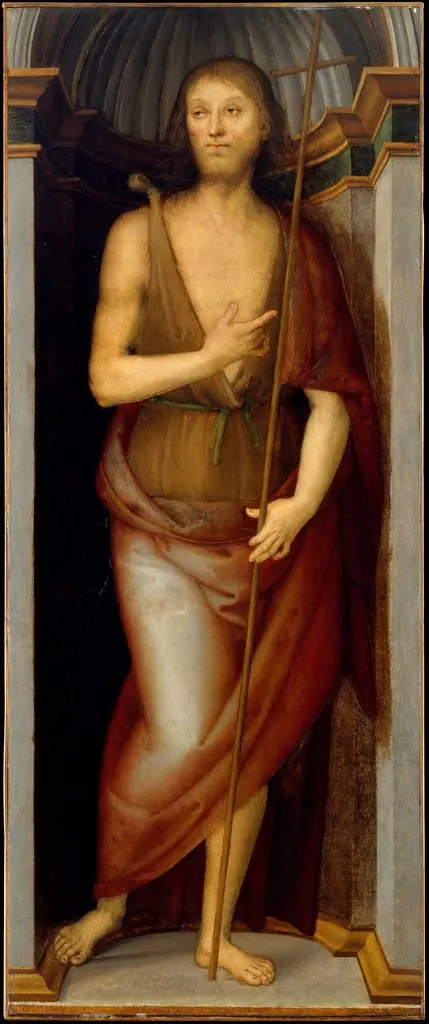 Saint John the Baptist; Saint Lucy
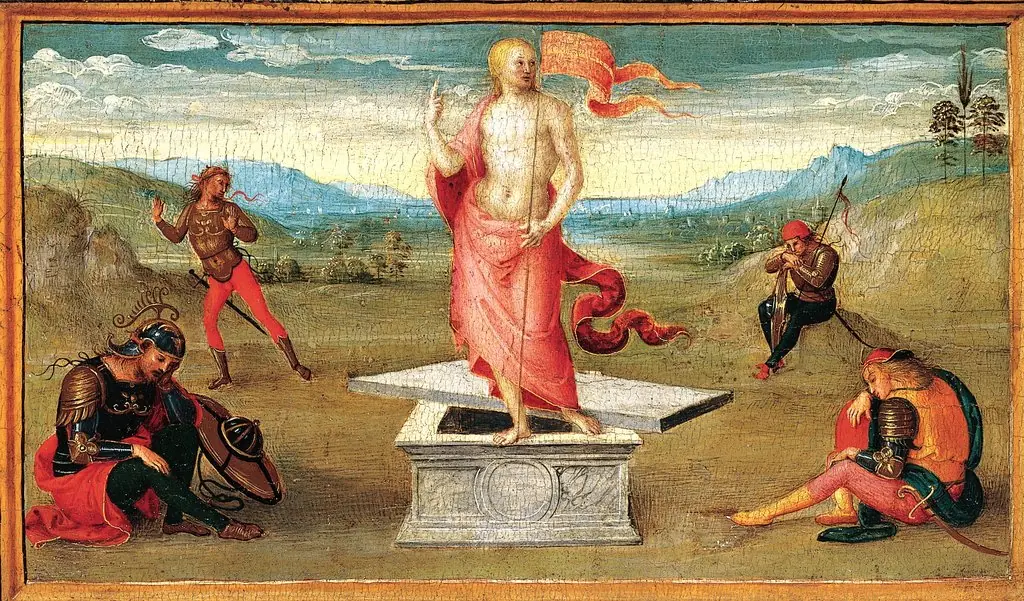 The Resurrection
![The Crucifixion with the Virgin, Saint John, Saint Jerome, and Saint Mary Magdalene [left panel], by Pietro Perugino](https://artifactworldgallery.com/img/pietro-perugino--the-crucifixion-with-the-virgin-saint-john-saint-jerome-and--1017dec17318baa5-w320.webp) The Crucifixion with the Virgin, Saint John, Saint Jerome, and Saint Mary Magdalene [left panel]
The Crucifixion with the Virgin, Saint John, Saint Jerome, and Saint Mary Magdalene [left panel]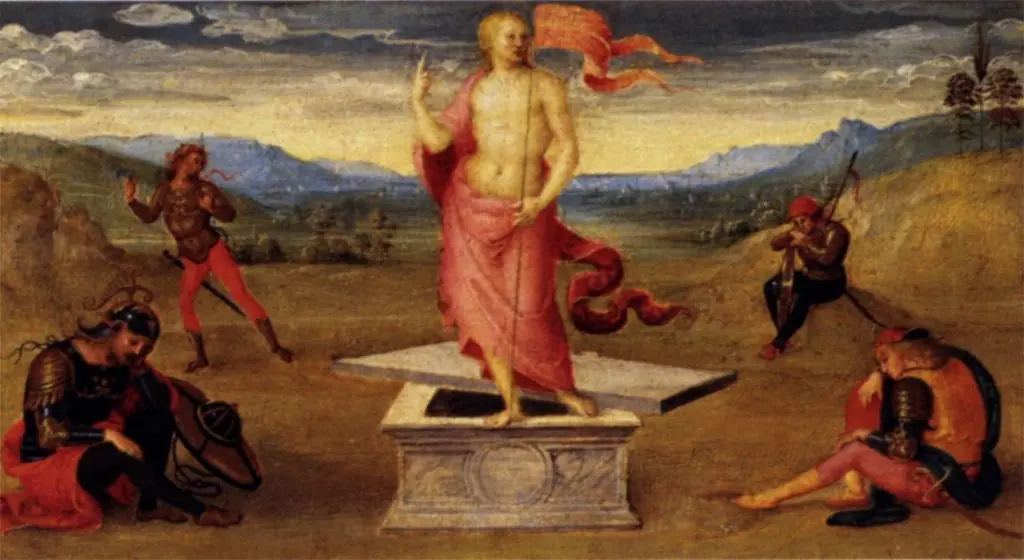 Resurrection of Christ