Artwork
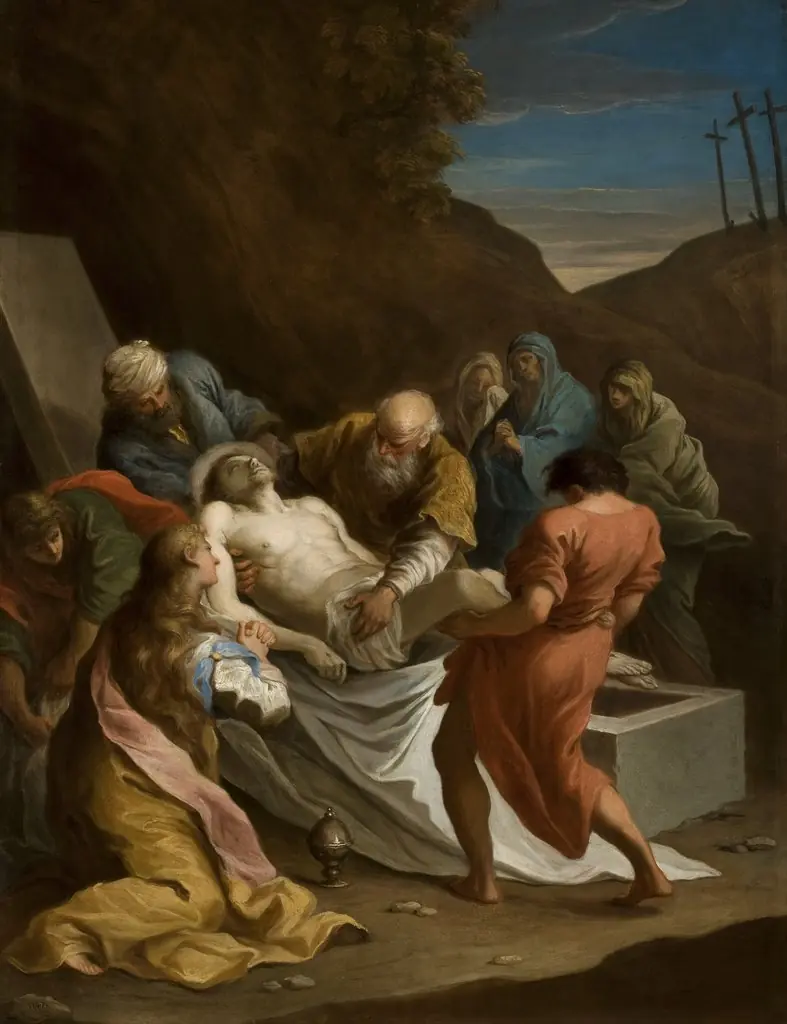
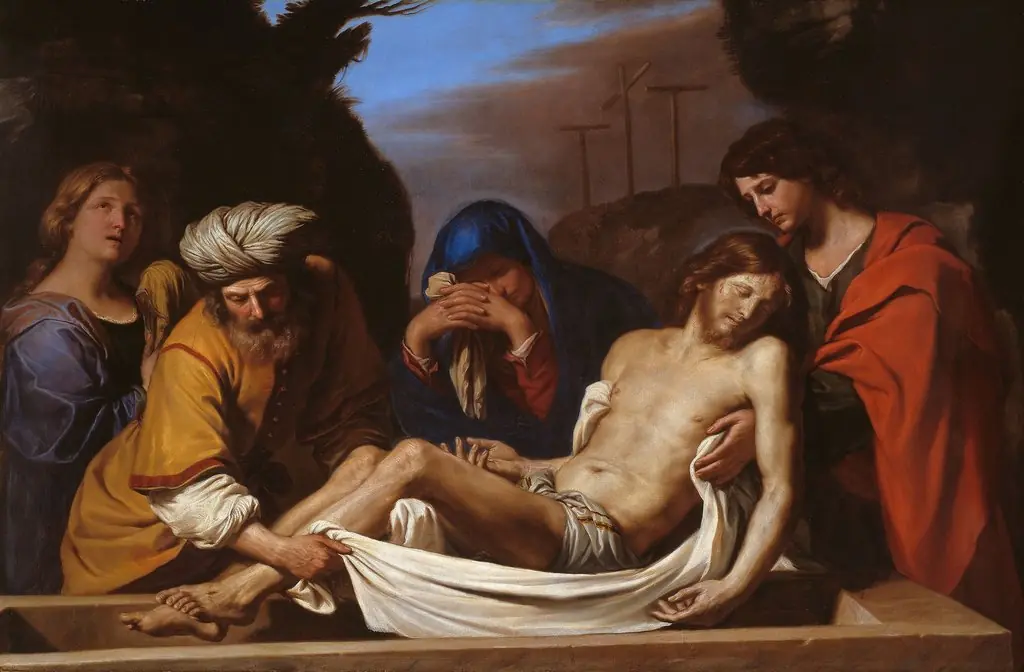
The Entombment of Christ
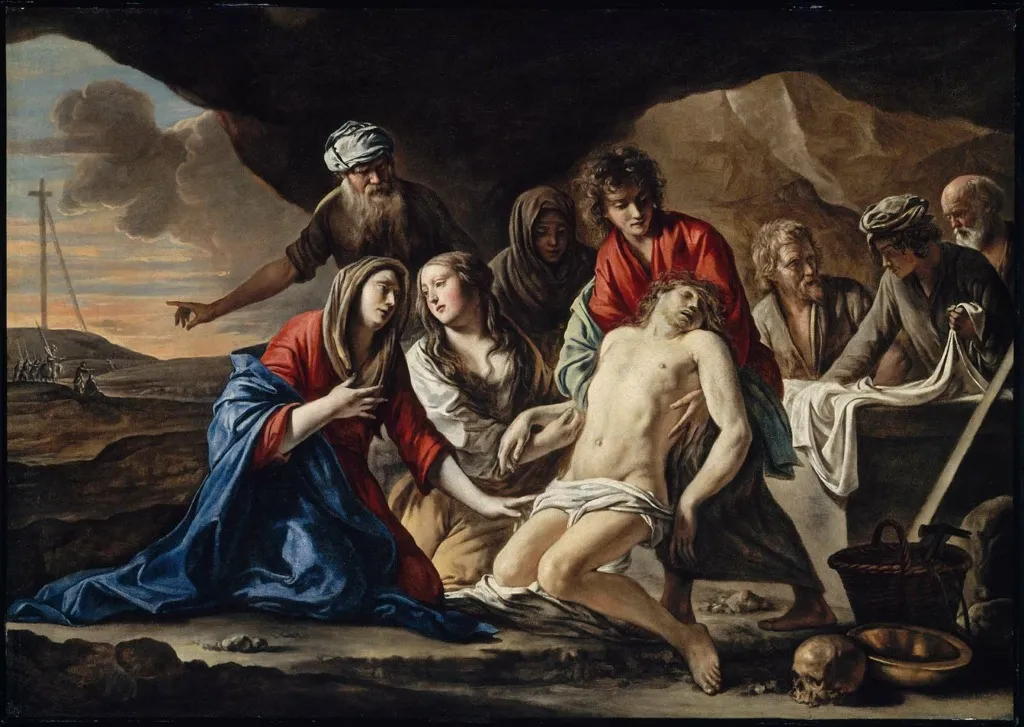
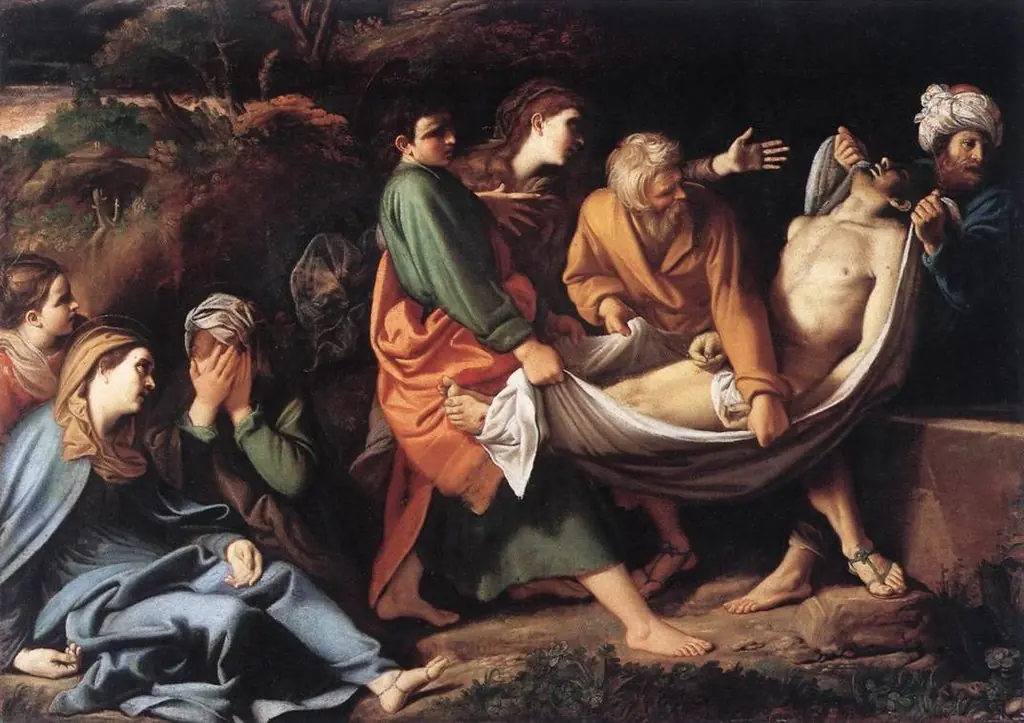
The Entombment of Christ is an oil painting by the French Classical Baroque artist Le Nain. It dates from 1645 and is held in the collection of the Museum of Fine Arts Boston.
About this work
Overview
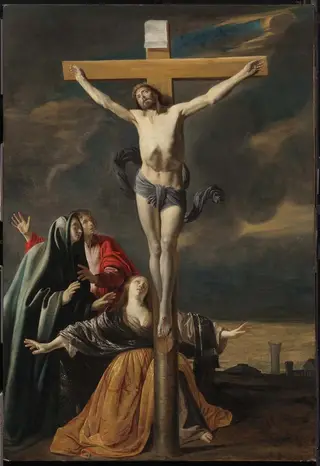
Mathieu Le Nain’s 1645 oil painting entitled The Entombment of Christ presents a somber scene of the burial of Jesus. Executed in the mid‑seventeenth century, the work now belongs to the collection of the Museum of Fine Arts in Boston. The composition centers on a pale, lifeless figure surrounded by mourners, set against a bleak shoreline where a ship rests under a storm‑laden sky.
Subject & Meaning
The canvas portrays the moment after Christ’s crucifixion, when his body is being laid to rest. Two women in richly coloured robes, one in red, the other in blue, support the corpse, while other figures gesture or hold cloths, expressing grief and reverence. A dark‑haired man kneels in the foreground, emphasizing the personal sorrow that accompanies the theological narrative of sacrifice.
Technique & Style
Le Nain employs a stark chiaroscuro, allowing light to strike the faces and hands of the mourners while the surrounding space remains in deep shadow. This contrast heightens the emotional intensity and draws attention to the expressions of the participants. The painter’s handling of oil creates a tactile sense of flesh and fabric, and the turbulent sky adds a dramatic atmospheric element.
History & Provenance
Completed in 1645, the work was likely commissioned for a private devotional setting, as was common for religious canvases of the period. It entered the Museum of Fine Arts, Boston, through a 20th‑century acquisition, where it has been displayed as part of the museum’s French Baroque holdings, illustrating the Le Nain brothers’ contribution to French religious art.
Context
In mid‑17th‑century France, artists such as Le Nain merged naturalistic detail with dramatic lighting to engage viewers spiritually.
The painting reflects the Counter‑Reformation emphasis on vivid, emotionally resonant depictions of Christ’s Passion. In mid‑17th‑century France, artists such as Le Nain merged naturalistic detail with dramatic lighting to engage viewers spiritually. The inclusion of a ship on a rocky coast may allude to the journey of the soul or the broader theme of pilgrimage, linking the earthly scene to a larger theological framework.
Artist & collection