Artwork
Mary with the child, Saint Jerome, Anthony of Padua and two angels
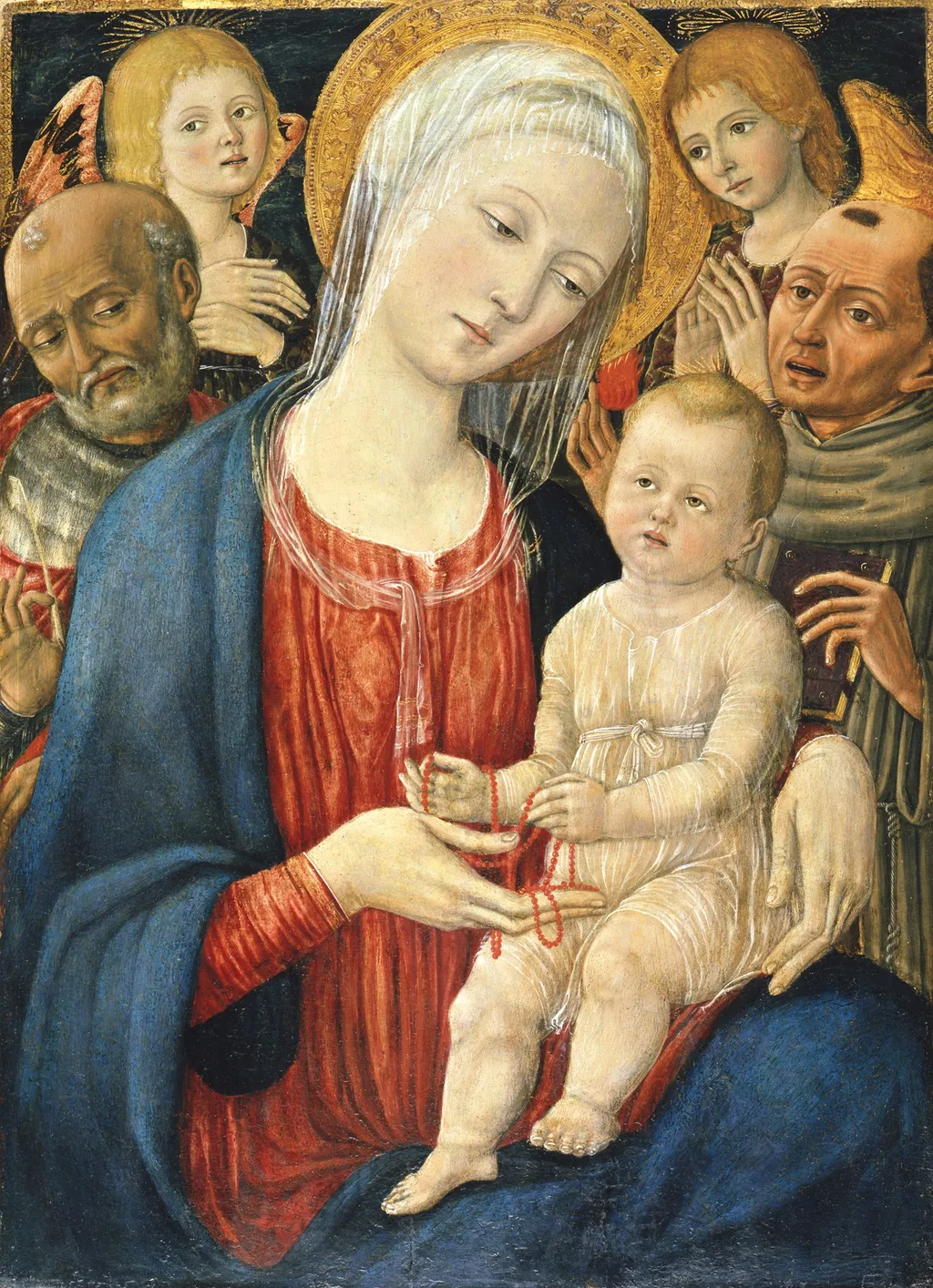
Mary with the child, Saint Jerome, Anthony of Padua and two angels is a paint painting by the Sienese School artist Matteo di Giovanni. It dates from 1330 and is held in the collection of the Gemäldegalerie Berlin.
About this work
Overview
The work is held in the Gemäldegalerie, Berlin, and represents a significant example of late fifteenth-century Sienese devotional painting.
Mary with the child, Saint Jerome, Anthony of Padua and two angels is a religious painting by the Sienese artist Matteo di Giovanni di Bartolo (circa 1430-1497), executed in tempera on a poplar panel. The work is held in the Gemäldegalerie, Berlin, and represents a significant example of late fifteenth-century Sienese devotional painting. Matteo di Giovanni, one of the leading painters of his native city during the decades following the death of Sano di Pietro, produced numerous altarpieces and private devotional panels characterized by their refined technique and traditional gold-ground aesthetic. This panel exemplifies his ability to balance naturalistic figure modeling with the decorative conventions of the Sienese school.
Subject & Meaning
The painting depicts the Virgin Mary seated with the Christ Child on her lap, flanked by four attendant figures. To the left stands Saint Jerome, identifiable by his balding head, gray beard, and red garment, his gaze directed downward in contemplation. To the right appears Saint Anthony of Padua, tonsured and clad in a gray Franciscan habit, holding a small book and raising a hand to his face in a gesture of reverence or scholarly reflection. Behind these two saints, two blond angels with golden halos occupy the background; one clasps hands together while the other places a hand near the cheek in attitudes of adoration. The Christ Child, dressed in white, holds a string of red beads, an attribute that may allude to prayer or the rosary. The Virgin wears her traditional color scheme of red dress and blue mantle, with a translucent white veil over her pale hair and a large tooled golden halo. The composition emphasizes the sacred conversation between earthly and heavenly realms, with the saints and angels bearing witness to the divine motherhood of Mary. The pairing of Jerome and Anthony of Padua, both known for their writings and preaching on Mary's virginity, creates a theological framework that underscores the doctrinal significance of the scene.
Technique & Style
The work is executed in tempera on poplar panel, a support typical of Sienese panel painting. The surface displays fine craquelure and a smooth, matte finish characteristic of the egg tempera technique. The paint application is precise, with delicate linear details in the drapery folds and facial features. The palette is dominated by deep blue, vermillion red, white, and gold, with light falling evenly across the figures to create soft modeling. The dark background causes the figures to project forward, creating a shallow but clearly defined pictorial space. A decorative gold border runs along the upper edge, preserving the ornamental tradition of the Sienese gold ground even as the artist employs more naturalistic figure modeling. The overlapping spatial arrangement of the figures and their naturalistic proportions demonstrate Matteo di Giovanni's engagement with Renaissance developments in pictorial space, while the overall decorative effect remains rooted in local Sienese conventions. The handling of the translucent veil and the tooled halo shows particular technical refinement.
History & Provenance
Specific details of the commission and early ownership of this panel remain undocumented in the available sources. The painting is currently located in the Gemäldegalerie, Berlin, having been accessioned into that collection. Its provenance prior to its arrival in Berlin has not been established in the provided sources. The work has not been the subject of extensive published exhibition history in the sources consulted. A related composition by Matteo di Giovanni, titled Madonna and Child with Saints and Angels and featuring Saints Jerome and Bernardino of Siena, was acquired by Henry Walters in 1925 and is now in the Walters Art Museum, Baltimore, suggesting that the artist explored this devotional format in multiple variants. Another comparable panel, Madonna and Child with Saints Jerome and Mary Magdalen, is in the collection of the Metropolitan Museum of Art, New York, though this latter work differs in its saintly attendants.
Context
Matteo di Giovanni was active in Siena during a period of significant artistic transition, working from circa 1430 until his death in 1497. His career spanned the period when Florentine innovations in perspective and naturalism were increasingly influencing painters throughout central Italy, yet the Sienese school maintained a distinctive attachment to decorative elegance and the gold-ground tradition. Matteo's work exemplifies this negotiation between old and new: his figures show naturalistic modeling and spatial awareness, yet his compositions frequently retain the formal clarity and ornamental surfaces associated with earlier Sienese painting. The subject of the Madonna and Child with attendant saints was a staple of Sienese devotional art, produced for both altarpieces and private devotion. The narrow vertical format of this panel suggests it may have been intended for private contemplation rather than public liturgical display. Critical reception of Matteo di Giovanni has generally positioned him as a conservative but accomplished practitioner who preserved Sienese artistic identity in the face of Florentine dominance. His works are now distributed across major European and American collections, attesting to their sustained appreciation by collectors and museums.
Own this work as a print
Artist & collection

Artist
A 15th-century Italian painter from the Renaissance era, Matteo di Giovanni’s altarpieces glow with soft golds and deep reds.

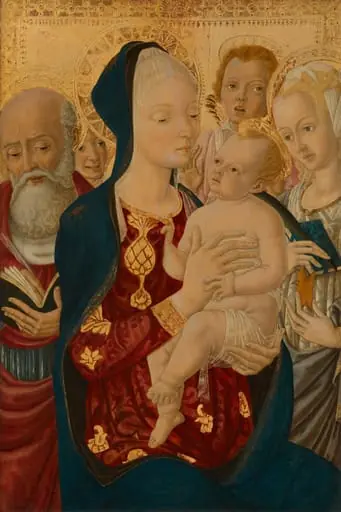 Madonna and Child with Saint Jerome, Saint Catherine of Alexandria, and Angels
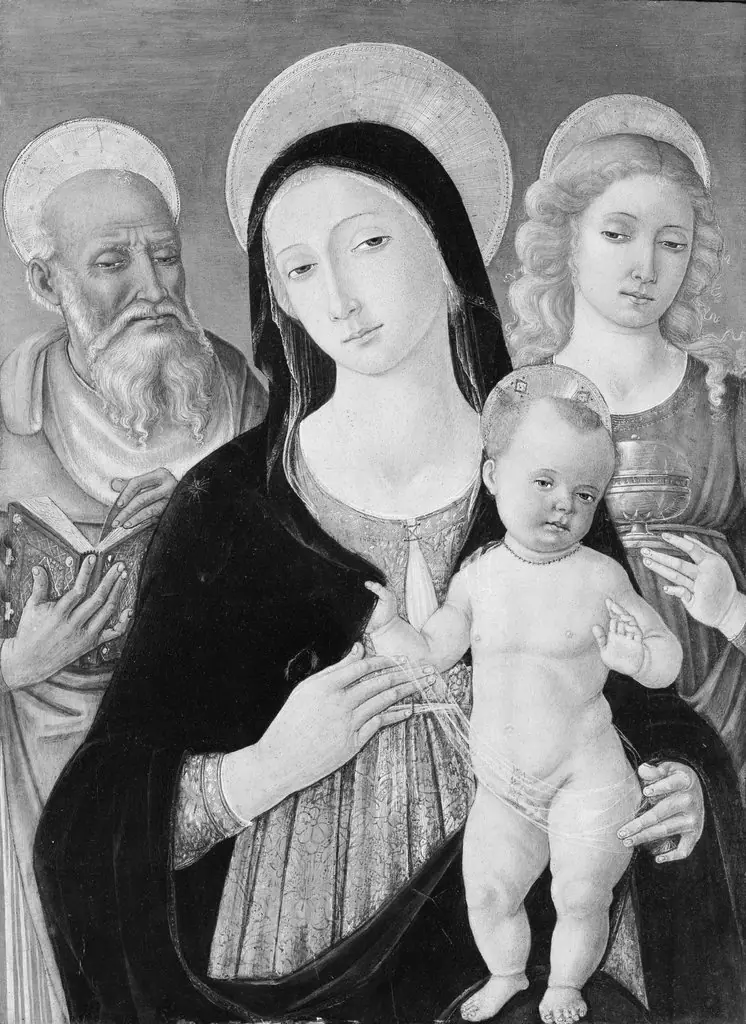 Madonna and Child with Saints Jerome and Mary Magdalen
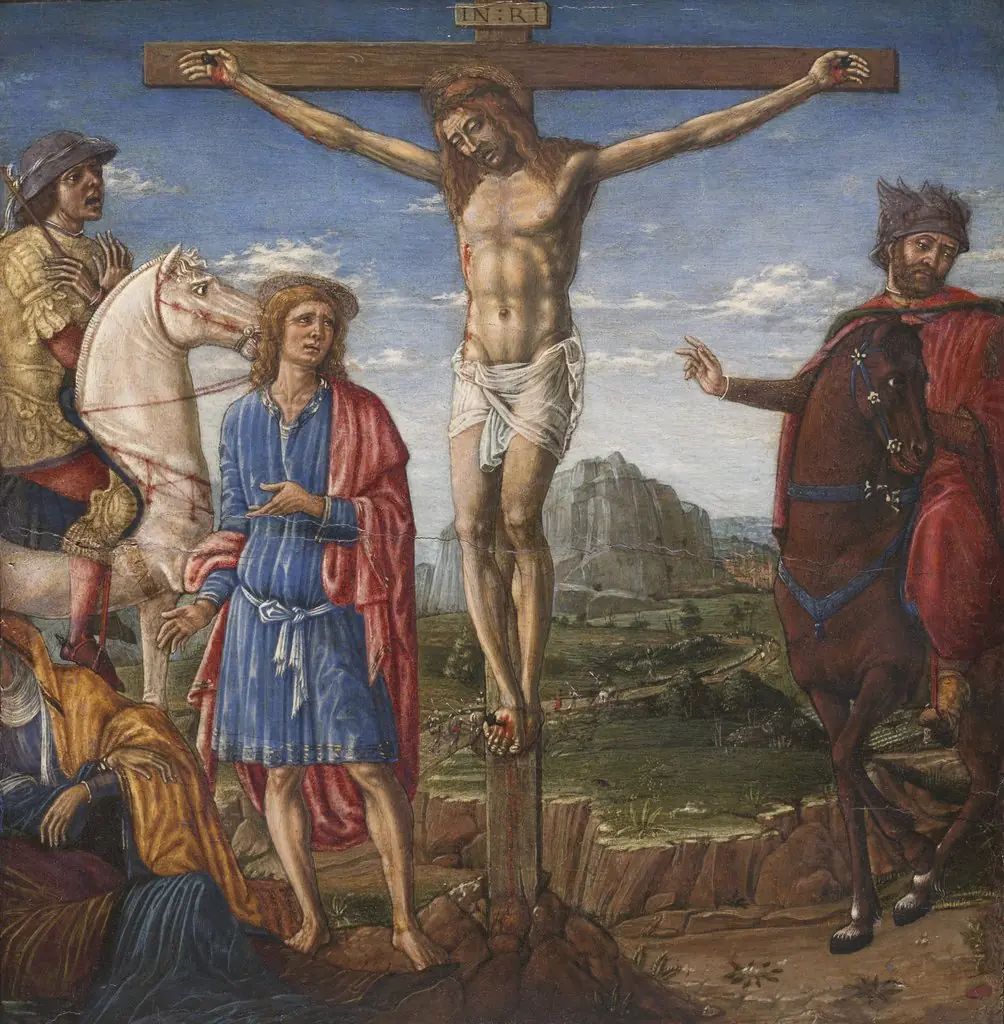 The Crucifixion
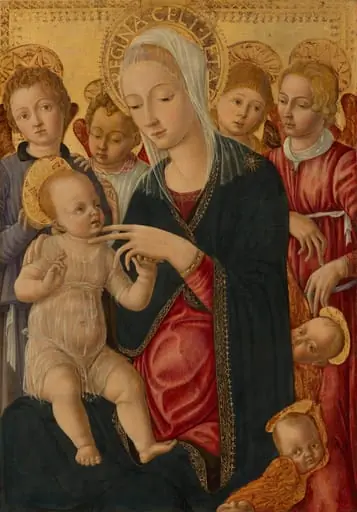 Madonna and Child with Angels and Cherubim
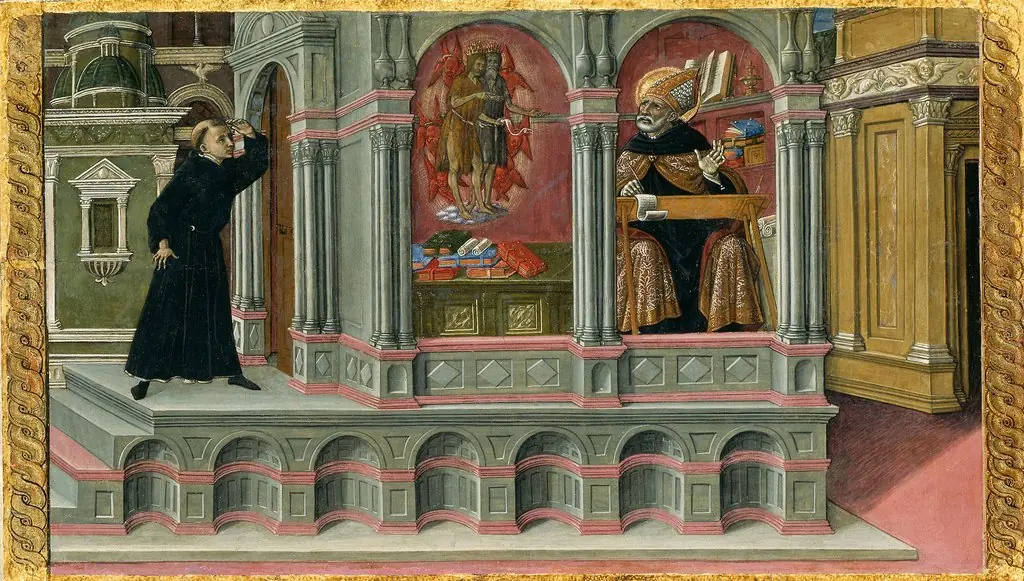 Saint Augustine's Vision of Saints Jerome and John the Baptist
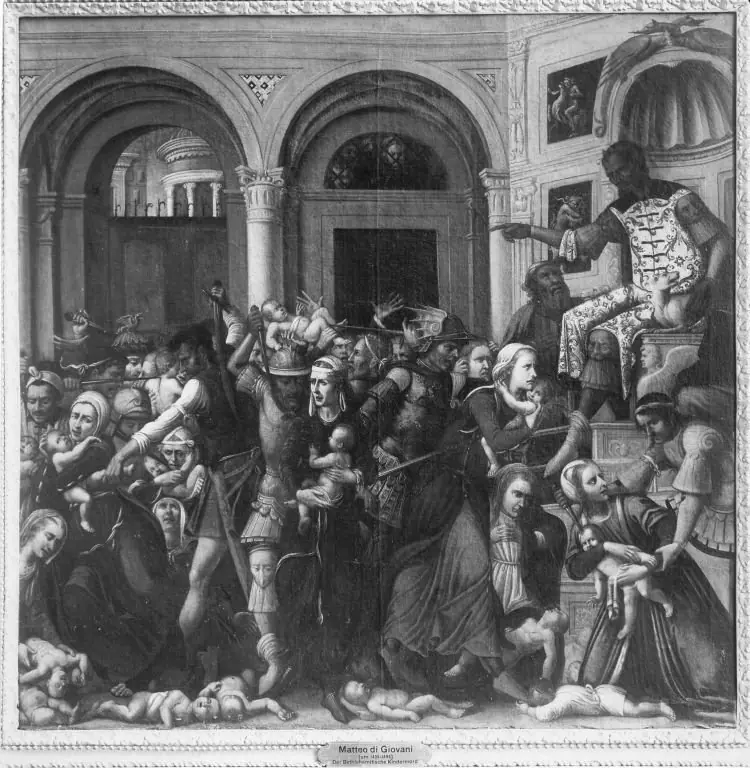 massacre of the Innocents
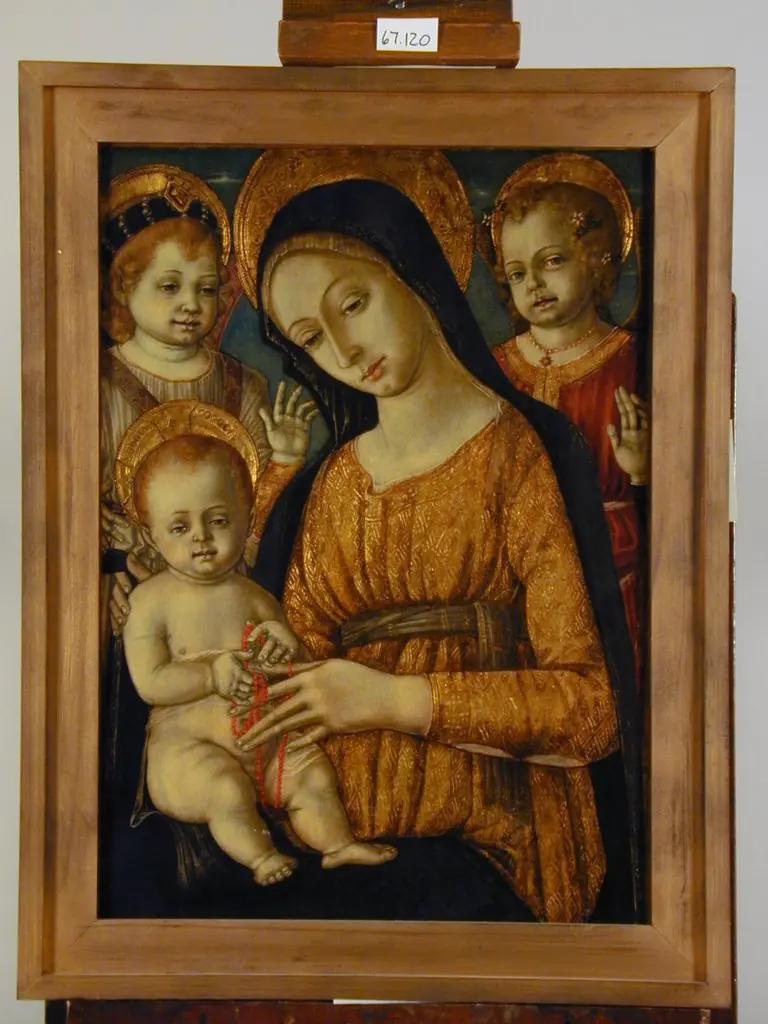 Madonna and Child with Angels
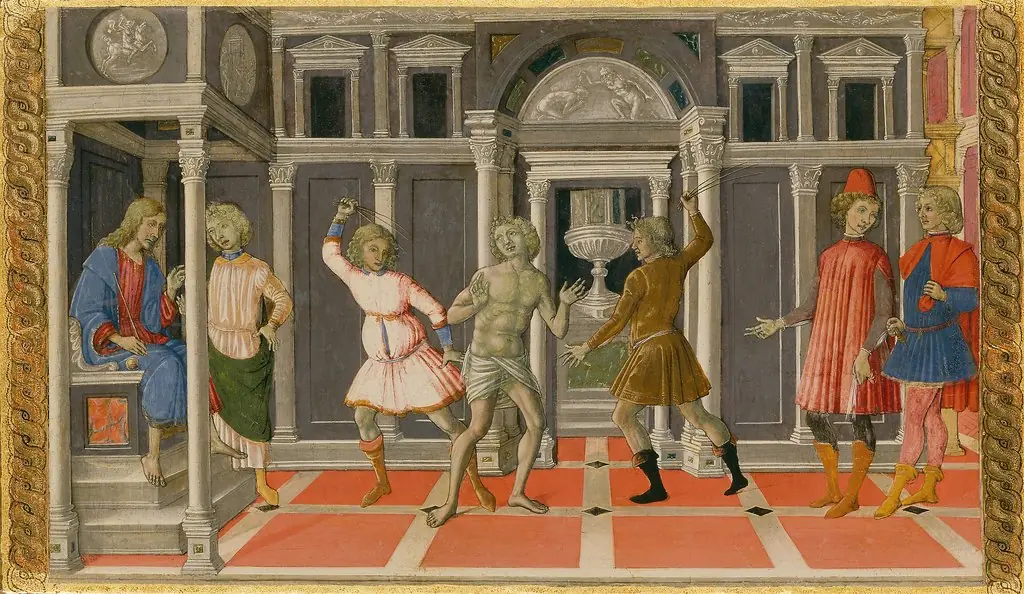 The Dream of Saint Jerome
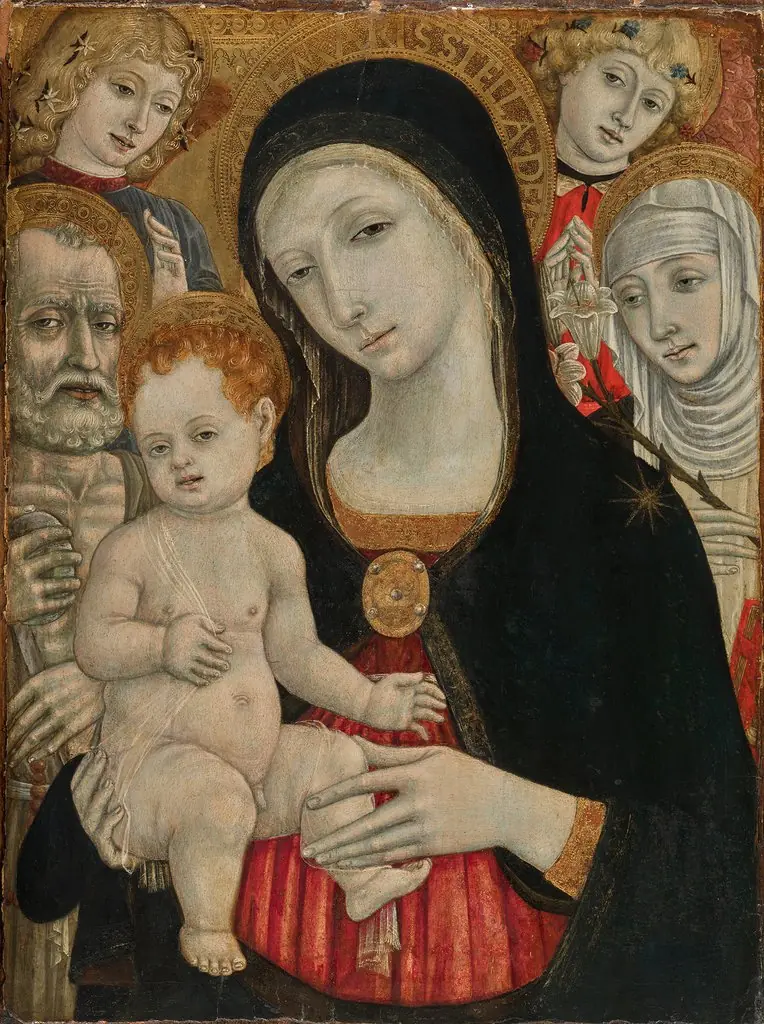
- Mary with the Child, Saint Jerome, Catherine of Siena and two angels
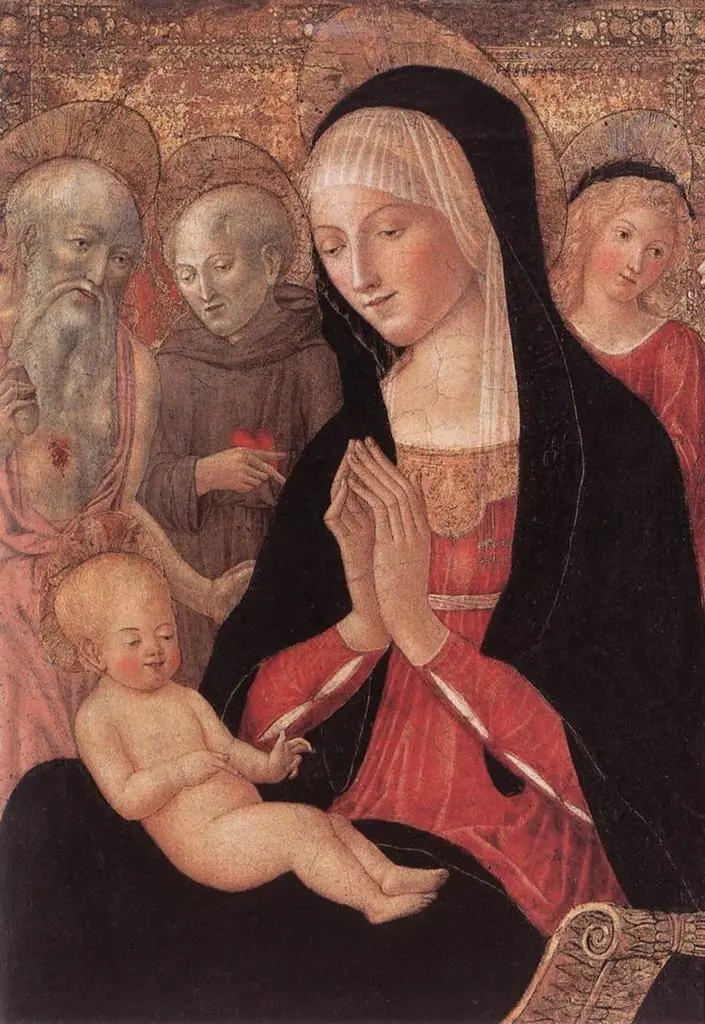 Virgin and Child with Saint Jerome, Saint Anthony of Padua and Two Angels
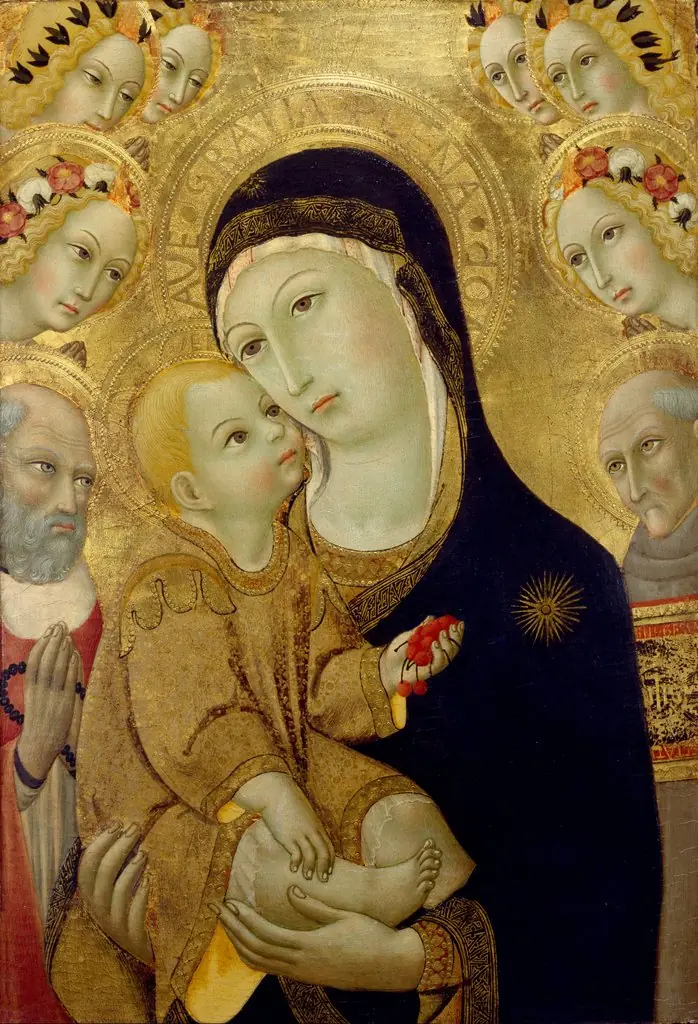 Virgin and Child with Saints Jerome and Bernardino of Siena and Six Angels
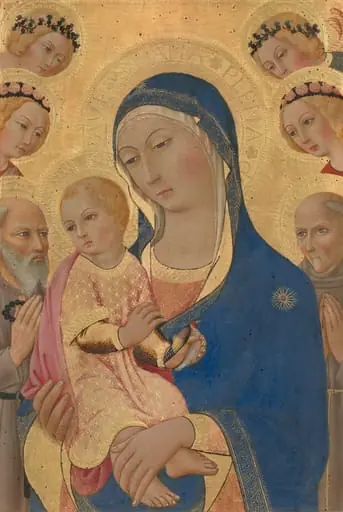 Madonna and Child with Saint Jerome, Saint Bernardino, and Angels
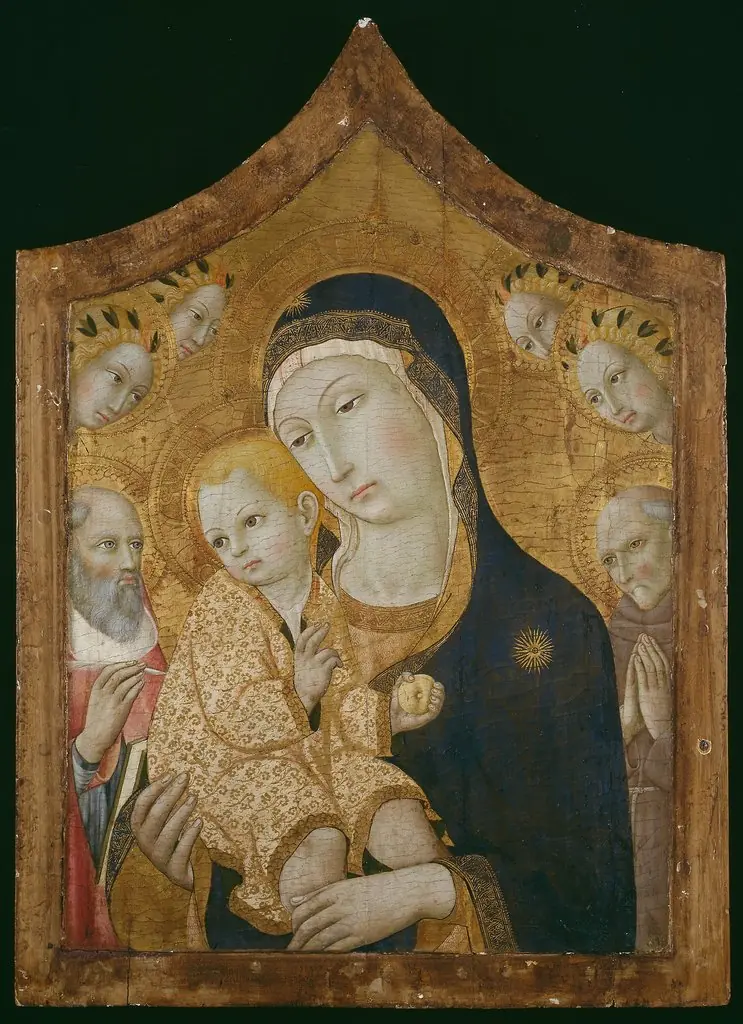 Virgin and Child with Saints Jerome, Bernardino of Siena, and Angels
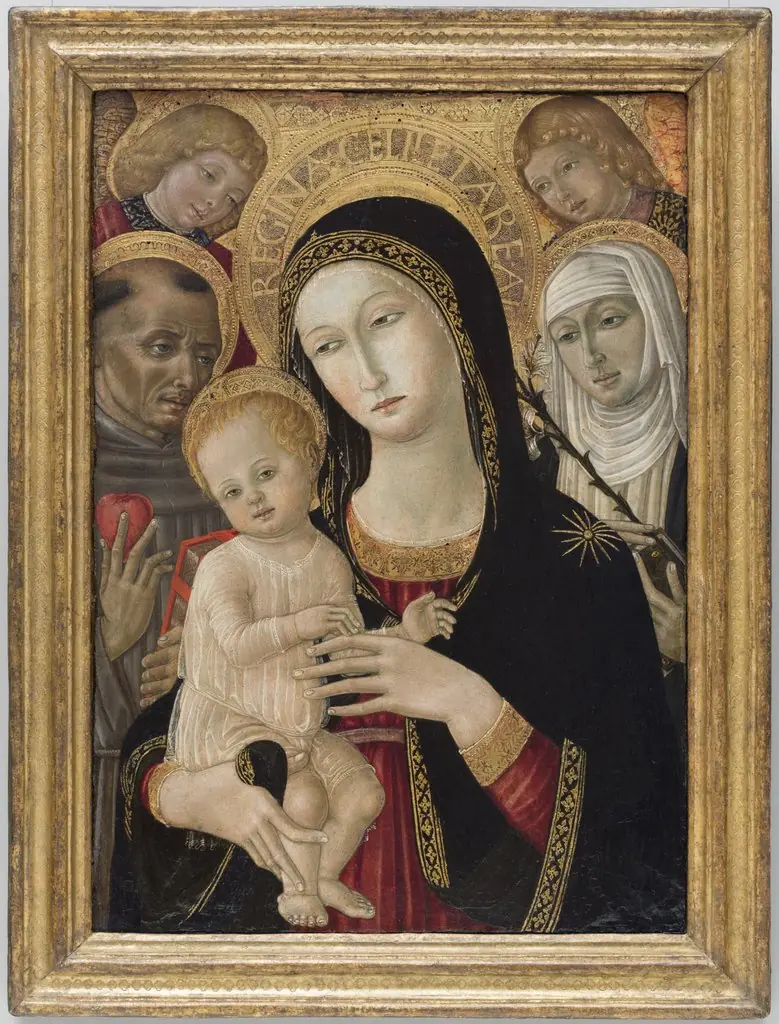 Madonna and Child with St. Catherine of Siena, Saint Anthony of Padua and Angels
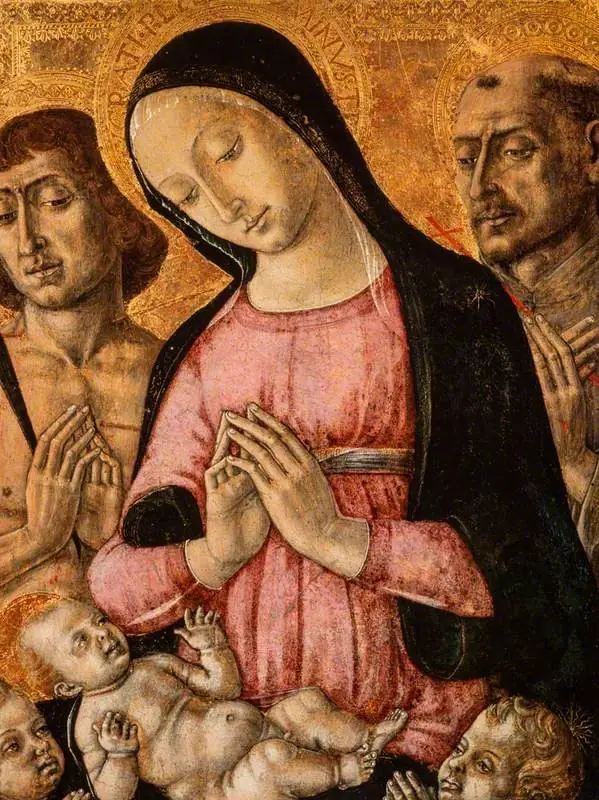 The Virgin and Child with Saint Sebastian, Saint Francis and Angels