Artwork
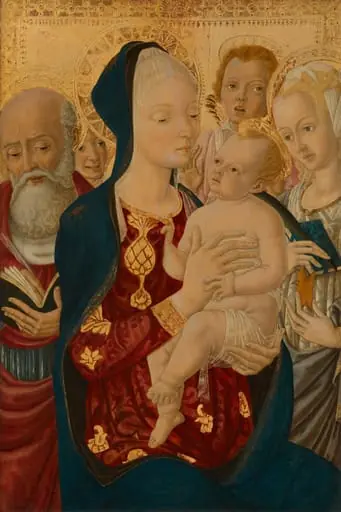
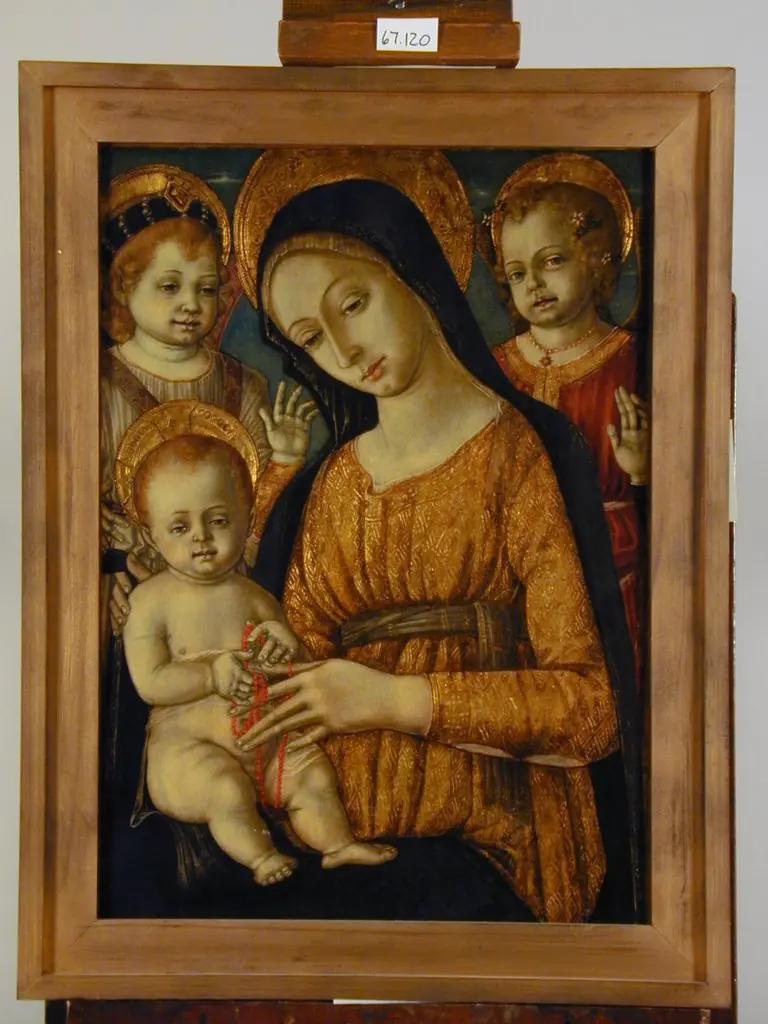
Madonna and Child with Angels and Cherubim
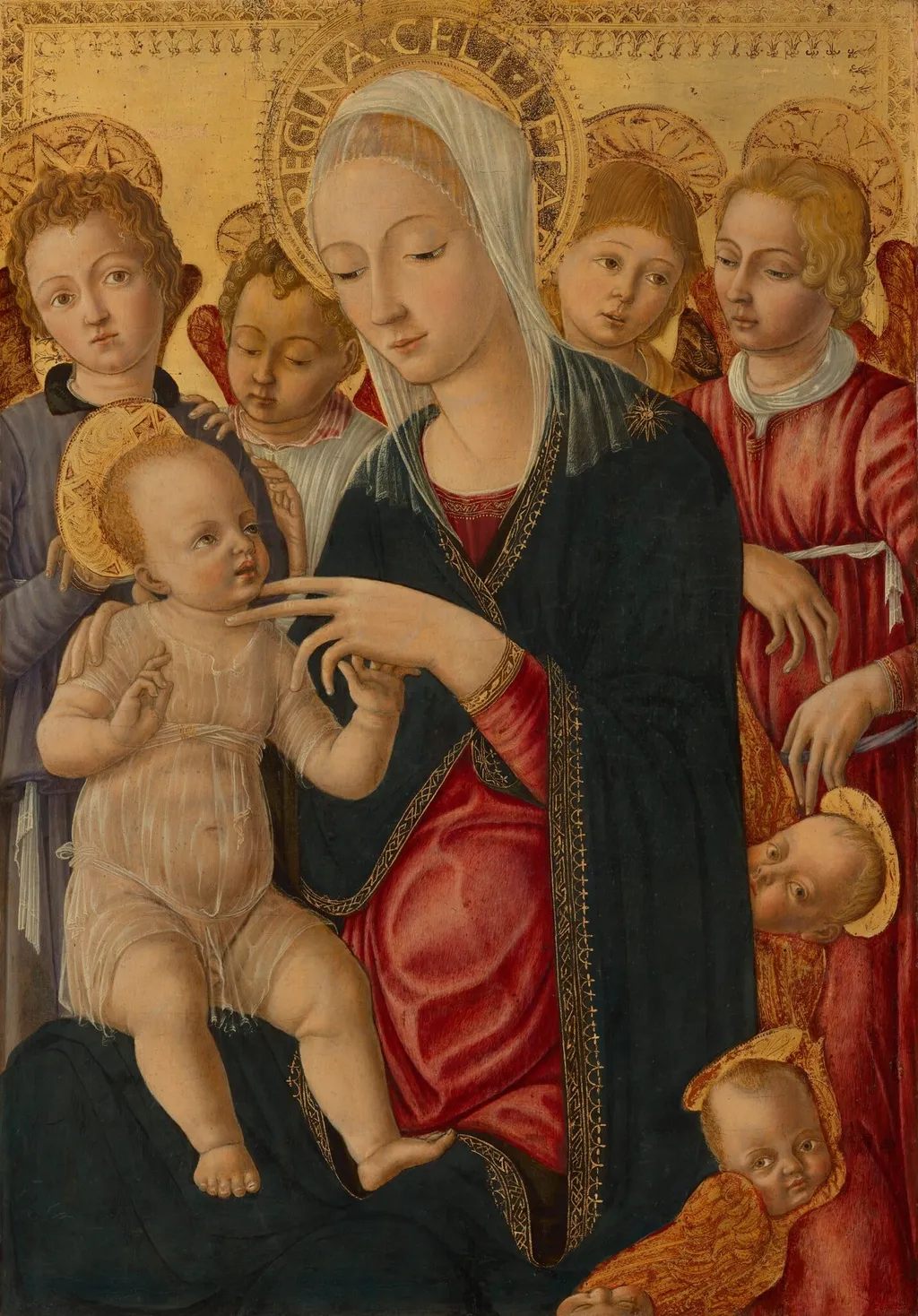
Madonna and Child with Angels and Cherubim is a tempera painting by the Early Renaissance artist Matteo di Giovanni. It dates from 1462 and is held in the collection of the National Gallery of Art.
- Inscription
- Inscribed:upper center on the Madonna's halo: REGINA CELI LETA[RE ALLELUIA] (O Queen of Heaven, rejoice!)
About this work
Subject & Meaning
The presence of multiple angels underscores a harmonious heavenly court and reinforces the theological theme of salvation embraced by both mother and child.
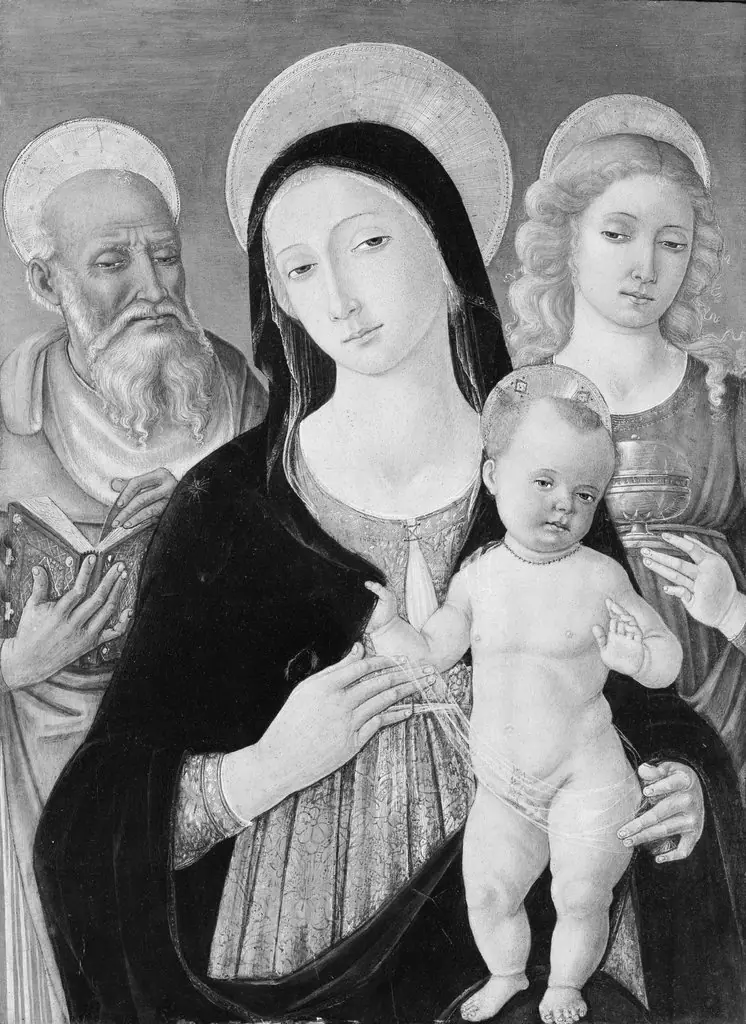
The painting depicts the Virgin Mary cradling the infant Christ, flanked by angels and cherubim in a celestial gathering. In Renaissance iconography this arrangement emphasizes the divine maternity, the humanity of Christ, and the intercessory role of heavenly beings who accompany the holy family. The presence of multiple angels underscores a harmonious heavenly court and reinforces the theological theme of salvation embraced by both mother and child.
Stylistically the work combines rich tempera tones with delicate gold leaf, reflecting devotional practices of the 15th‑century Italian church. Its iconographic program conveys the theological message that the incarnate Christ is welcomed by the heavenly host, a visual affirmation of Christian redemption.
Technique & Style
The work is painted in tempera on a poplar panel, the support commonly used for early Italian devotional images. It was created around 1460, placing it in the Quattrocento period of Italian art. The subject depicts the Madonna and Child with angels and cherubim, a traditional religious composition.
The panel passed through the Ashburnham family, was sold to Duveen Brothers in 1919, and was acquired by the A.W. Mellon Trust in 1936 before being gifted to the National Gallery of Art in 1937.
History & Provenance
The painting, executed in tempera on a poplar panel, is dated to circa 1460. Its earliest known ownership traces to the Ashburnham family: possibly George Ashburnham, 3rd Earl of Ashburnham, then passing by inheritance to his son Bertram, 4th Earl, and subsequently to Bertram, 5th Earl. After the 5th Earl’s death, the work went to his daughter, Lady Mary Catherine Charlotte Ashburnham, before entering the London dealer Robert Langton Douglas’s stock.
It was sold in June 1919 to Duveen Brothers, acquired on 15 December 1936 by the A.W. Mellon Educational and Charitable Trust, and gifted to the National Gallery of Art in 1937.
The painting is held by the National Gallery of Art, Washington, D.C., as part of the Andrew W. Mellon Collection, with accession number 1937.1.2.
Its exhibition history begins with its sale in June 1919 to Duveen Brothers, who later facilitated its acquisition by The A.W. Mellon Educational and Charitable Trust in December 1936. It entered the National Gallery of Art in 1937 as a gift from the Mellon Trust.
Overview
Painted around 1462 by Matteo di Giovanni, Madonna and Child with Angels and Cherubim is a religious work created using tempera on a poplar panel. The composition centers on the Virgin Mary holding the infant Jesus, who is surrounded by six angelic figures. This piece exemplifies 15th-century Italian devotional art, presenting a tender and reverent depiction of a sacred theme.
Own this work as a print
Artist & collection

Artist
A 15th-century Italian painter from the Renaissance era, Matteo di Giovanni’s altarpieces glow with soft golds and deep reds.