Artwork
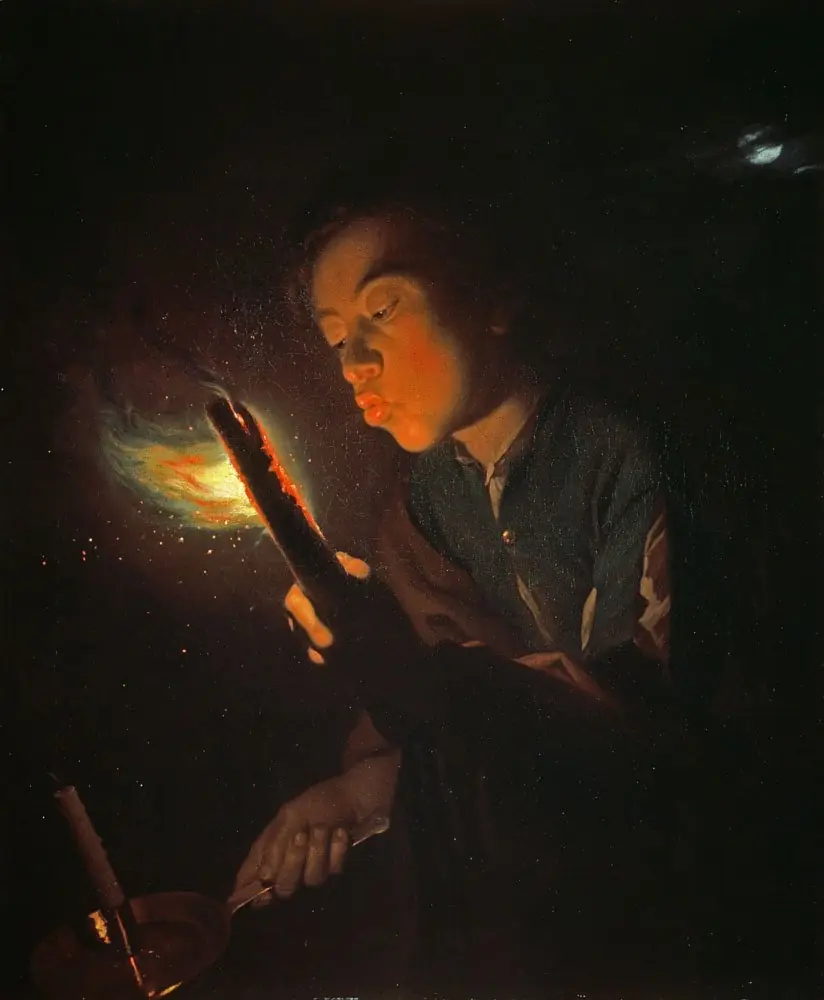
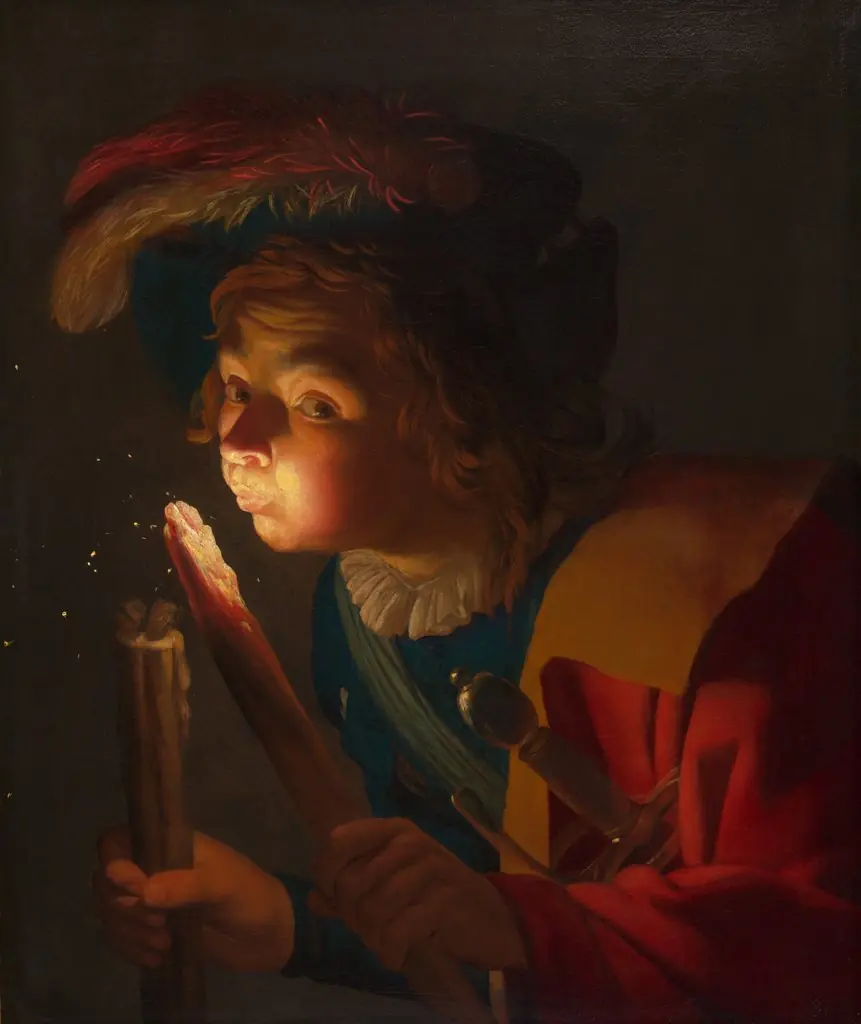
Boy lighting a candle from a wick
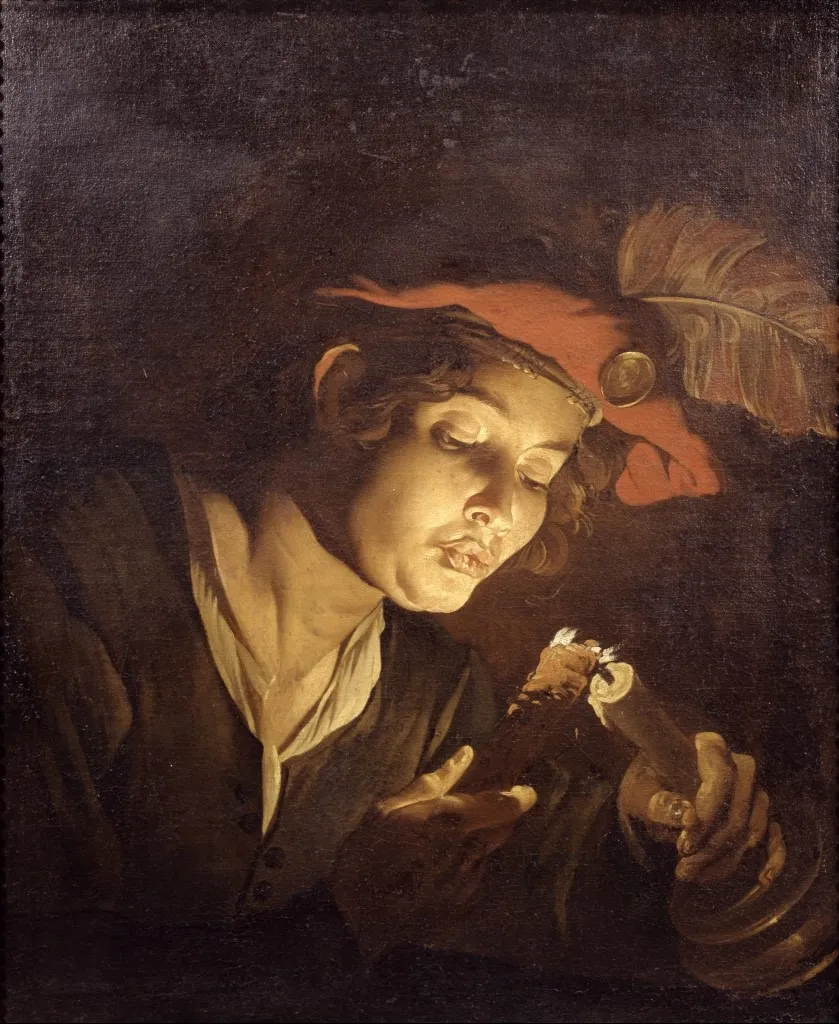
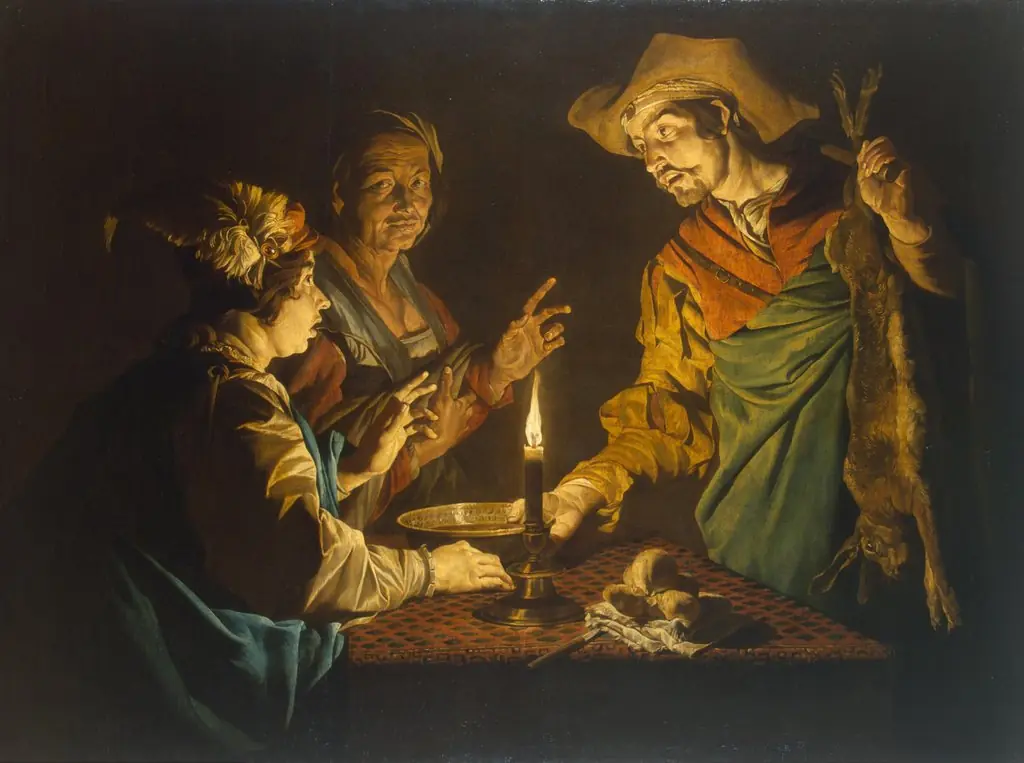
Boy lighting a candle from a wick is an oil painting by the Caravaggisti artist Matthias Stom. It is held in the collection of the Accademia Carrara. Created around 1700, this oil painting portrays a young figure carefully lighting a candle from a wick.
About this work
Overview
Created around 1700, this oil painting portrays a young figure carefully lighting a candle from a wick. The composition is dominated by a dark background that intensifies the glow of the flame, drawing attention to the illuminated face and hands. The work belongs to the collection of the Accademia Carrara, reflecting the artist’s engagement with dramatic lighting effects.
Subject & Meaning
The scene captures an intimate moment in which a youth, assisted by an older companion, focuses on the act of igniting a candle. The concentration evident in the boy’s gaze and the steady grip on the candle suggest themes of vigilance and the transition from darkness to light, resonating with the moral undertones common in early‑modern genre paintings.
Technique & Style
Employing a pronounced chiaroscuro, the painter contrasts deep shadows with the bright, localized illumination of the candle. The oil medium allows for a textured surface that enhances the softness of flesh tones against the stark darkness. The handling of light recalls the tenebristic approach of Caravaggio’s followers, emphasizing volume and three‑dimensionality through sharp tonal shifts.
History & Provenance
The artist, a Dutch or Flemish painter who spent much of his career in Italy, was part of the Northern Caravaggisti, a group that adapted Caravaggio’s dramatic lighting to their own subjects. Though primarily known for biblical scenes, this work illustrates his occasional turn to everyday genre moments. It entered the Accademia Carrara’s holdings in the 20th century, where it remains on display.
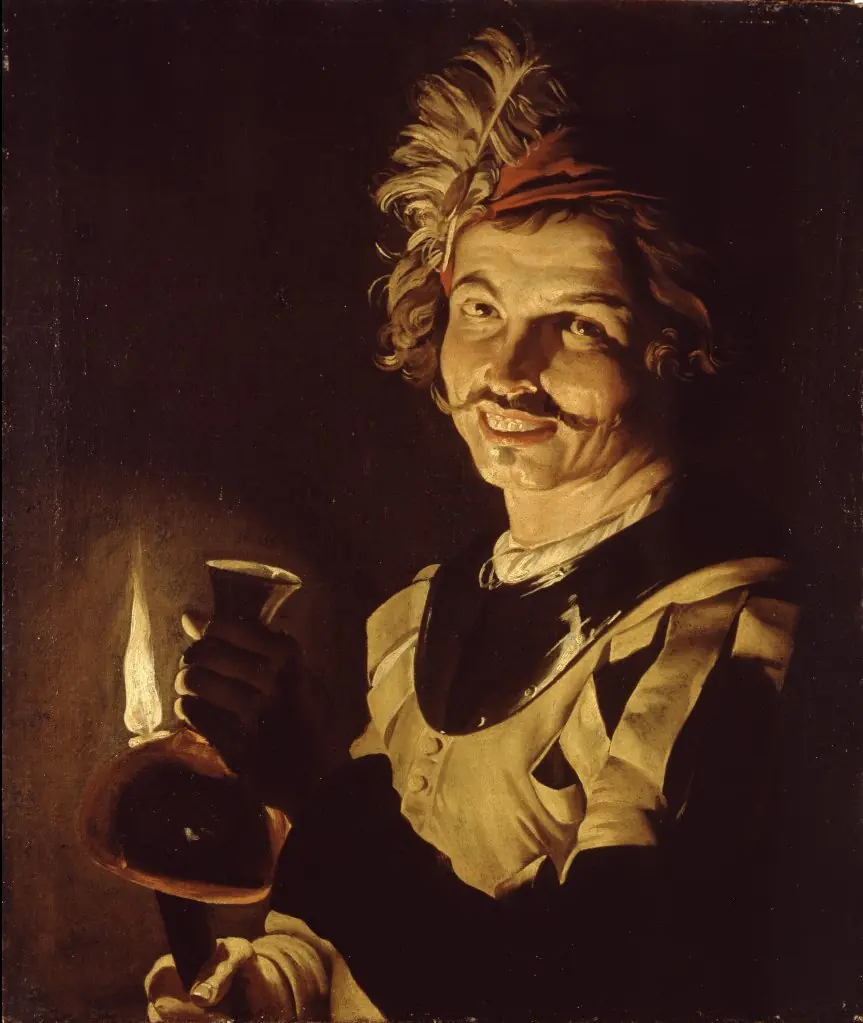
Artist & collection
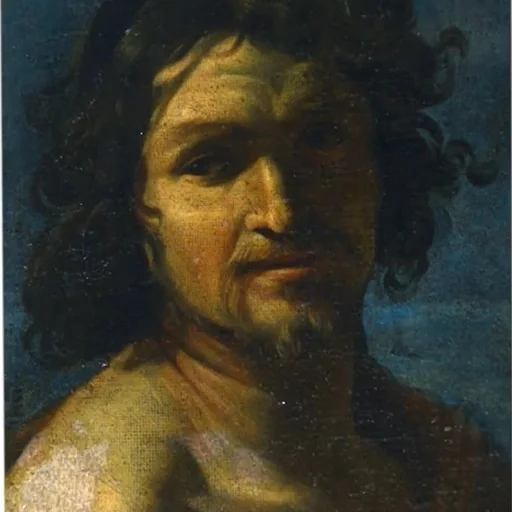
Artist
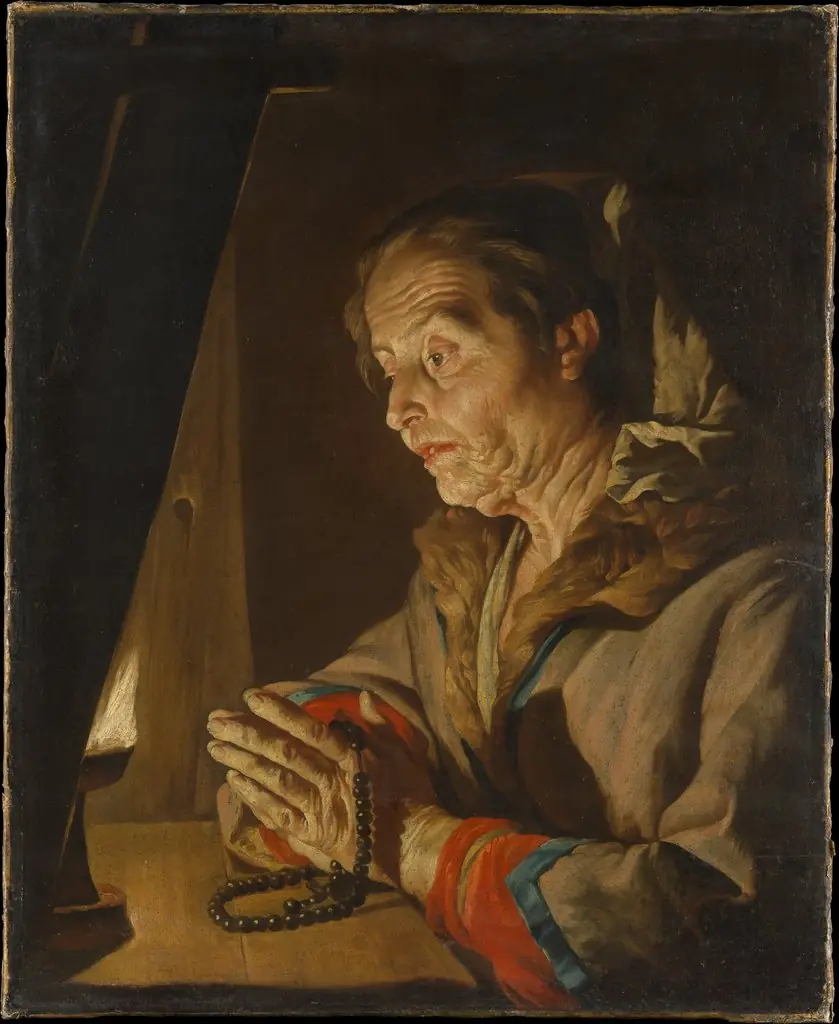
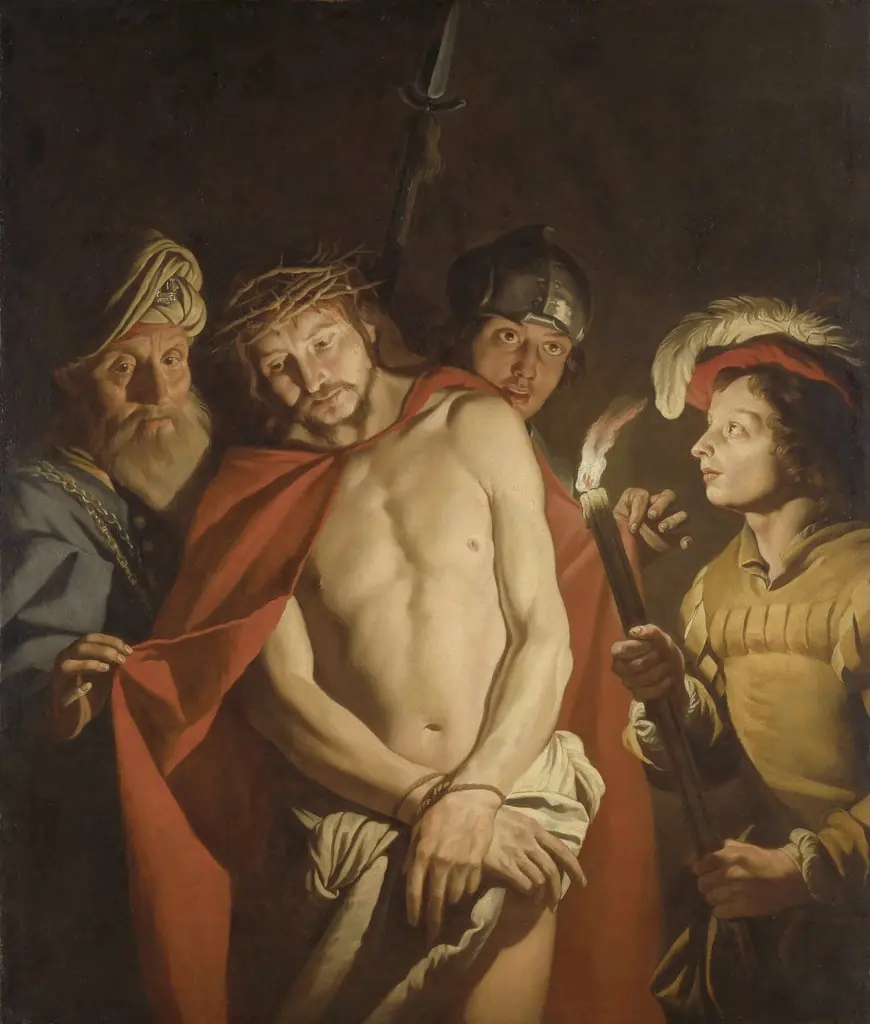
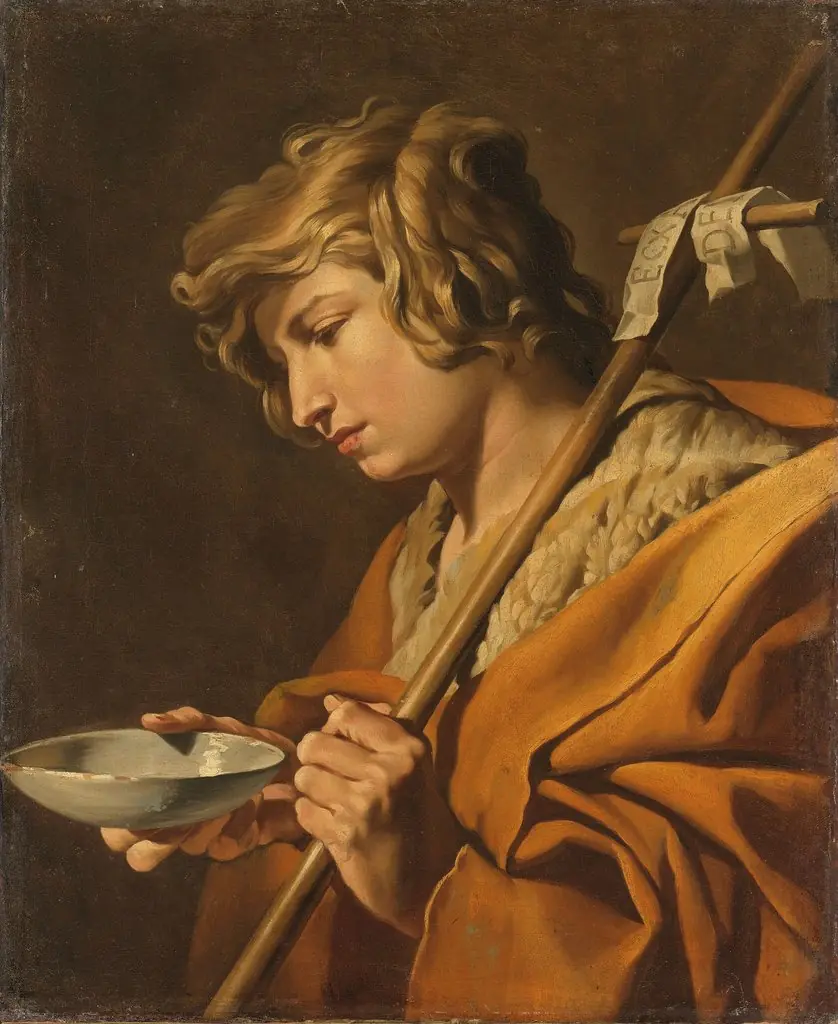
Matthias Stom or Matthias Stomer (c. 1600 – after 1652) was a Dutch, or possibly Flemish, painter who is only known for the works he produced during his residence in Italy. He was influenced by the work of non-Italian…