Artwork
The Incredulity of Saint Thomas
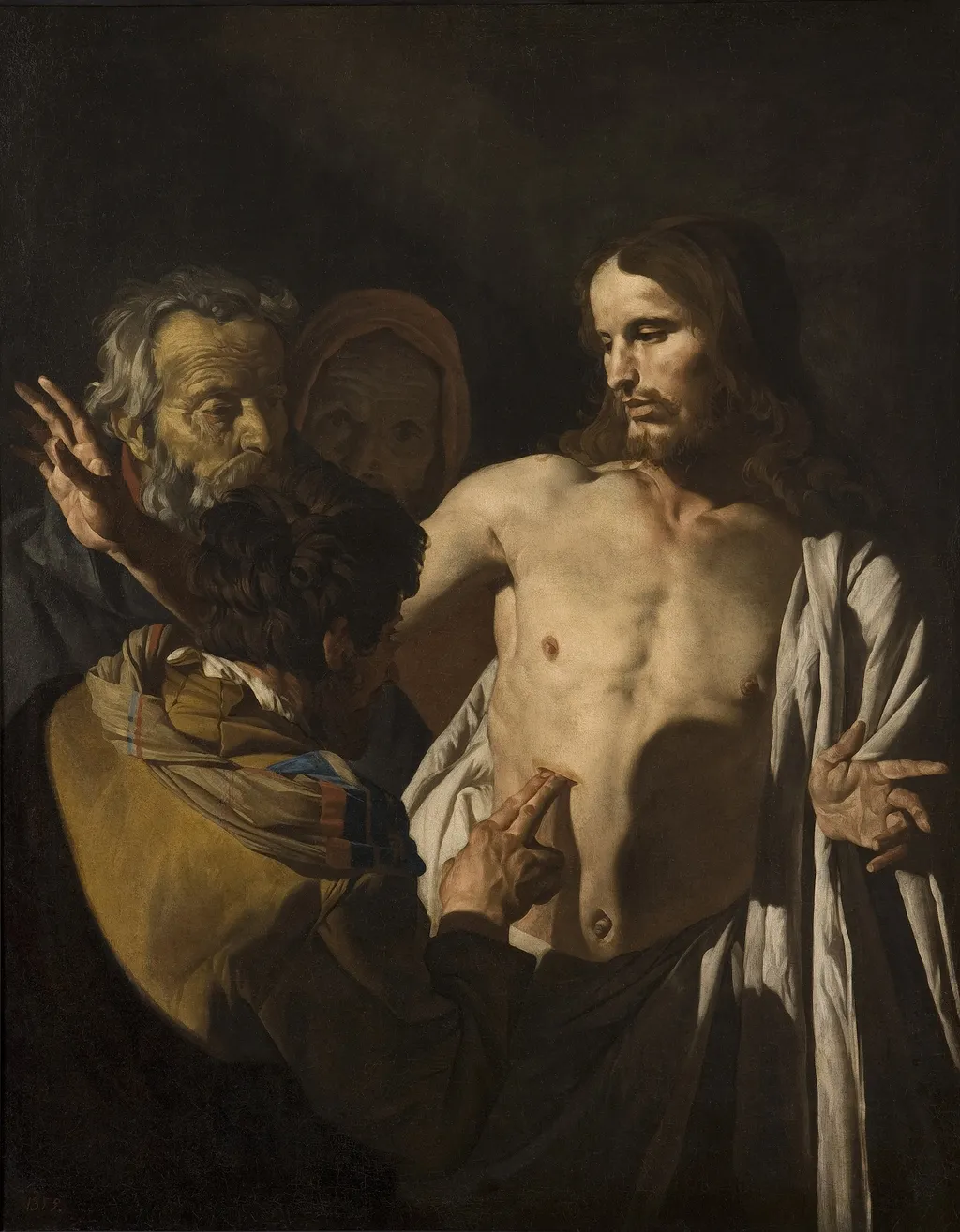
The Incredulity of Saint Thomas is an oil painting by the Early Baroque Italian artist Matthias Stom. It dates from 1641 and is held in the collection of the Museo del Prado.
About this work
Matthias Stom painted The Incredulity of Saint Thomas in oil around 1640–49. The scene shows Thomas touching Jesus after the Resurrection. It hangs today in Madrid’s Museo del Prado.
Thomas doubted at first, but here he probes Jesus’ wound with his finger. Stom was a Dutch artist who worked in Italy later in life.
If you like this, look up chiaroscuro next.
Subject & Meaning
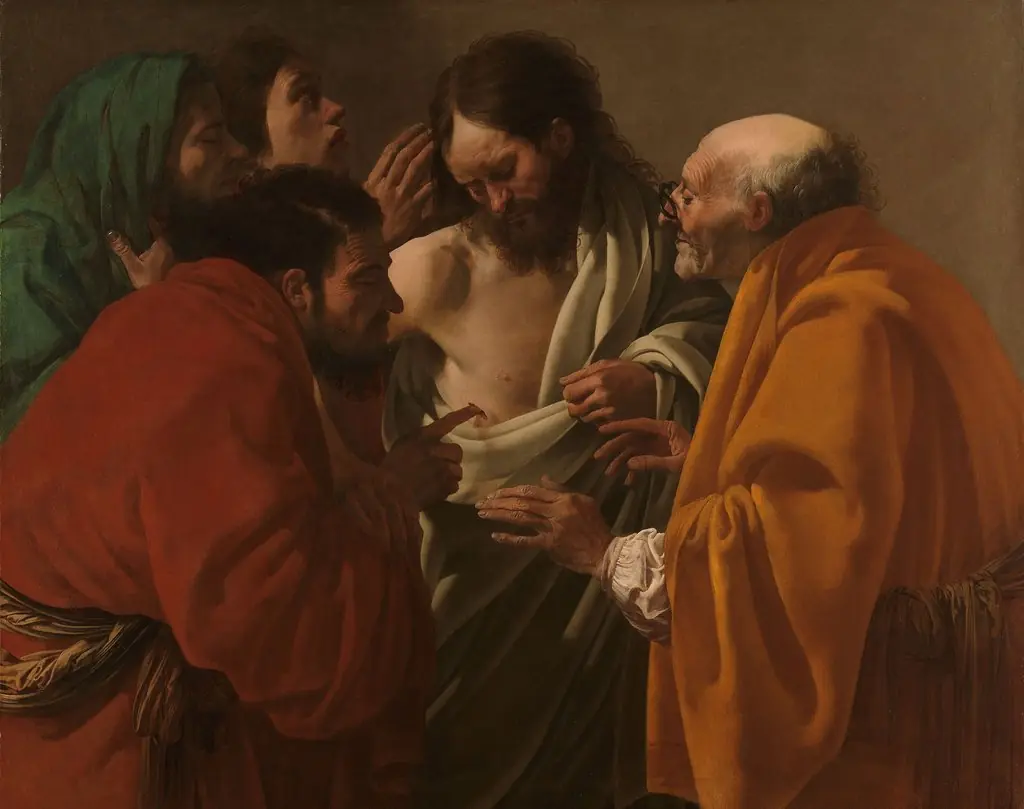
The composition focuses on the intimate interaction between the figures, with Thomas's face partially obscured as he contemplates the wound.
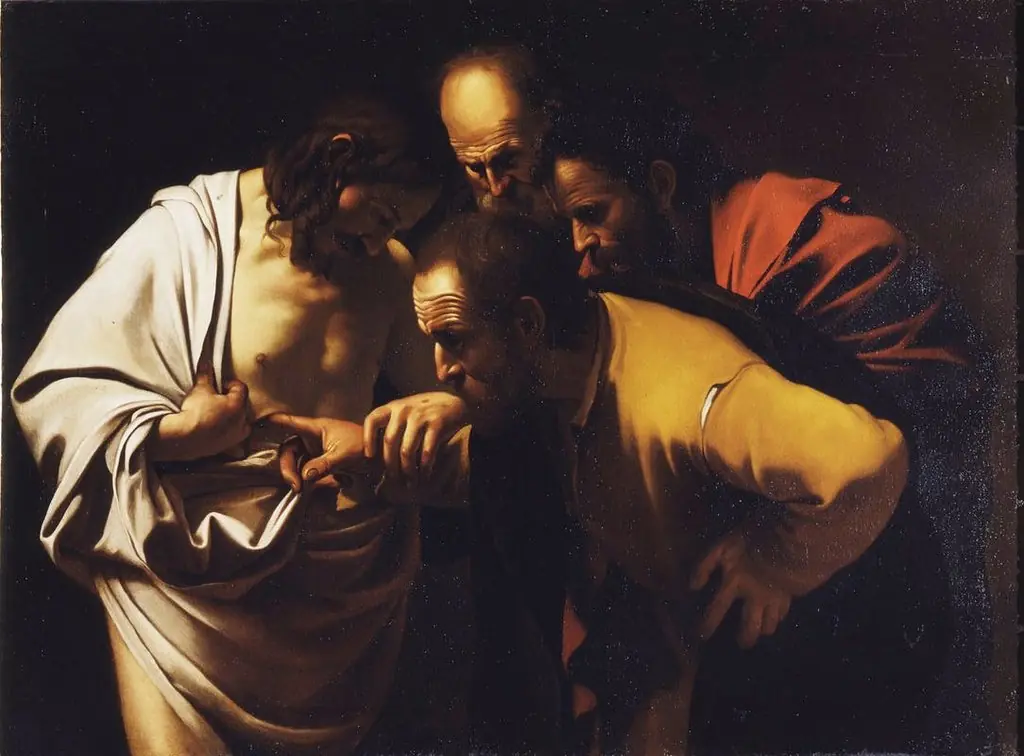
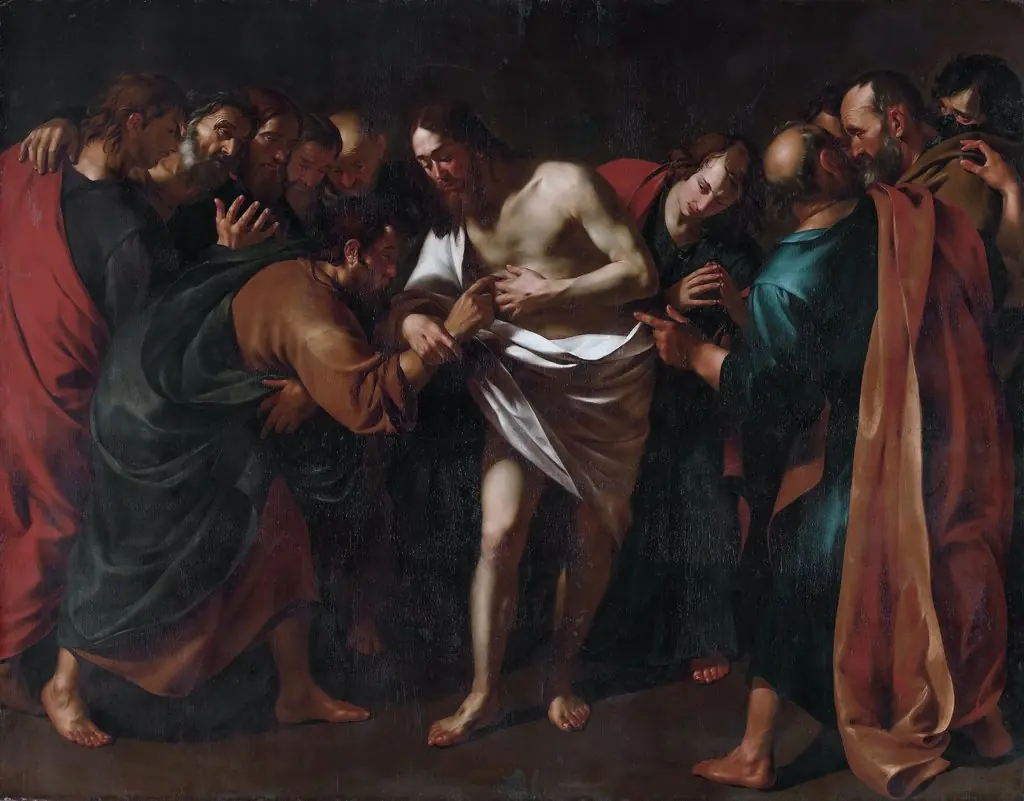
The painting depicts the biblical moment from the Gospel of John where the Apostle Thomas, skeptical of Jesus's resurrection, verifies the reality of the event by inserting his fingers into the wound in Christ's side. This scene of 'Doubting Thomas' illustrates the transition from skepticism to belief through physical contact. The composition focuses on the intimate interaction between the figures, with Thomas's face partially obscured as he contemplates the wound. Two additional elderly figures, possibly including another Apostle and a woman, observe the event from the left. The work serves as a religious exploration of faith, emphasizing the tangible evidence required to overcome doubt.
Technique & Style
The painting is executed in oil on canvas and measures 125 cm in height by 99 cm in width. Stom’s handling emphasizes chiaroscuro, with strong directional light carving the figures into sharp relief against a dark ground. The apostles are rendered with volumetric solidity, their drapery falling in heavy folds that catch the light. Thomas’s gesture, fingers probing Christ’s wound, is composed with close attention to anatomical articulation and tactile surface. The composition’s structure is anchored by the diagonal axis formed by Christ’s body and Thomas’s outstretched arm, guiding the viewer’s eye toward the moment of revelation. The subdued palette, dominated by earthy browns and ochres, is punctuated by Christ’s pale flesh and the gleam of the wound, heightening the scene’s dramatic tension.
History & Provenance
The Incredulity of Saint Thomas was painted by Matthias Stom in 1641, as recorded in internal documentation and corroborated by Wikidata.
The work first entered the written record after surviving the 1734 fire at the Royal Alcázar of Madrid, where it was initially misattributed as a copy after Guercino. By 1772 it was listed in the Royal Palace of Madrid inventories and misidentified as an autograph work by Gerard van Honthorst. The correct attribution to Stom was proposed by Arthur von Schneider and definitively restored in 1985 through a catalogue raisonné. The painting has remained in the collection of the Museo del Prado since at least 1734.
The work is held in the Museo del Prado, Madrid, as P007606.
It entered the Spanish royal collection before 1734, when it was listed among paintings saved from the fire at the Royal Alcázar of Madrid; at that time it was considered a copy after Guercino. By 1772 it was inventoried in the Royal Palace, Madrid, attributed to Gerard van Honthorst. In 1963 the attribution shifted to Hendrick ter Brugghen, and in 1985 the Prado catalogue restored the attribution to Matthias Stom.
The painting has not been the subject of major international loans in recent decades.
Context
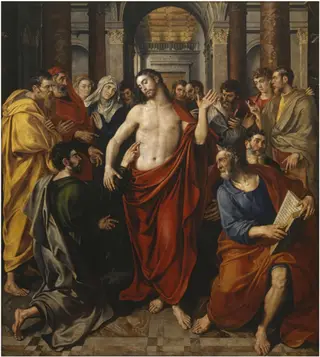
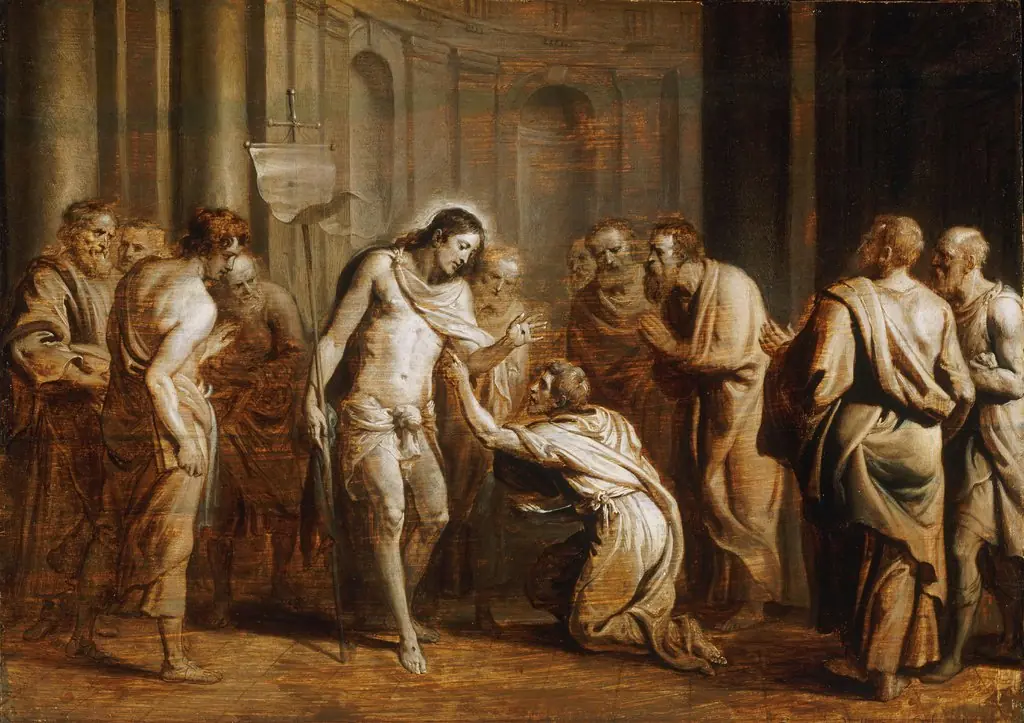
Created during Matthias Stom's residence in Sicily, *The Incredulity of Saint Thomas* reflects the artistic milieu of the Dutch Caravaggisti. Its composition draws upon Hendrick ter Brugghen's depiction of the same subject from the early 1620s and Peter Paul Rubens's 1613-1615 treatment of the theme. The work's art-historical trajectory is marked by significant attribution shifts; following the 1734 fire at the Royal Alcázar of Madrid, it was initially cataloged as a copy of a Guercino original. Later inventories misidentified it as an autograph work by Stom's teacher, Gerard van Honthorst, and subsequently as a piece by ter Brugghen. Arthur von Schneider first proposed Stom as the creator, a correction that was not fully ratified until a 1985 catalogue restored the attribution to the Dutch master.
Own this work as a print
Artist & collection
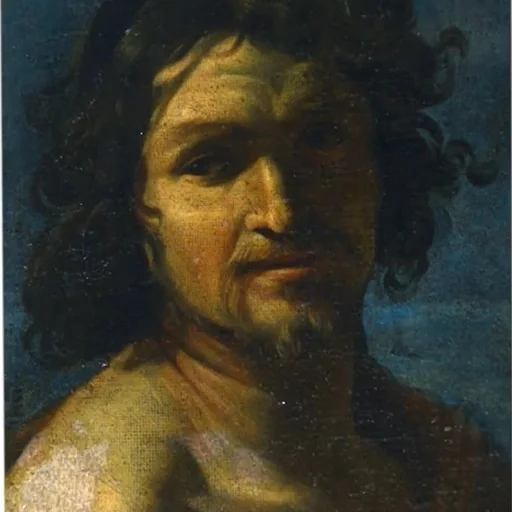
Artist
Matthias Stom or Matthias Stomer (c. 1600 – after 1652) was a Dutch, or possibly Flemish, painter who is only known for the works he produced during his residence in Italy. He was influenced by the work of non-Italian…