Artwork
Old Woman Praying
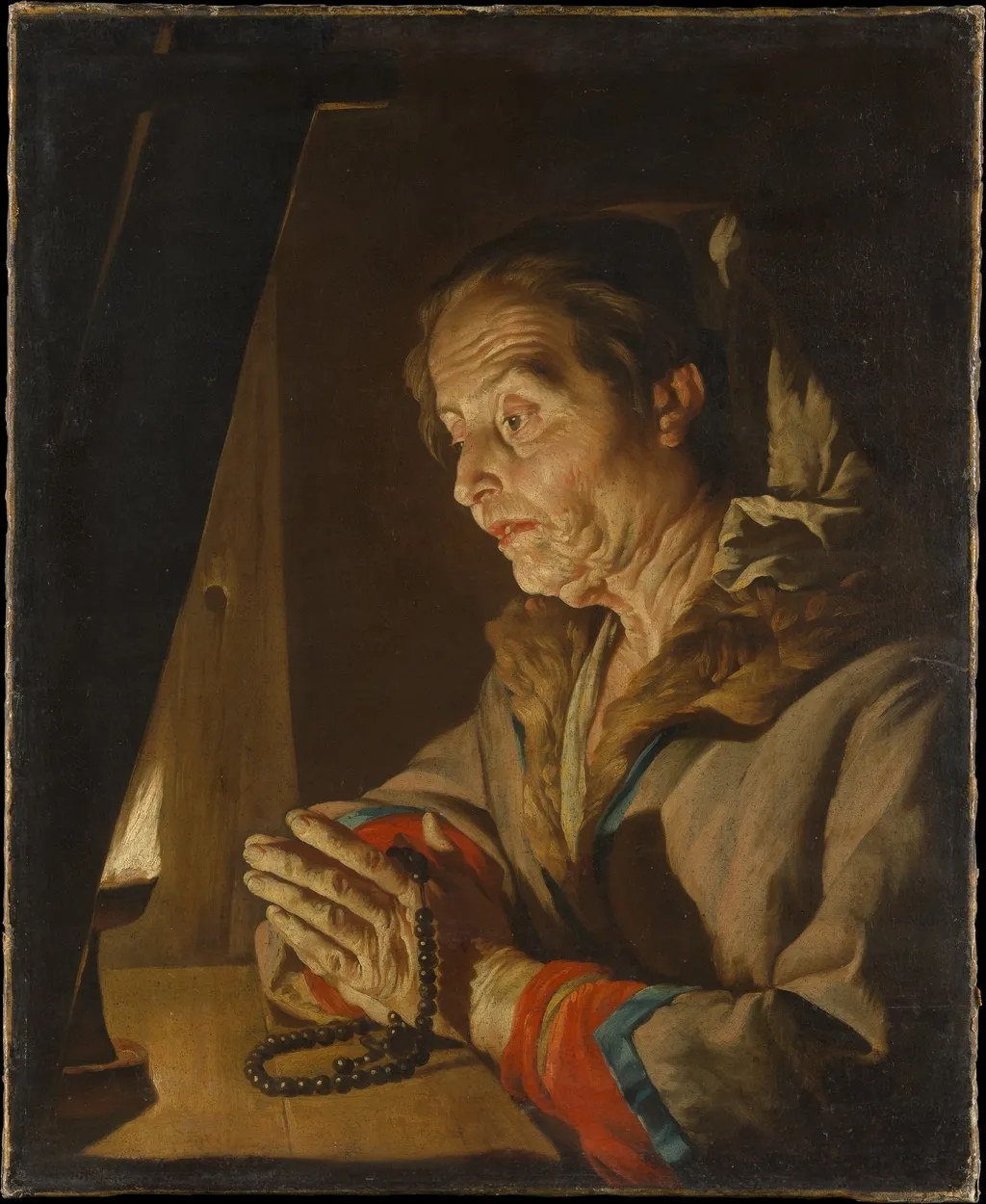
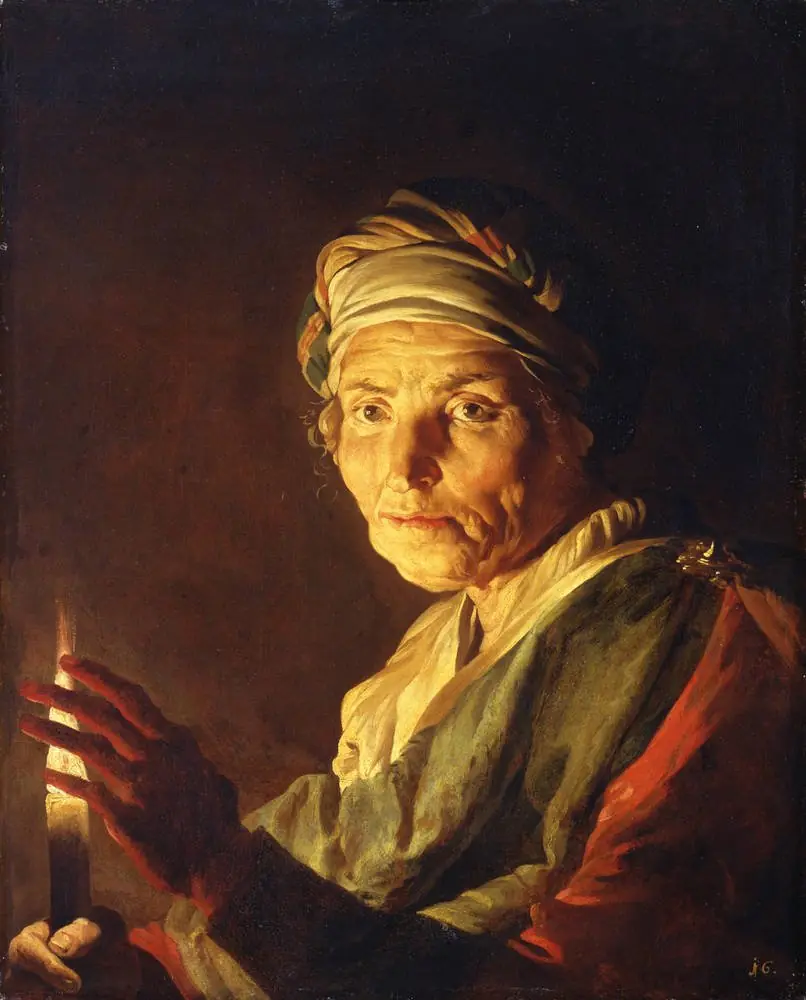
Old Woman Praying is an oil painting by the Dutch Golden Age artist Matthias Stom. It dates from 1640 and is held in the collection of the Metropolitan Museum of Art.
About this work
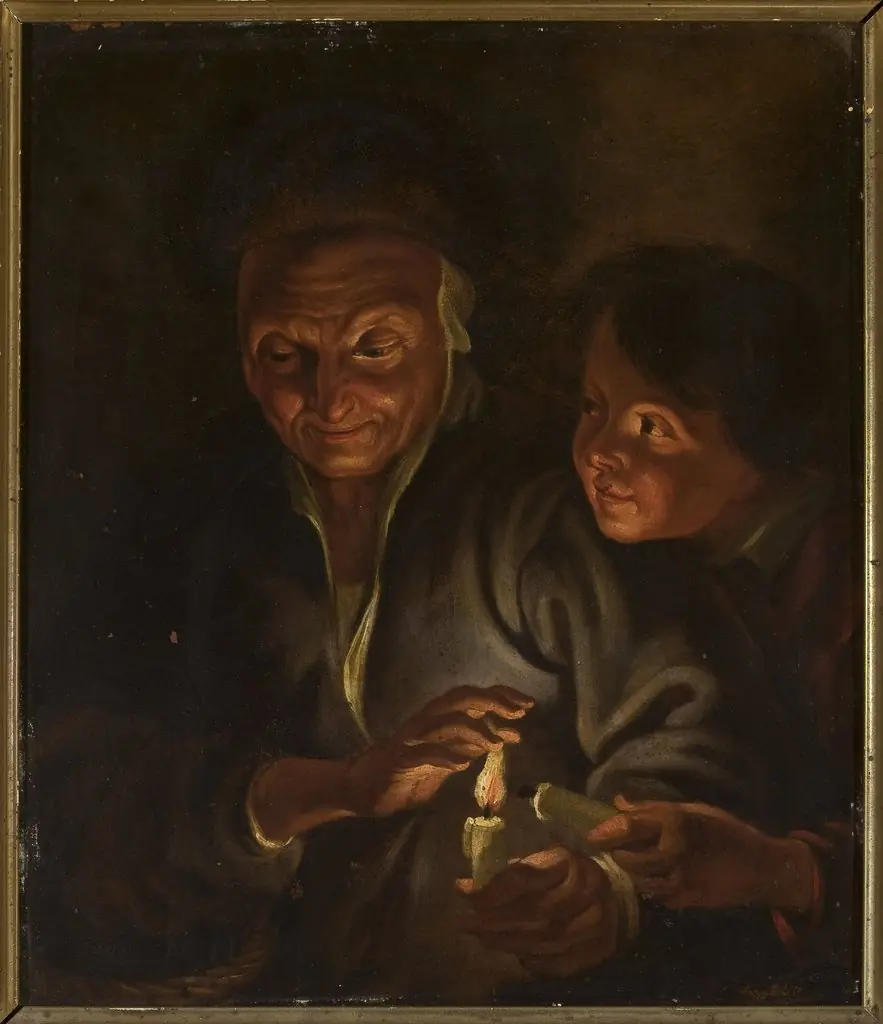
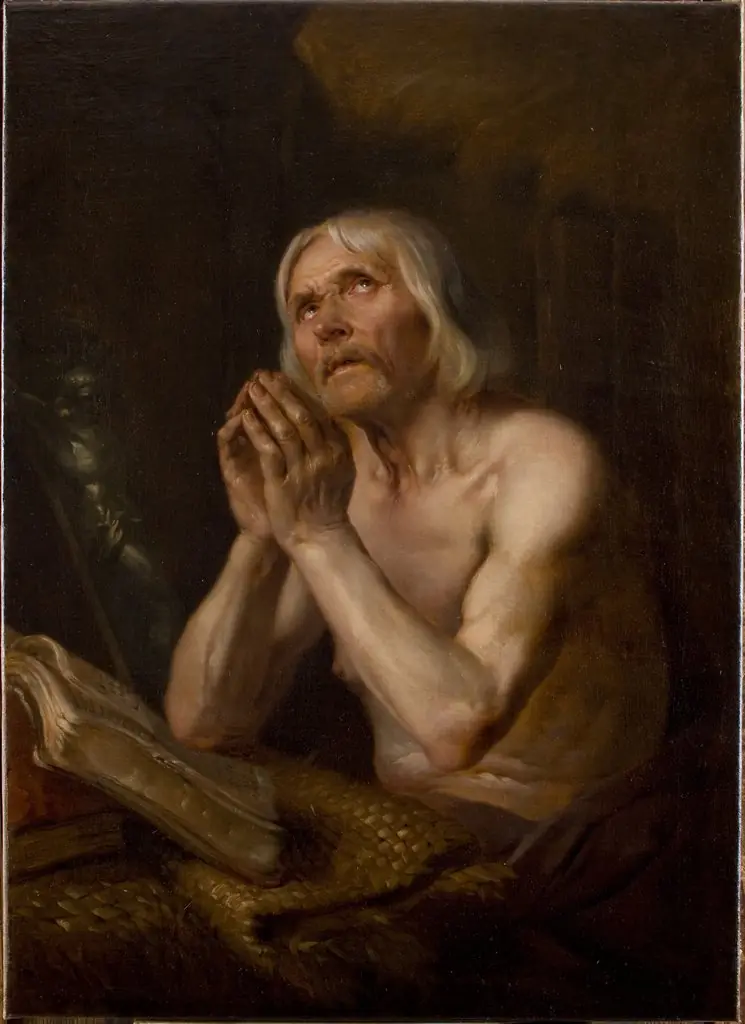
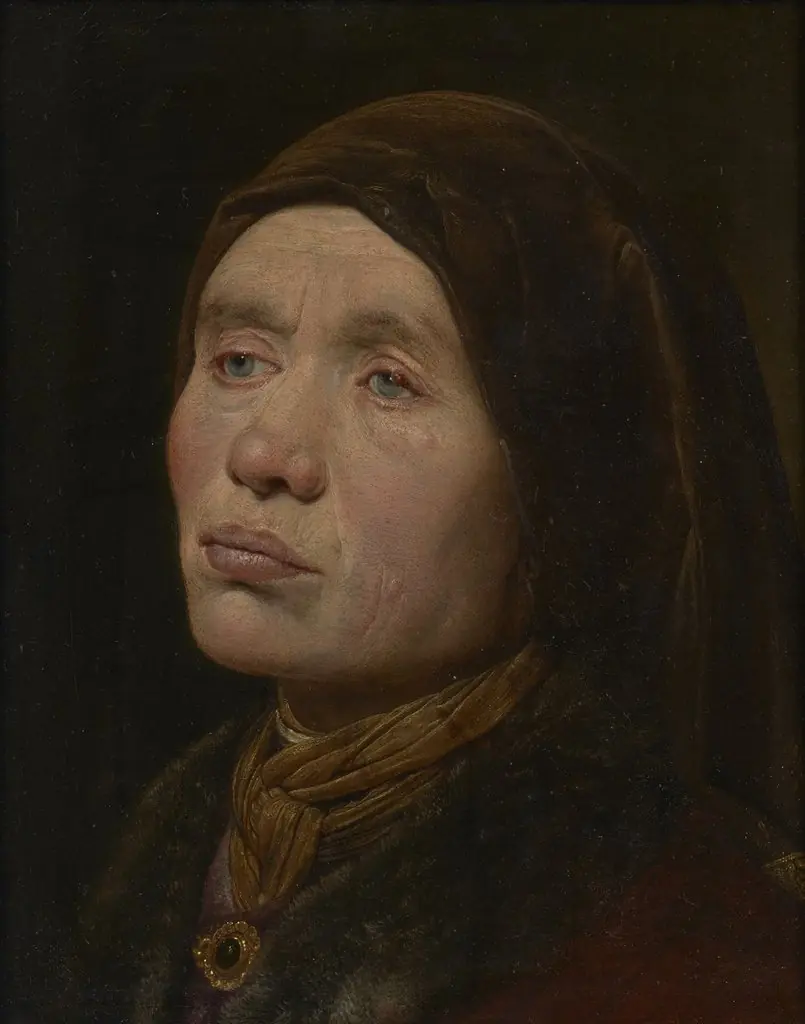
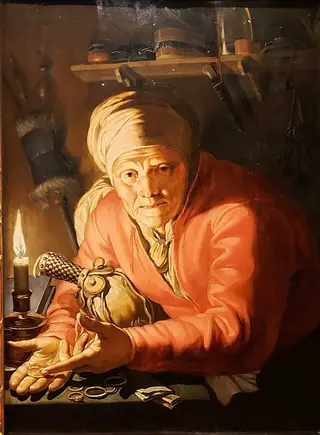
An old woman sits in dim light, her face half-lit by a small window, both hands wrapped around a rosary. An orange sash and fur collar warm her brown cloak, and the dark background throws her face and hands forward. Matthias Stom painted it in 1640, the light modeling her skin almost in three dimensions.
Subject & Meaning
The work belongs to the broader tradition of Dutch and Flemish genre scenes that elevate quiet domestic religiosity to a subject of contemplative significance.
The painting depicts an elderly woman absorbed in private devotion, her clasped hands wrapped around a rosary as she kneels before a plain background. The rosary signals Catholic prayer, while her concentrated gaze and folded posture emphasize piety and inward reflection. The subdued lighting and muted palette focus attention on the act of supplication rather than on external circumstance, framing the scene as a meditation on faith and the spiritual life of the aged.
The work belongs to the broader tradition of Dutch and Flemish genre scenes that elevate quiet domestic religiosity to a subject of contemplative significance.
Technique & Style
The work titled Old Woman Praying is an oil painting on canvas, measuring 77.8 cm in height by 63.8 cm in width and dated to 1640. It was executed in oil paint, a medium noted for its rich tonal modeling and subtle glazing, which creates a luminous surface characteristic of Baroque realism. The canvas support is prepared with a traditional ground, allowing fine brushwork to render the elderly figure’s wrinkled hands and the delicate beads of a rosary with meticulous detail.
The composition focuses on a solitary praying woman, emphasizing intimate devotion through chiaroscuro and a restrained palette, reflecting the genre‑scene tradition of intimate interior subjects. The painting’s condition appears stable, with no recorded restoration noted in the available documentation.
History & Provenance
The painting Old Woman Praying is attributed to Matthias Stom and dated to 1640. It is held in the collection of the Metropolitan Museum of Art, where it is recorded as a genre-scene painting created in oil on canvas. The work depicts an elderly woman engaged in prayer, holding a rosary, consistent with Stom’s known focus on religious and devotional subjects during this period.
The painting’s dimensions (77.8 cm in height and 63.8 cm in width) align with typical works from his oeuvre of the 1640s.
The painting is held by the Metropolitan Museum of Art in New York, where it is catalogued as part of the museum’s holdings. Its accession number is 52.186. The work was first publicly displayed as part of the museum’s collection after its acquisition, though specific exhibition records post-acquisition are not detailed in the cited sources.
Overview
Matthias Stom, a painter of Dutch or Flemish origin working in Italy, completed Old Woman Praying in 1640. This oil painting exemplifies a genre scene from the Dutch Golden Age, capturing a solitary figure engaged in a moment of devotion. The artwork is part of the collection at The Metropolitan Museum of Art, showcasing Stom's distinctive approach to light and shadow.
Context
Active primarily in Italy, Matthias Stom's artistic practice was significantly shaped by the Caravaggisti, followers of Caravaggio known for their intense naturalism and dramatic lighting. His work also reflects influences from Spanish painter Jusepe de Ribera and the Flemish Baroque master Peter Paul Rubens. While Stom is largely recognized for his religious narratives, Old Woman Praying demonstrates his capacity for poignant genre scenes, distinct from the humorous or allegorical subjects often found in contemporary art.
Own this work as a print
Artist & collection
Artist
Matthias Stom or Matthias Stomer (c. 1600 – after 1652) was a Dutch, or possibly Flemish, painter who is only known for the works he produced during his residence in Italy. He was influenced by the work of non-Italian…