Artwork
Das Bild der Düldung (Allegory of Tolerance)
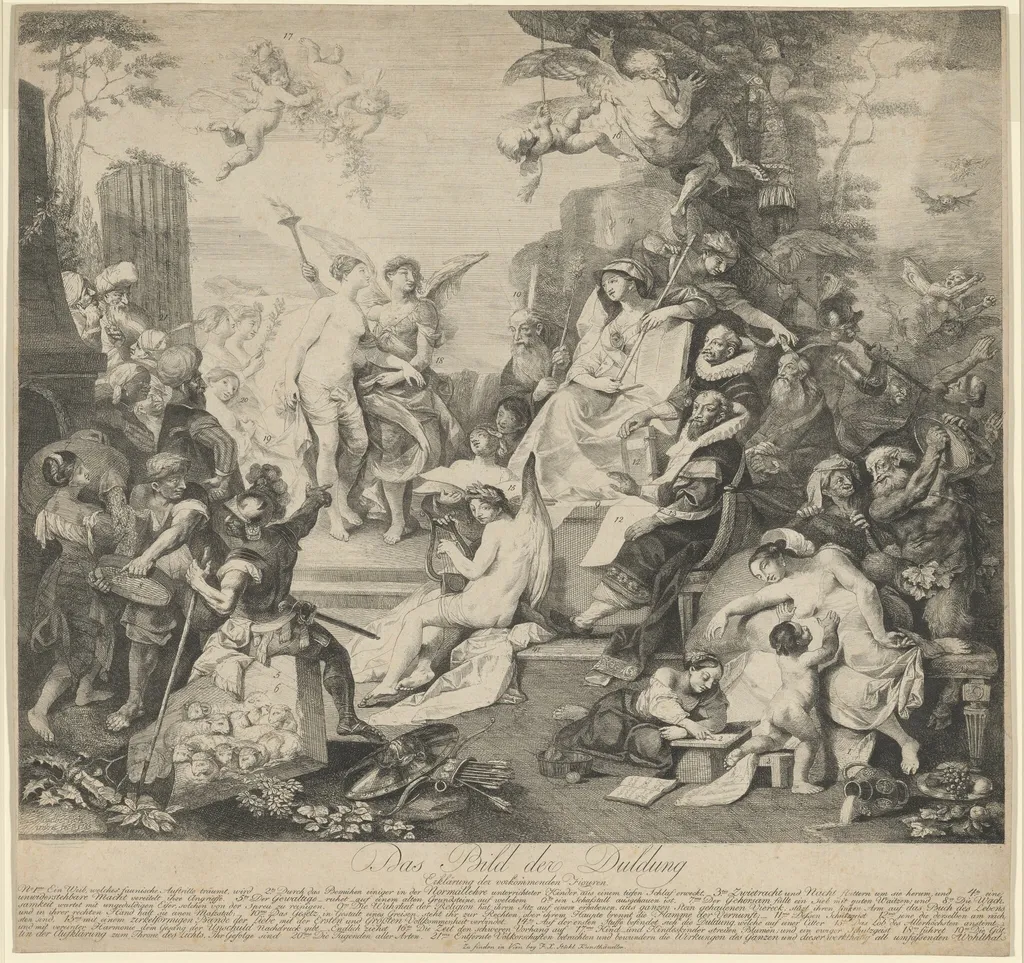
Das Bild der Düldung (Allegory of Tolerance) is an ink print by the Romanticist artist Franz Anton Maulbertsch. It dates from 1785 and is held in the collection of the National Gallery of Art.
- Inscription
- Inscribed:lower left in image: Maulbertsch / inv. et fec. 1785; figures numbered throughout image; lower center in plate: Das Bild der Duldung / Erklärung der vorkommenden Figuren... / ... Au finden in Vien bei F. X. Stöckl Kunsthändler; by later hand, lower left verso in graphite: Anton Franz Maulbertsch / 1724 - 1796 / Das Bild der Dülding / Andr. 2; by later hand, along right verso in graphite: Das Bild der Düldung Figuren und composition / [not deciphered] Radirt ohne Slattenrand / R. W. [not deciphered]
About this work
Overview
Das Bild der Düldung (Allegory of Tolerance) is an etching on laid paper created by Austrian artist Franz Anton Maulbertsch in 1785. It is held in the collection of the National Gallery of Art, Washington.
Subject & Meaning
The etching depicts a lively, crowded scene with a diverse group of figures, including winged beings and individuals dressed in elaborate attire, gathered around a central female figure holding a book. The scene conveys a sense of celebration and allegory, representing the concept of tolerance.
Technique & Style
Maulbertsch employed etching techniques to achieve a range of shading and textures, creating a detailed and dynamic composition. The use of varying line qualities, from sharp to soft, adds to the overall sense of energy and visual interest in the work.
Context
Maulbertsch's work was influenced by Venetian artists, including Piazzetta, Pittoni, Ricci, and Tiepolo, reflecting his connection to the Rococo style prevalent in the German and Hungarian regions during the 18th century.
Own this work as a print
Artist & collection
Artist
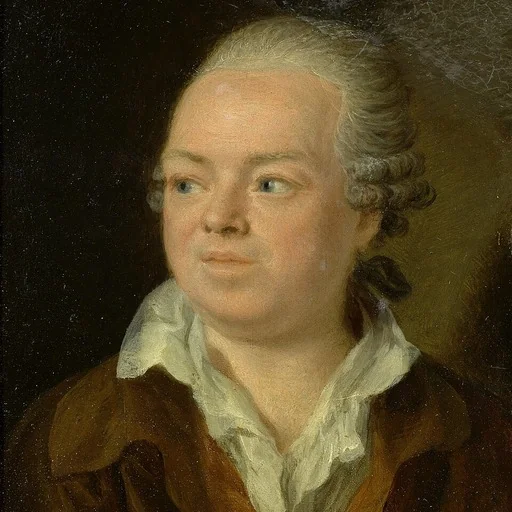
Franz Anton Maulbertsch (7 June 1724 – 8 August 1796) was an Austrian painter and engraver, one of the most renowned exponents of Rococo painting in the German and Hungarian regions.

- Village Festival
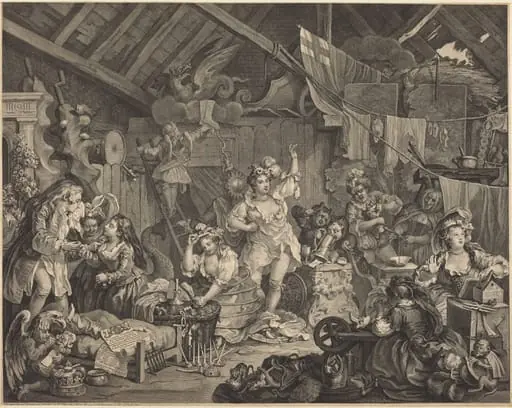 Strolling Actresses Dressing in a Barn
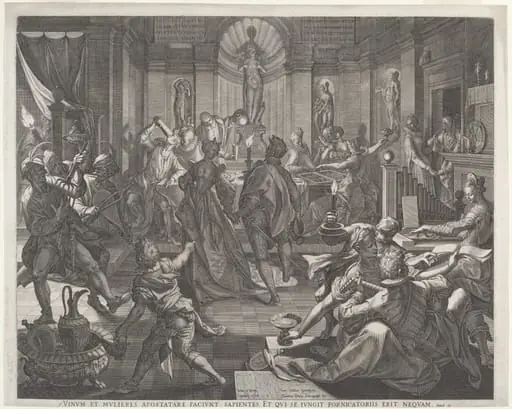 A Pleasure House
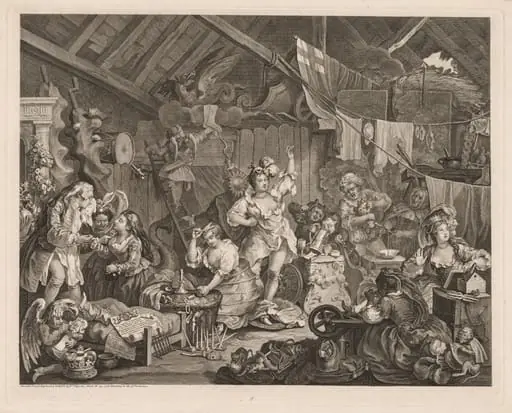 Strolling Actresses Dressing in a Barn
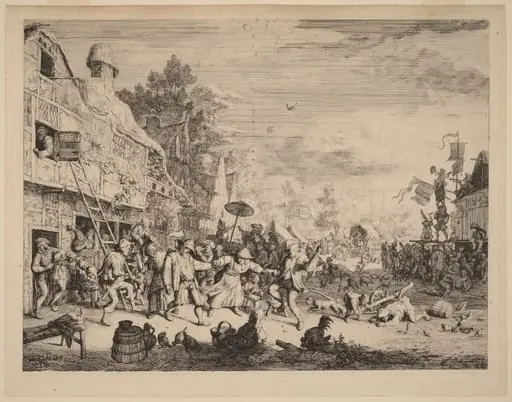 Village Festival
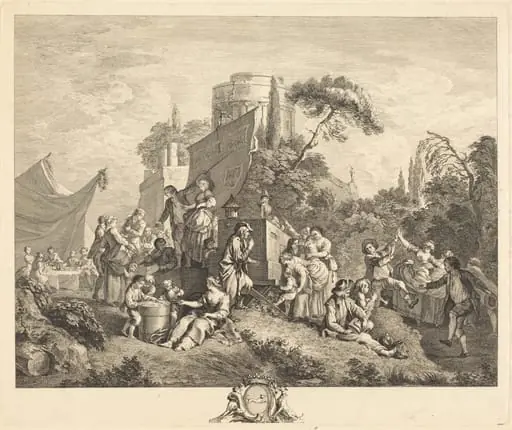 Village Fair
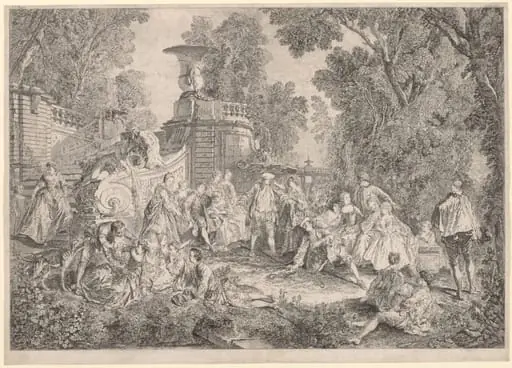 The Game of Blind Man's Bluff
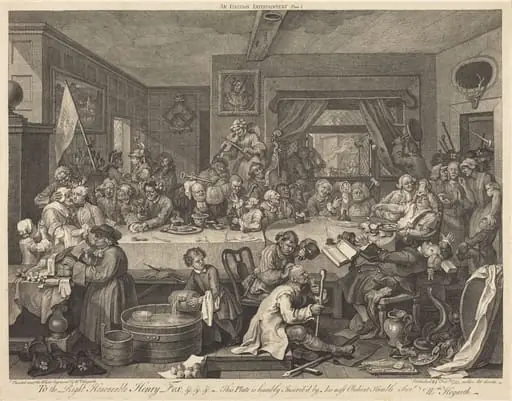 An Election Entertainment
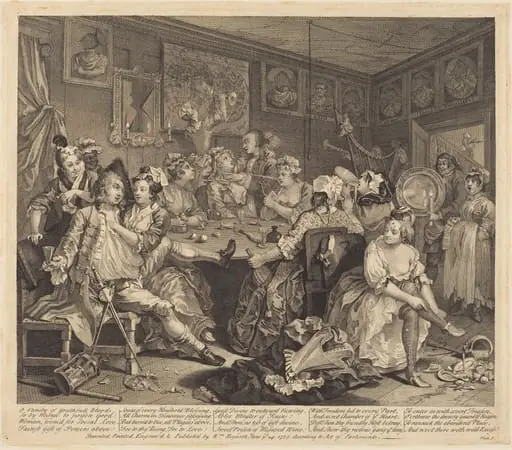 A Rake's Progress: pl.3
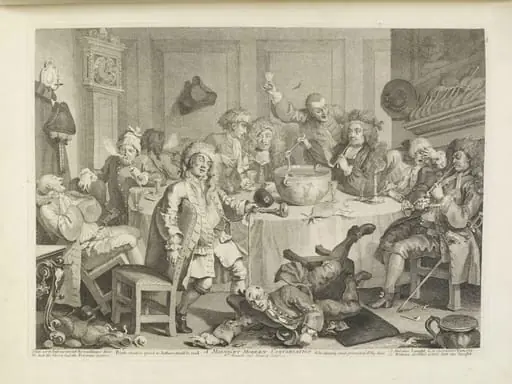 A Midnight Modern Conversation
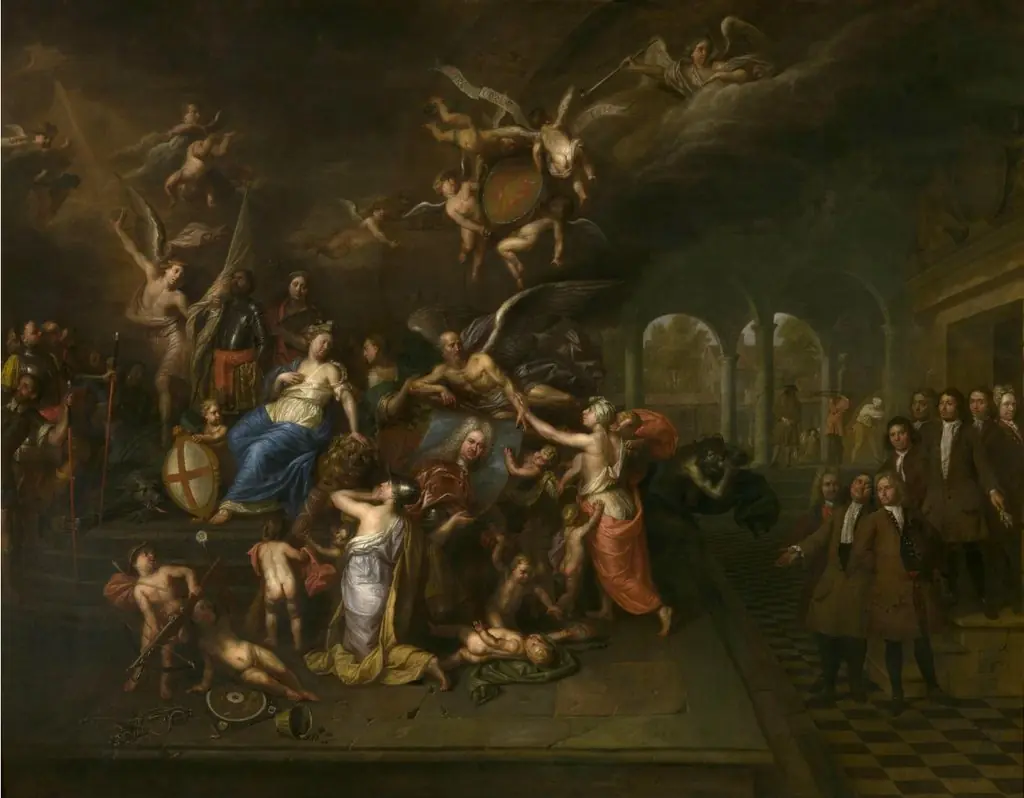 The Guild of the Crossbow Venerates the Portrait of Headman Jan Karel de Cordes
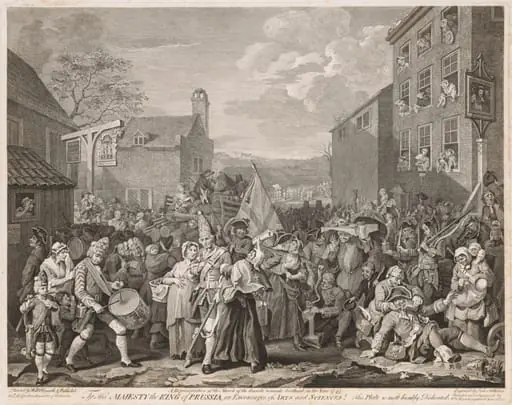 March to Finchley in the Year 1746 (After Hogarth)