Artwork
The Spanish Steps
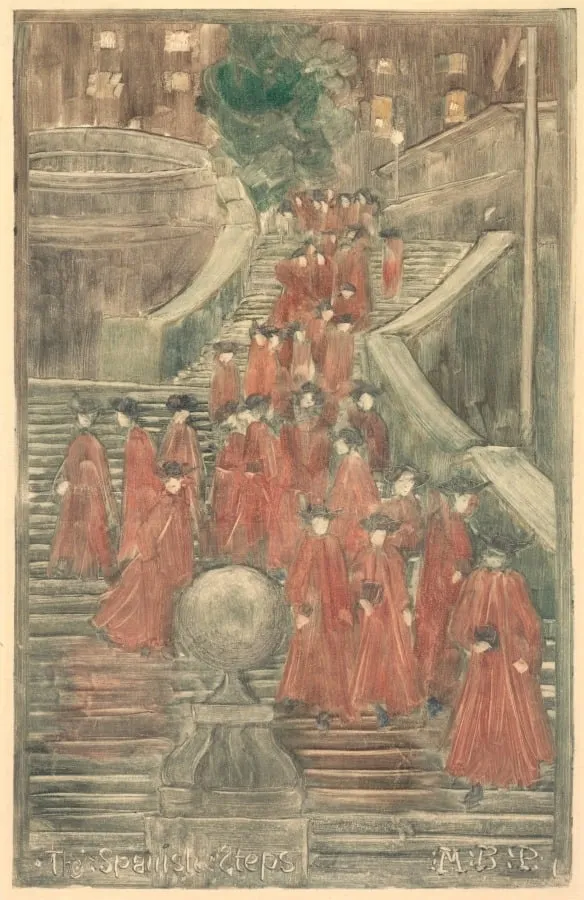
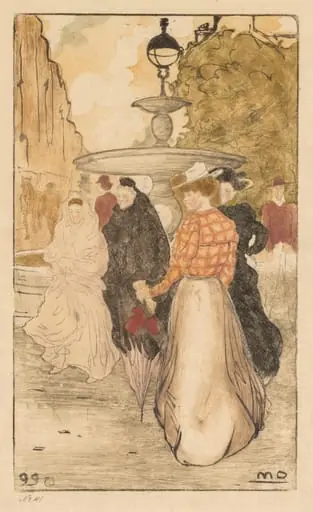
The Spanish Steps is a print by the Impressionist artist Maurice Prendergast. It dates from 1898 and is held in the collection of the Cleveland Museum of Art.
- Accession no.
- 1982.167
- Credit line
- Mr. and Mrs. Charles G. Prasse Collection
About this work
Overview
Rather than emphasizing its grandeur in isolation, Prendergast filled the steps with dozens of figures, transforming the space into a dynamic procession.
Created during Maurice Prendergast’s initial visit to Italy, this monotype captures the Spanish Steps in Rome, a site typically portrayed as an architectural landmark. Rather than emphasizing its grandeur in isolation, Prendergast filled the steps with dozens of figures, transforming the space into a dynamic procession. The work reflects his interest in everyday movement and urban rhythm, rendered with deliberate simplification and vivid color.
Subject & Meaning
The scene depicts approximately thirty-six seminarians in red robes descending the staircase, their unified hue creating a visual current that mirrors the steps’ curves. The choice of religious students, rather than tourists or locals, suggests a quiet ceremonial presence. Their collective motion implies order and ritual, contrasting with the chaotic energy often associated with crowded public spaces.
Technique & Style
Prendergast employed monotype, a printmaking method yielding a single unique impression. He used flat, unmodulated areas of color, particularly the intense reds and muted grays, that evoke stained glass rather than naturalistic rendering. Brushwork is controlled yet expressive, with minimal texture, prioritizing pattern and silhouette over depth or modeling.
History & Provenance
This work dates to 1898, during Prendergast’s first journey to Europe, when he was absorbing the visual language of Italian urban life. It was likely made in Rome shortly after his arrival, reflecting his immediate response to the city’s architecture and social rhythms. The piece remained in private hands until entering a public collection in the mid-20th century.
Context
At the time, American artists were increasingly drawn to European subjects as part of a broader interest in modern life. Prendergast’s focus on crowds and public spaces aligned with contemporaries like Degas and Toulouse-Lautrec, though his palette and flattened forms leaned toward decorative modernism. The Spanish Steps, a well-known pilgrimage site, offered both visual structure and symbolic weight.
Legacy
The monotype exemplifies Prendergast’s distinctive approach to urban scenes, emphasizing rhythm, color, and composition over narrative detail. It influenced later American modernists interested in pattern and movement, and remains a key example of how early 20th-century artists reimagined traditional tourist subjects through a personal, stylized lens.
Artist & collection
Artist
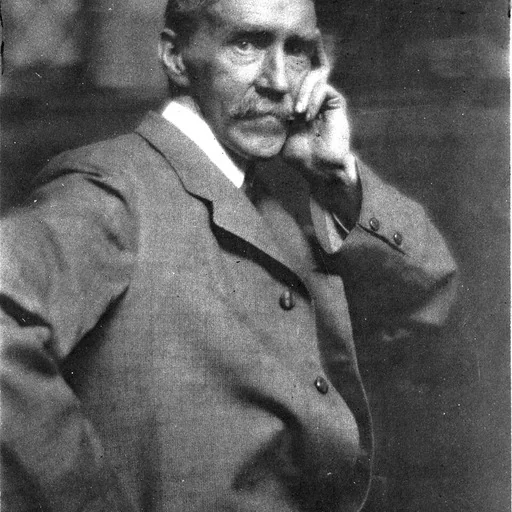
Maurice Brazil Prendergast (October 10, 1858 – February 1, 1924) was a Newfoundlander-American artist who painted in oil and watercolor, and created monotypes.