Artwork
Descent from the Cross
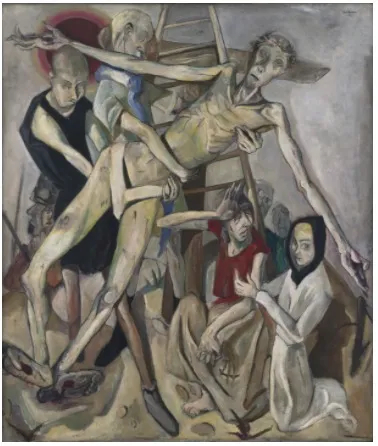
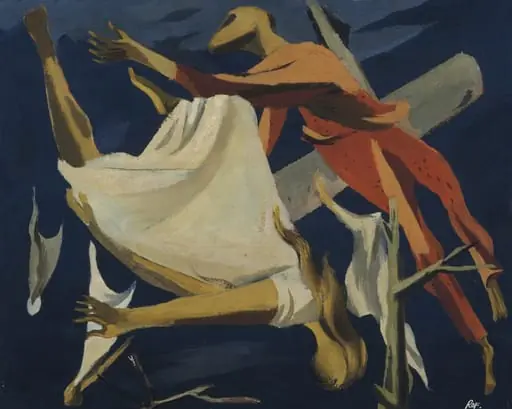
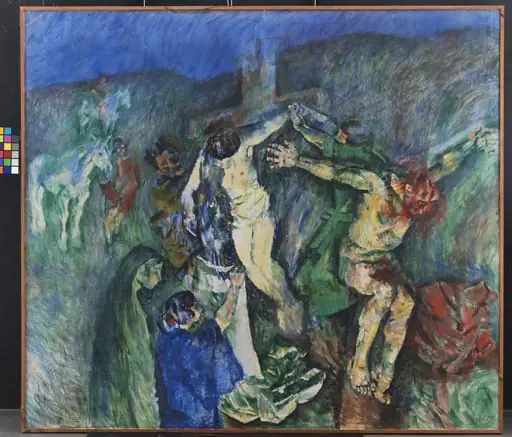
Descent from the Cross is an oil painting by Max Beckmann. It dates from 1917 and is held in the collection of the Städel Museum.
About this work
Overview
Executed during the artist’s early mature period, the work presents a compact composition centred on a group of figures surrounding a central, cruciform form.
Max Beckmann’s 1917 oil painting titled Descent from the Cross is part of the collection at New York’s Museum of Modern Art. Executed during the artist’s early mature period, the work presents a compact composition centred on a group of figures surrounding a central, cruciform form. The canvas measures a modest size, typical of Beckmann’s wartime output, and remains a notable example of his engagement with religious subject matter.
Subject & Meaning
The scene portrays the moment when a body is being lowered from a cross, a motif drawn from the Passion narrative. Surrounding participants, likely disciples or mourners, are arranged in a semi‑circular fashion, emphasizing the collective act of removal and the solemnity of the event. Beckmann’s treatment suggests an interest in human response to suffering rather than a strictly theological illustration.
Technique & Style
Beckmann employs a restrained palette of earthy ochres and occasional vivid accents, while bold outlines define each figure. The application of oil is vigorous, with expressive brushwork that conveys movement. Strong chiaroscuro creates volumetric forms, using stark light‑dark contrasts to heighten the drama and give the composition a three‑dimensional presence despite its relatively flat background.
History & Provenance
Created amid World War I, the painting entered the Museum of Modern Art’s holdings through a mid‑20th‑century acquisition program focused on modern European art. Its provenance traces back to private collections in Germany before crossing the Atlantic, where it was recognized for its significance within Beckmann’s oeuvre and added to MoMA’s representation of early 20th‑century expressionism.
Context
Beckmann painted Descent from the Cross during a period when he was confronting the devastation of war and personal dislocation. The work reflects his broader shift from academic realism toward a more expressive, symbolic language, aligning with contemporary movements that sought to reinterpret traditional religious themes through modern visual strategies.
Artist & collection
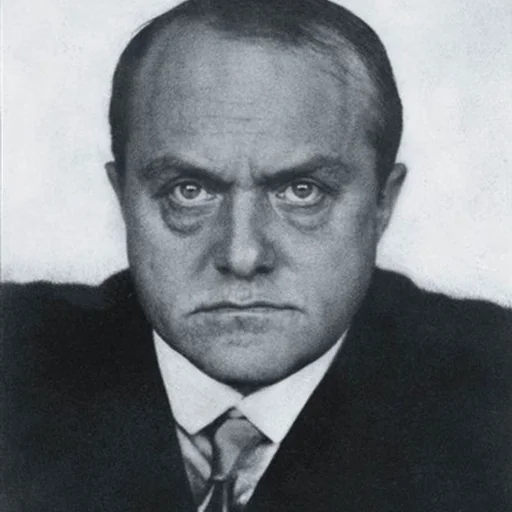
Artist
Max Carl Friedrich Beckmann (February 12, 1884 – December 27, 1950) was a German painter, draftsman, printmaker, sculptor, and writer.