Artwork
Perry T. Rathbone
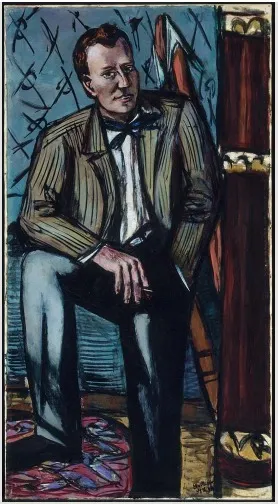
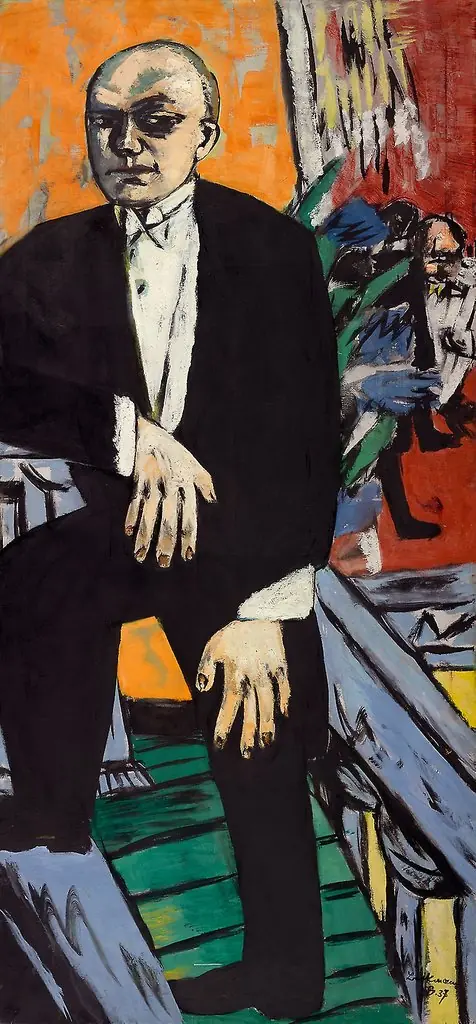
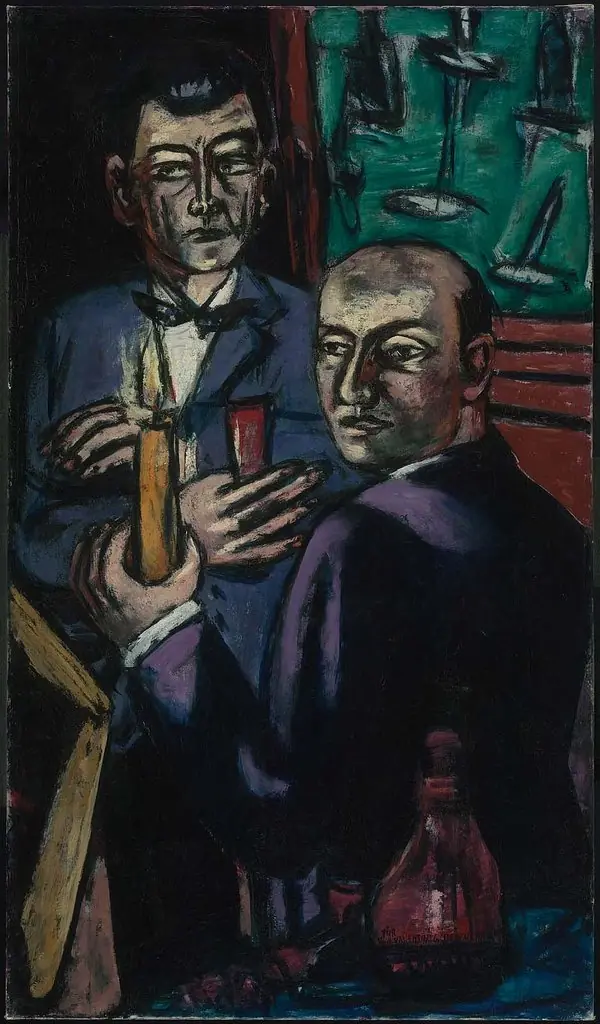
Perry T. Rathbone is an oil painting by the Neo Expressionist artist Max Beckmann. It dates from 1948 and is held in the collection of the Museum of Fine Arts Boston.
About this work
Overview
Rathbone, then a museum administrator, would later lead the Museum of Fine Arts, Boston, where the painting resides.
Max Beckmann created this oil portrait of Perry T. Rathbone in 1948, during the later phase of his career. Rathbone, then a museum administrator, would later lead the Museum of Fine Arts, Boston, where the painting resides. Beckmann, a German artist with a background in printmaking and sculpture, had moved beyond his earlier New Objectivity style toward a more emotionally charged, structured approach. The work reflects his mature engagement with psychological depth and formal composition.
Subject & Meaning
Rathbone is depicted seated in a composed, upright posture, dressed in formal attire that suggests his professional role. His crossed legs and restrained gesture convey quiet authority rather than overt display. The painting does not idealize its subject but instead captures a sense of inward focus, consistent with Beckmann’s tendency to infuse portraiture with psychological tension. The setting, though abstracted, implies an interior space of intellectual or institutional gravity.
Technique & Style
Beckmann employed bold, flat planes of color and sharp linear contours to define form and space. The background’s geometric blue and black shapes, alongside the patterned rug, create a compressed, stage-like environment. The subject’s striped jacket and the contrast between warm and cool tones add rhythmic energy.
Brushwork is deliberate and controlled, avoiding impressionistic looseness in favor of structured, almost architectural rendering that reinforces the portrait’s solemn tone.
History & Provenance
Painted in 1948, the portrait was acquired by the Museum of Fine Arts, Boston, where Rathbone served as director from 1955 to 1972. It remained in the museum’s collection following his tenure. Beckmann, who had emigrated to the United States in 1947, completed the work shortly after arriving, during a period of transition.
The painting’s presence in Boston reflects both the artist’s American connections and Rathbone’s role in supporting modern European art in the U.S.
Context
Beckmann’s postwar work moved away from the satirical realism of the 1920s toward a more symbolic, emotionally dense style often linked to Neo-Expressionism. In the U.S., he found renewed interest in his art, particularly among museum professionals like Rathbone who championed European modernism. This portrait emerged amid broader efforts to reintegrate displaced German artists into American cultural institutions after the war.
Legacy
The portrait stands as a quiet testament to the relationship between artist and patron in postwar American art circles. It exemplifies Beckmann’s enduring ability to merge psychological insight with formal rigor. While not widely exhibited, it remains a significant example of his late portraiture and a key piece in the Museum of Fine Arts, Boston’s collection of 20th-century German art.
Artist & collection
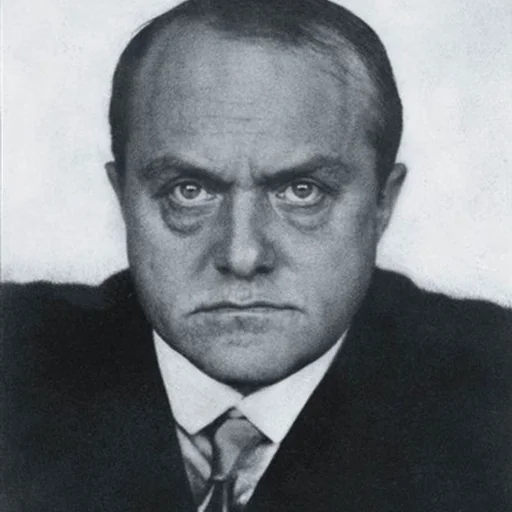
Artist
Max Carl Friedrich Beckmann (February 12, 1884 – December 27, 1950) was a German painter, draftsman, printmaker, sculptor, and writer.