Artwork
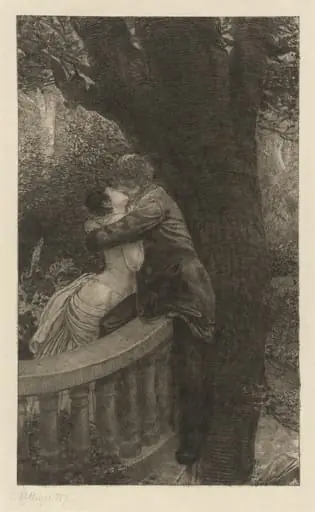
Night, from On Death, Part I, Opus XI (Nacht, Vom Tode, Erster Teil, Opus XI)
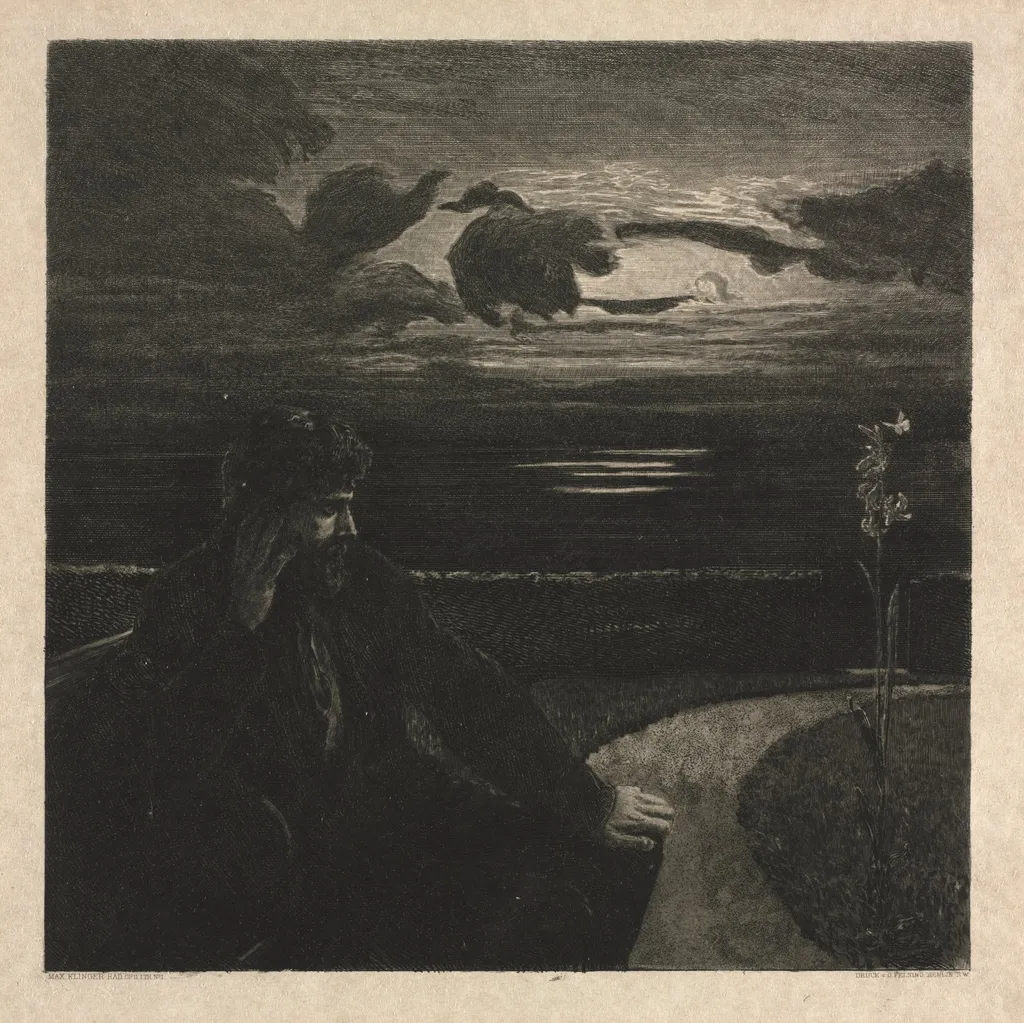
Night, from On Death, Part I, Opus XI (Nacht, Vom Tode, Erster Teil, Opus XI) is a print by the Impressionist artist Max Klinger. It dates from 1889 and is held in the collection of the Cleveland Museum of Art.
- Accession no.
- 1933.126.1
- Credit line
- Gift of The Print Club of Cleveland
About this work
Overview
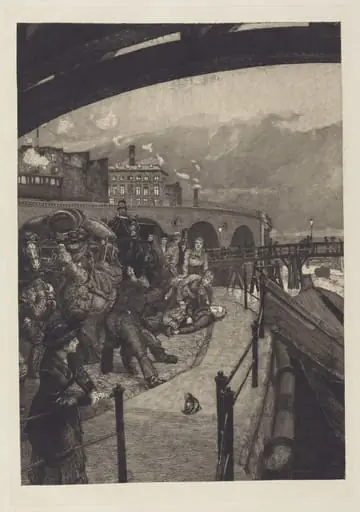
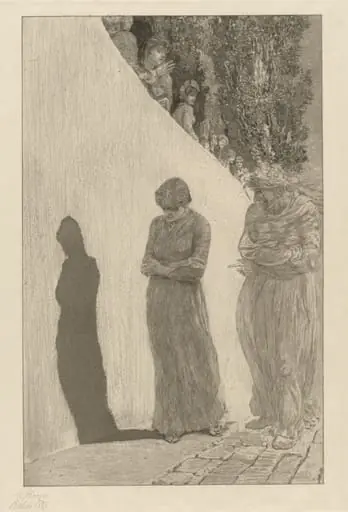
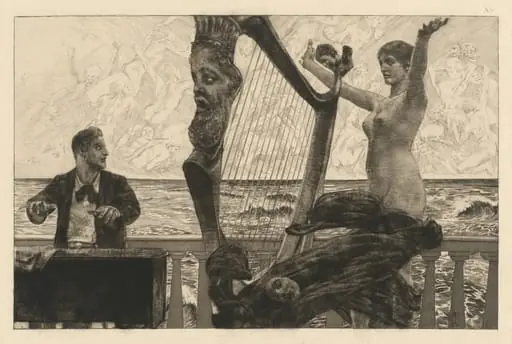
Night is the inaugural print in Max Klinger's series On Death, Part I (Opus XI), a collection of ten etchings exploring the transience of life and the abruptness of death.
Subject & Meaning
The piece depicts a contemplative man seated on a bench within an enclosed nocturnal garden, where a moonlit landscape and symbolic elements, a lily with a butterfly, reflect his introspective, melancholic state, embodying the series' themes of mortality and the human experience.
Technique & Style
Klinger employs chiaroscuro, leveraging the stark contrast between light and dark to evoke a sense of solemnity and inner turmoil, characteristic of the Symbolist movement's emphasis on emotional depth and the subconscious.
History & Provenance
Created as part of On Death, Part I, this etching was part of a broader artistic response to mortality, drawing parallels with the medieval 'Dance of Death' motif, as noted by contemporaries, highlighting its thematic resonance with both historical and contemporary audiences.
Context
Within the series, Night sets the somber tone, inviting viewers to ponder the ephemeral nature of life, a common preoccupation among Symbolist artists who often explored the mystical and the inevitable.
Legacy
As the opening piece of On Death, Part I, Night contributes to the series' influence on subsequent artists exploring themes of mortality and the psychological, though its direct legacy is more nuanced, reflecting the varied reception of Klinger's work over time.
Own this work as a print
Artist & collection

Artist
Max Klinger (18 February 1857 – 5 July 1920) was a German artist who produced significant work in painting, sculpture, prints and graphics, as well as writing a treatise articulating his ideas on art and the role of…