Artwork
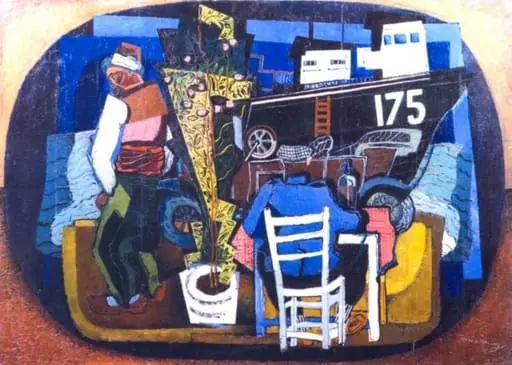
Natură moartă (Omagiu lui Glezos)
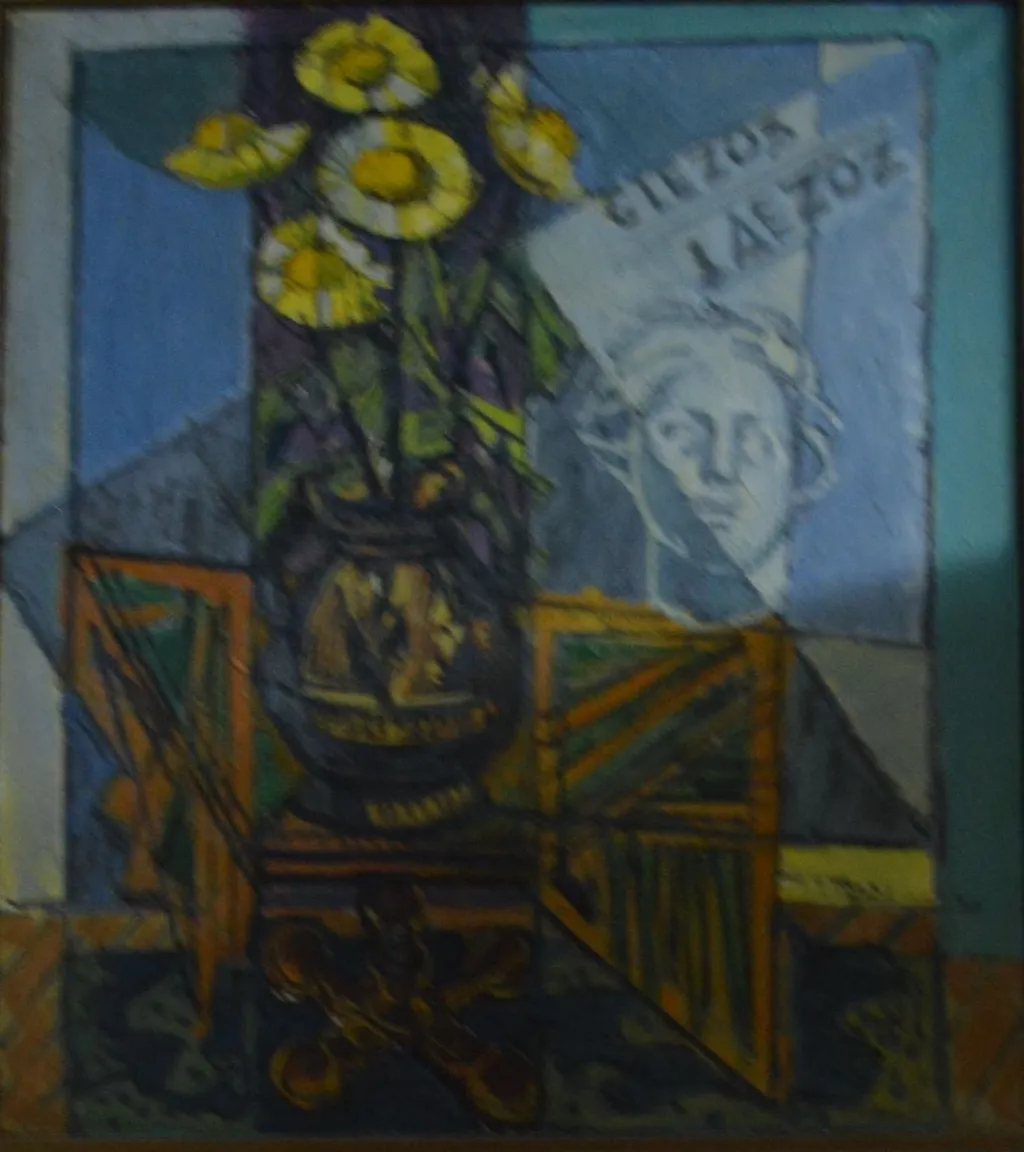
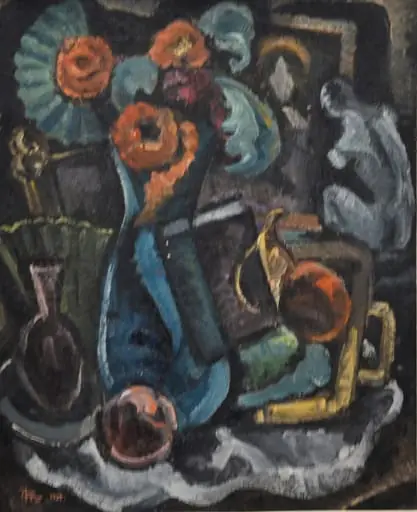
Natură moartă (Omagiu lui Glezos) is a print by Max Hermann Maxy. It dates from 1943 and is held in the collection of the Art Museum of Constanta.
About this work
Overview
Created around 1943 by Romanian artist Max Hermann Maxy, this work is titled Natură moartă (Omagiu lui Glezos). It is part of the collection at the Museum of Ethnography. The piece combines still-life elements with subtle figurative suggestion, using simplified forms and heightened color contrasts to evoke emotional resonance rather than literal representation.
Subject & Meaning
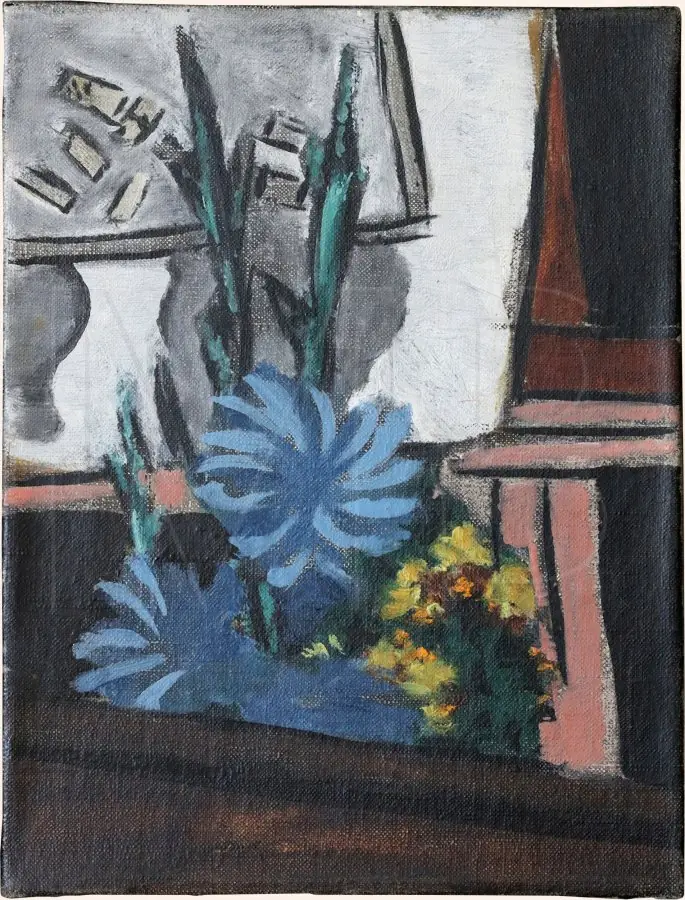
A vibrant yellow floral arrangement sits on a wooden chair, its brightness contrasting with the dark vase and muted surroundings.
A vibrant yellow floral arrangement sits on a wooden chair, its brightness contrasting with the dark vase and muted surroundings. Behind it, a faint, blurred face emerges from draped fabric, suggesting presence or memory. The distant view of buildings and a mountain implies a world beyond the domestic scene.
The title, honoring Glezos, may reference a personal or political figure, adding a layer of quiet tribute to the composition.
Technique & Style
Maxy employs flat planes of bold color and minimal detail to structure the image. The flowers are rendered with sharp edges and intense yellow, while the background and figure dissolve into soft, indistinct tones. Light is used not for realistic modeling but to isolate the bouquet, creating a visual hierarchy. The effect recalls elements of expressionism and early modernist simplification, prioritizing emotional impact over naturalism.
History & Provenance
The work dates from the early 1940s, a period of political tension in Romania. It entered the Museum of Ethnography’s collection following the artist’s lifetime, though specific acquisition details are not widely documented. Its preservation in an ethnographic institution, rather than a fine arts museum, suggests a broader cultural framing of Maxy’s practice during that era.
Context
Maxy was active in Romania’s interwar avant-garde circles, influenced by Cubism and Expressionism. During the 1940s, artists often embedded personal or political references in seemingly abstract or domestic scenes due to censorship. The obscured face and symbolic flowers may reflect suppressed voices or mourning, common themes among artists navigating authoritarian regimes.
Legacy
Though not widely exhibited outside Romania, this work exemplifies Maxy’s ability to merge modernist formal strategies with intimate, encoded narratives. It contributes to understanding how Romanian artists navigated artistic expression under political constraint, using still-life as a vessel for subtle commentary rather than overt protest.
Artist & collection

Artist
Max Hermann Maxy was a Romanian painter, art professor, scenographer, and professor of German-Jewish descent.