Artwork
The Sepulchre of Absalom
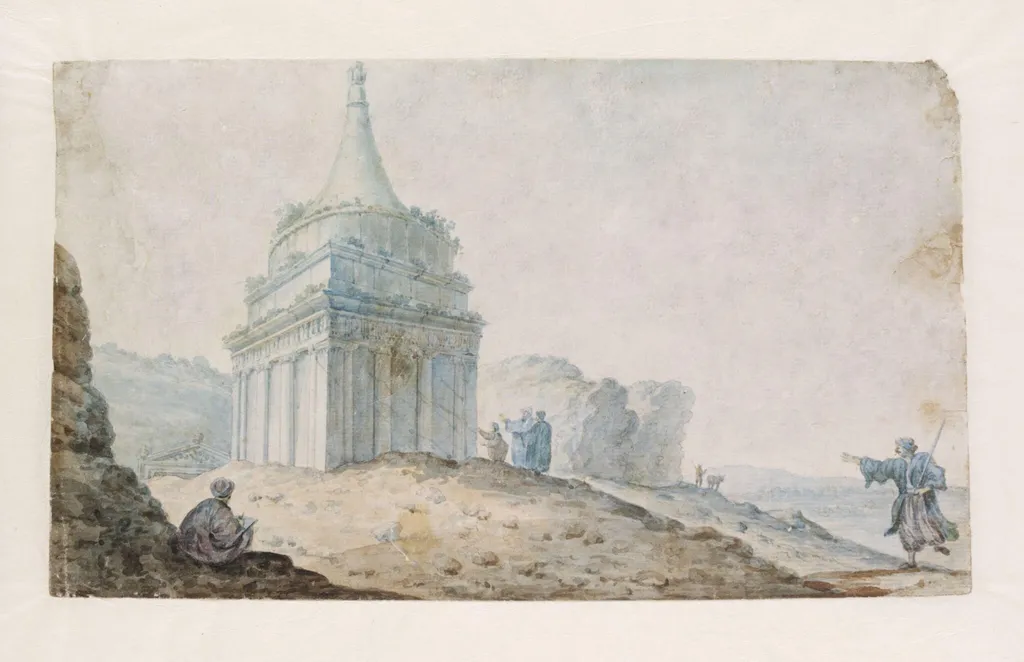
The Sepulchre of Absalom is a watercolor work on paper by the Romanticist artist Luigi Mayer. It dates from 1792 and is held in the collection of the Victoria and Albert Museum.
About this work
Overview
The Sepulchre of Absalom is a watercolour drawing created by Luigi Mayer in 1792. It is part of a series of related works that the artist later adapted into aquatints.
Subject & Meaning
The drawing depicts the Tomb of Absalom, a rock-cut sepulchre in the Kidron Valley near Jerusalem. The scene shows the tomb surrounded by a few figures, with one person sketching in the foreground, set against a calm sea and pale sky.
Technique & Style
Mayer employed soft watercolour washes to capture the interplay of light and shadow, imbuing the scene with a dreamy quality. The depiction of the tomb blends real and imagined architectural styles.
History & Provenance
The watercolour was acquired by Rodney Searight from Victor Maly in 1967. It may have been executed on the spot during Mayer's visit to Syria.
Context
This work is associated with the Romanticism movement, characterized by its dreamy and imaginative representation of a historical site.
Own this work as a print
Artist & collection

Artist
Luigi Mayer (1755–1803) was an Italian-German artist and one of the earliest and most important late 18th-century European painters of the Ottoman Empire.

 View of Grand Cairo from the Summit of the Great Pyramid of Giza
 An Ancient Obelisk At Matarea, Formerly Heliopolis
 Portrait of Clara Mayer
 Stanmore Church Middlesex
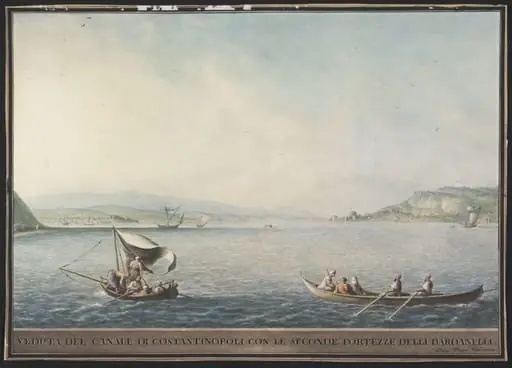 View of the Straits with the Second Fortress of the Dardanelles
![Dance of Peasants [possibly in Belgrade near Constantinople], by Luigi Mayer](https://artifactworldgallery.com/img/luigi-mayer--dance-of-peasants-possibly-in-belgrade-near-constantinople--e0530a0b87d5c4c1-w320.webp) Dance of Peasants [possibly in Belgrade near Constantinople]
Dance of Peasants [possibly in Belgrade near Constantinople]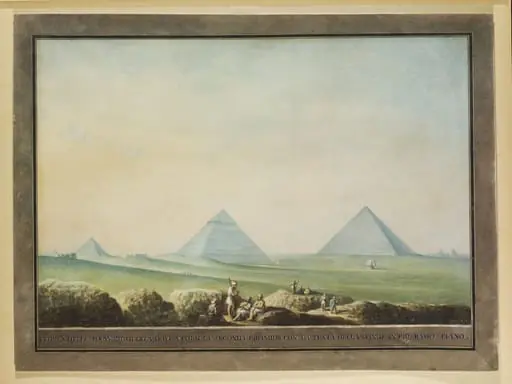 The Pyramids of Giza
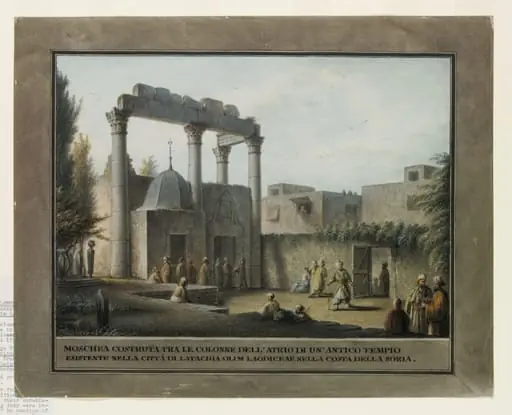 Mosque built between the columns of an ancient temple in Latakia on the coast of Syria, about 1800
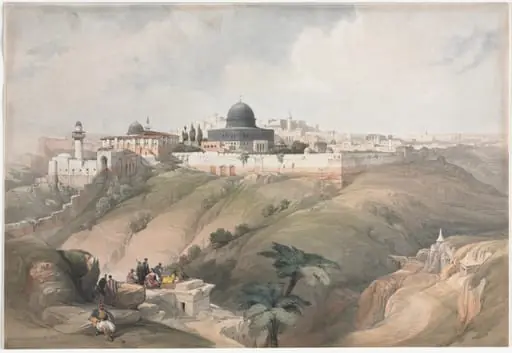 Jerusalem
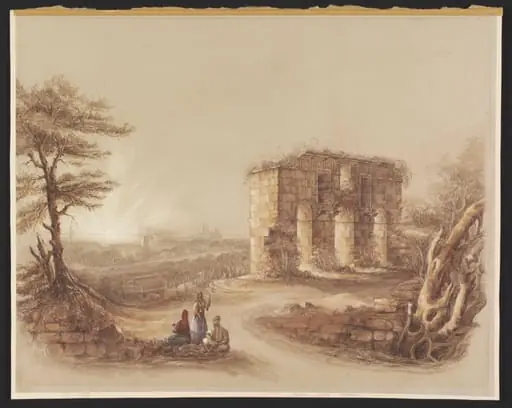 Monumental Gateway, Patara, Turkey
![Yediküle with a Muslim Cemetery, Constantinople, by Michel-François Préaulx [Préaux]](https://artifactworldgallery.com/img/michel-francois-preaulx-preaux--yedikule-with-a-muslim-cemetery-constantinople--c422bdec8e9c6ba8-w320.webp) Yediküle with a Muslim Cemetery, Constantinople
Yediküle with a Muslim Cemetery, Constantinople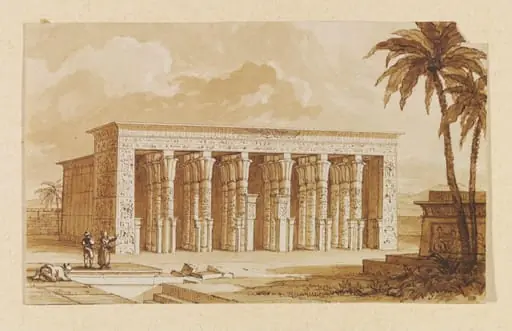 Perspective view of the Temple of Antaeopolis
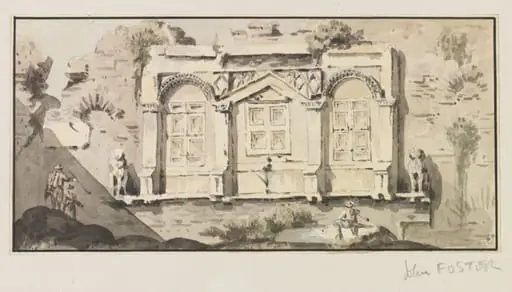 View of the Western facade of the Boukoleon Palace
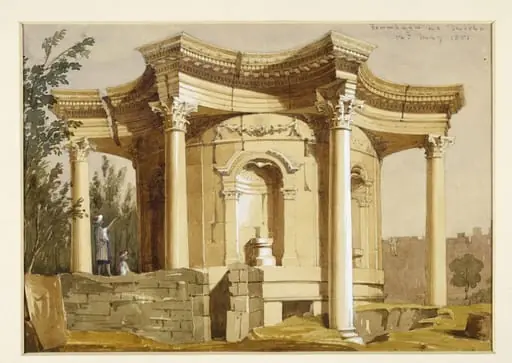 Fountain at Balbec
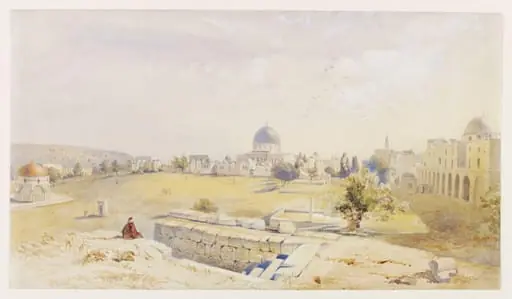 Jerusalem. Mount Moriah The Site Of The Temple now occupied by the Mosque of Omar
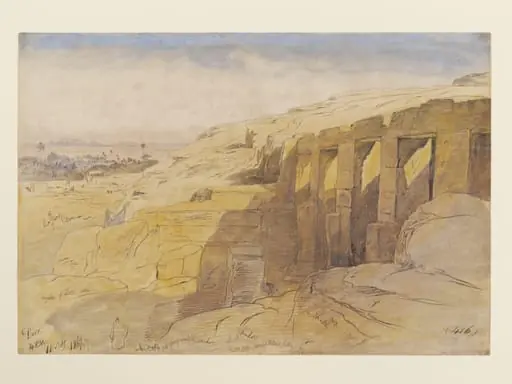 Temple at Derr, Nubia, Egypt
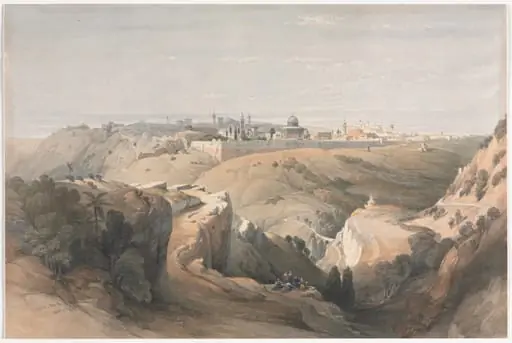 Jerusalem from the Mount of Olives
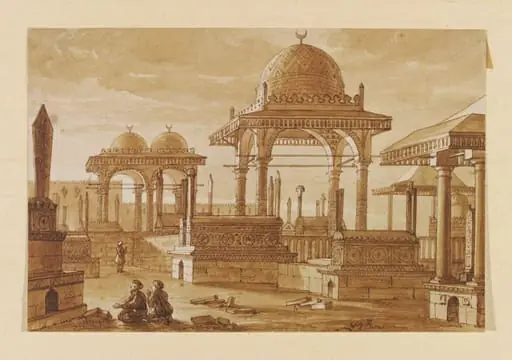 Part of the City of Tombs at Cairo
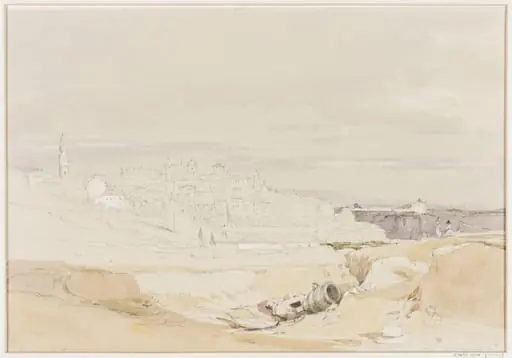 Sketch in Portugal
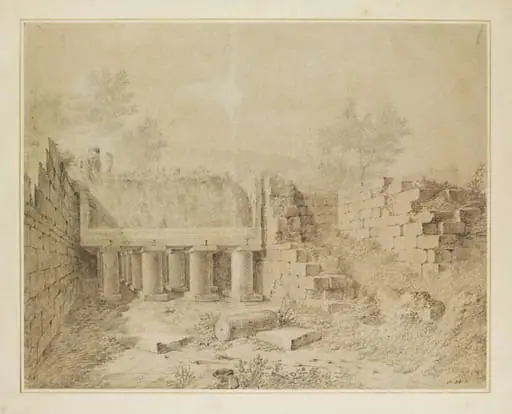 Figures among Classical Ruins, probably in Sicily