Artwork
The Crucifixion of Christ
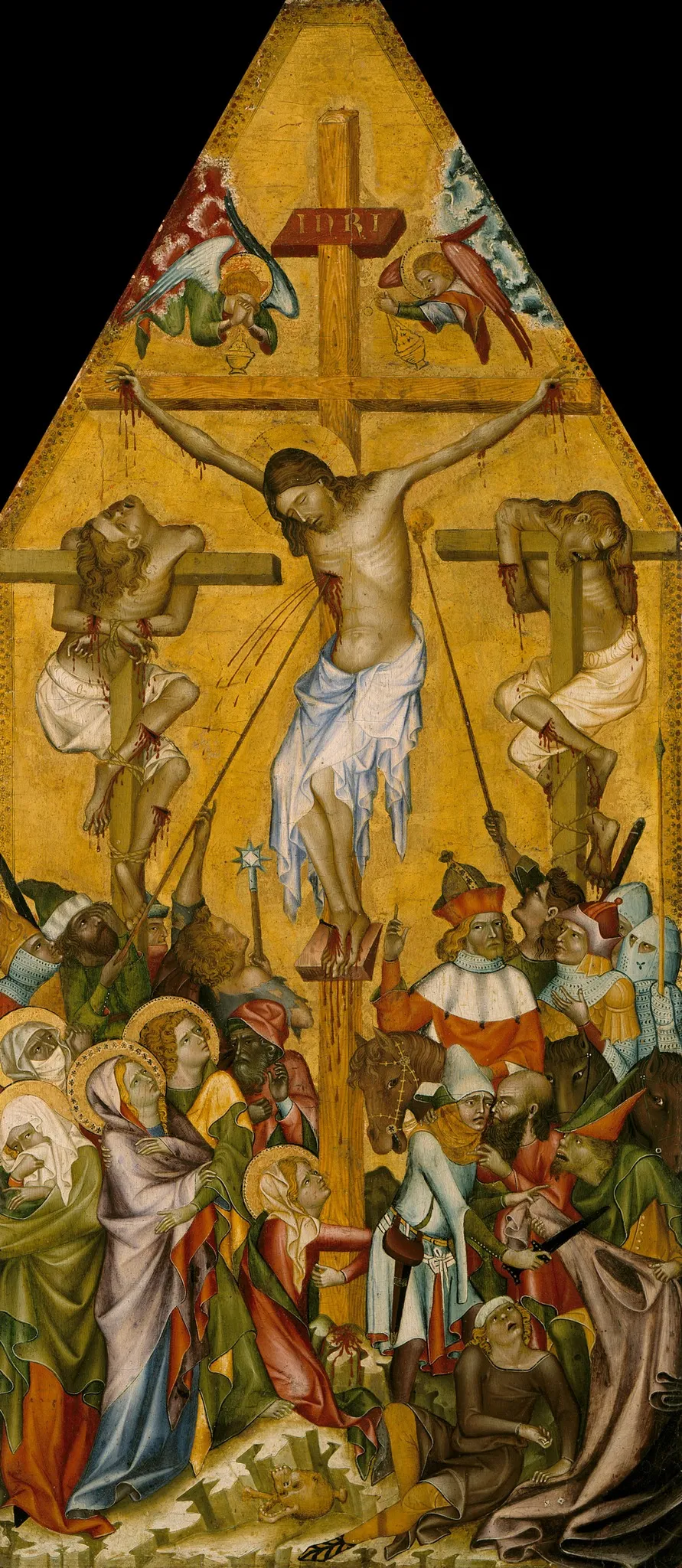
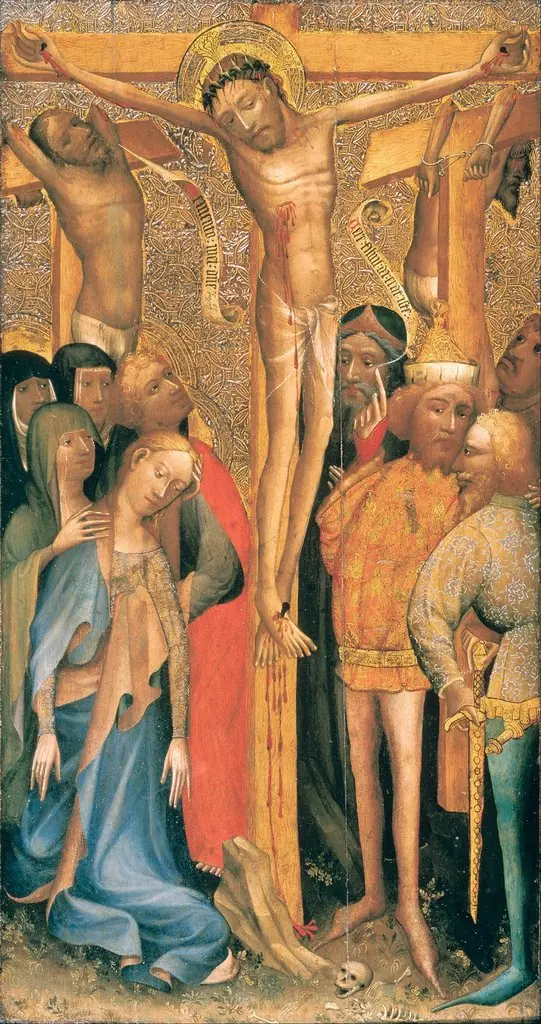
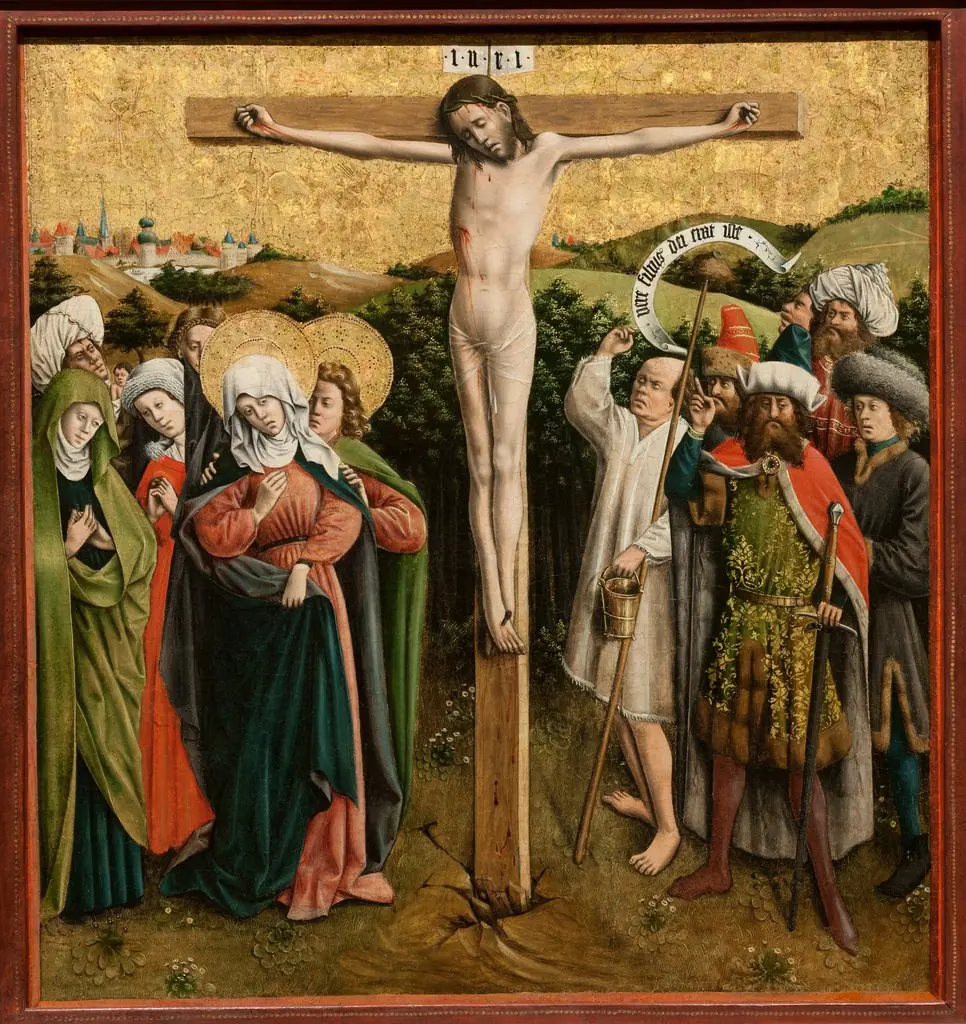
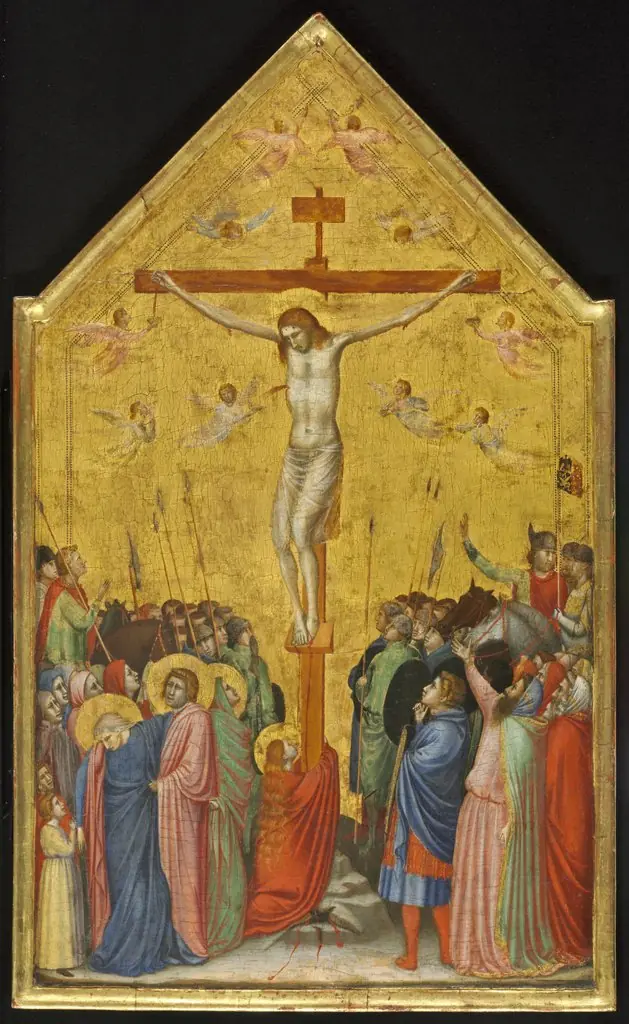
The Crucifixion of Christ is a wood painting by the Gothic painting artist Meister der Kaufmannschen Kreuzigung. It dates from 1340 and is held in the collection of the Gemäldegalerie Berlin. This panel painting, known as The Kaufmann Crucifixion, depicts the central Christian narrative of Christ's crucifixion.
About this work
Subject & Meaning
The work depicts the Crucifixion of Jesus as the central event, flanked by the crosses of the Penitent and Impenitent thieves.
The work depicts the Crucifixion of Jesus as the central event, flanked by the crosses of the Penitent and Impenitent thieves. This composition represents the first known Bohemian depiction of Calvary featuring three crosses alongside a complex narrative of figures beneath them, including Mary, Mary Magdalene, John the Apostle, Longinus, and an angel. The inclusion of these multiple figures and the specific spatial arrangement suggest Italian artistic influence, particularly in the use of perspectival shortening.
While retaining Gothic characteristics such as vivid coloration and rhythmic figure movement, the painting introduces a dramatically focused naturalism that diverges from the typically lyrical atmosphere of contemporary Bohemian art. This shift marks a progression from mystical religious expression toward a more intense, realistic presentation of the suffering inherent in the Passion narrative.
Technique & Style
The work is executed in tempera on a wooden panel that is covered with stretched canvas, measuring approximately 67 cm by 30 cm. It was originally part of a small folding altarpiece and was later transferred to a new canvas support after a 1918 restoration. The surface shows a Gothic composition with Italianate perspective and dramatic naturalism, reflecting both Bohemian and French influences. The painting’s style features sharp drawing, plastic modelling and vivid colour, while its depiction of the crucifixion includes multiple figures such as Mary, John, and the two thieves. These formal qualities distinguish it as a unique Bohemian Gothic panel from the mid‑14th century.
History & Provenance
The Crucifixion of Christ (Kaufmann Crucifixion) was painted circa 1340–1360, likely in Prague, and is attributed to an anonymous Bohemian artist rather than the earlier Meister der Kaufmannschen Kreuzigung.
It was acquired from the Berlin collection of Richard von Kaufmann (1849–1908) by dealers Pavel Cassirer and F.W. Lippmann with Hugo Helbing, who donated it to the Kaiser Friedrich Museum in Berlin (now the Gemäldegalerie Berlin). The panel, tempera on wood covered with canvas (67 × 29.5 cm), was restored in 1918 and remounted.
The work is held in the Gemäldegalerie, Berlin, accessioned as the Kaufmann Crucifixion. It entered the collection through the 1908 donation by Berlin dealers Pavel Cassirer, F.W. Lippmann, and Hugo Helbing, who acquired it from the Richard von Kaufmann collection and presented it to the Kaiser Friedrich Museum, from which it later transferred to the Gemäldegalerie.
It has not been documented in major exhibitions in the sources provided.
Legacy
The Kaufmann Crucifixion is recognized as a unique work within European painting of its period, possessing a formal perfection that established it as a model for subsequent artists. Its specific motifs, particularly the figure of a man seated on the ground with one leg bent and the other extended, were frequently adopted in later works. This influence is documented in surviving panel paintings as well as manuscript illuminations created in Bohemia and other regions.
The painting represents a stylistic progression from mystical religious expression toward a more dramatic presentation of reality, distinguishing it from the generally lyrical atmosphere characteristic of contemporary Bohemian art.
Overview
This panel painting, known as The Kaufmann Crucifixion, depicts the central Christian narrative of Christ's crucifixion. Created by an unknown Bohemian artist between 1340 and 1360, it is rendered on wood. The work likely served as the focal point of a smaller, folding altarpiece, a common format for devotional art during the Gothic period.
Artist & collection
Artist
Meister der Kaufmannschen Kreuzigung
Meister der Kaufmannschen Kreuzigung, the Master of the Kaufmann Crucifixion, is the conventional name for an anonymous Bohemian Gothic painter active in the mid-fourteenth century.