Artwork
Kreuzigung Christi
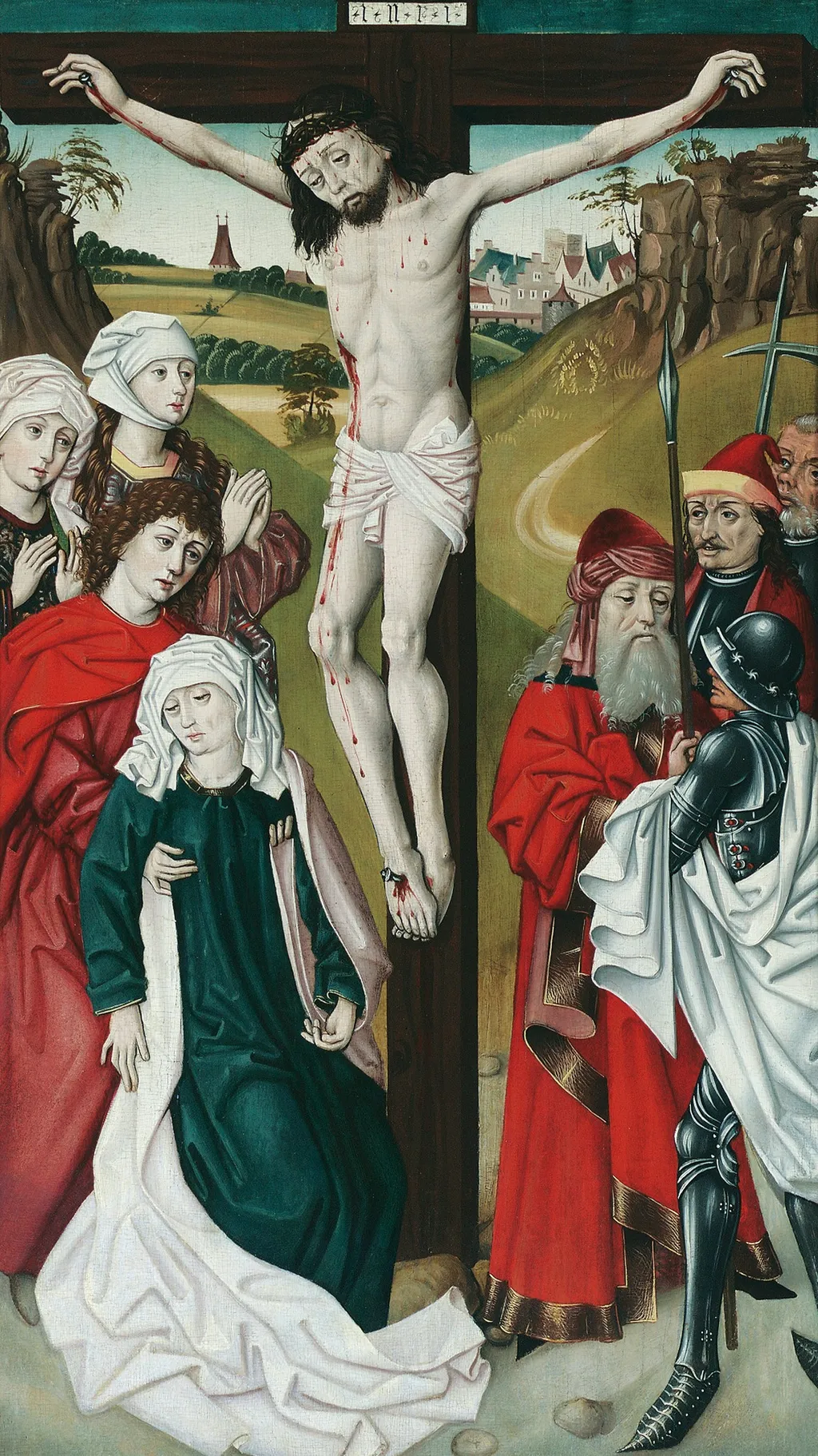
Kreuzigung Christi is an unspecified painting by the Northern Renaissance artist Master of the Schotten Altarpiece. It dates from 1475 and is held in the collection of the Kunsthistorisches Museum.
About this work
Subject & Meaning
The painting portrays the crucifixion of Jesus Christ, a central moment in Christian iconography symbolizing sacrifice and redemption.
The painting portrays the crucifixion of Jesus Christ, a central moment in Christian iconography symbolizing sacrifice and redemption. The composition emphasizes the suffering and solemnity of the scene through the figure of Christ on the cross, flanked by the two thieves and the mourning Virgin Mary, reflecting traditional medieval symbolism of sacrifice and divine love. The work belongs to the religious art genre, consistent with devotional practices of the late 15th century in Central Europe.
The depiction draws on established iconographic conventions, including the use of the Latin cross as a symbol of sacrifice and the inclusion of mourning figures to heighten emotional resonance. The artist, active in Vienna around 1475, contributed to the visual theology of the period by rendering sacred narratives with both spiritual gravity and narrative clarity, as seen in this panel from the Schotten Altarpiece.
The painting measures 87.5 cm in height and 52 cm in width, created in tempera on wood, and is housed in the Belvedere, Kunsthistorisches Museum in Vienna.
The subject of the work is the crucifixion of Jesus Christ, a foundational event in Christian theology representing atonement and salvation, and the artwork serves as a devotional object within the religious art tradition of the period.
History & Provenance
The painting Kreuzigung Christi was created in 1475 by the Master of the Schotten Altarpiece. The work is currently held in the collection of the Belvedere, which is part of the Kunsthistorisches Museum in Vienna. While the specific original commissioner and the detailed ownership chain prior to its museum acquisition are not provided in the available records, the piece is firmly attributed to the workshop of the Master of the Schotten Altarpiece based on its stylistic characteristics and historical classification.
The painting Kreuzigung Christi by the Master of the Schotten Altarpiece is held in the collection of the Belvedere in Vienna. While some records associate the work with the Kunsthistorisches Museum, the primary location listed is the Belvedere. The source material does not provide a specific inventory or accession number for the piece. Additionally, the available documentation contains no information regarding the work's exhibition history or past display venues.
Overview
Created in 1475, the Kreuzigung Christi portrays the crucifixion of Jesus. Executed by the anonymous Master of the Schotten Altarpiece, a German painter active in Vienna during the late medieval period, the work belongs to the Northern Renaissance and is part of the Kunsthistorisches Museum’s collection.
Technique & Style
The composition relies on clear, bold outlines and flat areas of colour rather than gradual shading. Bright reds, blue‑green garments and touches of gold create a striking visual contrast, while the figures’ calm expressions lend a restrained emotional tone.
Context
The painting reflects the devotional art of late 15th‑century Central Europe, where religious scenes were rendered with an emphasis on narrative clarity. Its stylistic traits align with the Northern Renaissance’s focus on detailed surface treatment and precise linear forms.
Artist & collection
Artist
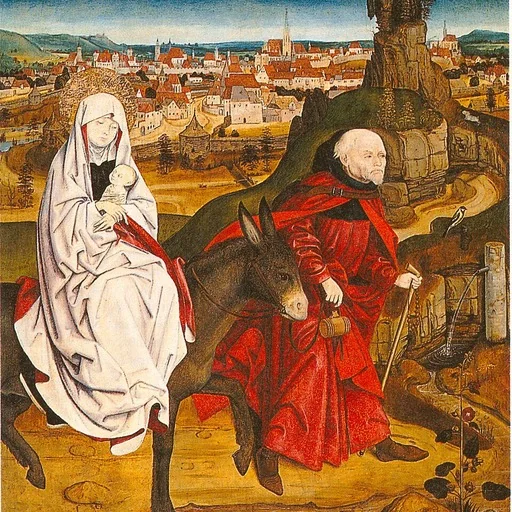
Master of the Schotten Altarpiece
The Master of the Schotten Altarpiece (German: Meister des Wiener Schottenaltars) was a German painter, active in Vienna during the 14th and 15th centuries.

 Crucifixión
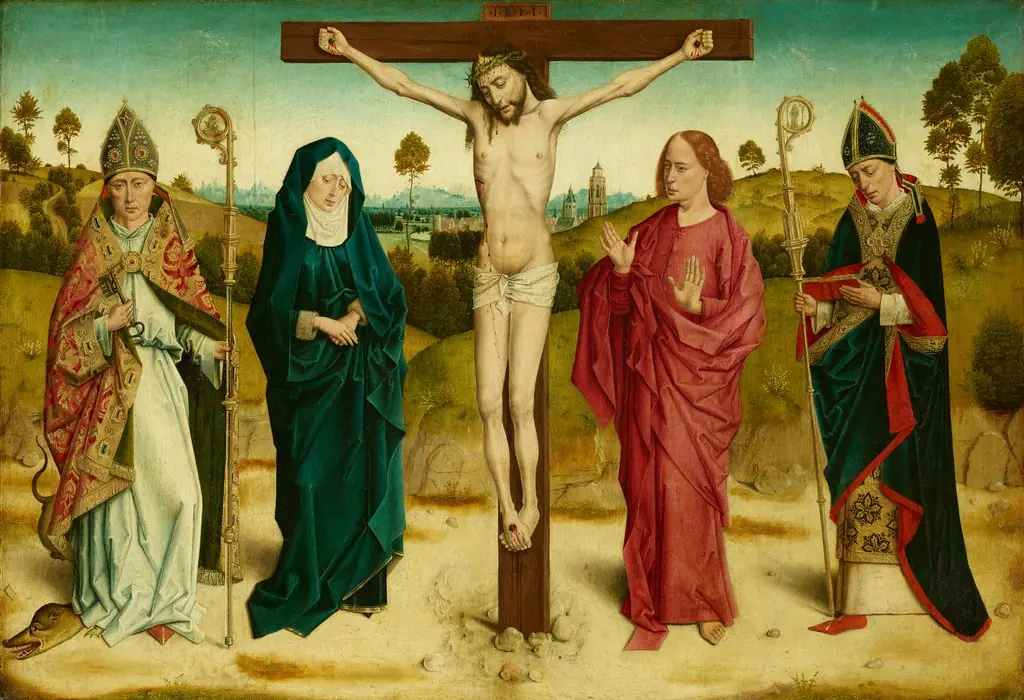 Christ crucified between Mary and John the Evangelist and the saints Adolphus and Ambrosius
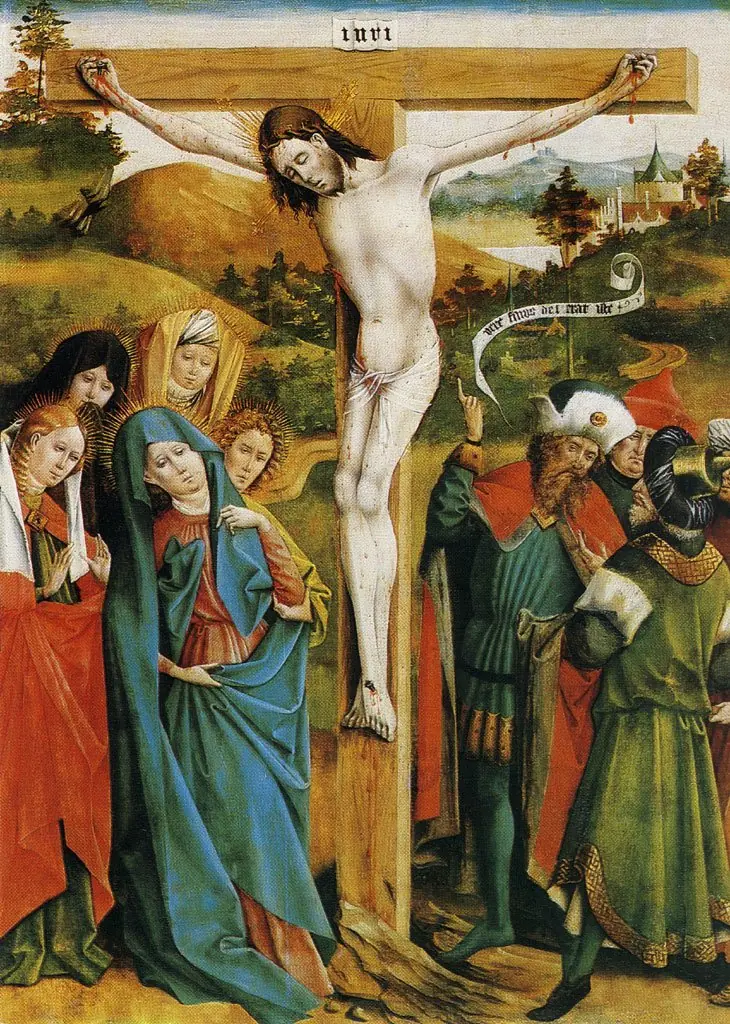 Crucifixion of Christ
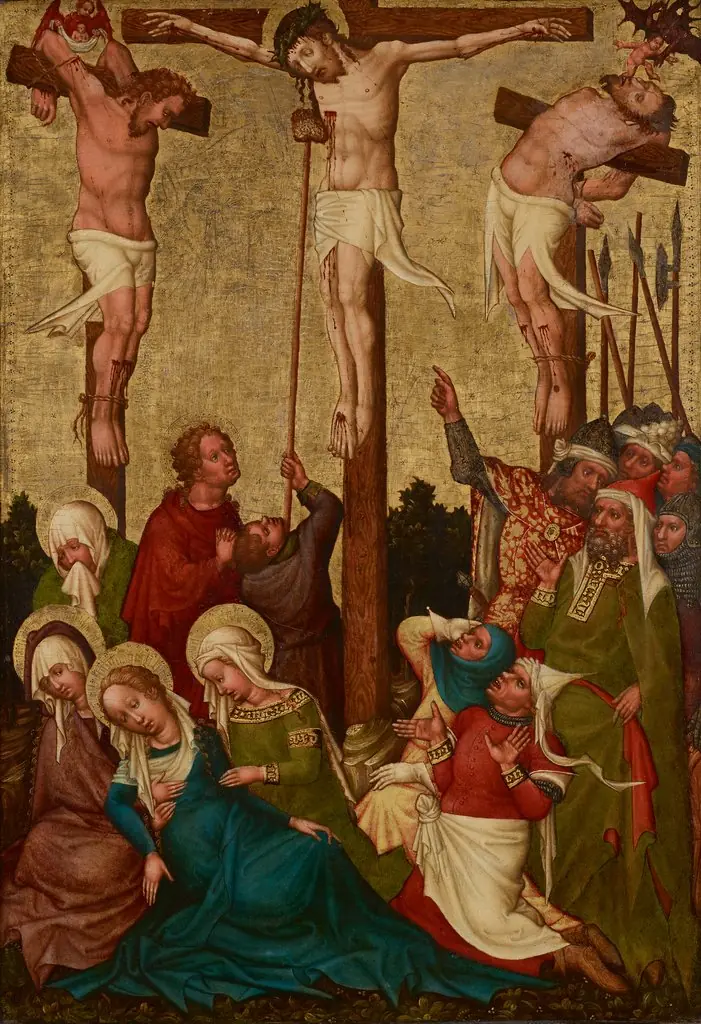 Crucifixion
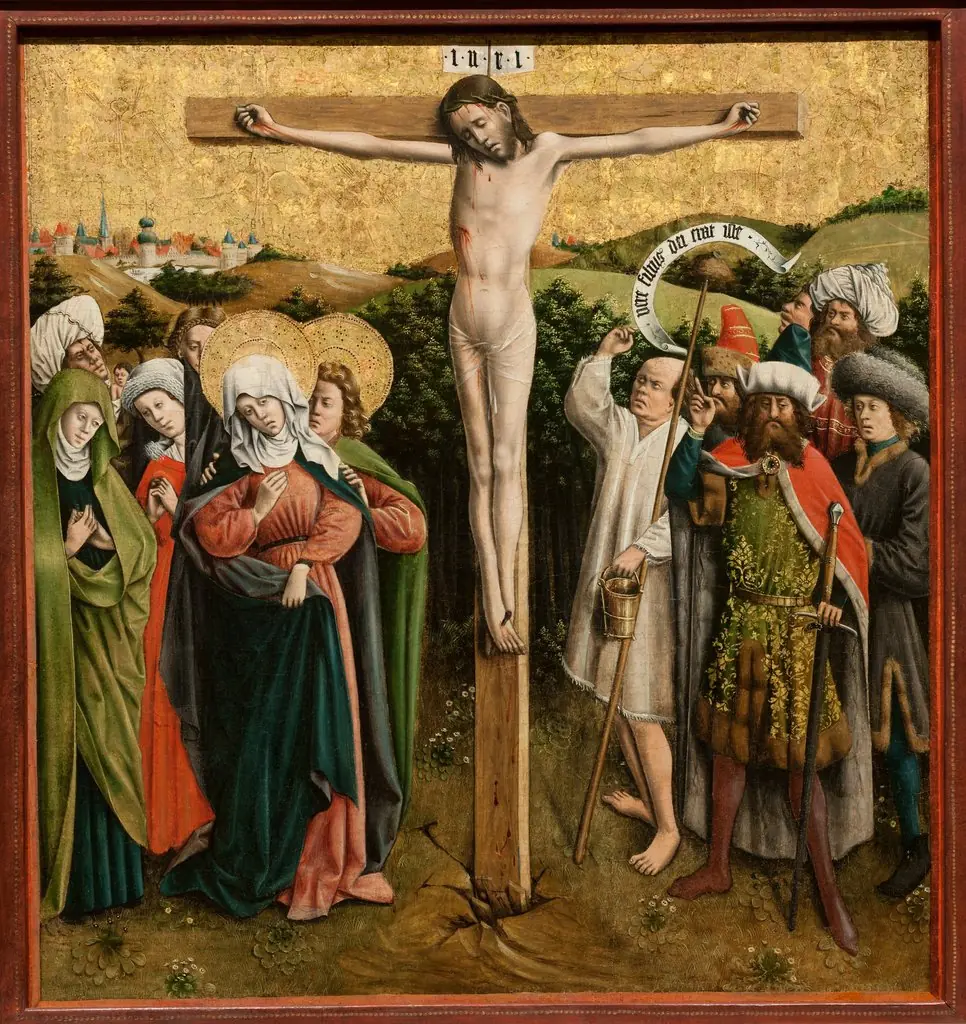 Altarpiece with The Passion of Christ
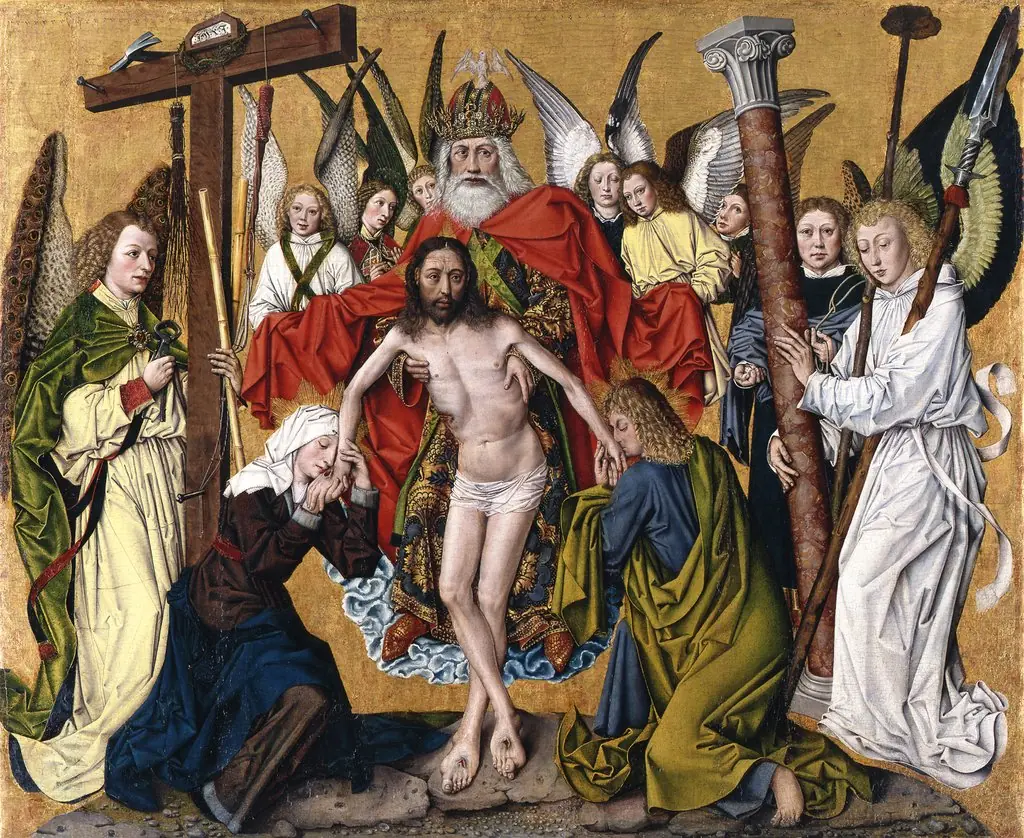 The Throne of Mercy with the Virgin, St. John, and Angels with the Arma Christi
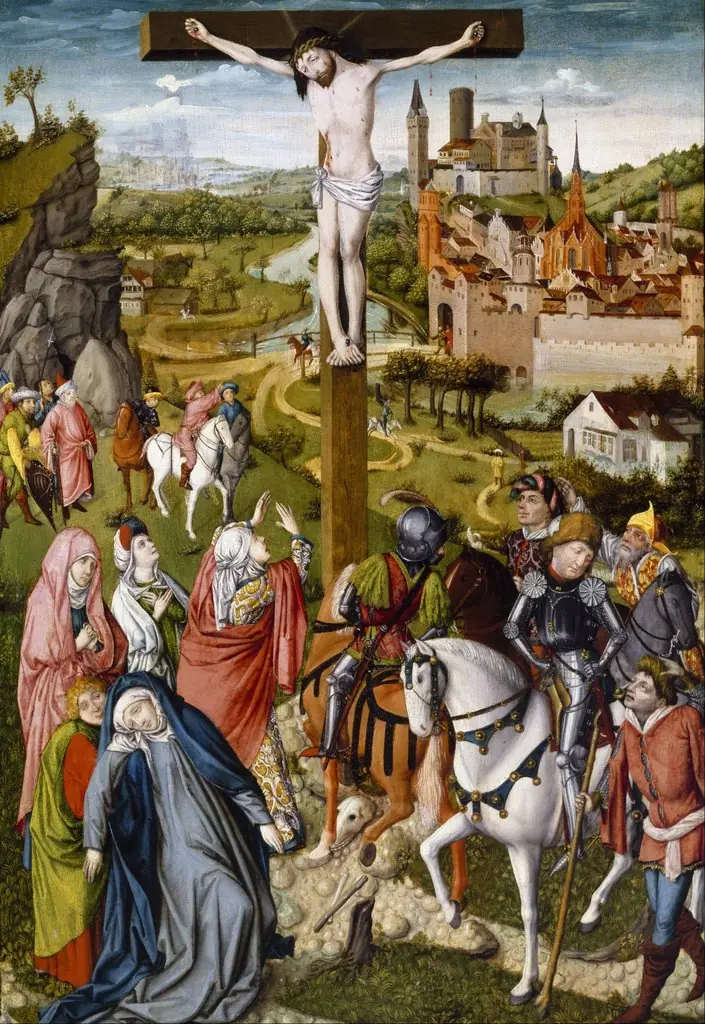 Crucifixion
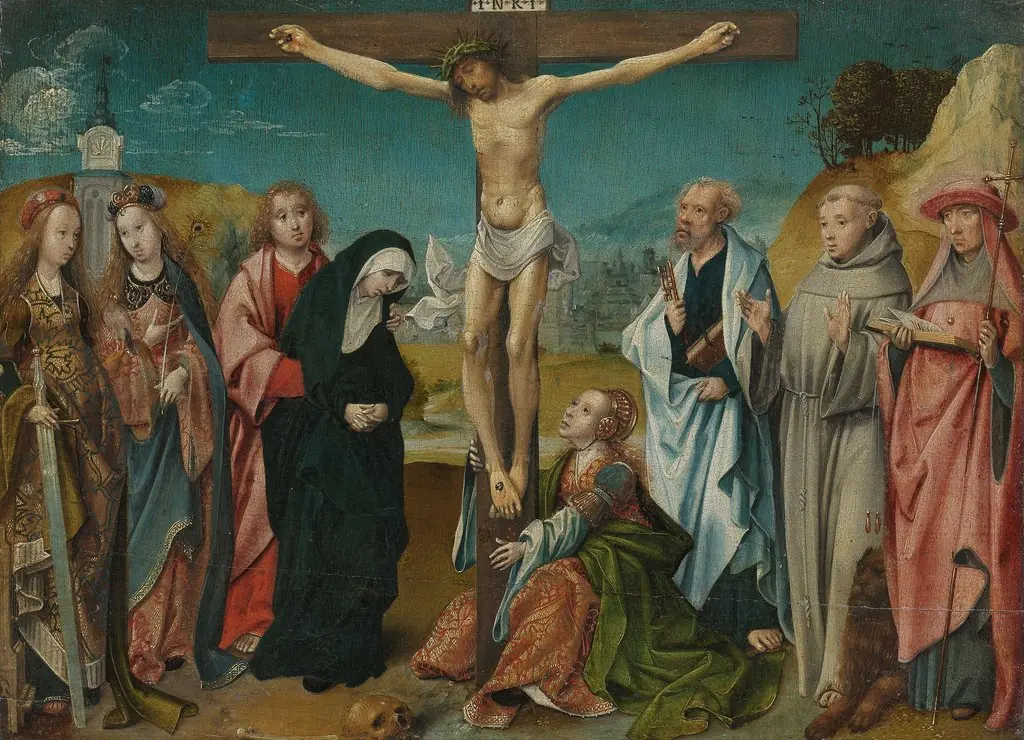 Christ on the cross with the Virgin, St John the Evangelist, Mary Magdalen, and Sts Cecilia and Barbara (left), and Sts Peter, Francis and Jerome (right)
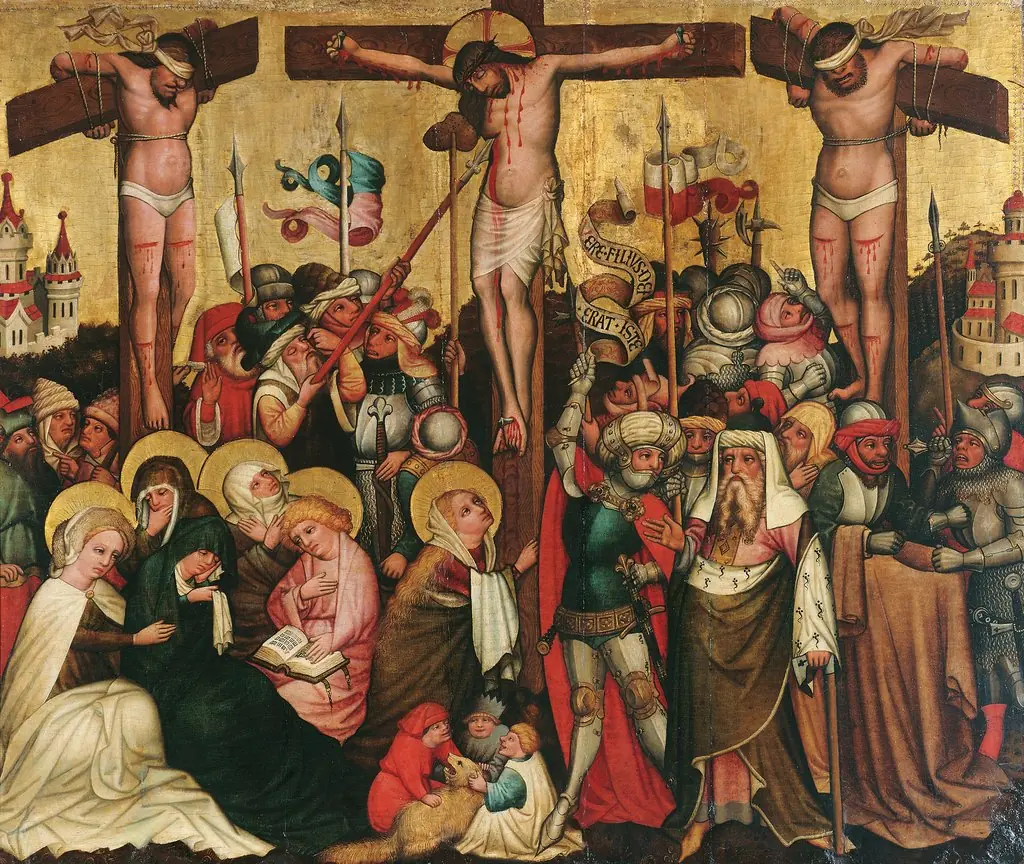 The crucifixion
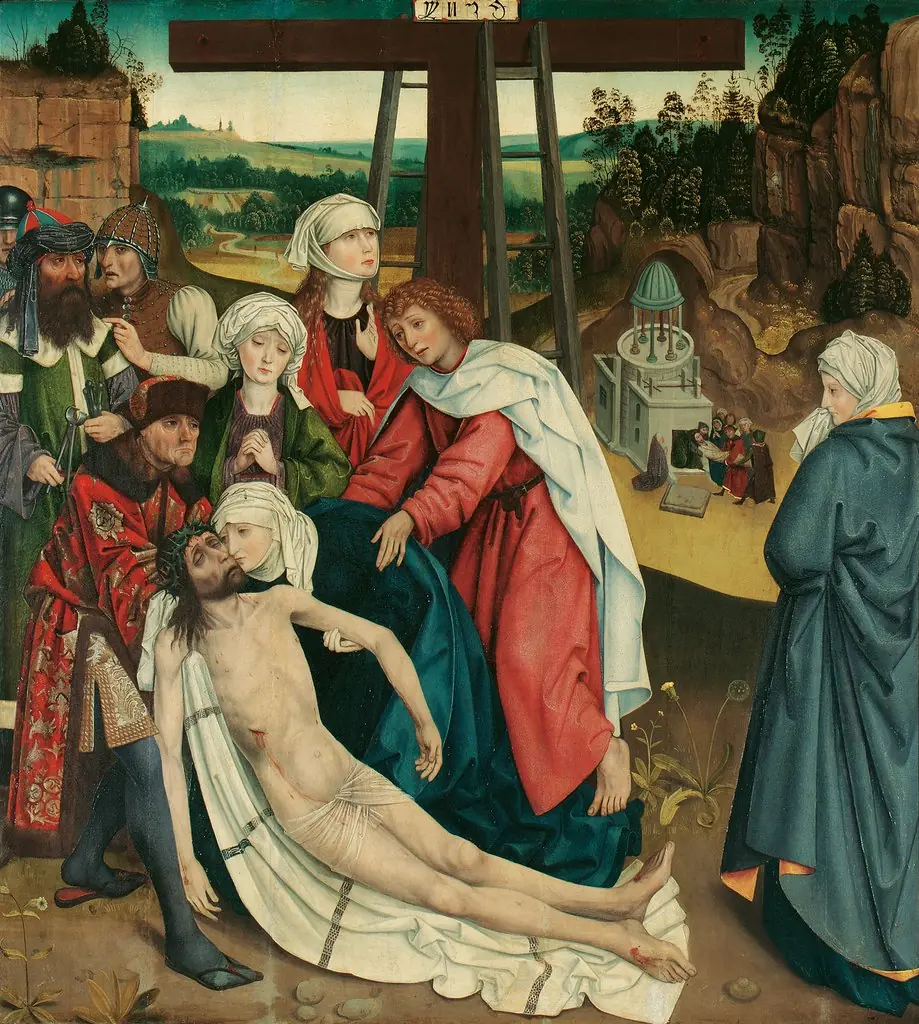 Lamentation of Christ