Artwork
The Crucifixion
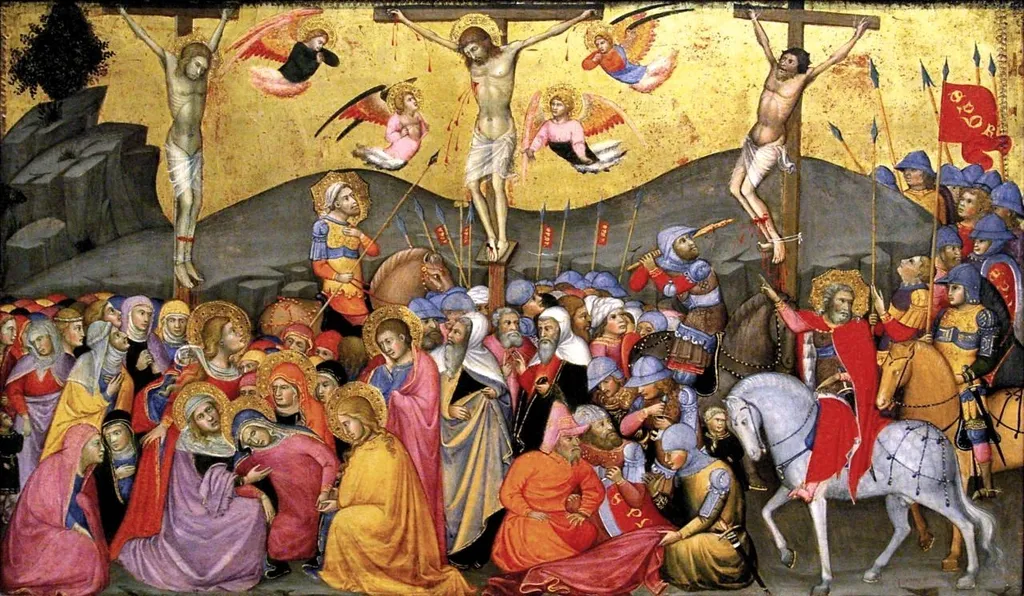
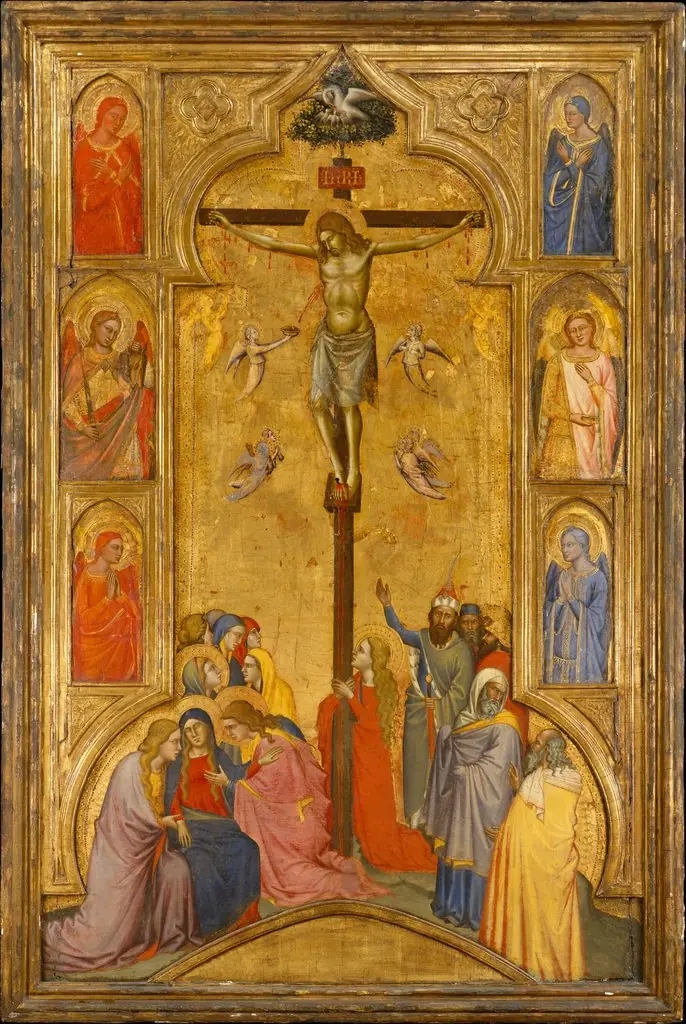
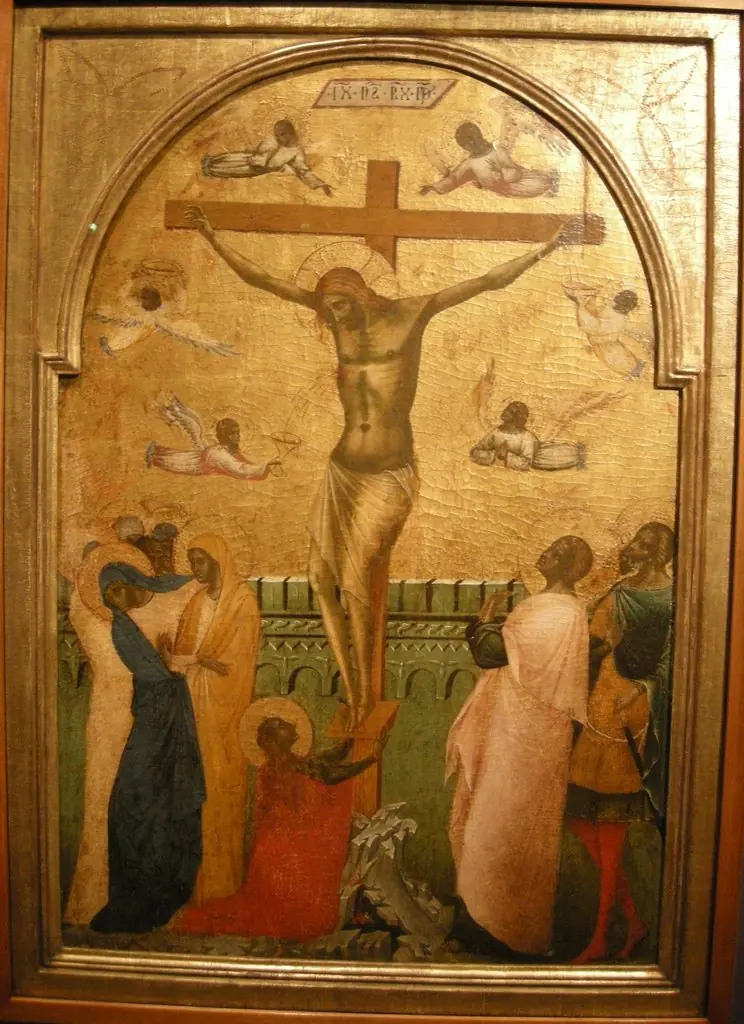
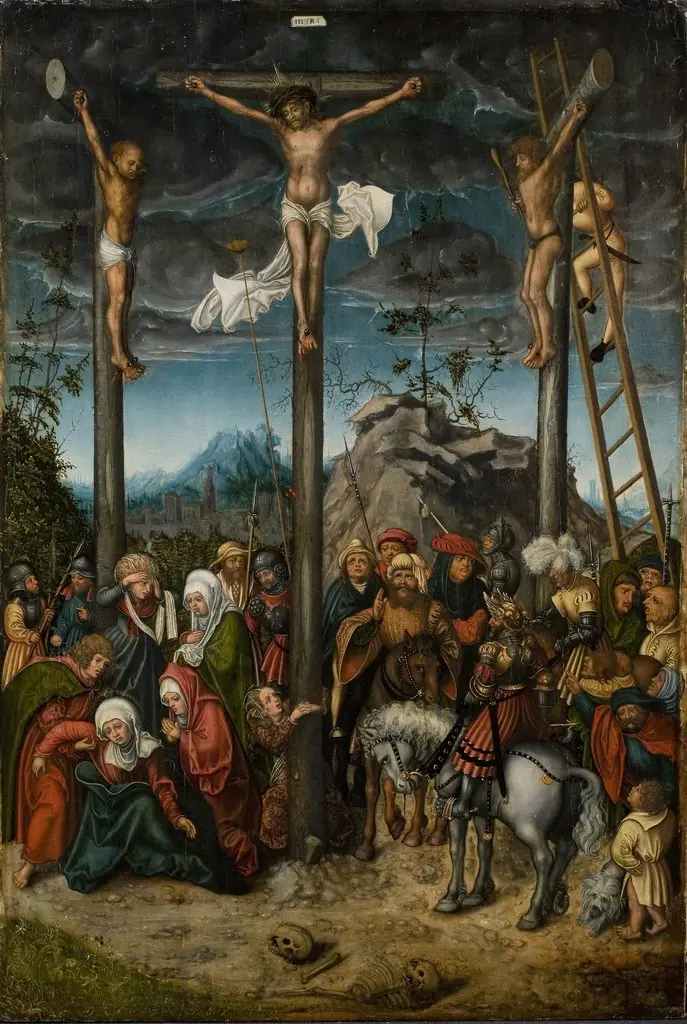
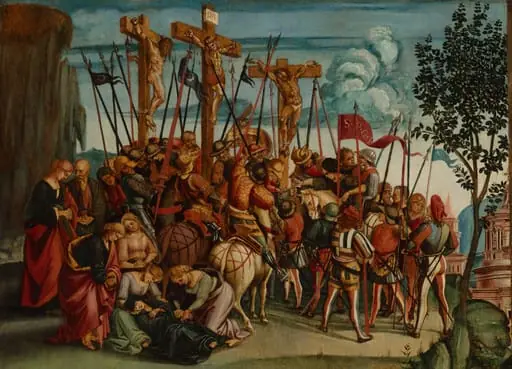
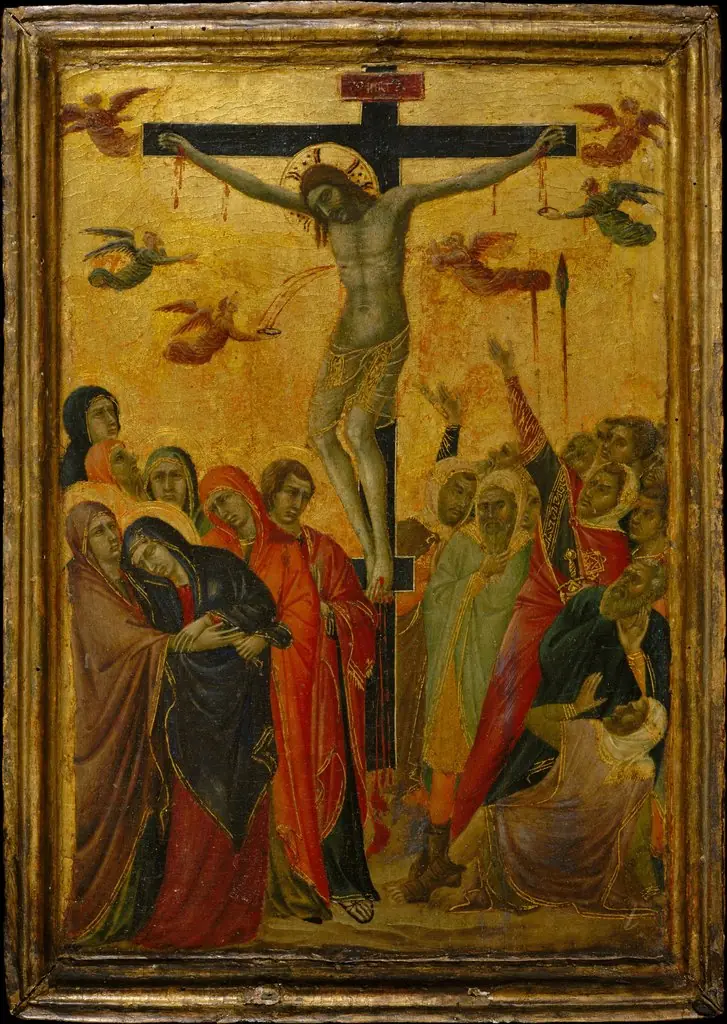
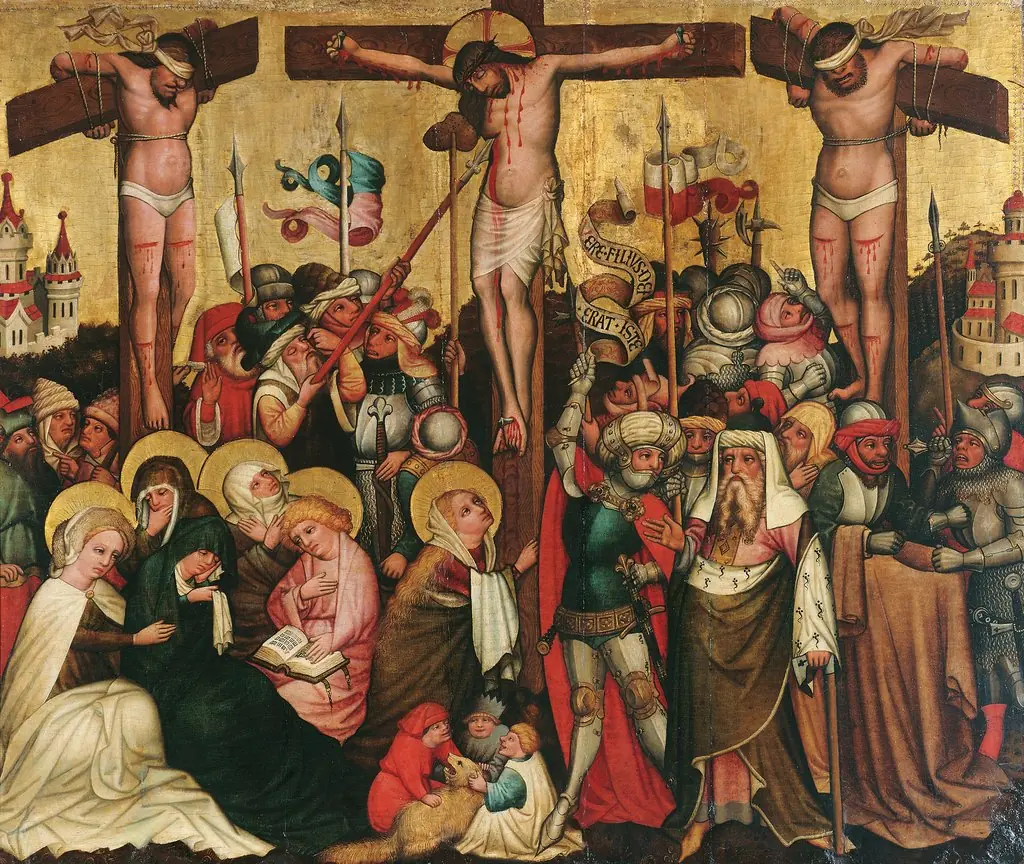
The Crucifixion is a tempera painting by the Italo Byzantine artist Andrea di Bartolo. It is held in the collection of the Metropolitan Museum of Art.
About this work
Subject & Meaning
As a religious painting executed in tempera on panel, the work functions as a devotional image illustrating the pivotal moment of Christ's execution.
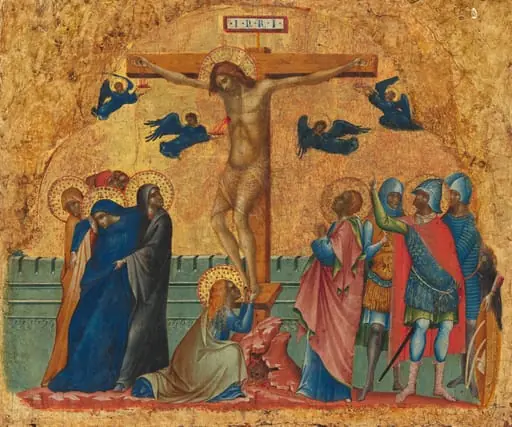
The artwork depicts the crucifixion of Jesus Christ, serving as a central subject of religious art created in 1400. The composition features Jesus Christ as the main figure on the cross, accompanied by a soldier and another man within the scene. As a religious painting executed in tempera on panel, the work functions as a devotional image illustrating the pivotal moment of Christ's execution.
The narrative focus remains strictly on the event of the crucifixion, presenting the figures involved in this biblical episode without additional allegorical layers described in the available records. The depiction aligns with the genre of religious art, emphasizing the solemnity of the sacrifice through the portrayal of the central figure and the specific individuals present at the site.
Technique & Style
Executed in tempera on panel, The Crucifixion is a horizontal religious painting measuring 52.7 by 97.8 centimeters, a format consistent with a predella or narrative compartment. The work belongs to the tradition of early fifteenth-century Sienese panel painting, in which egg tempera was applied in thin, carefully blended layers over a gessoed wooden support to achieve luminous color and precise linear definition. The horizontal orientation accommodates the extended figural grouping of the Crucifixion scene, with Christ on the cross flanked by soldiers and onlookers. The painting is held in the collection of the Metropolitan Museum of Art.
History & Provenance
The Crucifixion by Andrea di Bartolo is held in the collection of the Metropolitan Museum of Art in New York, where it has been accessioned as part of the museum's holdings of early Italian painting. The work, executed in tempera on panel and dated to 1400, measures 52.7 by 97.8 centimeters. No specific accession number, acquisition date, or prior exhibition history is documented in the available sources.
Overview
Andrea di Bartolo's "The Crucifixion," created around 1400, is a tempera painting that visually interprets a pivotal moment in Christian theology. This work, now part of The Metropolitan Museum of Art's collection, presents a complex narrative scene. It reflects the artistic conventions of the early Renaissance, offering a detailed depiction of the biblical account and inviting viewers to contemplate the profound suffering and sacrifice central to its theme.
Artist & collection


![Christ on the Cross [reverse], by Andrea di Bartolo](https://artifactworldgallery.com/img/andrea-di-bartolo--christ-on-the-cross-reverse--6bfe980f802a6327-w320.webp)
![Madonna of Humility, The Blessing Christ, Two Angels, and a Donor [obverse], by Andrea di Bartolo](https://artifactworldgallery.com/img/andrea-di-bartolo--madonna-of-humility-the-blessing-christ-two-angels-and-a-don--d37c382429905539-w320.webp)