Artwork
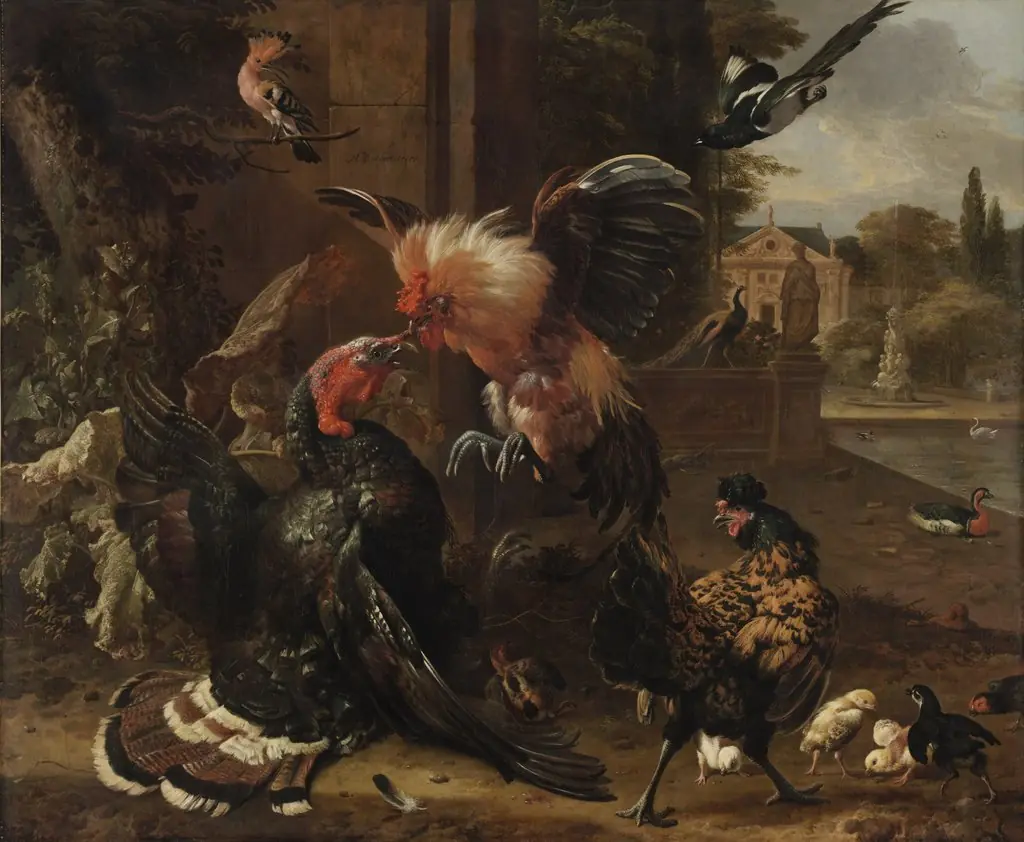
Barnyard Fowl and Peacocks
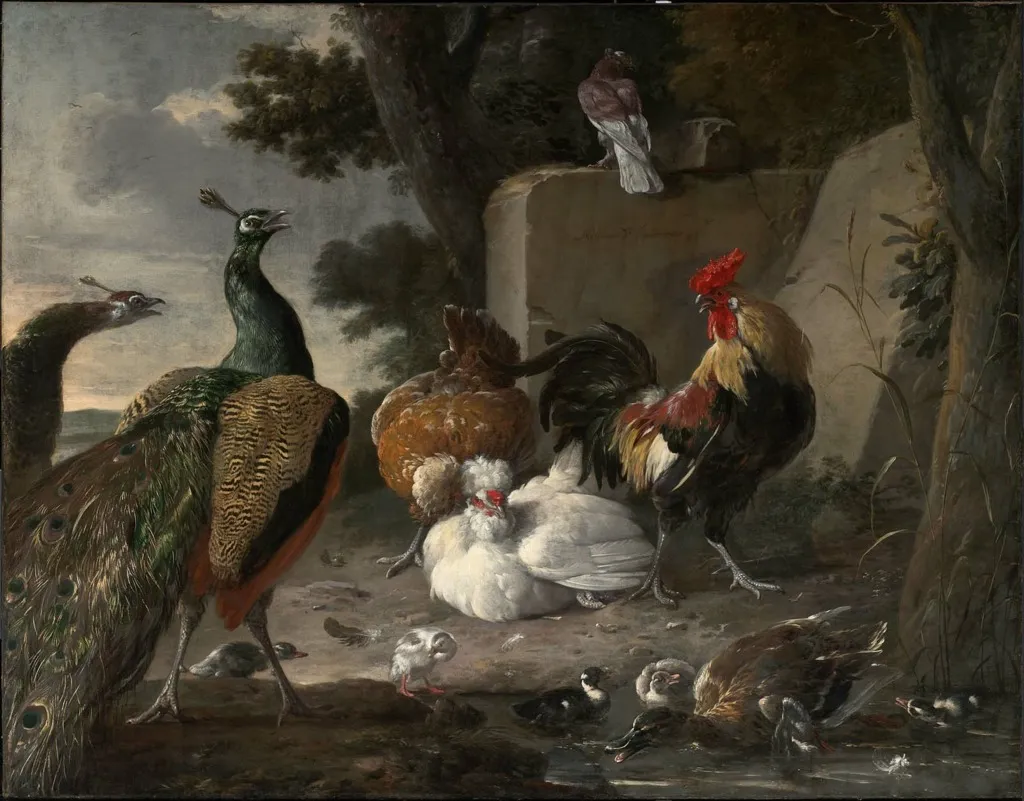
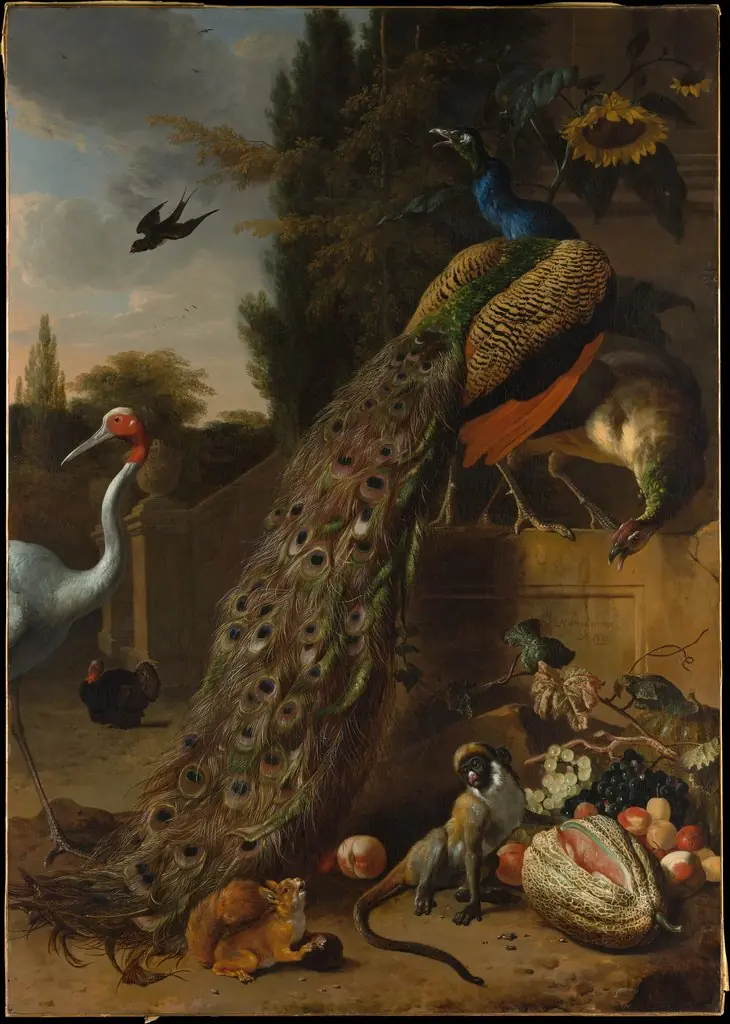
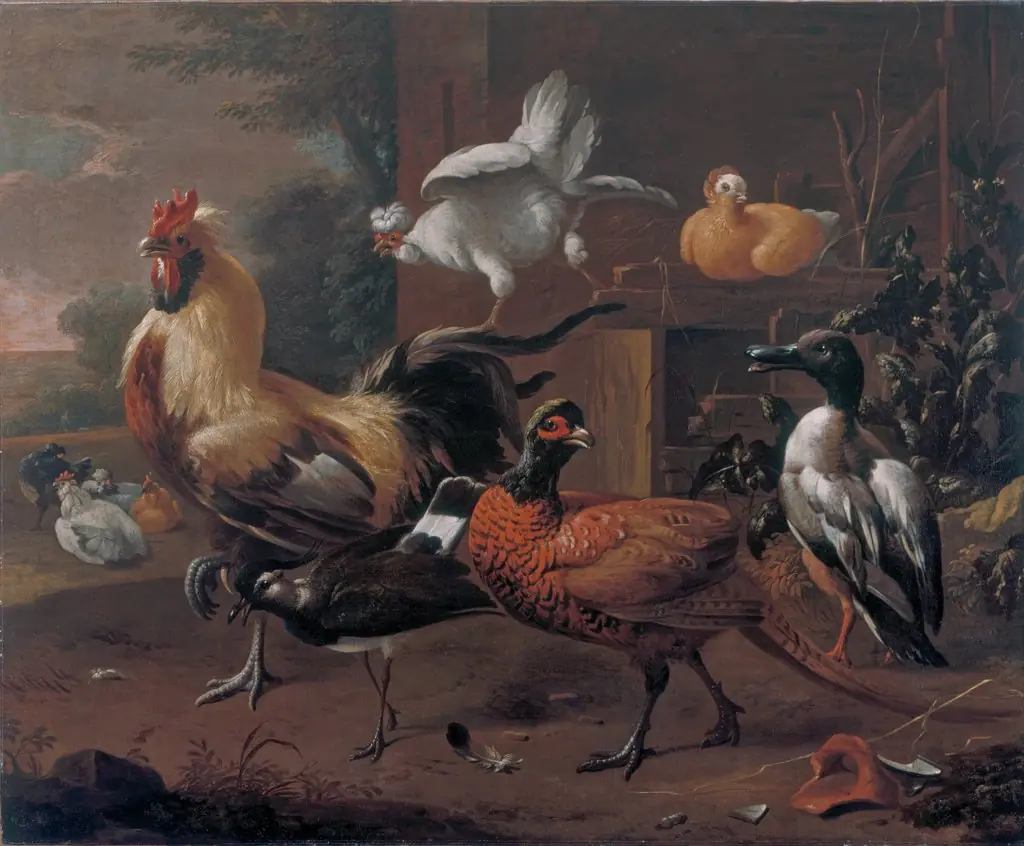
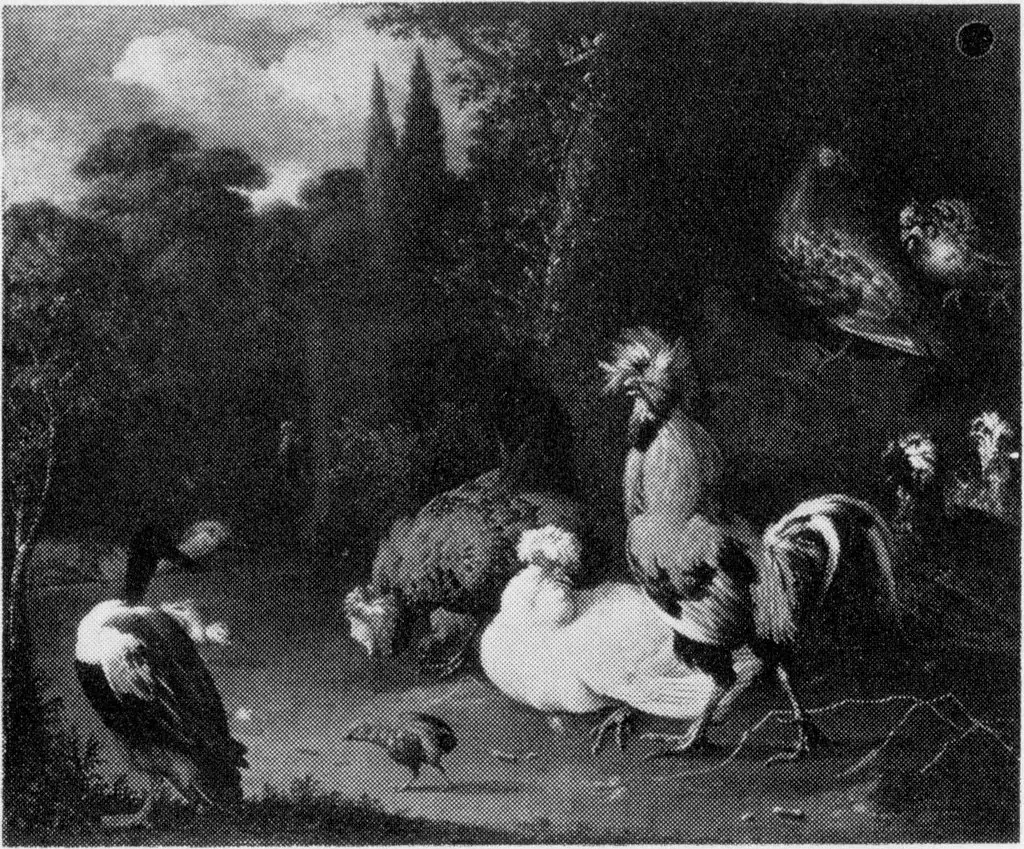
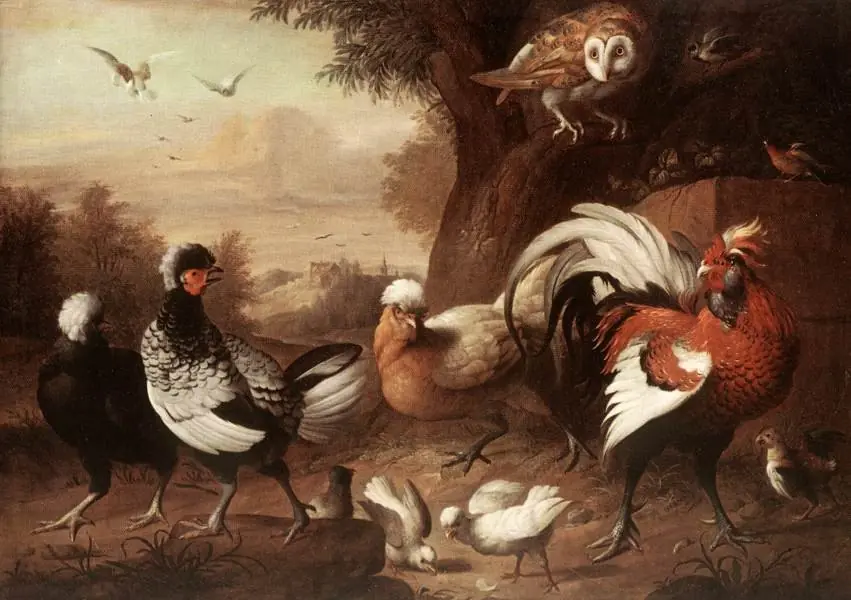
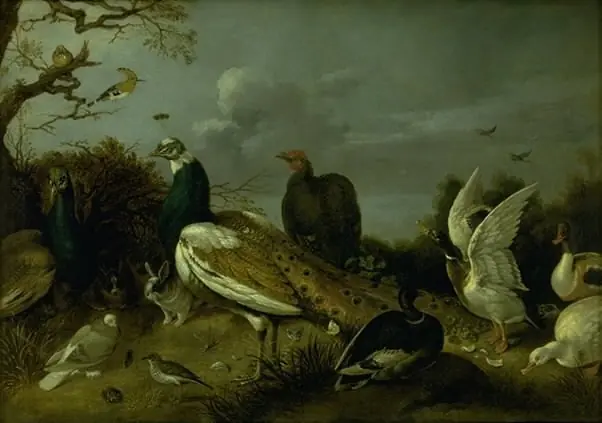
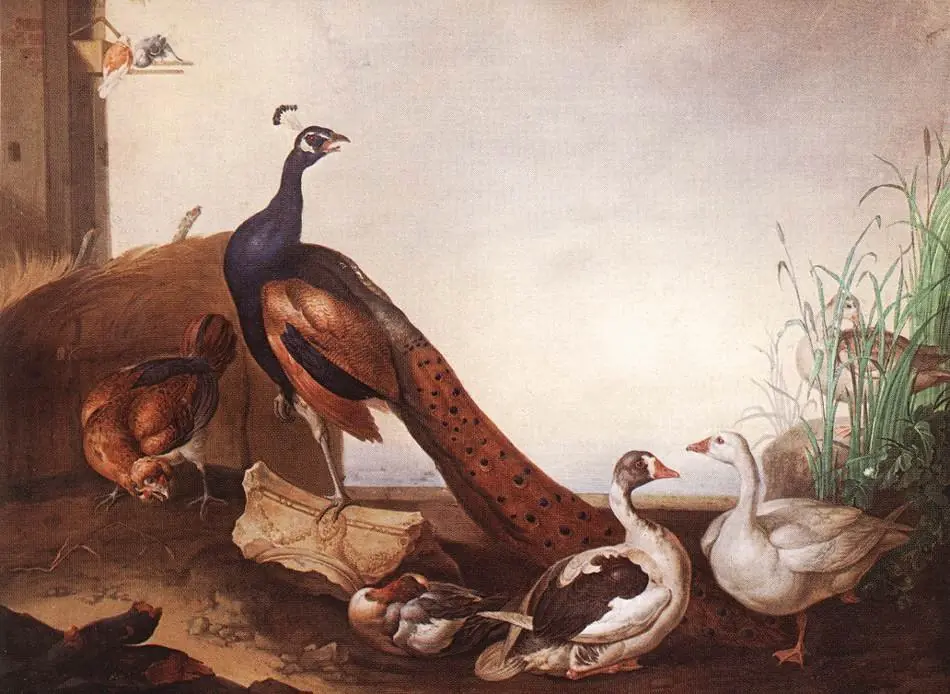
Barnyard Fowl and Peacocks is an oil painting by the Dutch Golden Age artist Melchior d' Hondecoeter. It dates from 1665 and is held in the collection of the Museum of Fine Arts Boston.
About this work
Overview
A leading Dutch animalier of the Golden Age, d’Hondecoeter focused on avian subjects with meticulous observation, blending realism with compositional elegance.
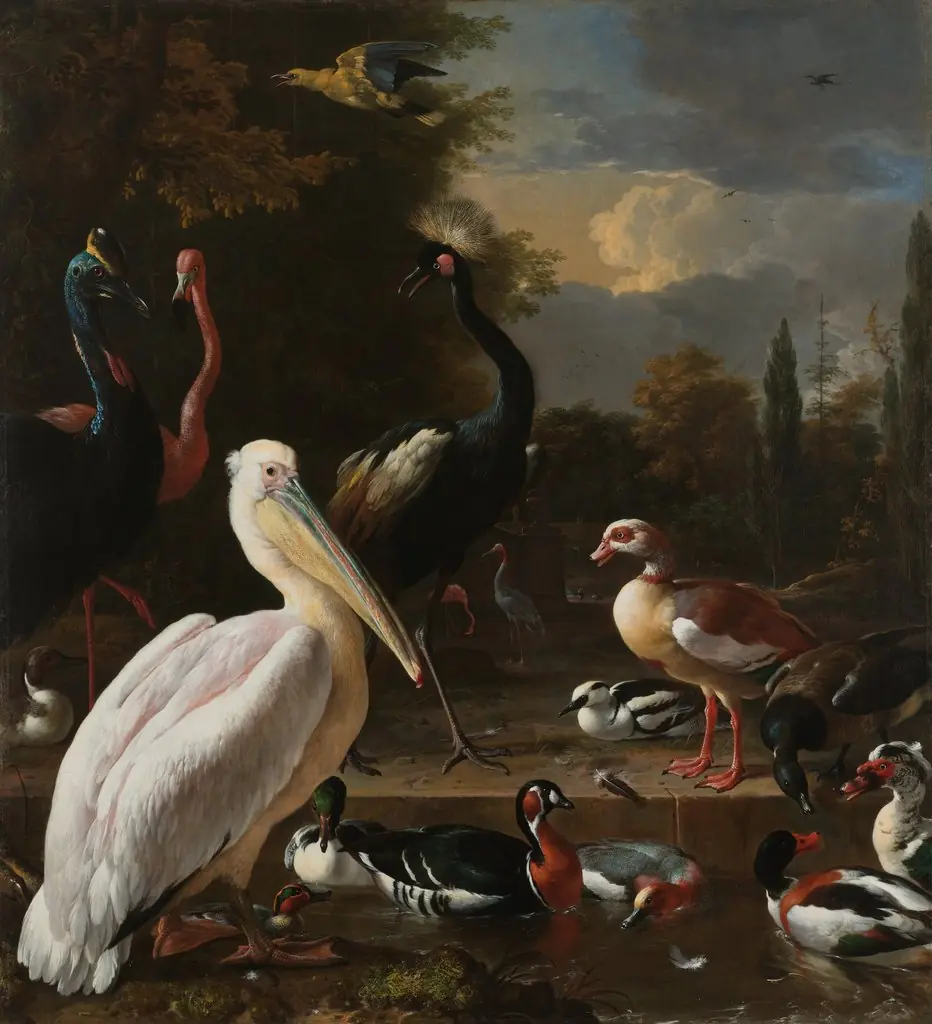
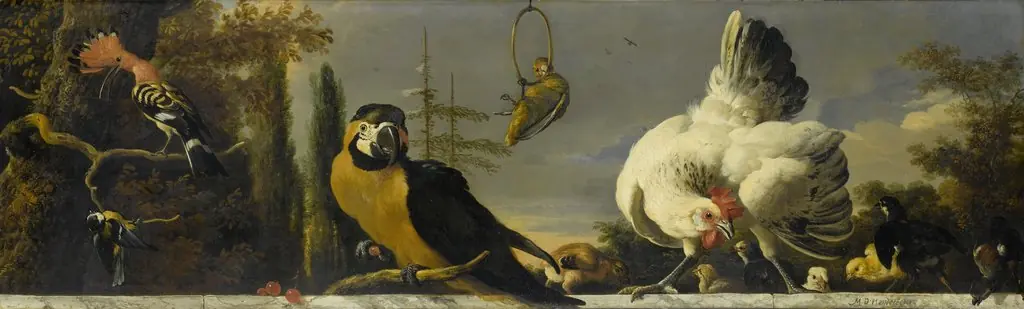
Painted in 1665 by Melchior d’Hondecoeter, this oil-on-canvas work presents a curated assembly of domestic and exotic birds within a naturalistic outdoor setting. A leading Dutch animalier of the Golden Age, d’Hondecoeter focused on avian subjects with meticulous observation, blending realism with compositional elegance. The painting resides today in the Museum of Fine Arts, Boston, as part of its European art holdings.
Subject & Meaning
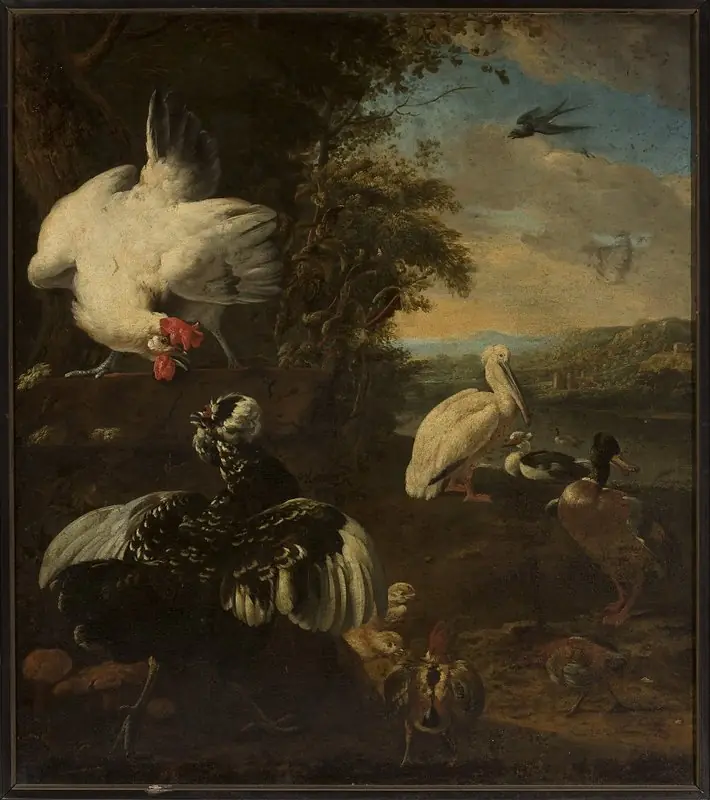
The scene includes peacocks, roosters, hens, and ducks arranged in a semi-wild courtyard, suggesting a cultivated estate rather than a working farm. The peacock, with its expanded tail, serves as a visual anchor, symbolizing beauty and rarity. Other birds appear in moments of quiet activity, preening, foraging, or resting, conveying a sense of calm observation rather than narrative drama.
Technique & Style
D’Hondecoeter employed fine brushwork and layered glazes to capture the iridescence and texture of feathers. Light is carefully modulated to emphasize volume and surface sheen, particularly on the peacock’s plumage. The background, rendered with softer edges, recedes into a hazy landscape of trees and cloud-dappled sky, enhancing the foreground’s tactile precision through contrast.
History & Provenance
Created during d’Hondecoeter’s mature period in Amsterdam, the painting reflects the collector interest in exotic fauna among Dutch elites. It entered the Museum of Fine Arts, Boston, in the early 20th century through a private donation, likely acquired via European art markets. Its condition remains well-preserved, with minimal retouching evident under conservation analysis.
Context
In 17th-century Netherlands, depictions of birds were more than decorative, they signaled wealth, global trade connections, and scientific curiosity. Peacocks, imported from Asia, were status symbols in aristocratic gardens. D’Hondecoeter’s works aligned with broader trends in natural history illustration, appealing to patrons who valued both aesthetic refinement and empirical detail.
Legacy
D’Hondecoeter’s approach influenced later animal painters across Europe, particularly in the treatment of avian anatomy and light. While not widely copied, his compositions set a standard for naturalistic bird painting. Today, his works are studied for their technical precision and as records of early modern attitudes toward nature, domestication, and exoticism.
Artist & collection
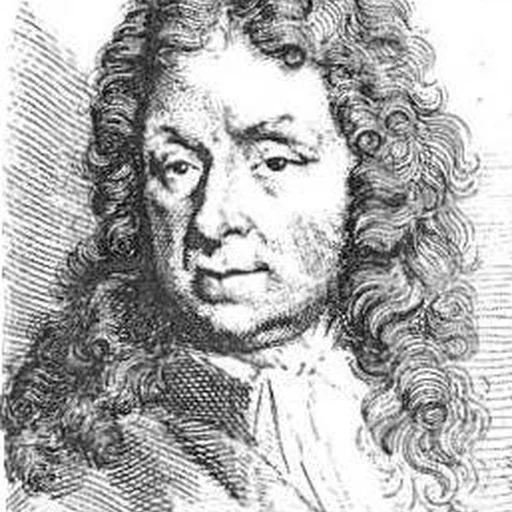
Artist
Melchior d'Hondecoeter (Dutch pronunciation:; c. 1636 – 3 April 1695), Dutch animalier painter, was born in Utrecht and died in Amsterdam. After the start of his career, he painted virtually exclusively bird subjects,…