Artwork
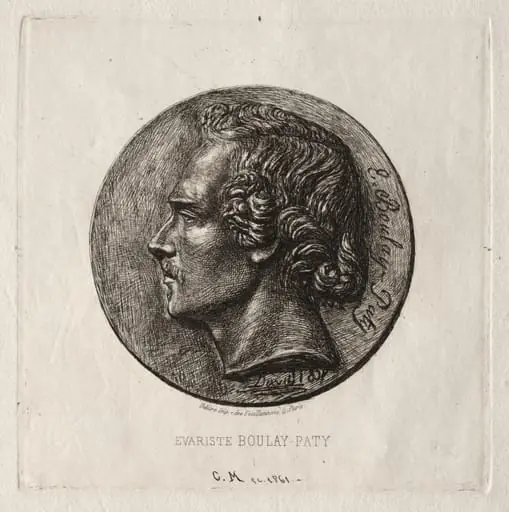
Evariste Boulay-Paty; A Poet (From a Bronze by David d'Angers)
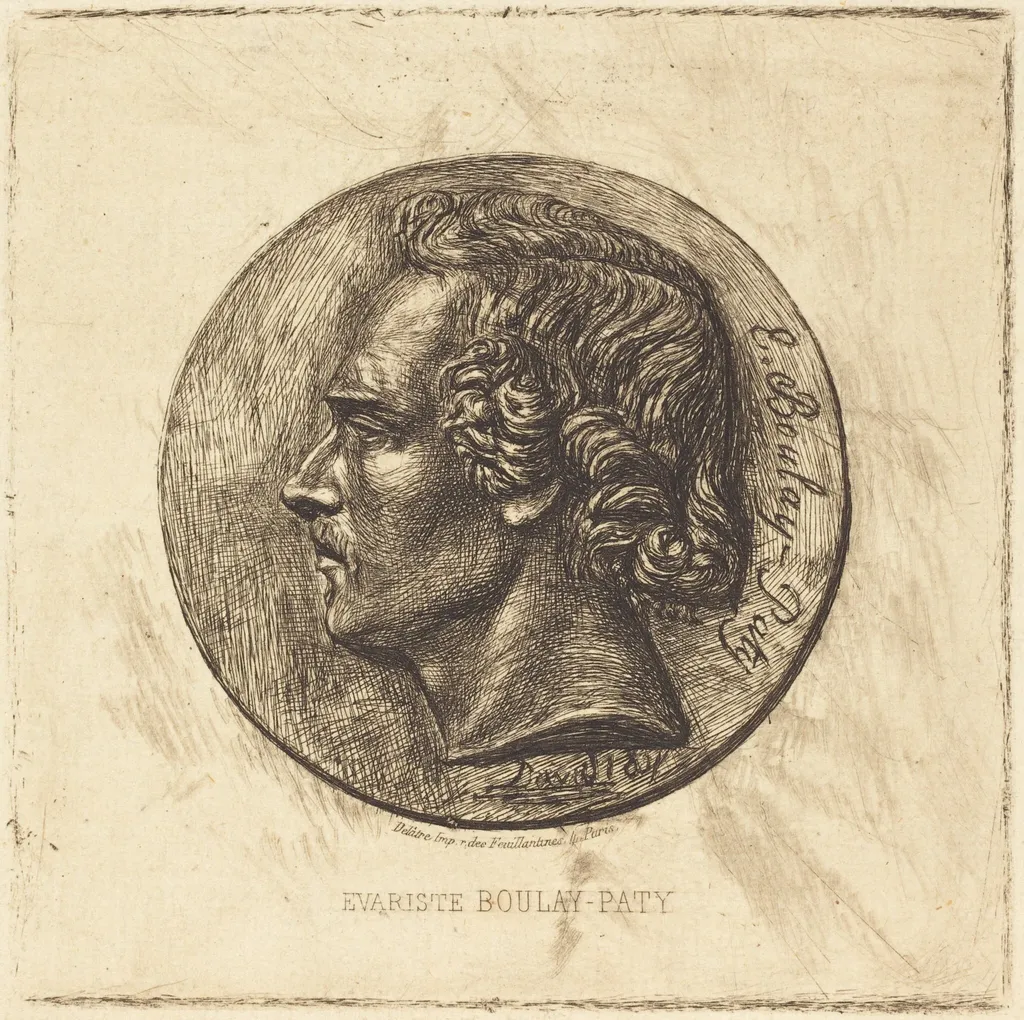
Evariste Boulay-Paty; A Poet (From a Bronze by David d'Angers) is an ink print by the Impressionist artist Charles Meryon. It dates from 1861 and is held in the collection of the National Gallery of Art.
- Inscription
- Inscribed:Not signed. Not dated. "Delâtre Imp. r. des Feuillantines, 4, Paris" lower center margin, in plate, artist's hand. "EVARISTE BOULAY-PATY" lower center margin, in plate. "E. Boulay-Paty" right composition, in plate, artist's hand. "B89" lower right margin, graphite, unknown hand. "77." upper right margin, graphite, unknown hand. "c.1247/k.358" verso, lower left sheet, graphite, unknown hand. "33" verso, lower center sheet, graphite, unknown hand.
- Markings
- Marked:"LRJ" verso, black stamped ink, stamped twice, (Lugt 1760b). "National Gallery of Art" verso, black stamped ink, (Lugt 1932d). "T" (unidentified collector's stamp) verso, black stamped ink, (Lugt 2412).
About this work
Overview
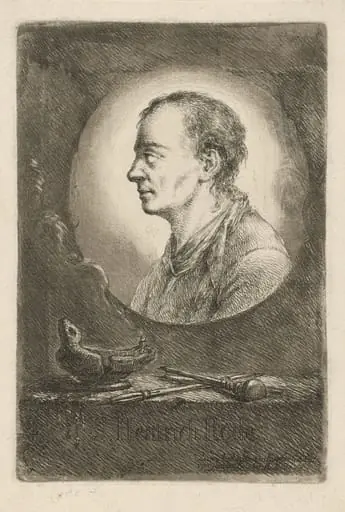
Created in 1861, this work is an etching on laid paper by French printmaker Charles Meryon. It presents a monochrome portrait of the poet Évariste Boulay‑Paty, derived from a bronze relief originally executed by sculptor David d’Angers.
Subject & Meaning
The image captures Boulay‑Paty in profile, his curly hair and high‑collared attire rendered with delicate line work. The inclusion of the poet’s name beneath the oval frame identifies the sitter and underscores the work’s function as a commemorative portrait.
Technique & Style
Meryon employed traditional etching: a metal plate was coated with a wax ground, incised with fine lines, then exposed to acid to bite the design. The resulting inked lines on the laid paper convey subtle tonal variation and a texture reminiscent of woven fabric along the frame’s edge.
History & Provenance
Meryon, noted for his mastery of etching despite his colour‑blindness, produced this print as a reproduction of David d’Angers’s bronze. The piece reflects the 19th‑century practice of translating sculptural portraiture into print form for broader dissemination.
Context
During the mid‑1800s, French artists frequently collaborated across media, with sculptors like d’Angers providing source material for printmakers. Meryon’s choice to depict Boulay‑Paty aligns with contemporary interest in honoring literary figures through visual arts.
Own this work as a print
Artist & collection
Artist
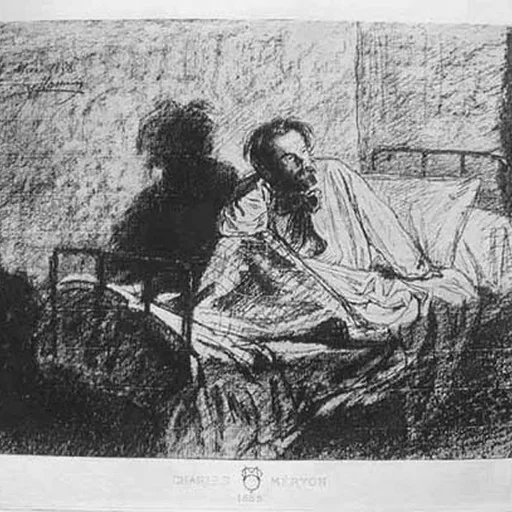
Charles Meryon (sometimes Méryon, 23 November 1821 – 14 February 1868) was a French artist who worked almost entirely in etching, as he had colour blindness.