Artwork
Le Pont-au-Change, Paris, vers 1784
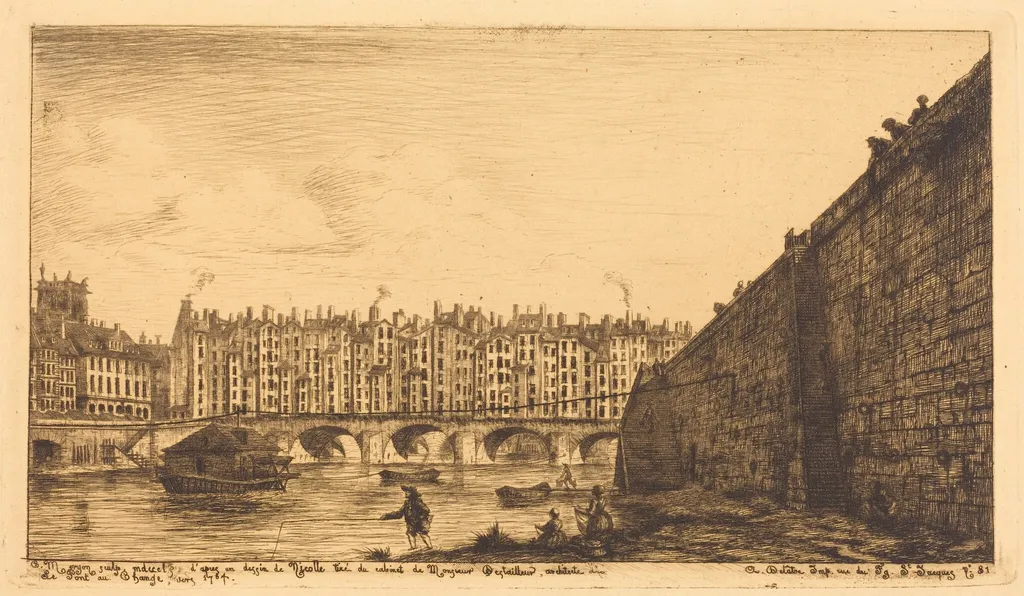
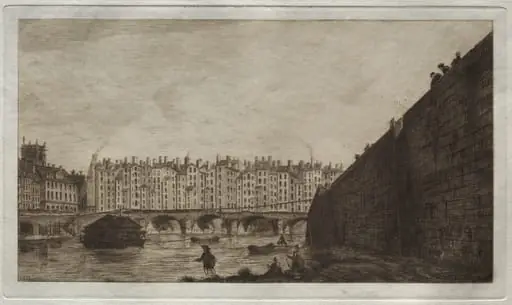
Le Pont-au-Change, Paris, vers 1784 is an ink print by the Impressionist artist Charles Meryon. It dates from 1855 and is held in the collection of the National Gallery of Art. Created in 1855, this etching presents a view of the Pont‑au‑Change, a historic bridge spanning the Seine in Paris.
- Inscription
- Inscribed:"C. Meryon sculp. mdccclv d'apres un dessin de Nicolle tiré du cabinet de Monsieur Destailleur, architecte ano / Le Pont au Change, vers 1784." lower left margin, in plate, artist's hand. "A Delâtre Imp. rue du Fg. St Jacques No 81" lower right margin, in plate, artist's hand. "C. Meryon / LD + W 47VI Le Pont au Change, vers 1784" lower center margin, graphite, unknown hand. "c15081" lower right margin, graphite, unknown hand. Verso: none.
- Markings
- Marked:"LRJ" verso, black stamped ink, stamped twice, (Lugt 1760b). "National Gallery of Art" verso, black stamped ink, (Lugt 1932d).
About this work
Overview
Created in 1855, this etching presents a view of the Pont‑au‑Change, a historic bridge spanning the Seine in Paris. The composition captures the riverbank’s architecture, a central bridge, and a few small vessels, while a solitary figure stands on the quay and another occupies a boat. The work conveys a quiet, atmospheric urban scene rendered in fine line work.
Subject & Meaning
The image focuses on the everyday life of the Seine’s banks, juxtaposing the solid masonry of the bridge and surrounding buildings with the transient presence of people and boats. By emphasizing the interplay of static structures and fleeting human activity, the print reflects a contemplative observation of Parisian urban rhythm in the late eighteenth‑century setting it evokes.
Technique & Style
Executed on wove paper, the artist employed traditional etching methods, using a network of delicate lines to model architecture, water, and figures.
Executed on wove paper, the artist employed traditional etching methods, using a network of delicate lines to model architecture, water, and figures. Varied hatching creates tonal contrasts, while careful manipulation of light and shadow imparts depth and a muted atmospheric quality. The texture achieved through the etched lines draws the eye across the scene, enhancing its realistic yet evocative character.
History & Provenance
The work belongs to a series produced by a French etcher noted for his Gothic‑tinged visions of Paris. Despite his color‑vision deficiency, he devoted himself to the medium of etching, establishing a reputation as a leading 19th‑century French printmaker. This particular plate, dated 1855, reflects his mature period and continues to be held in public and private collections that focus on 19th‑century French graphic art.
Artist & collection
Artist
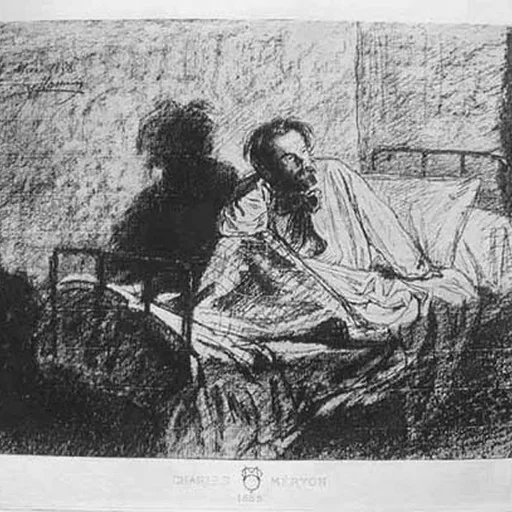
Charles Meryon (sometimes Méryon, 23 November 1821 – 14 February 1868) was a French artist who worked almost entirely in etching, as he had colour blindness.

- Le Pont-au-Change, Paris, vers 1784
 Le Pont-au-change, Paris, vers 1784
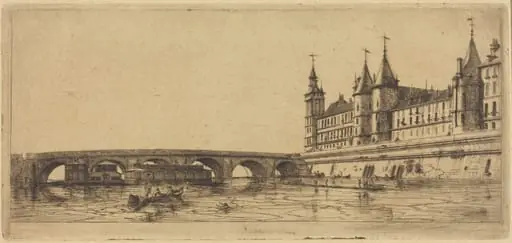 Le Pont-au-Change, Paris
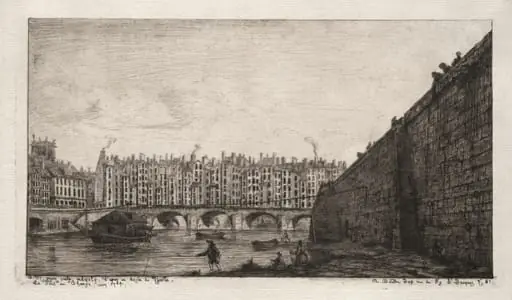 The Exchange Bridge, Paris, about 1784
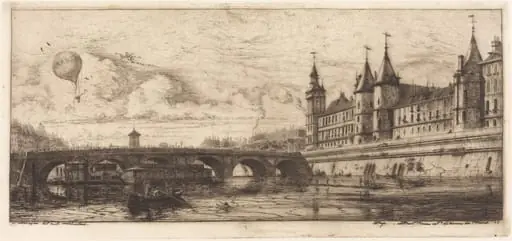 Le Pont-au-Change, Paris
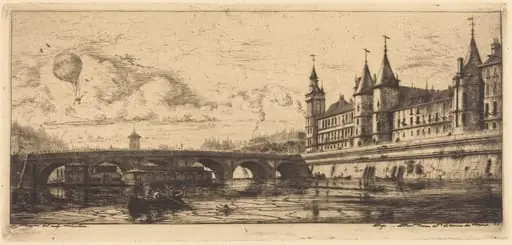 Le Pont-au-Change, Paris
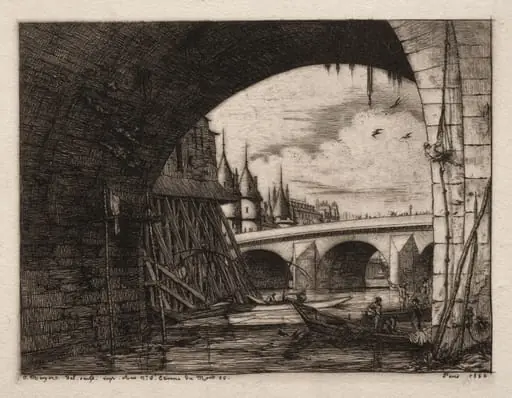 L'arch du Pont Notre Dame, Paris
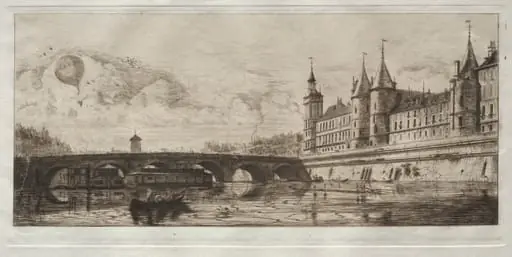 Le Pont-au-Change
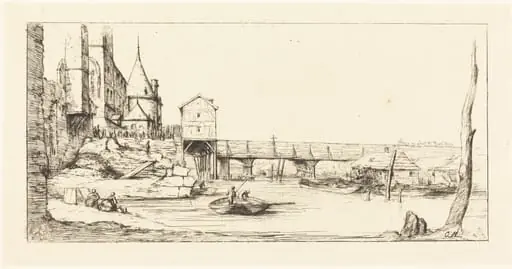 Passerelle du Pont-au-Change, Paris, après l'Incendie de 1621 (Footbridge Temporarily Replacing the Pont-au-Change, Paris, after the Fire of 1621)
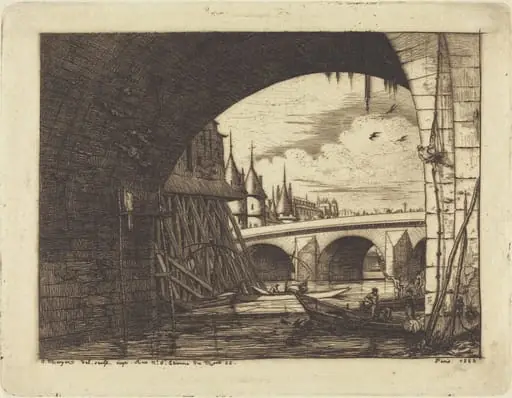 L'arche du Pont Notre-Dame, Paris (An Arch of the Notre-Dame Bridge, Paris)
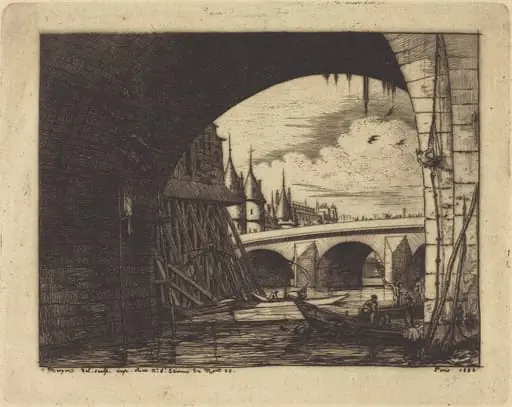 L'arche du Pont Notre-Dame, Paris (An Arch of the Notre-Dame Bridge, Paris)