Artwork
Păzitorii castelului
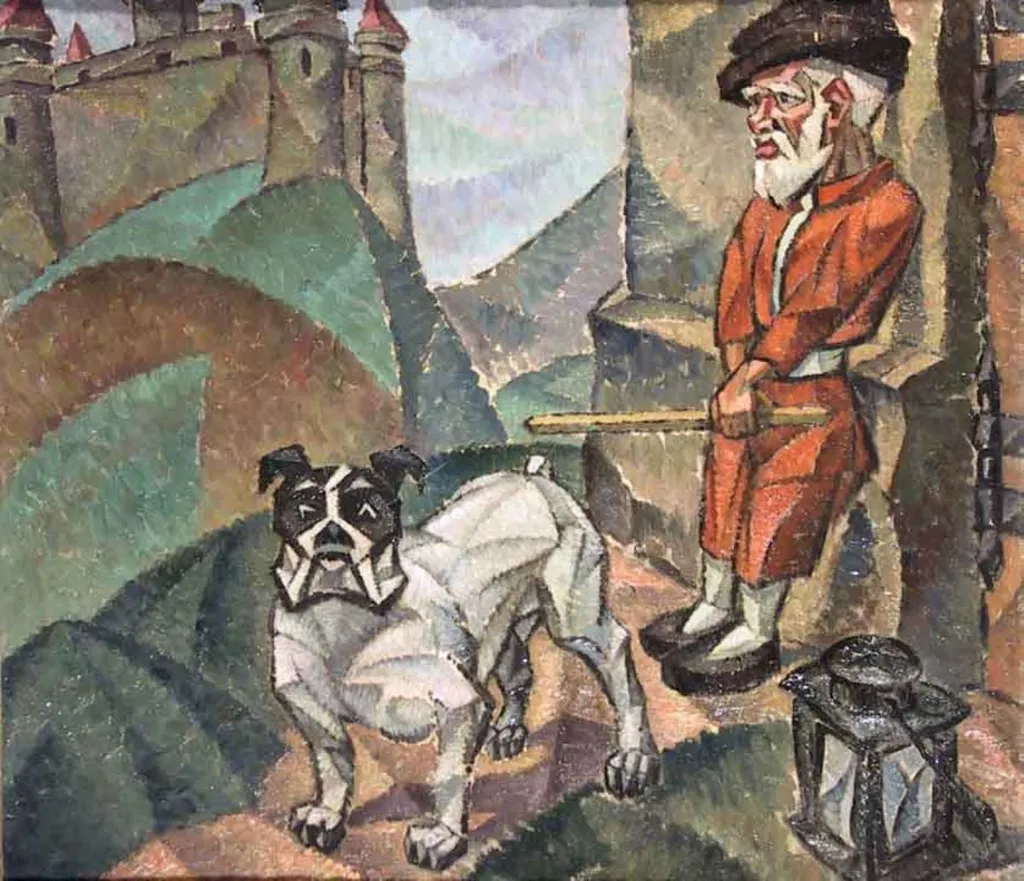
Păzitorii castelului is an unspecified painting by Corneliu Michăilescu. It dates from 1936 and is held in the collection of the Brukenthal National Museum.
About this work
Overview
The composition emphasizes stillness and isolation, framed by a landscape that blends rural realism with a faintly archaic atmosphere.
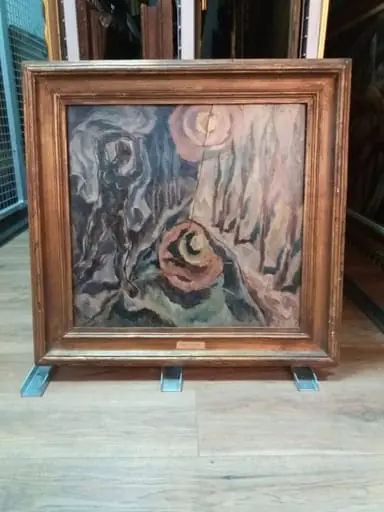
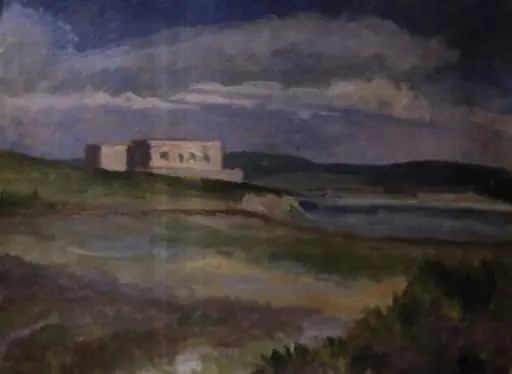
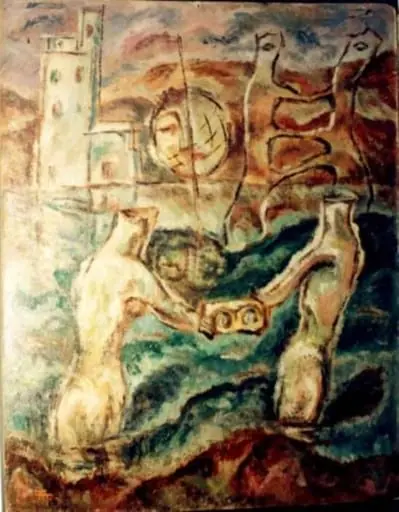
Păzitorii castelului, dated around 1936, is a painting by Romanian artist Corneliu Michăilescu. It portrays a solitary figure beside a dog, with a distant castle rising above undulating terrain. The composition emphasizes stillness and isolation, framed by a landscape that blends rural realism with a faintly archaic atmosphere.
The work resides in the collection of the Museum of Ethnography, reflecting its cultural rather than purely aesthetic significance.
Subject & Meaning
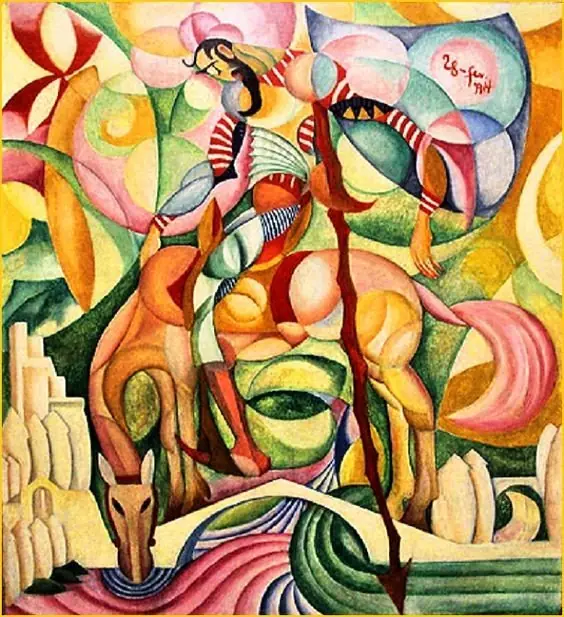
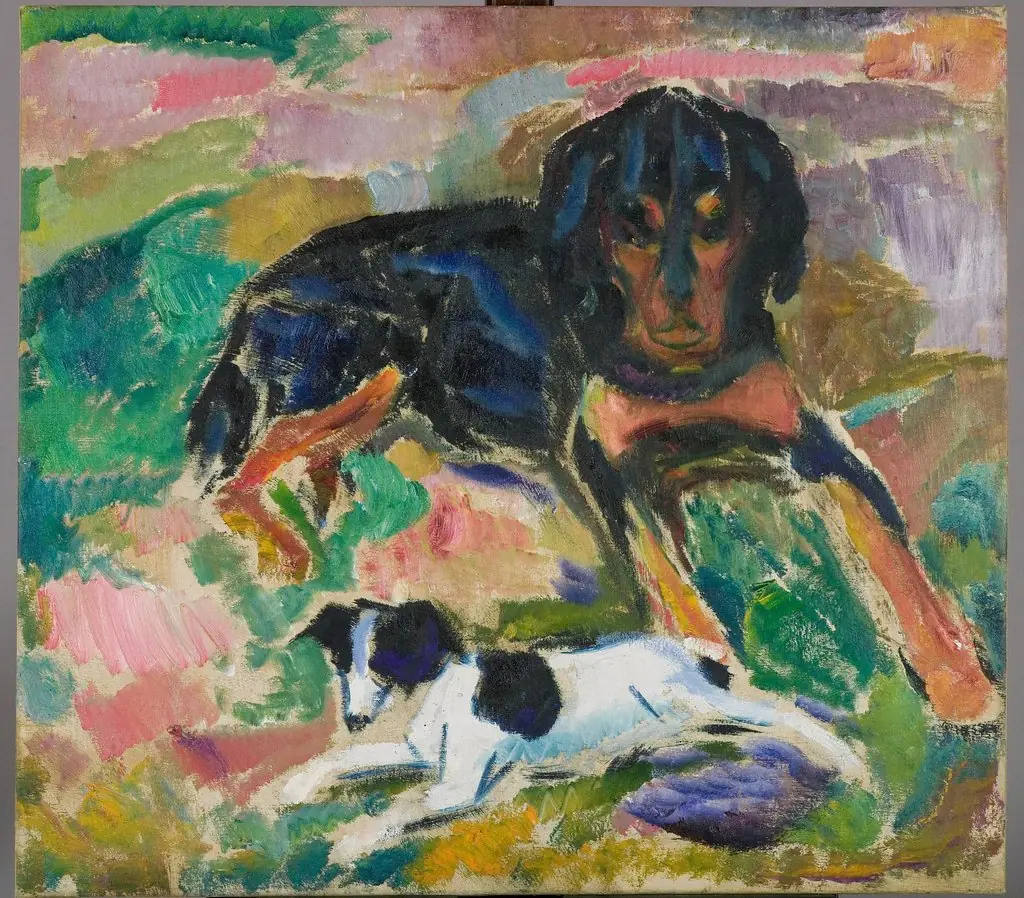
The central figure, clad in a long orange coat and black hat, holds a staff as if guarding the castle behind him. His companion, a white-and-black patched dog, reinforces the sense of vigilance. Together, they suggest a quiet, enduring role, neither heroic nor narrative, but rooted in routine.
The castle, rendered without detail, functions more as a symbol of permanence than a specific location, evoking themes of duty and solitude in a fading rural order.
Technique & Style
Michăilescu employs simplified forms and strong outlines to define figures and terrain, avoiding fine detail in favor of expressive geometry. Colors are saturated but not naturalistic: the orange coat contrasts sharply with muted greens and grays of the landscape. The dog’s markings and the man’s hat are rendered with deliberate clarity, anchoring the viewer’s attention. Brushwork is flat and intentional, prioritizing symbolic presence over atmospheric depth.
History & Provenance
The painting entered the collection of the Museum of Ethnography in Romania, where it remains today. Its acquisition aligns with mid-20th-century efforts to document vernacular visual culture. While little is documented about its early exhibition history, its placement in an ethnographic context suggests it was valued for its depiction of traditional rural life rather than as a work of fine art in the academic sense.
Context
Created during Romania’s interwar period, the painting reflects a broader cultural interest in national identity and rural heritage. Artists of the time often turned to folk motifs and pastoral scenes as a counterpoint to rapid modernization. Michăilescu’s work, though not overtly political, participates in this trend, presenting a timeless, almost mythic figure embedded in a landscape that feels both real and imagined.
Legacy
Păzitorii castelului is not widely reproduced or studied outside Romanian art circles, but it endures as a quiet example of regional modernism. Its stylistic restraint and symbolic clarity distinguish it from more dramatic nationalist works of the era. The painting continues to be referenced in discussions of Romanian visual culture for its understated evocation of solitude and continuity in a changing world.
Artist & collection