Artwork
Dom Quixote
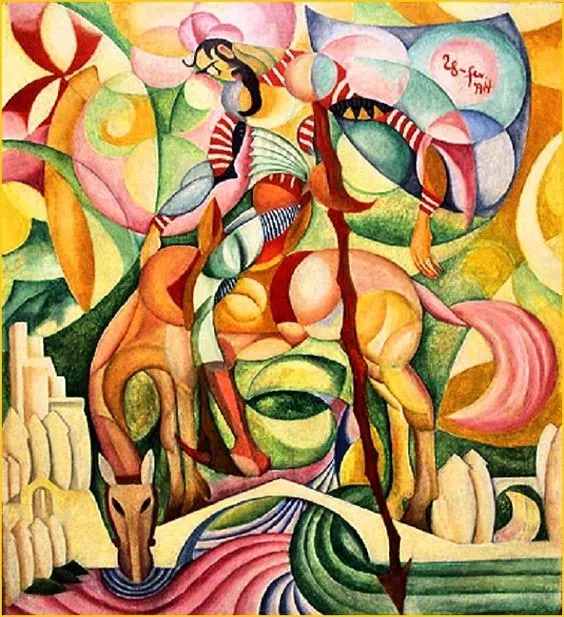
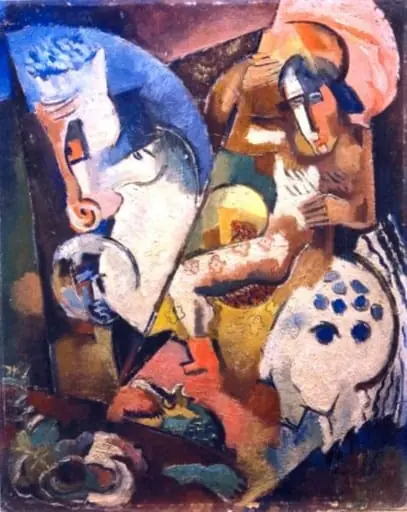
Dom Quixote is an oil painting by the Cubism Synthetic artist Amadeo de Souza Cardoso. It dates from 1914 and is held in the collection of the Calouste Gulbenkian Museum.
About this work
Overview
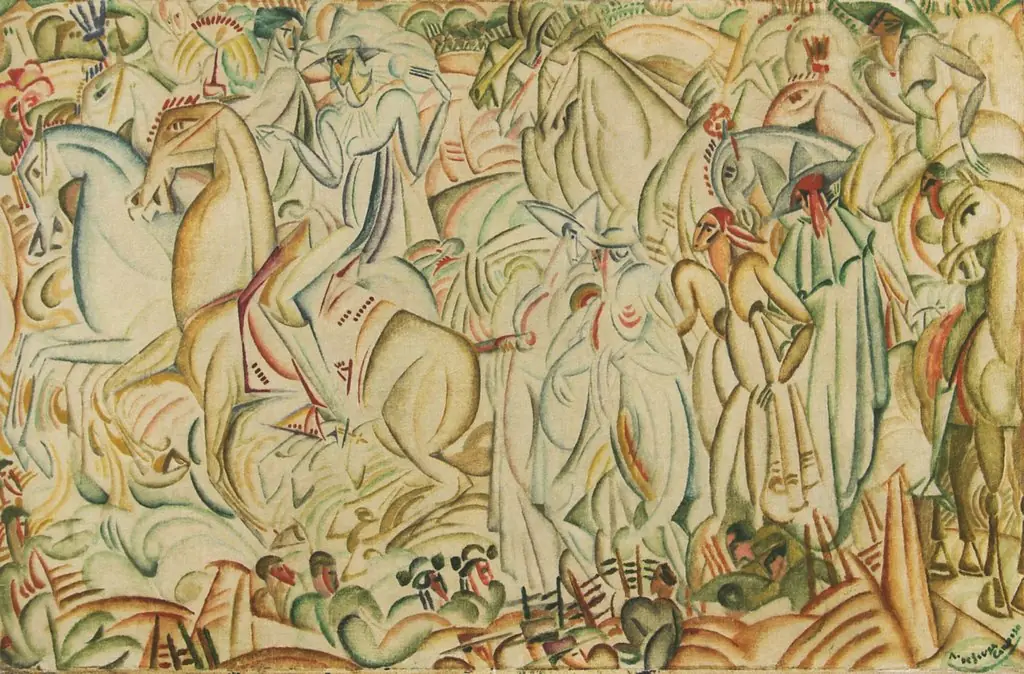
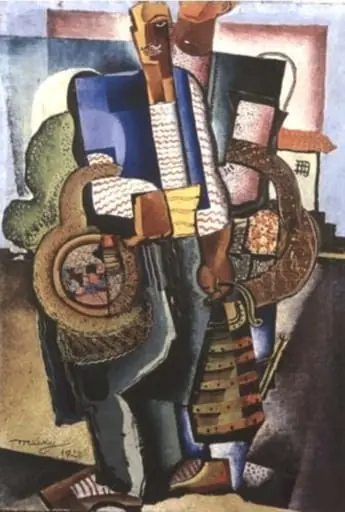
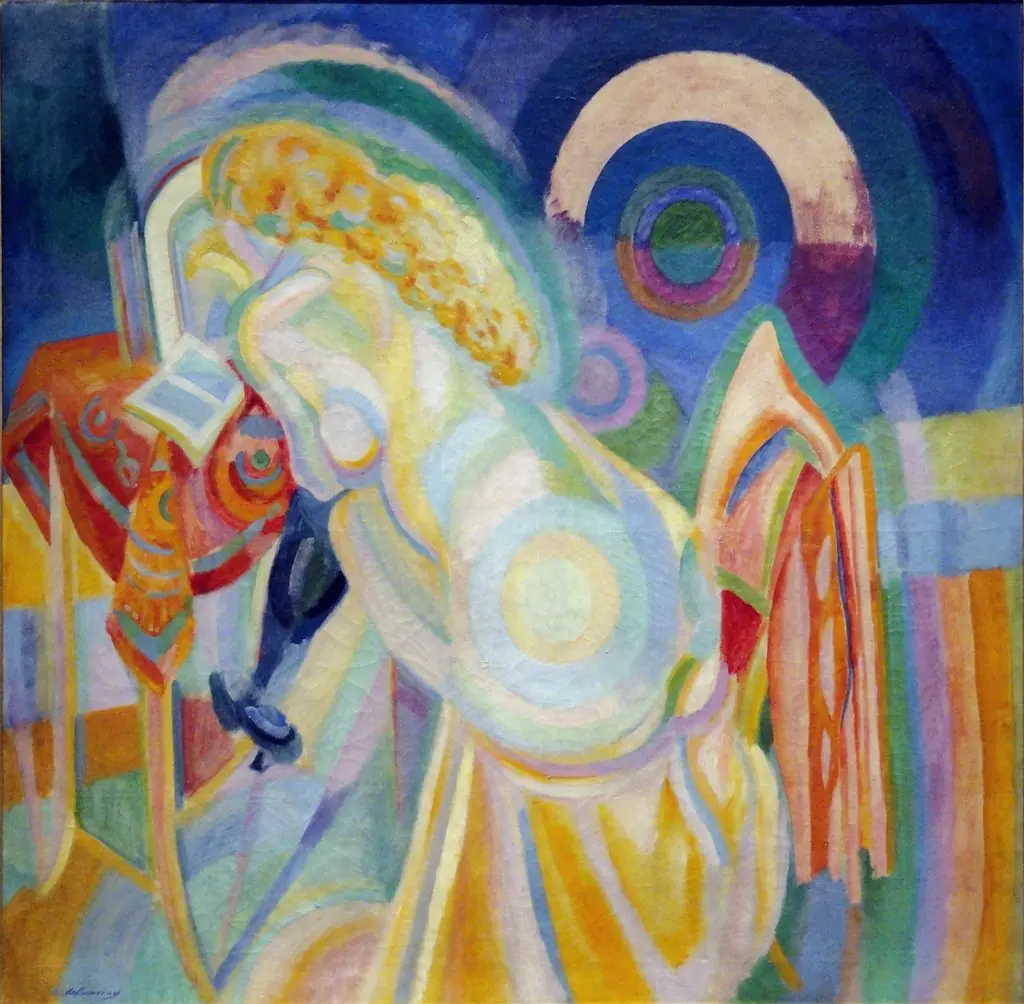
Created in 1914, Dom Quixote is an oil painting by Portuguese modernist Amadeo de Souza‑Cardoso. Executed in a synthetic cubist idiom, the canvas presents a stylised figure of the literary hero alongside a horse, set against a fragmented backdrop of yellow, green and pink planes. The work is part of the collection of the Calouste Gulbenkian Museum in Lisbon.
Subject & Meaning
The composition references Miguel de Cervantes’s Don Quixote, portraying the wandering knight‑errant, here identified as Alonso Quijano, in a moment of poised anticipation. He grips a blue‑and‑red flag bearing the date “26‑1‑14,” while his raised arm and upward gaze suggest a readiness for adventure, juxtaposed with the horse drinking from a stream, hinting at the tension between idealism and reality.
Technique & Style
The figure’s white shirt and red‑striped sleeves are rendered in flat planes, while the horse and surrounding landscape are broken into angular facets.
Souza‑Cardoso employs the synthetic cubist vocabulary of interlocking geometric shapes and bold, non‑naturalistic colours. The figure’s white shirt and red‑striped sleeves are rendered in flat planes, while the horse and surrounding landscape are broken into angular facets. The palette, bright blues, reds, yellows, greens and pinks, creates a rhythmic dynamism that emphasizes movement over literal representation.
History & Provenance
The painting emerged during the artist’s most experimental period, when he divided his time between Parisian avant‑garde circles and his family estate in Manhufe, Portugal. After its creation, Dom Quixote entered the collection of the Calouste Gulbenkian Museum, where it has remained on public display, illustrating the early 20th‑century exchange between Portuguese and European modernism.
Context
Souza‑Cardoso’s work reflects the broader dialogue between Portuguese artists and the Parisian cubist movement, which he encountered through exhibitions and personal contacts. By integrating Cubist formal strategies with a distinctly Iberian literary subject, the painting demonstrates how national cultural motifs were reinterpreted within an international modernist framework, contributing to the development of modern art in Portugal.
Artist & collection
Artist
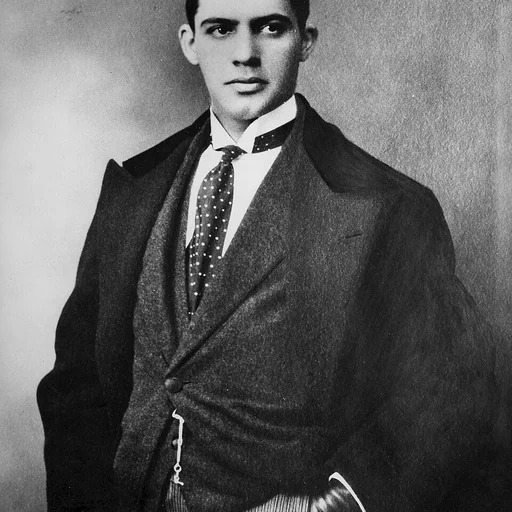
Amadeo de Souza-Cardoso (14 November 1887 – 25 October 1918) was a Portuguese painter.