Artwork
St. Barbara
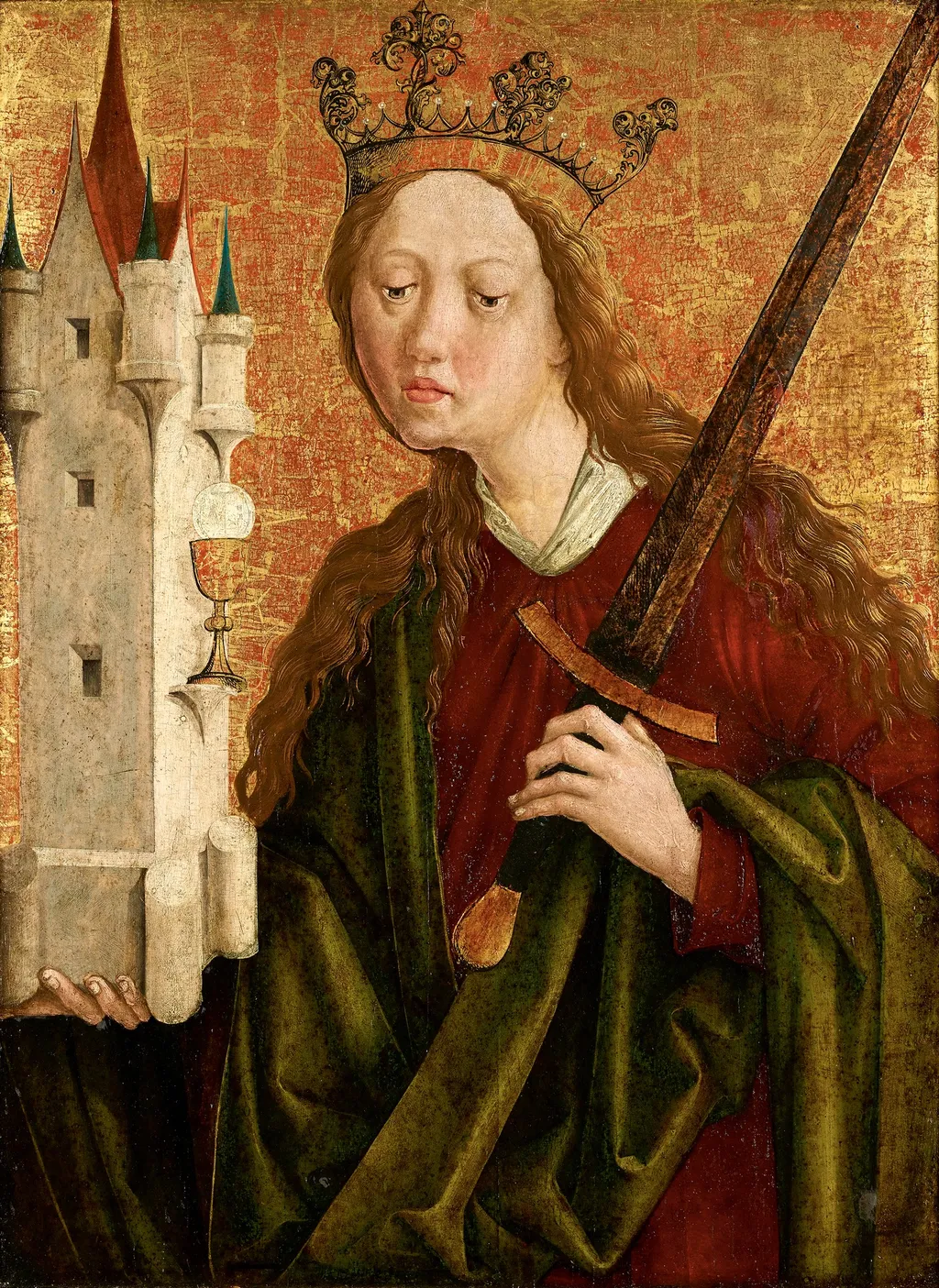
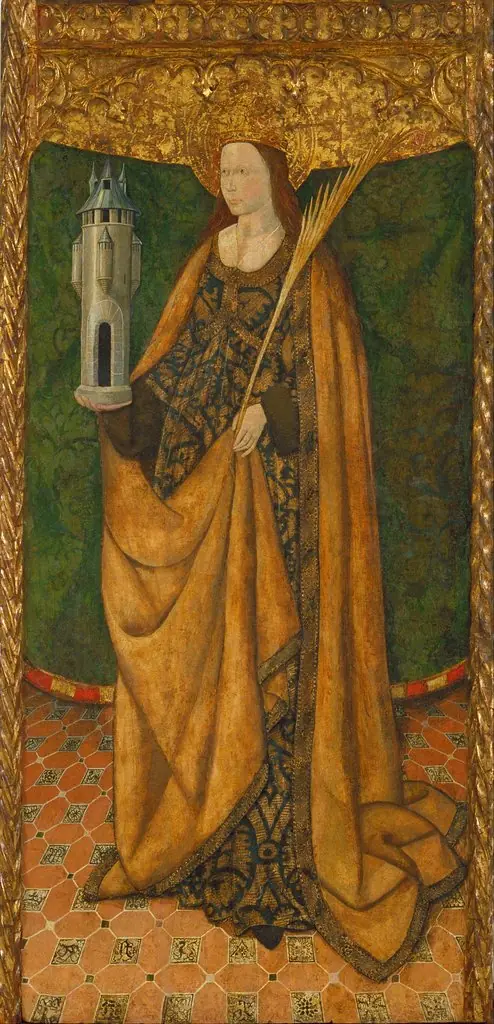
St. Barbara is an oil painting by the Early Renaissance artist Michael Pacher. It dates from 1493 and is held in the collection of the Belvedere. St.
About this work
Overview
Barbara is an oil painting on panel by the workshop of Michael Pacher, dated to 1485 and currently held in the collection of the Belvedere in Vienna.
St. Barbara is an oil painting on panel by the workshop of Michael Pacher, dated to 1485 and currently held in the collection of the Belvedere in Vienna. Measuring 54.5 by 41 centimeters, this vertically oriented devotional image exemplifies the synthesis of Italian Renaissance and Northern Gothic aesthetics that distinguishes Pacher's output in late fifteenth-century Tyrol. The panel's gold ground and compact scale indicate its original function as an interior wing of a larger altarpiece, a format central to Pacher's workshop production. As a product of one of the most significant altarpiece specialists of the period, the painting offers insight into the dissemination of Renaissance pictorial principles north of the Alps while maintaining the symbolic directness of Gothic devotional imagery.
Subject & Meaning
The panel depicts Saint Barbara, the early Christian virgin martyr, in a full-length, figure-filling composition. She is identified by her traditional attributes: in her right hand she holds a tall, slender Gothic tower, and in her left a long sword. The tower refers to the legend recorded in the Golden Legend, according to which her father imprisoned her in a tower to prevent her conversion to Christianity; the three windows she reportedly added to the structure symbolize the Trinity, and a small Eucharistic chalice with a hovering host appears on a ledge of the tower. The sword represents the instrument of her martyrdom, as she was beheaded by her own father for her faith. Her ornate crown and rich garments, a dark red dress with white collar beneath a voluminous green cloak, signal her noble status. The direct presentation of these attributes against the flat gold and red patterned background emphasizes the didactic and devotional function of the image, allowing viewers immediate recognition of the saint's identity and her significance as a model of virginity and martyrdom.
Technique & Style
The painting is executed in oil on a panel support of pine wood, a medium that permits the smooth, layered brushwork visible in the deep, voluminous folds of the green cloak and the delicate linear details of the hair and crown. The surface exhibits fine craquelure throughout, consistent with its age and medium. The handling combines even, subtle modeling on the face and hands with more dramatic shadowing in the drapery, creating a balance between naturalistic observation and decorative patterning. The flat gold and red background, devoid of landscape or architectural setting, maintains the iconic quality of Gothic panel painting, while the three-dimensional presence of the figure and the careful attention to the fall of light on fabric suggest the influence of Italian Renaissance practice. This stylistic fusion characterizes Pacher's workshop, which absorbed the spatial and corporeal innovations of Andrea Mantegna's Paduan frescoes while serving the devotional conventions of the South German and Austrian markets.
History & Provenance
The panel is dated to approximately 1485, with some sources suggesting a broader range of circa 1480 to 1490. Its attribution to the Pacher workshop rather than to Michael Pacher himself reflects the collaborative nature of production in his Bruneck atelier, which specialized in large-scale altarpiece commissions. The panel's gold ground and modest dimensions indicate that it originally formed part of a winged altarpiece, likely positioned on an interior wing where it would have been visible when the shrine was opened. The painting entered the collection of the Belvedere in Vienna, where it is now inventoried as number 4848. Its acquisition history prior to this is not fully documented in the available sources, though the Belvedere's Gothic collection includes several other panels from Pacher-related contexts, including fragments from the high altar of the Salzburg parish church and panels from the St. Lorenzen altarpiece that were sold in the nineteenth century.
Legacy
The reputation of Michael Pacher and his workshop rests primarily on their altarpieces, and the survival of panels such as St. Barbara in museum collections has allowed continued scholarly engagement with his artistic achievement. The St. Wolfgang Altarpiece remains in its original location and is considered, in the words of one assessment, one of the most remarkable carved and painted altar shrines in European art. The dispersal of workshop products, including the St. Lorenzen panels now divided among Munich, Vienna, and other collections, has complicated the construction of a coherent oeuvre but has also ensured Pacher's presence in major European museums. The Belvedere's holding of multiple Pacher-related panels, including the St. Barbara, contributes to the institutional study of late Gothic panel painting in Austria. Pacher's fusion of Italian Renaissance spatiality with Northern Gothic materiality has been recognized as laying groundwork for the more celebrated synthesis achieved by Dürer and his contemporaries, positioning the workshop as a significant, if geographically peripheral, node in the broader narrative of European art around 1500.
Own this work as a print
Artist & collection
Artist
Michael Pacher (c. 1435 – August 1498) was a painter and sculptor from Tyrol active during the second half of the fifteenth century. He was one of the earliest artists to introduce the principles of Renaissance painting…

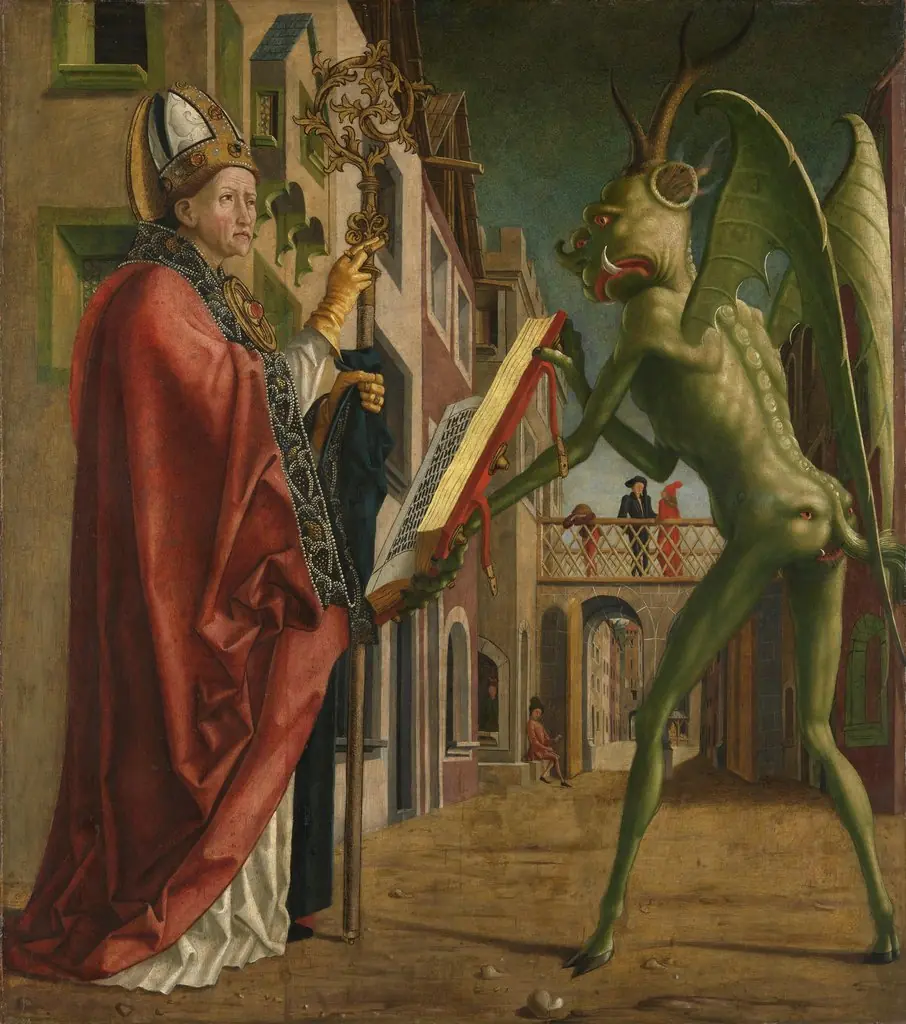 Kirchenväteraltar, Flügelaußenseite: Der Teufel weist dem hl. Augustinus das Buch der Laster vor
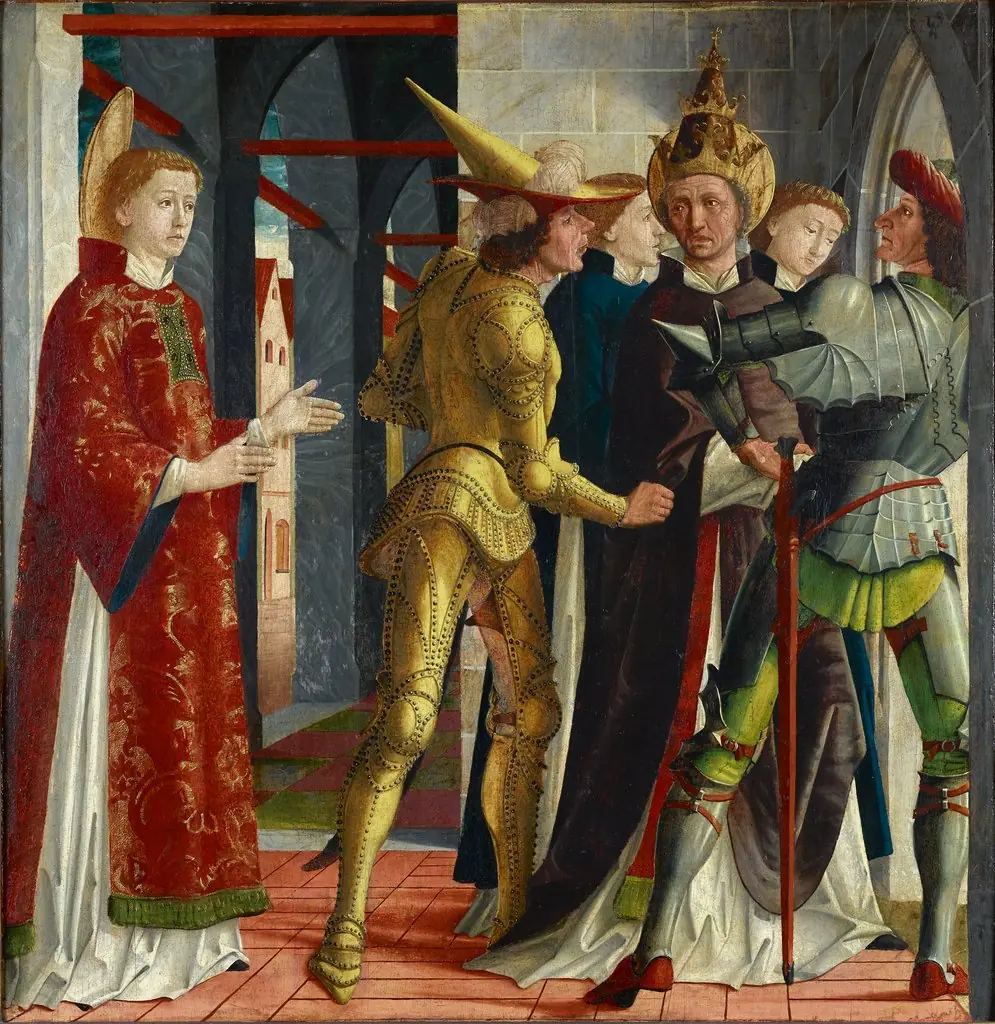 Pope Sixtus II. bids farewell to St. Lawrence
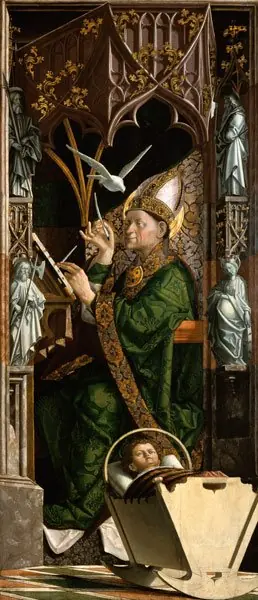 Saint Ambrose from Milan
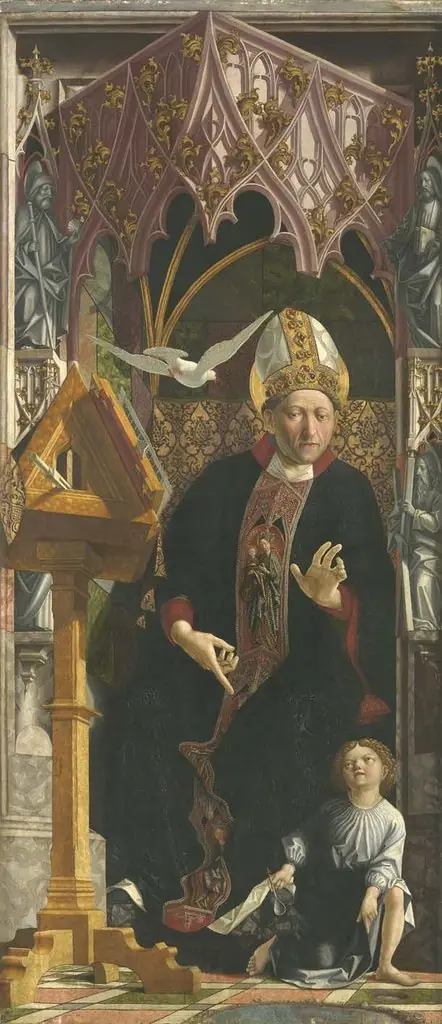 Kirchenväteraltar: Hl. Augustinus
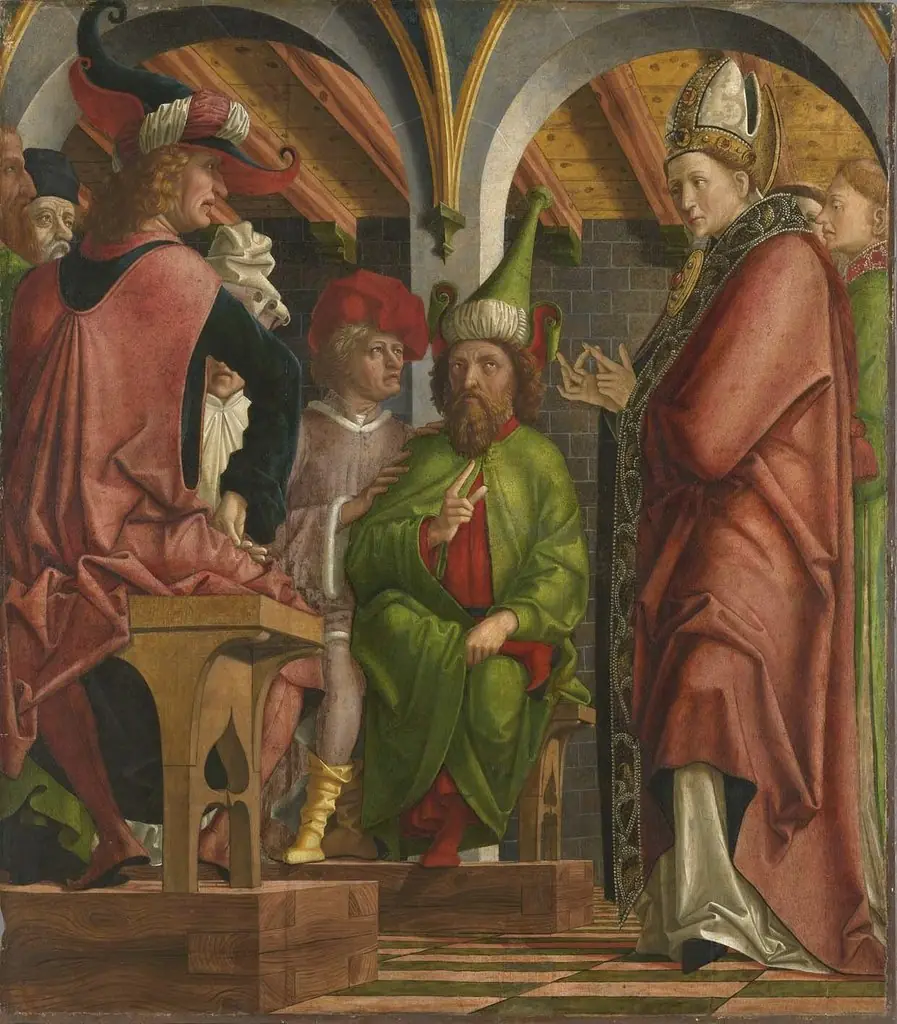 Kirchenväteraltar, Flügelaußenseite: Disputation des hl. Augustinus mit den Häretikern
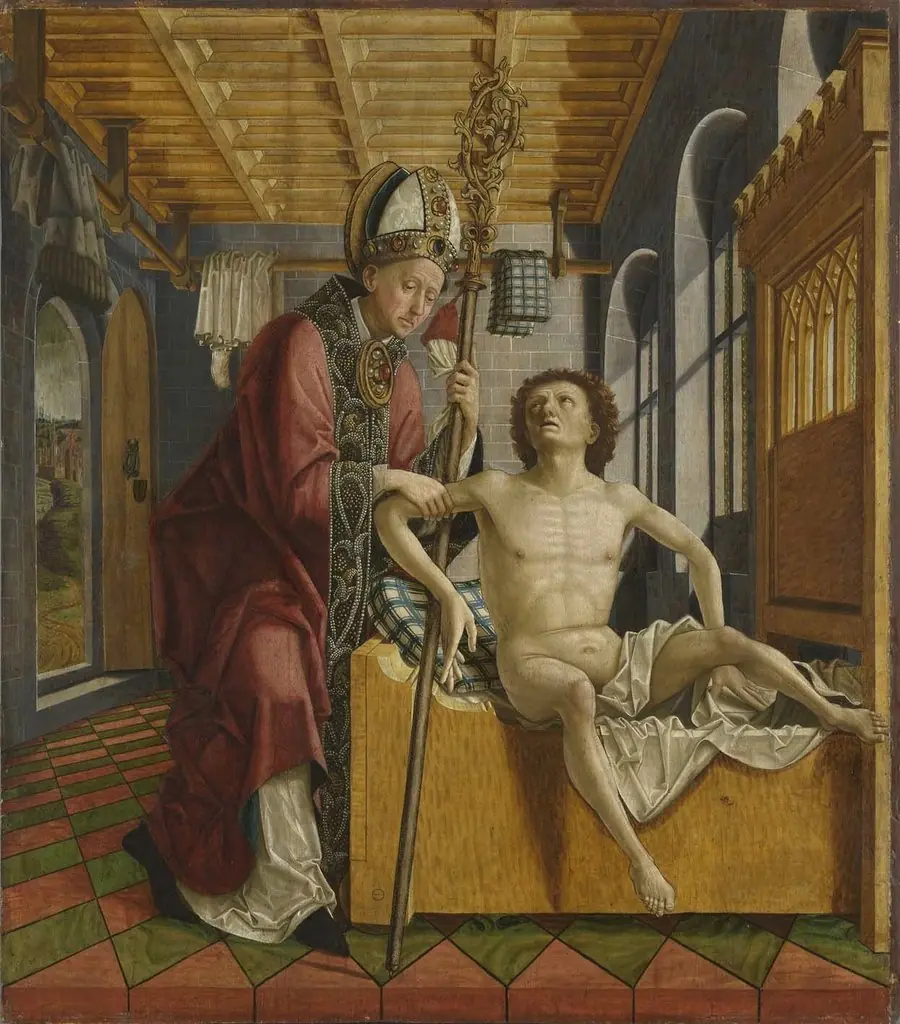 Kirchenväteraltar, Flügelaußenseite: Der hl. Augustinus heilt den Stiftsprobst
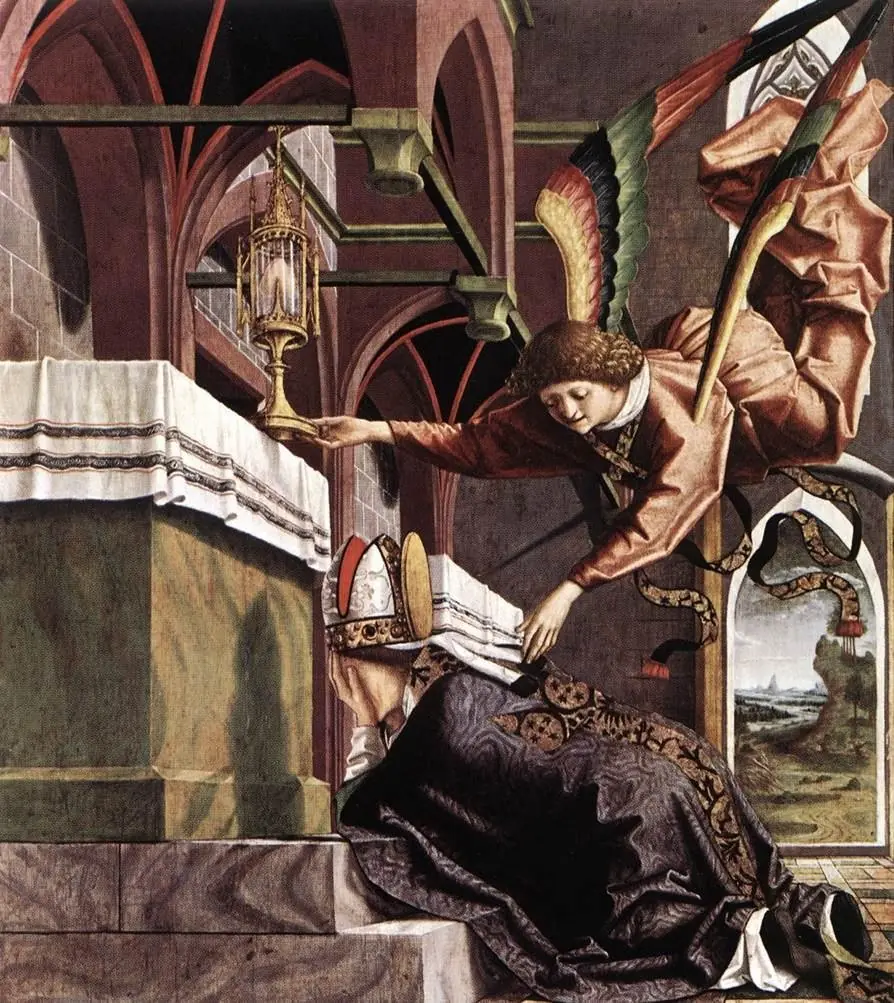 Altarpiece of the Church Fathers: Vision of St Sigisbert
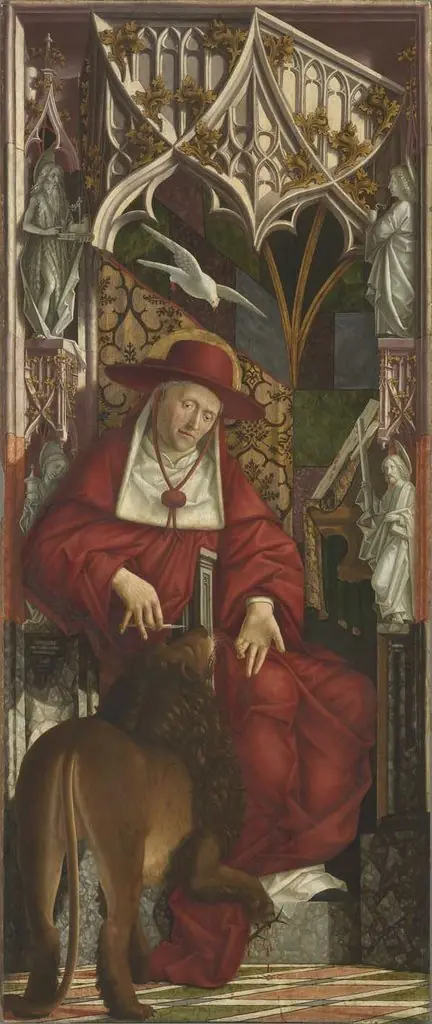 Kirchenväteraltar: Hl. Hieronymus