Artwork
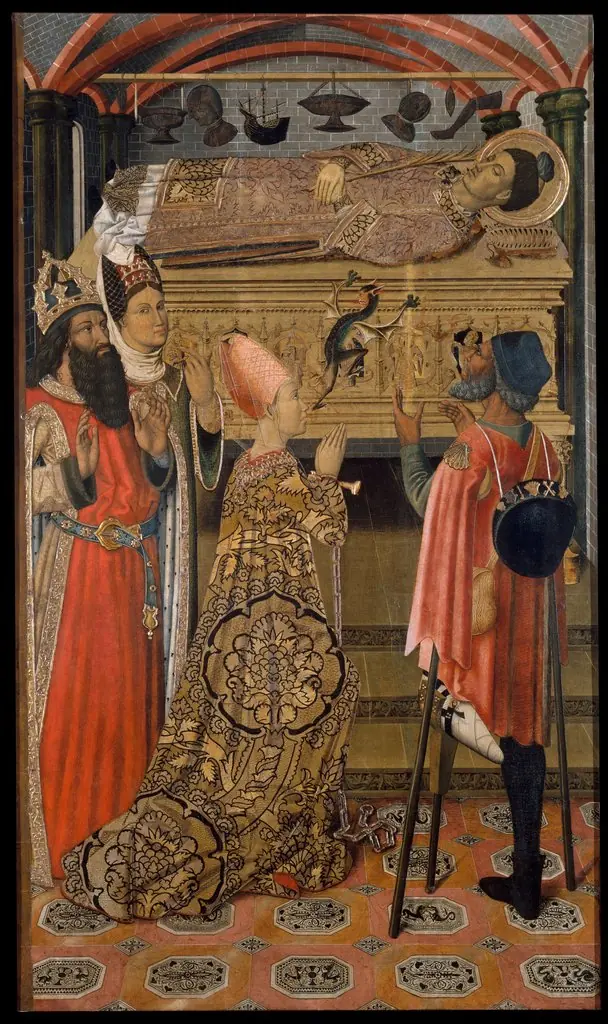
Pope Sixtus II. bids farewell to St. Lawrence
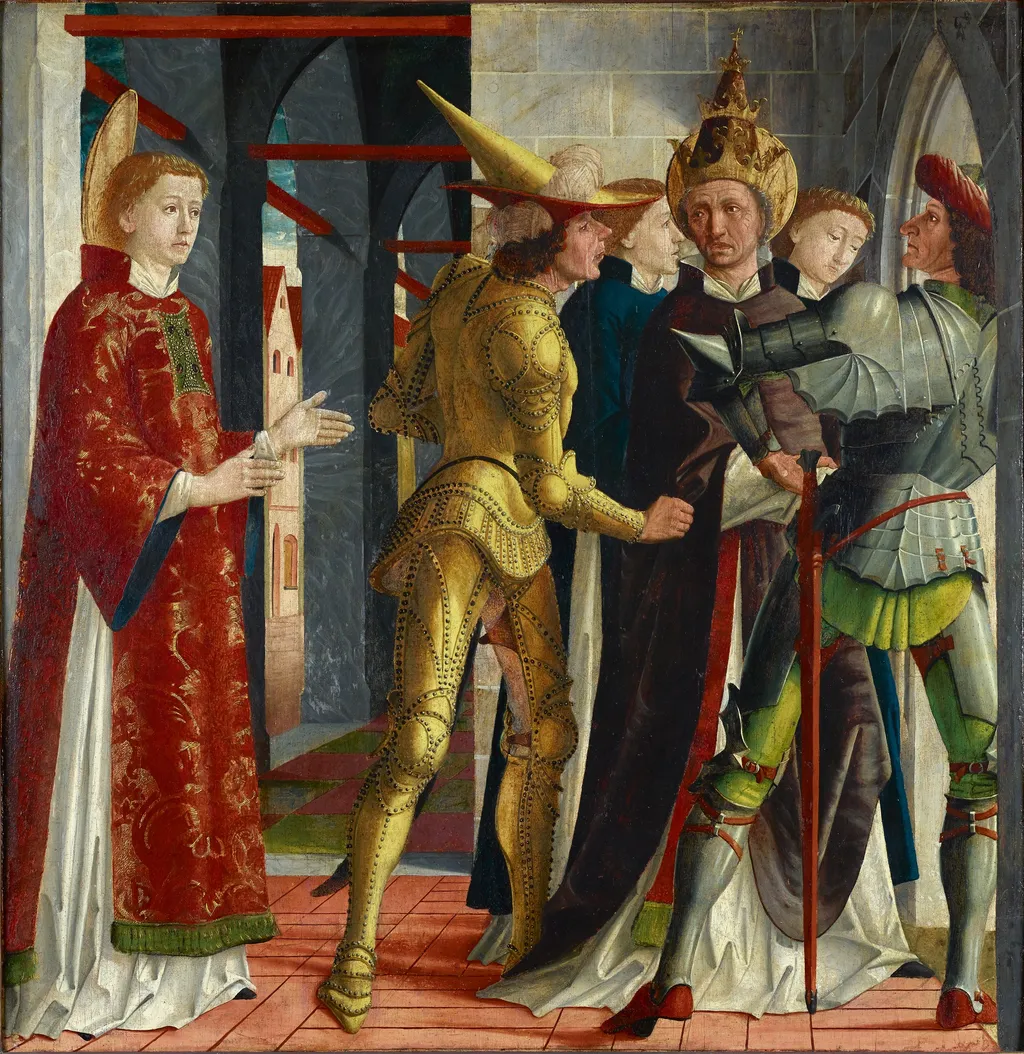
Pope Sixtus II. bids farewell to St. Lawrence is an oil painting by the Early Renaissance artist Michael Pacher. It dates from 1465 and is held in the collection of the Kunsthistorisches Museum.
About this work
Subject & Meaning
The composition likely draws on hagiographic accounts in which Sixtus predicts Lawrence’s future suffering, reinforcing the theme of steadfastness under trial.
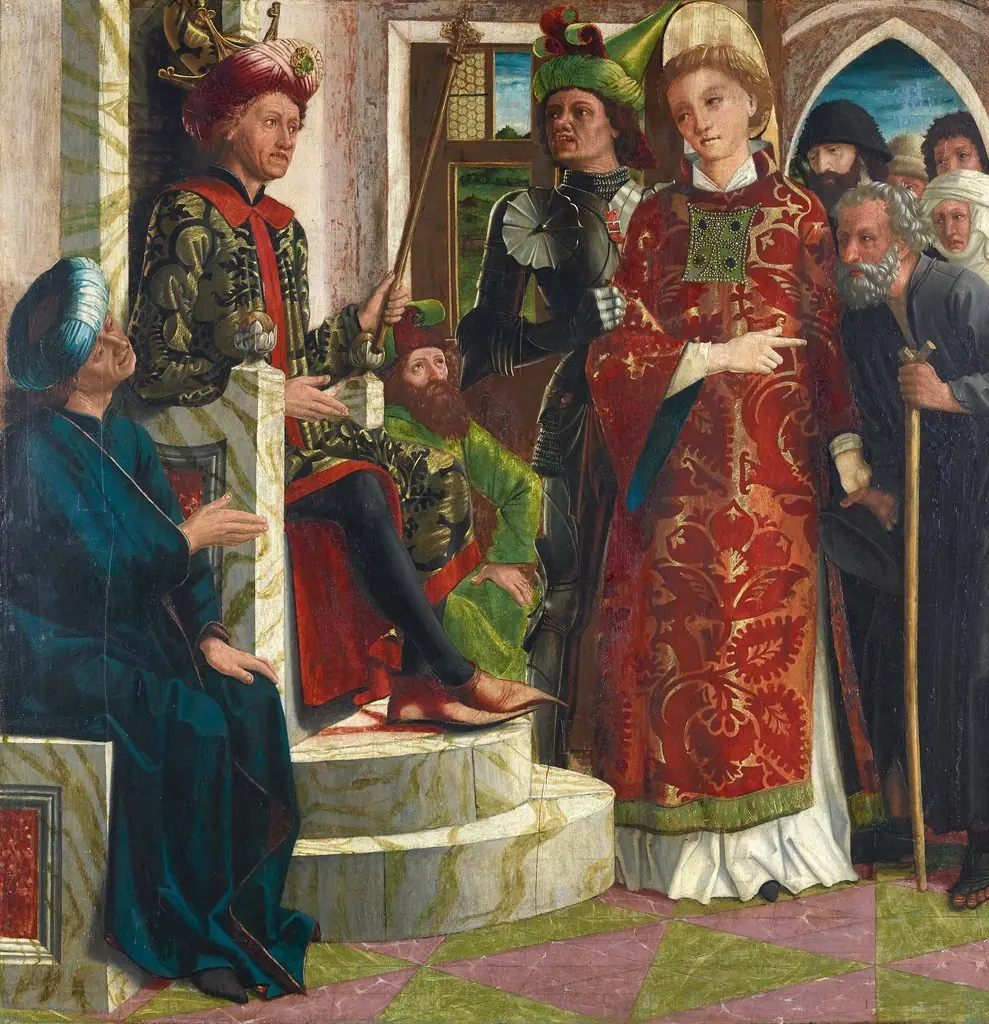
The painting depicts the final encounter between Pope Sixtus II and Saint Lawrence, moments before Sixtus’s martyrdom. According to early Christian tradition, Sixtus was led to execution while Lawrence, his deacon, witnessed the scene; the work visualizes their poignant farewell and the transfer of responsibility that precedes Lawrence’s own martyrdom.
Symbolically, the scene underscores the bond between mentor and disciple amid persecution, emphasizing the transmission of faith and the cost of Christian witness. The composition likely draws on hagiographic accounts in which Sixtus predicts Lawrence’s future suffering, reinforcing the theme of steadfastness under trial.
Technique & Style
Michael Pacher executed Pope Sixtus II. bids farewell to St. Lawrence in 1465 using oil paint applied to a wooden panel support. The work measures 104 cm in height and 100 cm in width, representing a square format typical of devotional panels from this period. As a religious painting, the piece demonstrates the artist's handling of oil on wood, a medium that allowed for detailed rendering of figures and textures within the sacred narrative.
The physical object is currently held in a major collection, confirming its preservation as a significant example of mid-15th-century panel painting.
History & Provenance
Michael Pacher created Pope Sixtus II bids farewell to St. Lawrence in 1465, executing the work in oil on panel measuring 104 cm in height and 100 cm in width. The painting entered the Belvedere collection, which is now part of the Kunsthistorisches Museum in Vienna, where it remains on display.
Overview
Created in 1465 by the Tyrolean artist Michael Pacher, this oil-on-panel painting presents a solemn encounter between Pope Sixtus II and the martyr Saint Lawrence. Executed during Pacher’s early adoption of Renaissance methods in the German lands, the work now belongs to the Kunsthistorisches Museum’s collection.
Context
Pacher’s career spanned painting, sculpture, and architecture, with a reputation for producing large, intricately carved altarpieces. This work exemplifies his transition from Gothic conventions toward the emerging Renaissance aesthetic, illustrating the cross‑regional exchange of artistic ideas in the mid‑15th century.
Own this work as a print
Artist & collection
Artist
Michael Pacher (c. 1435 – August 1498) was a painter and sculptor from Tyrol active during the second half of the fifteenth century. He was one of the earliest artists to introduce the principles of Renaissance painting…

 Kirchenväteraltar, Flügelaußenseite: Der Teufel weist dem hl. Augustinus das Buch der Laster vor
 Saint Ambrose from Milan
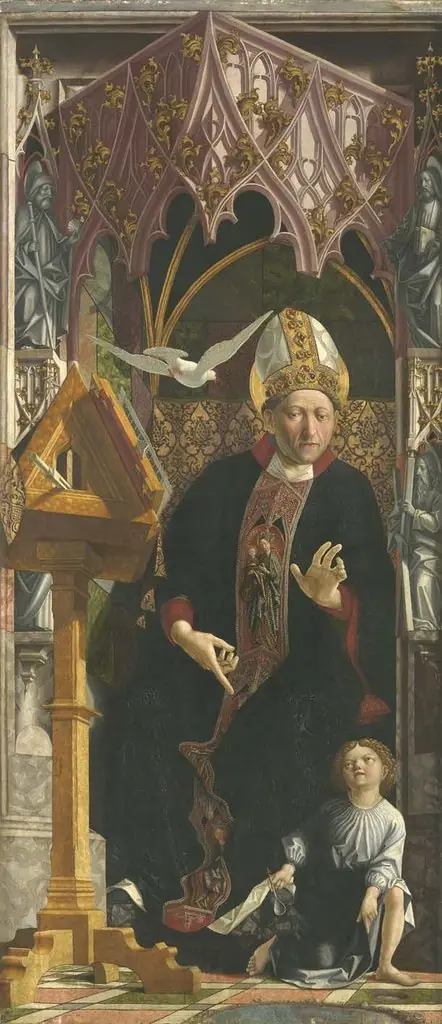 Kirchenväteraltar: Hl. Augustinus
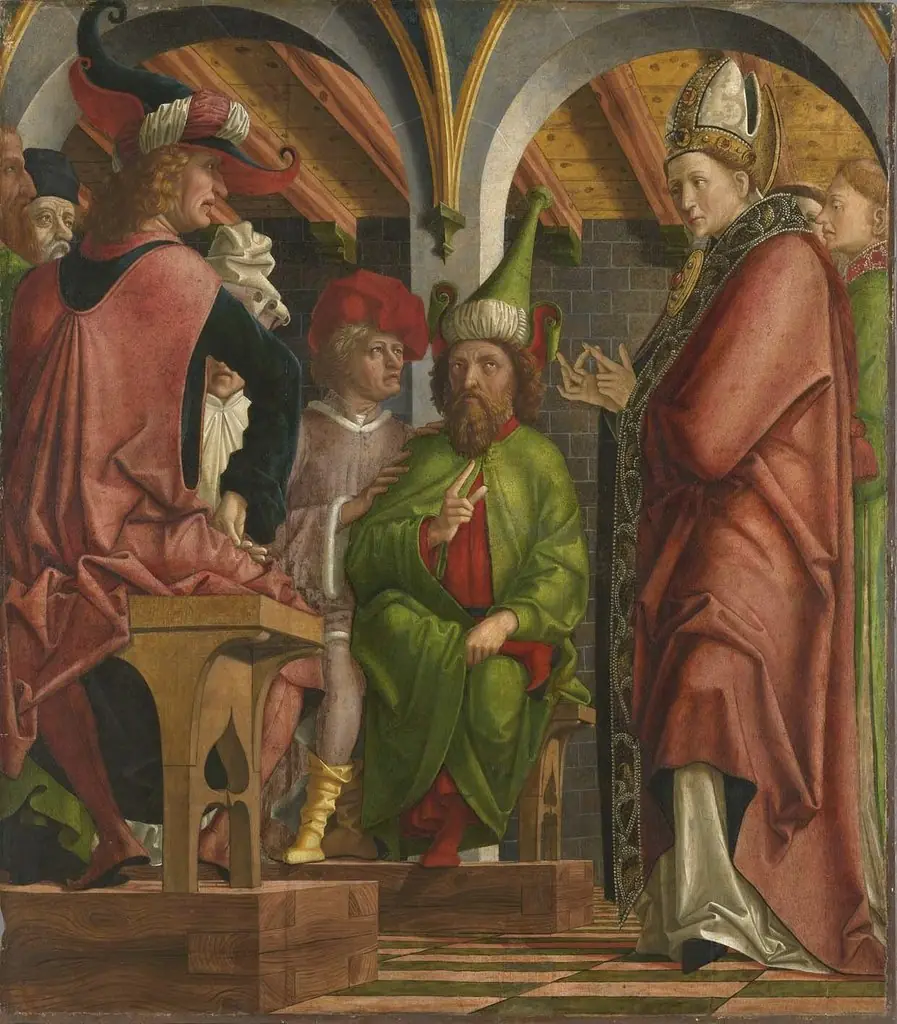 Kirchenväteraltar, Flügelaußenseite: Disputation des hl. Augustinus mit den Häretikern
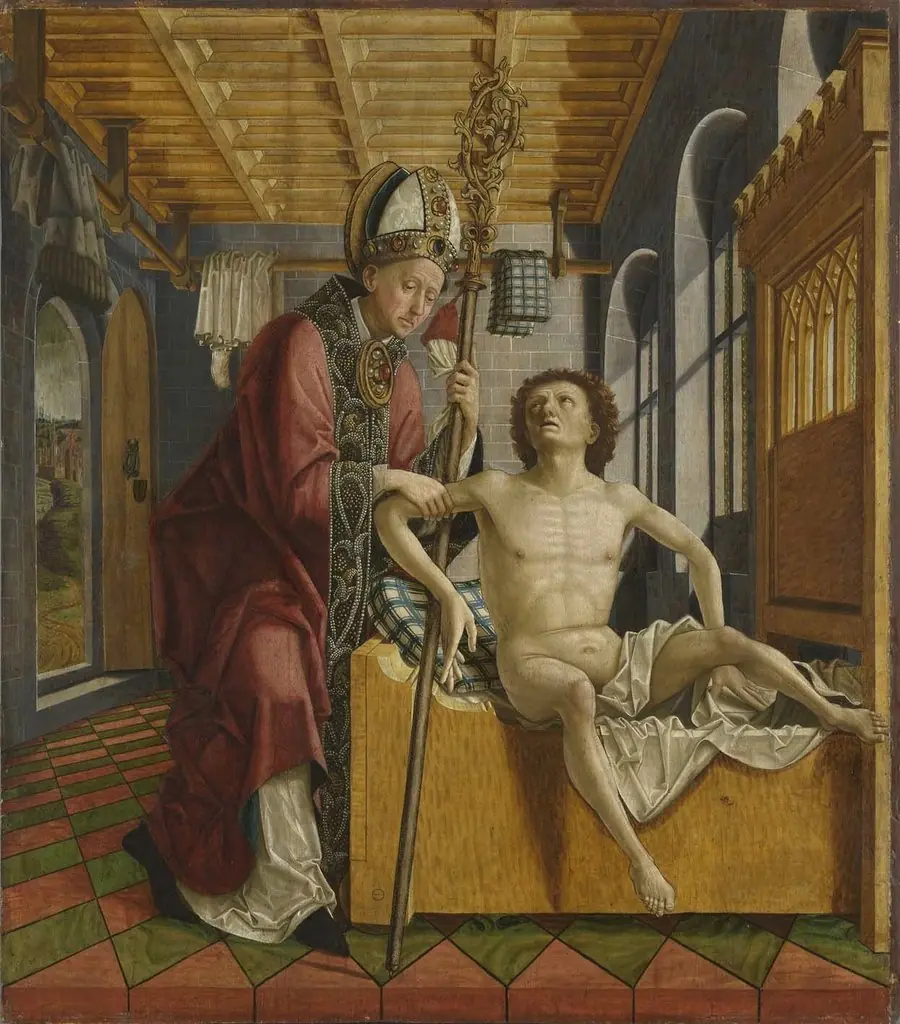 Kirchenväteraltar, Flügelaußenseite: Der hl. Augustinus heilt den Stiftsprobst
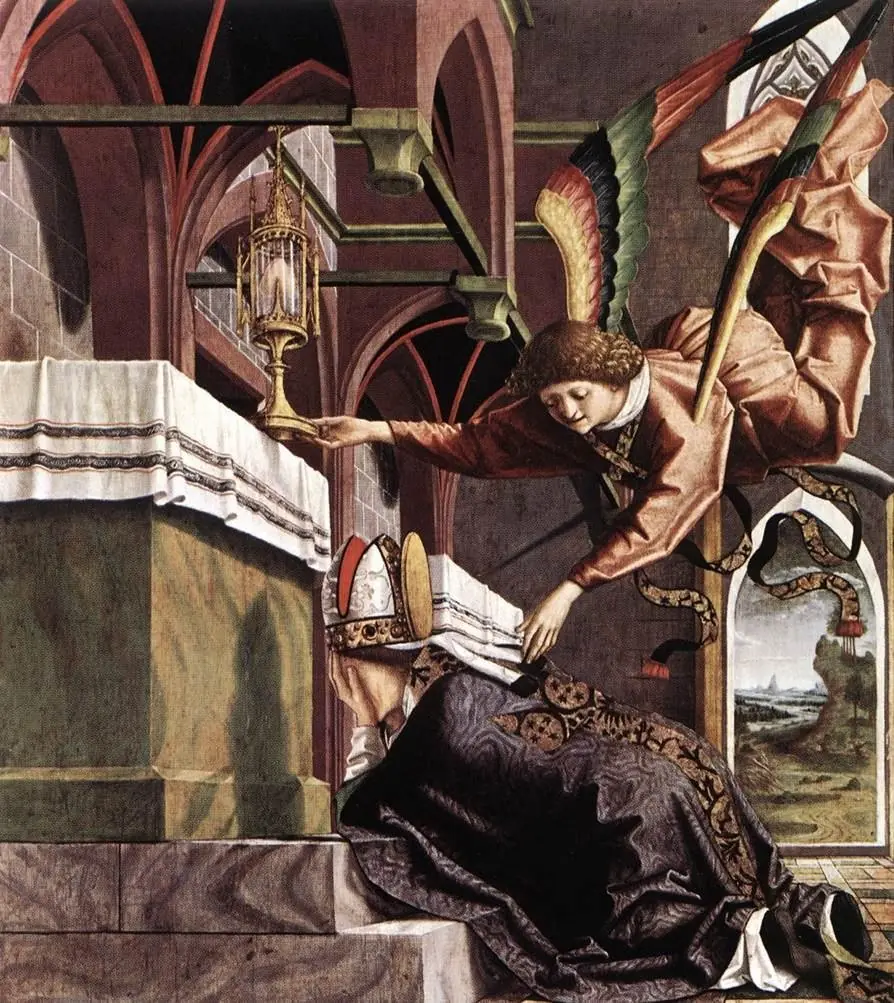 Altarpiece of the Church Fathers: Vision of St Sigisbert
 Kirchenväteraltar: Hl. Hieronymus
 St. Barbara
- Saint Lawrence Arraigned Before the Prefect Valerianus
 Der hl. Laurentius vor Kaiser Decius
 The Enthronement of Saint Romold as Bishop of Dublin
 Jakobus-Stephanus-Altar: Disputation des hl. Stephanus
 Saint Rumbold Taking Leave of his Parents
 Ferdinand I of Castile welcoming Saint Dominic of Silos
 Die vierzehn Nothelfer
 Saint Reparata before the Emperor Decius
 Saint Matthew and Saint Sebastian
 Saint Leonard Liberating Captives
 St. Barbara is led into the tower
 Princess Eudoxia before the Tomb of Saint Stephen