Artwork
Kirchenväteraltar: Hl. Hieronymus
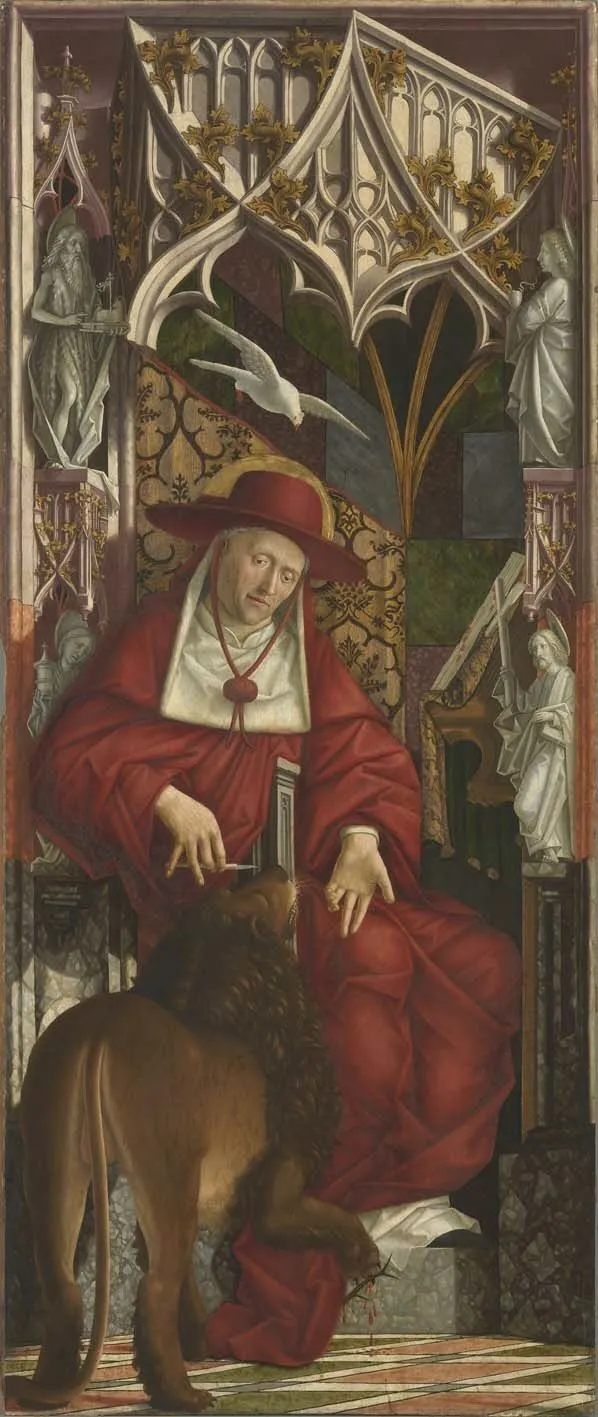
Kirchenväteraltar: Hl. Hieronymus is an unspecified painting by the Early Renaissance artist Michael Pacher. It dates from 1490 and is held in the collection of the Bavarian State Painting Collections.
About this work
Subject & Meaning
The painting serves as a devotional image representing Jerome's status as a pivotal scholar and translator of the Bible into Latin.
This religious panel depicts Saint Jerome, one of the four great Latin Doctors of the Church. Created as part of the Church Fathers Altarpiece, the work focuses on the specific iconography associated with this saint. The painting serves as a devotional image representing Jerome's status as a pivotal scholar and translator of the Bible into Latin. Its inclusion in the altarpiece highlights his theological importance alongside other foundational figures of the early Church.
Technique & Style
The Kirchenväteraltar: Hl. Hieronymus is a religious painting executed by Michael Pacher around 1480. The work is classified as a painting and depicts Saint Jerome.
It is held within the collection of the Bavarian State Painting Collections at the Alte Pinakothek. The physical dimensions of the panel measure 216 cm in height and 91 cm in width. As a panel painting from the late 15th century, the piece represents the artist's engagement with religious iconography of the period.
History & Provenance
The painting depicting Saint Jerome was created by Michael Pacher in 1480. Originally part of the Church Fathers Altar, the work is currently held in the collection of the Bavarian State Painting Collections. It is housed at the Alte Pinakothek, where it remains on display as a piece of religious art.
The Kirchenväteraltar: Hl. Hieronymus by Michael Pacher is held by the Alte Pinakothek in Munich as part of the Bavarian State Painting Collections. The panel, completed in 1480, measures 216 cm in height and 91 cm in width.
No specific inventory or accession number is recorded in the available sources, and no exhibition history is documented beyond its current institutional placement.
Legacy
The altarpiece of Saint Jerome, painted by Michael Pacher around 1480 for the church of St. Nicholas in Spital, became a defining example of Tyrolean late Gothic religious art. Its compositional complexity and naturalistic rendering of figures influenced subsequent regional workshops in the early 16th century, particularly in their treatment of saintly interiors and architectural framing. Reproductions of its central panel were widely circulated in devotional prints, extending its iconographic impact beyond the original location.
Today, the work is preserved in the Alte Pinakothek in Munich, where it remains a key reference point for studies of late medieval Central European painting.
Scholars cite its innovative use of spatial depth and emotional expression as foundational to the evolution of devotional imagery in the German lands.
Overview
Created around 1490 by Michael Pacher, a Tyrolean artist active in the late fifteenth century, the work known as the Kirchenväteraltar: Hl. Hieronymus is a painted panel that forms part of a larger altar ensemble now displayed in the Alte Pinakothek. It presents a portrait of Saint Jerome, a figure frequently depicted in late medieval and early Renaissance devotional art.
Context
During the late fifteenth century, artists in the Alpine region began to absorb Italian Renaissance principles, integrating them with established Germanic visual traditions. Pacher’s work reflects this cultural exchange, presenting a devotional image that balances narrative clarity with humanist interest in individual scholarly figures.
Artist & collection
Artist
Michael Pacher (c. 1435 – August 1498) was a painter and sculptor from Tyrol active during the second half of the fifteenth century. He was one of the earliest artists to introduce the principles of Renaissance painting…

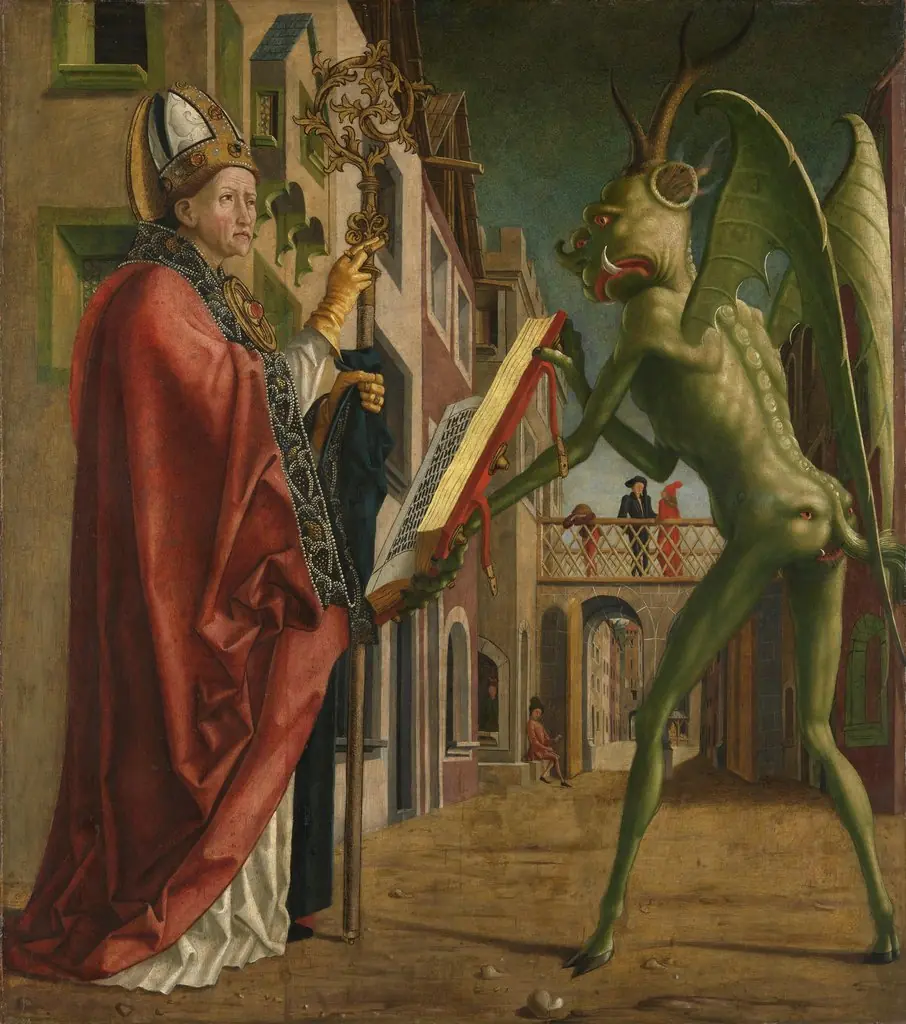 Kirchenväteraltar, Flügelaußenseite: Der Teufel weist dem hl. Augustinus das Buch der Laster vor
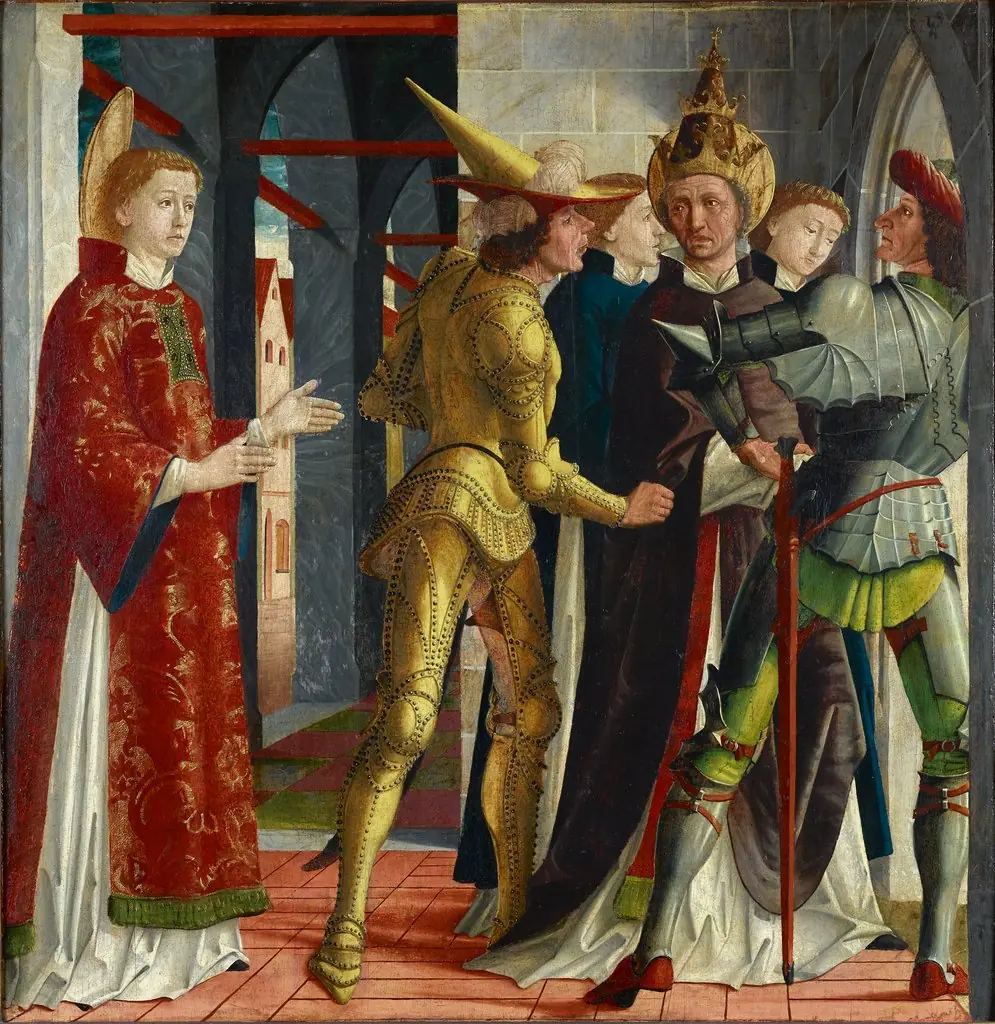 Pope Sixtus II. bids farewell to St. Lawrence
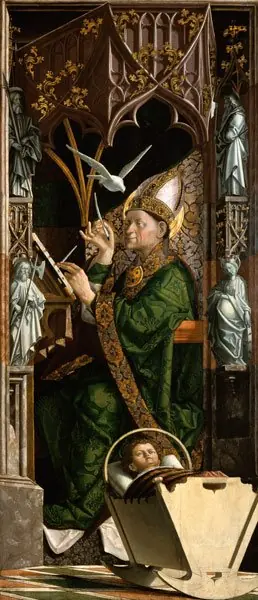 Saint Ambrose from Milan
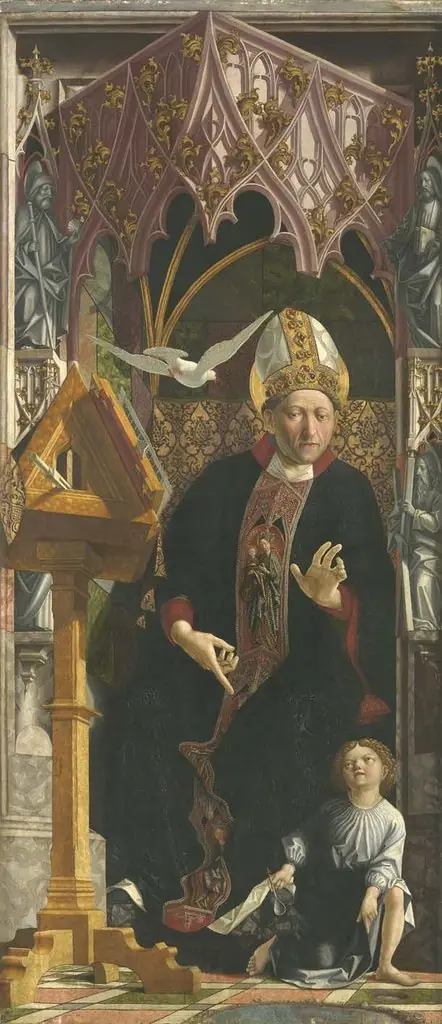 Kirchenväteraltar: Hl. Augustinus
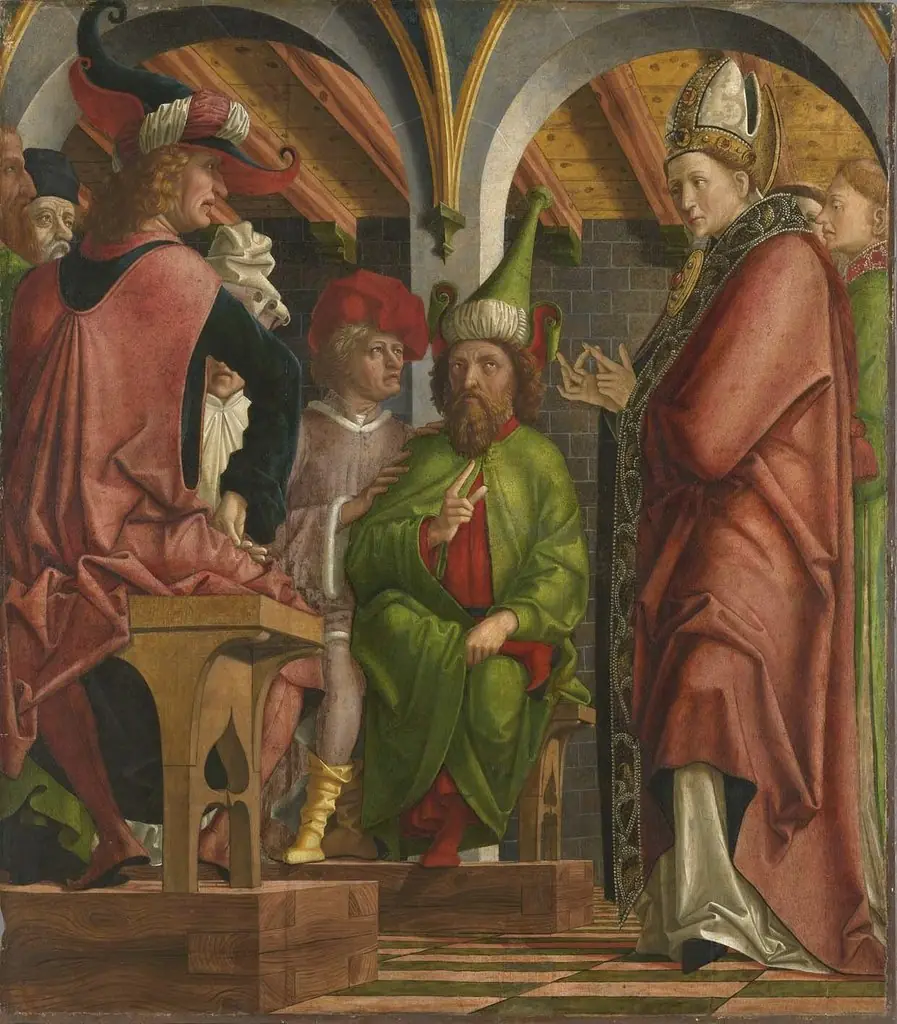 Kirchenväteraltar, Flügelaußenseite: Disputation des hl. Augustinus mit den Häretikern
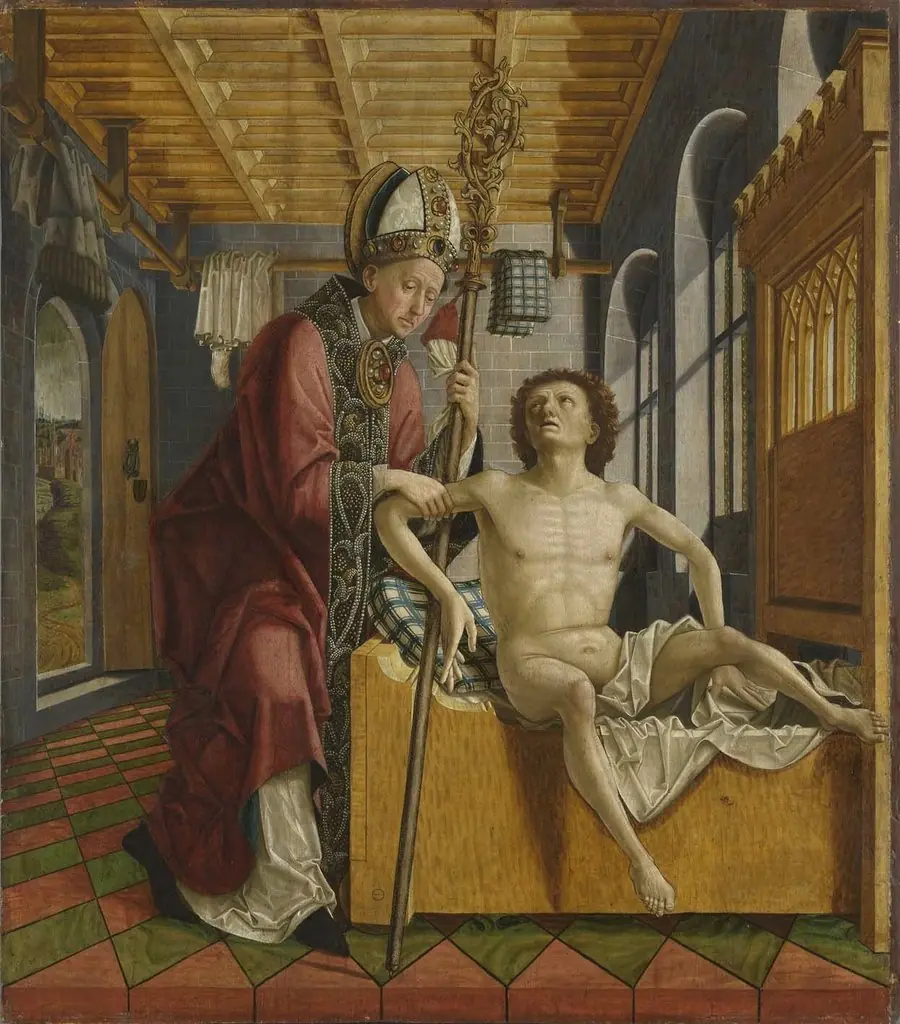 Kirchenväteraltar, Flügelaußenseite: Der hl. Augustinus heilt den Stiftsprobst
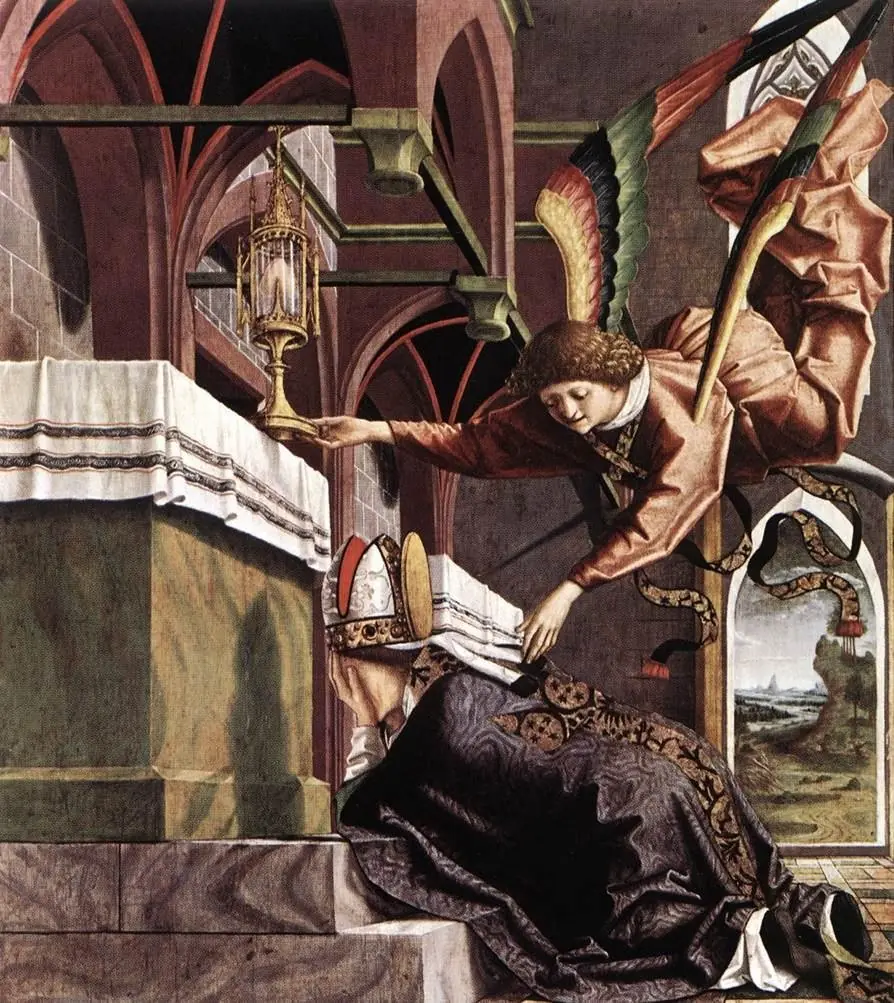 Altarpiece of the Church Fathers: Vision of St Sigisbert
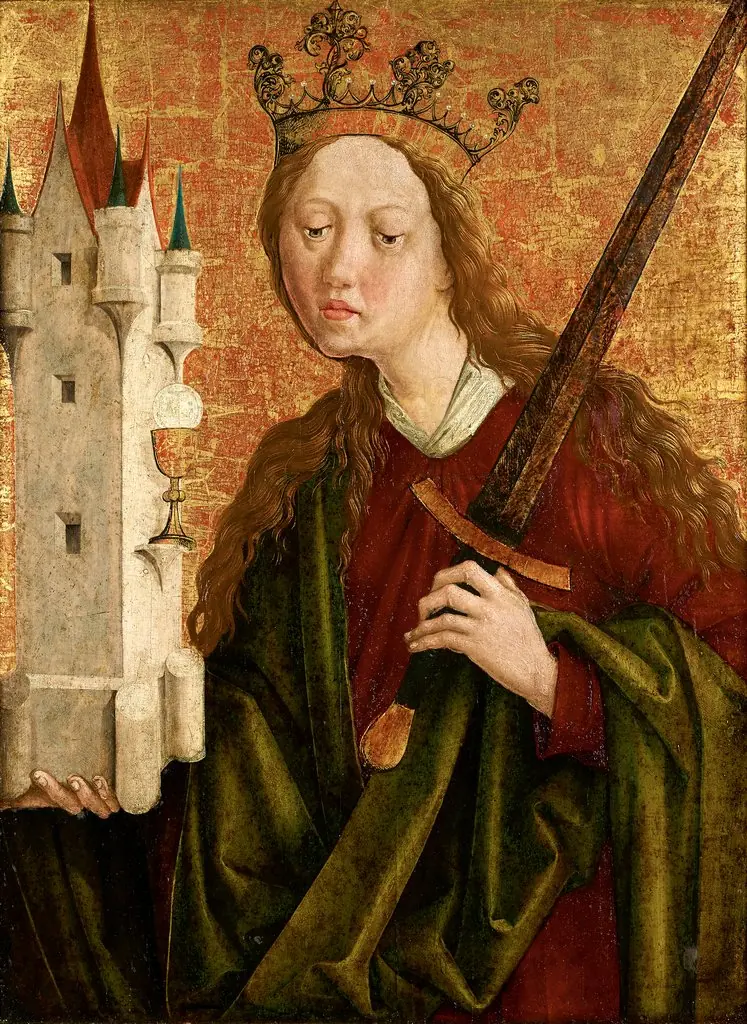 St. Barbara
- Saint Jerome in his Study
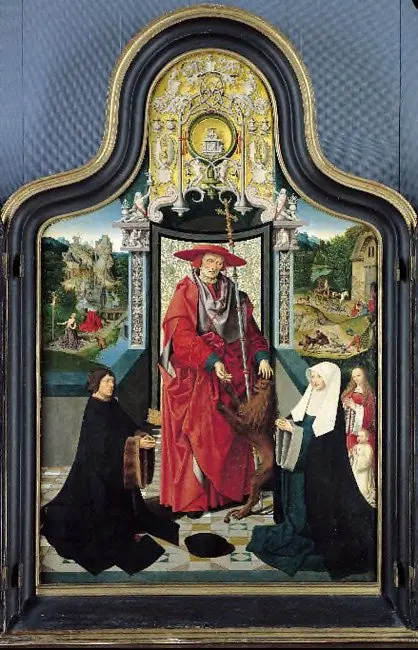 Een stichterspaar en hun kinderen in aanbidding voor de H. Hieronymus. In de achtergrond taferelen uit het leven van Hieronymus
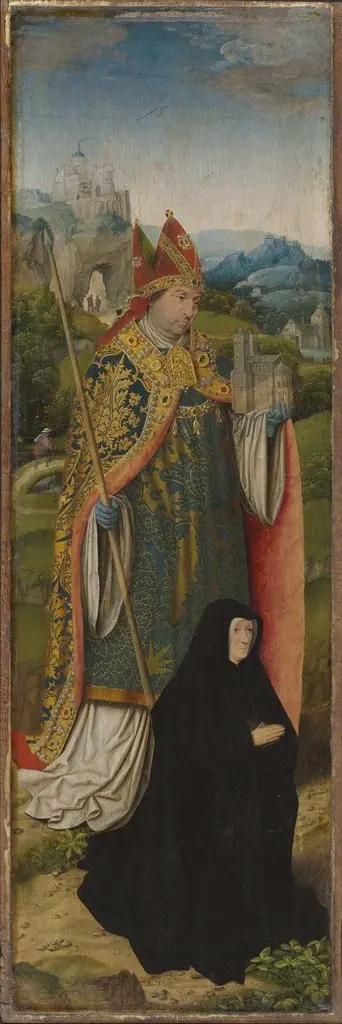 Kreuzigungsaltar: Hl. Bischof (Lambertus von Lüttich?) mit Stifterin
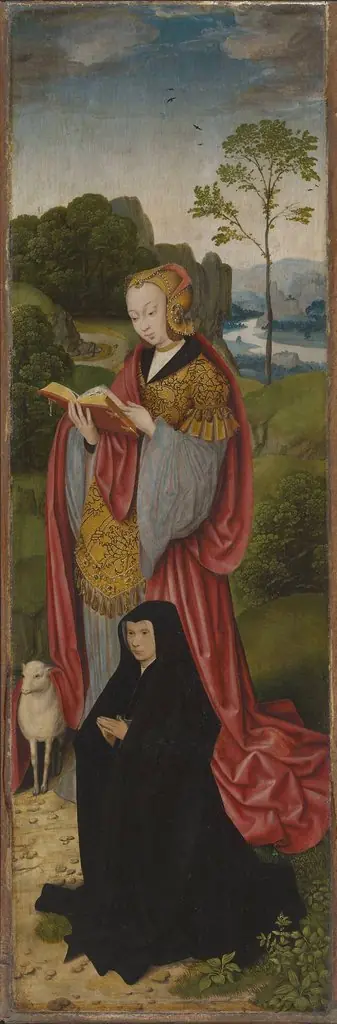 Kreuzigungsaltar: Hl. Agnes und Stifterin
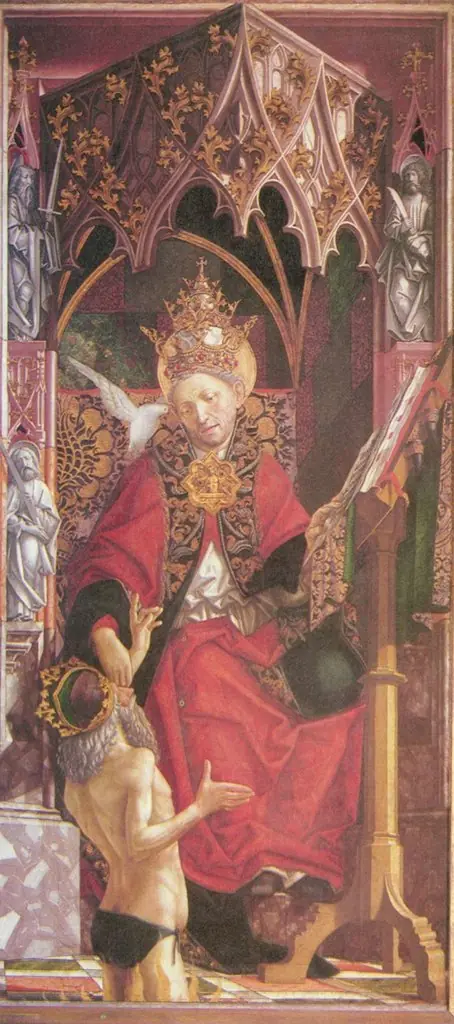 Kirchenväteraltar: Papst Gregor der Große
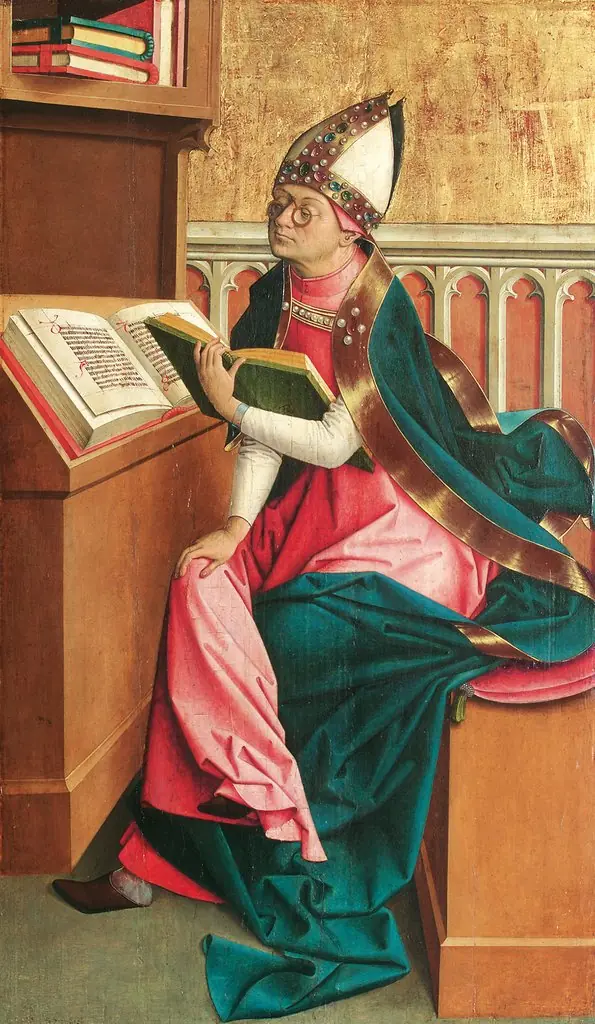 Hl. Augustinus
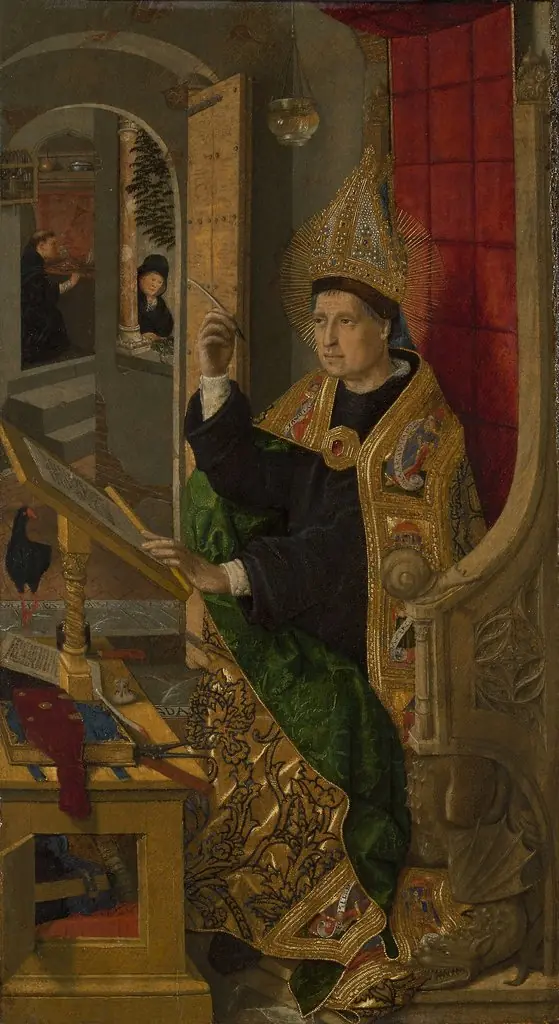 Saint Augustine
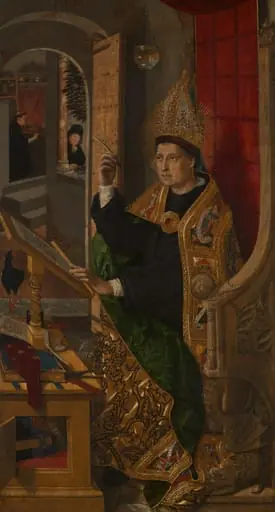 A Bishop Saint
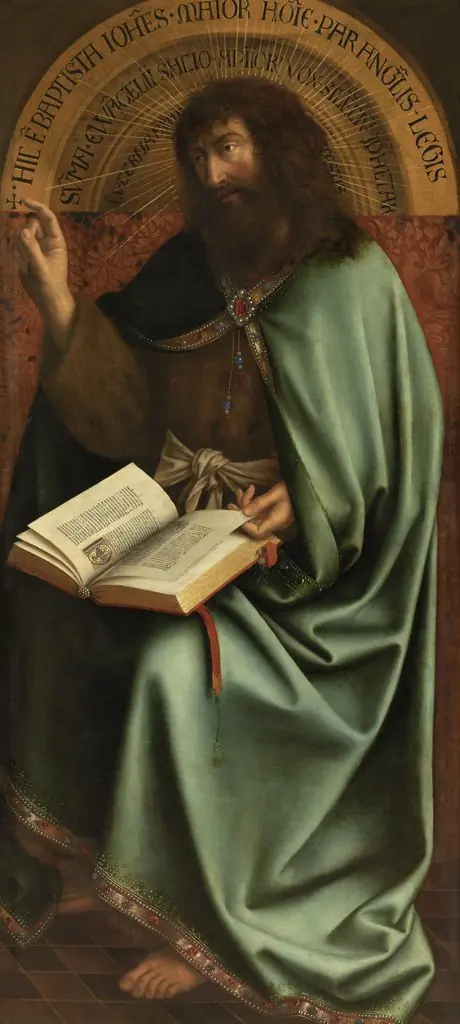 Saint John the Baptist
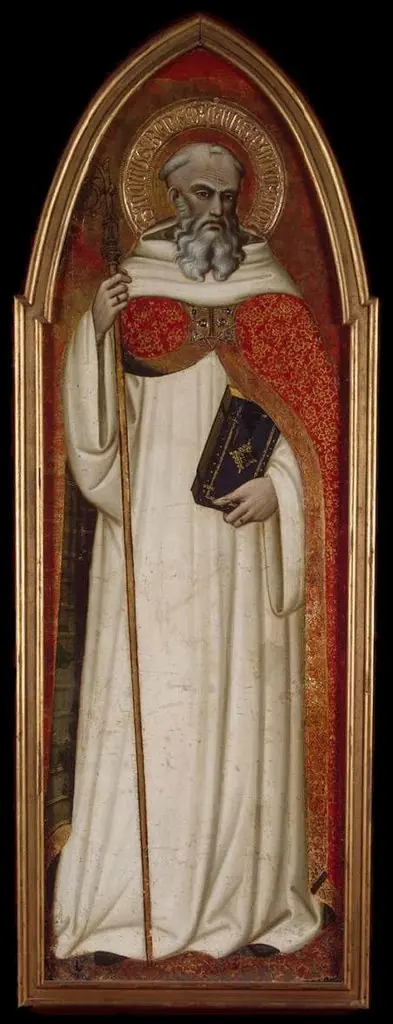 St Benedict (wing of a polyptych)
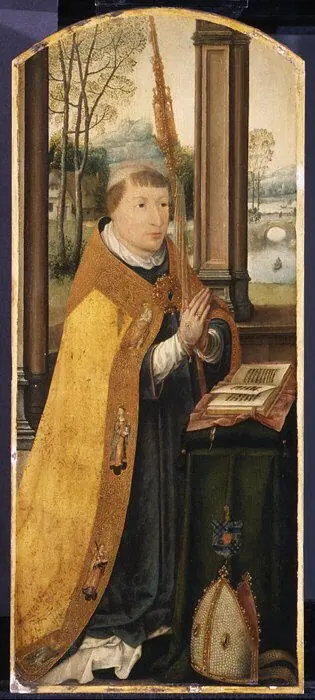 Charles Coguin, Abbot of Anchin