Artwork
Kirchenväteraltar: Hl. Augustinus
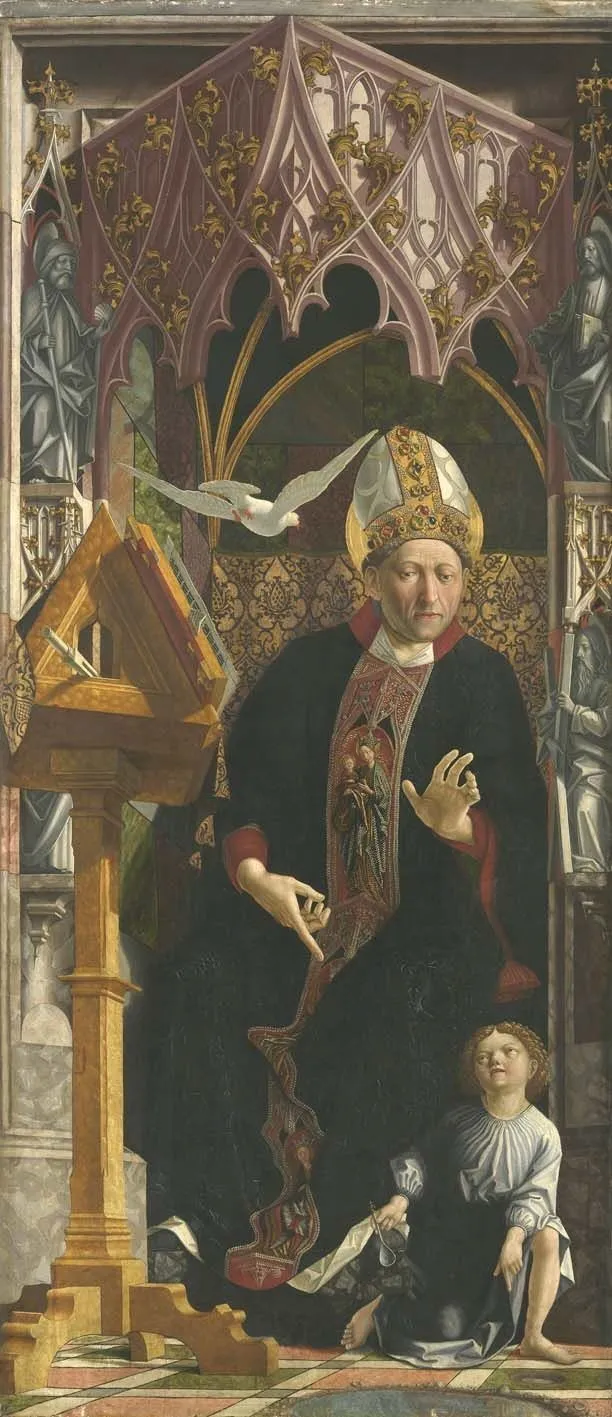
Kirchenväteraltar: Hl. Augustinus is an unspecified painting by the Early Renaissance artist Michael Pacher. It dates from 1490 and is held in the collection of the Bavarian State Painting Collections. Kirchenväteraltar: Hl.
About this work
Subject & Meaning
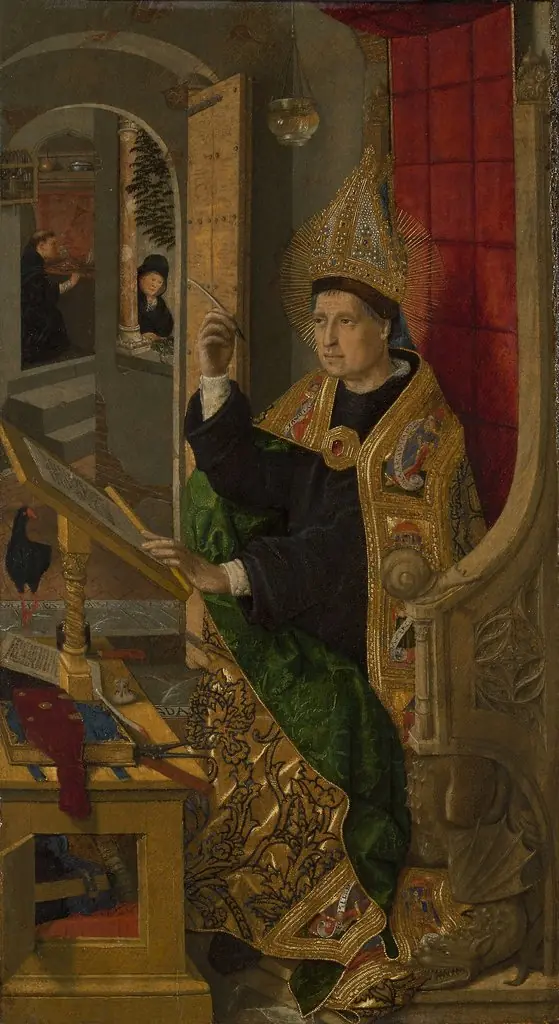
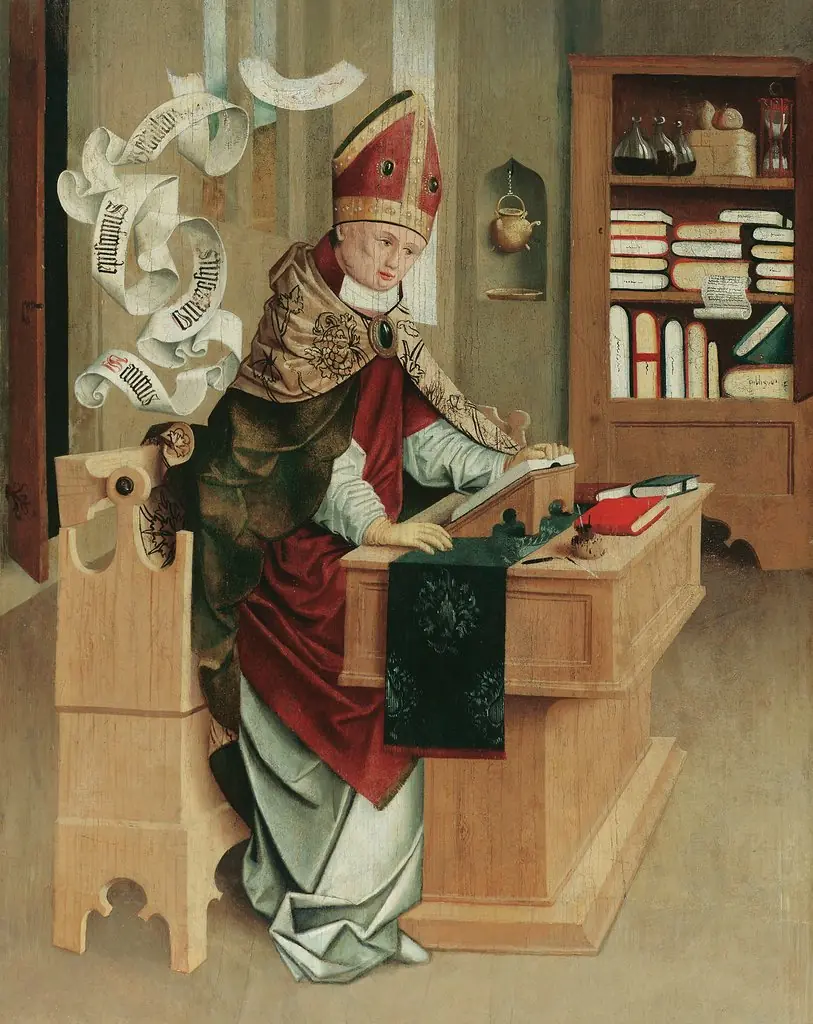
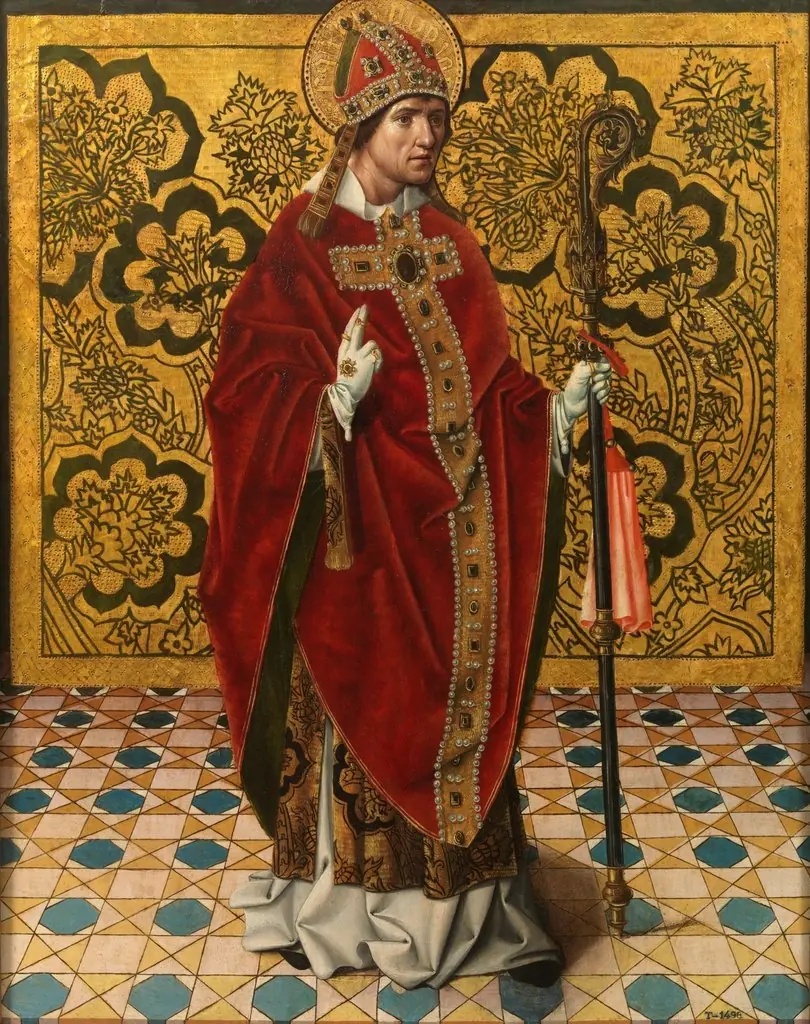
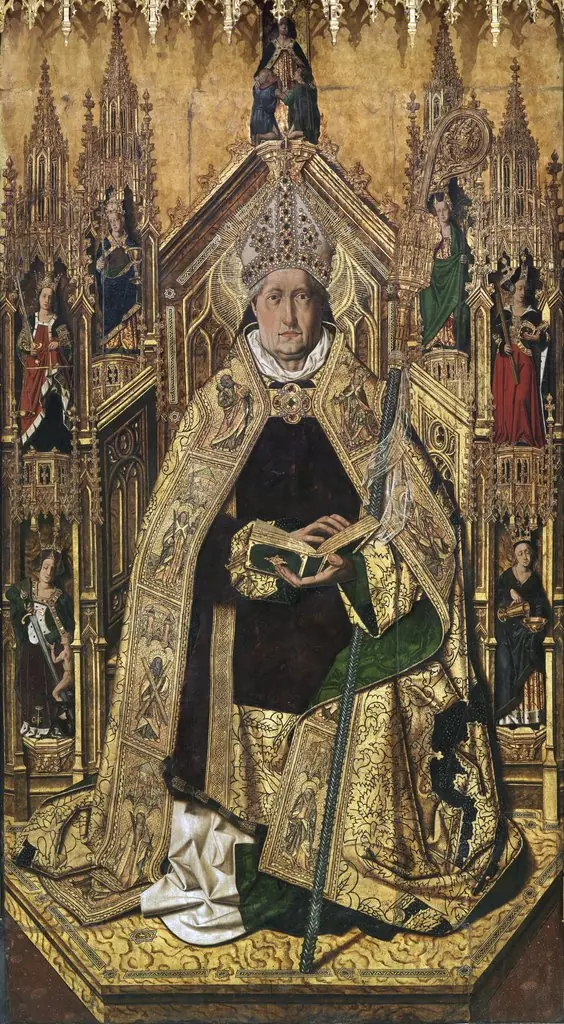
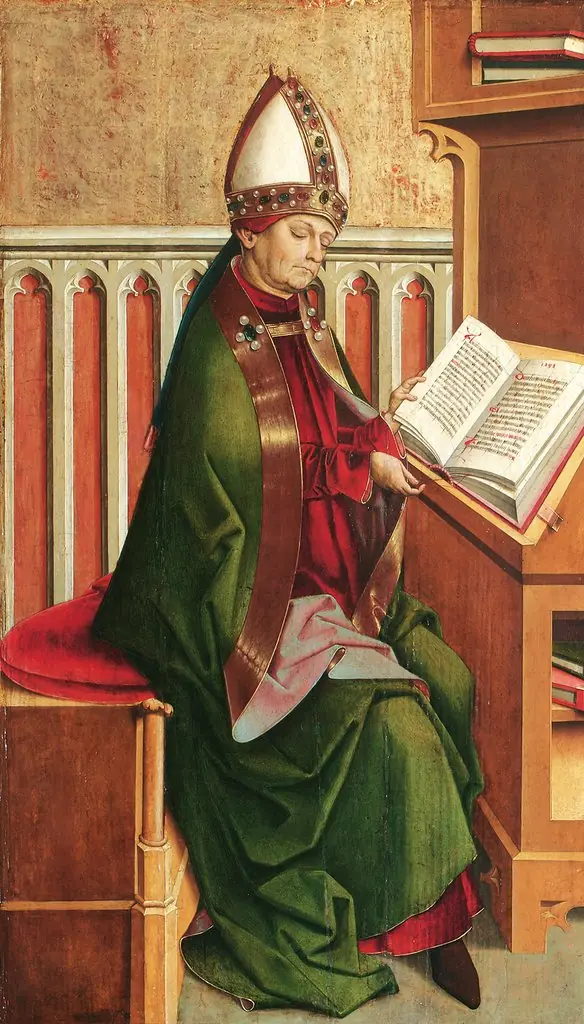
The panel depicts Saint Augustine of Hippo, identifiable by his traditional episcopal attire and mitre. He holds an open book, likely referencing his writings on theology and doctrine.
Augustine appears as a Church Father, emphasizing his role in shaping Western Christian thought. The inclusion of the open book underscores his intellectual legacy and the dissemination of his theological works.
History & Provenance
Its dimensions measure 212 cm in height and 100 cm in width, and it is classified as a religious painting from the late 15th century.
The altarpiece depicting Augustine of Hippo was created by Michael Pacher in 1480 for the Augustinian Canons' Monastery of St. Florian in Linz, Austria. It remained in the monastery's church until 1808 when it was transferred to the Bayerische Staatsgemäldesammlungen. The work entered the Alte Pinakothek collection in Munich, where it has been displayed since its acquisition.
Its dimensions measure 212 cm in height and 100 cm in width, and it is classified as a religious painting from the late 15th century.
The painting Kirchenväteraltar: Hl. Augustinus by Michael Pacher is held by the Bavarian State Painting Collections. It is currently located at the Alte Pinakothek in Munich. The work depicts Augustine of Hippo and was created in 1480.
The provided sources do not contain specific inventory numbers, accession dates, or a record of past exhibitions for this artwork.
Legacy
The altarpiece established Michael Pacher's reputation as a leading Tyrolean painter of devotional works in the late 15th century. Its focus on Augustine of Hippo as a central saint contributed to the veneration of Church Fathers in regional liturgical practice, reinforcing the theological emphasis on Augustine's doctrinal authority within Austrian ecclesiastical contexts. The work remains part of the Bavarian State Painting Collections and is displayed at the Alte Pinakothek in Munich, where it continues to be studied as an example of Tyrolean Gothic artistry and as a key piece in Pacher's documented output from 1480.
Overview
Kirchenväteraltar: Hl. Augustinus is a painting created by Michael Pacher in 1490. It is part of the Alte Pinakothek's collection.
Technique & Style
Pacher's use of chiaroscuro creates a sense of depth and volume, emphasizing the central figures. The work showcases the artist's integration of Renaissance principles into a German context, characterized by intricate detail and a blend of painting and architectural elements.
Artist & collection
Artist
Michael Pacher (c. 1435 – August 1498) was a painter and sculptor from Tyrol active during the second half of the fifteenth century. He was one of the earliest artists to introduce the principles of Renaissance painting…

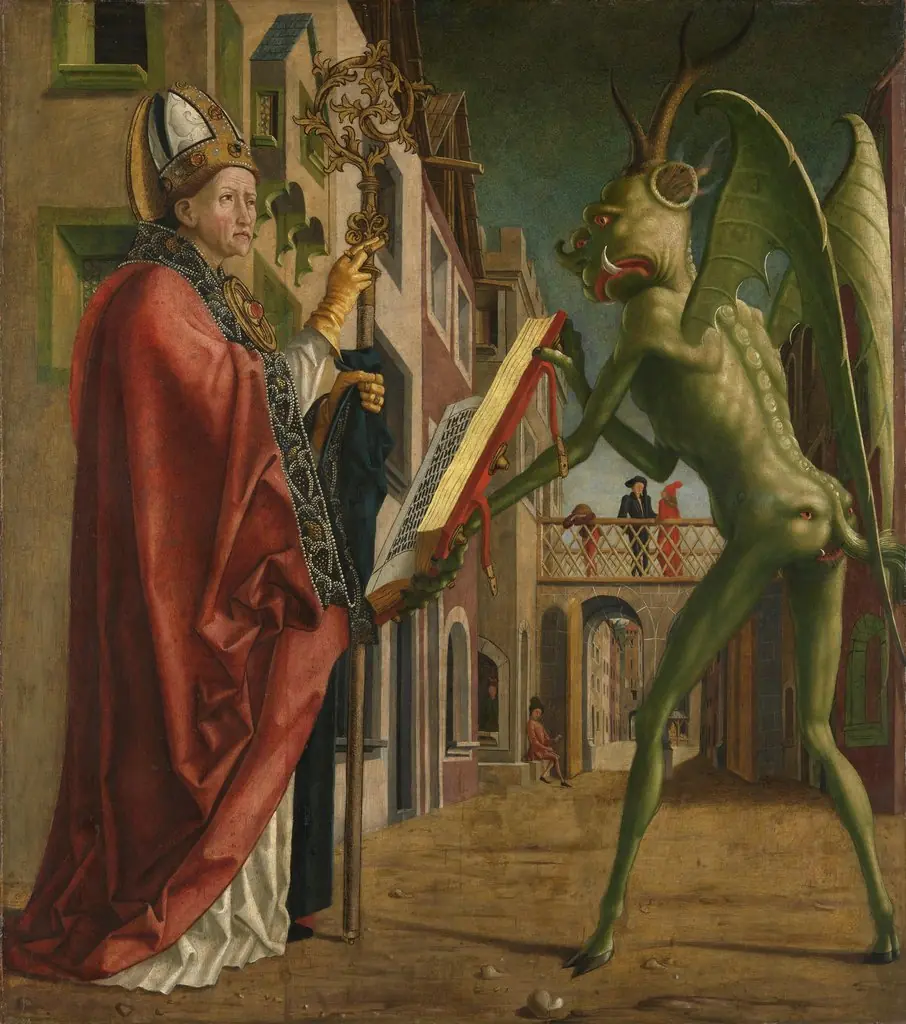 Kirchenväteraltar, Flügelaußenseite: Der Teufel weist dem hl. Augustinus das Buch der Laster vor
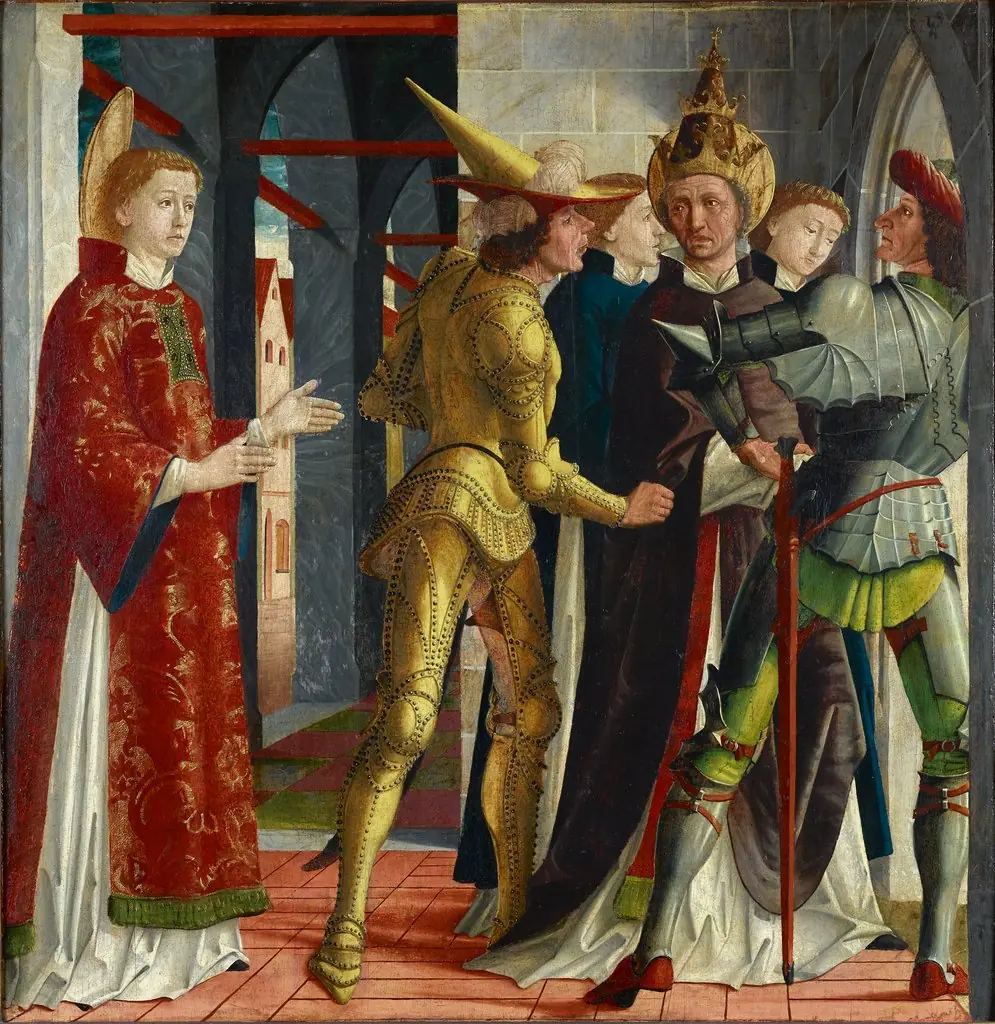 Pope Sixtus II. bids farewell to St. Lawrence
- Saint Ambrose from Milan
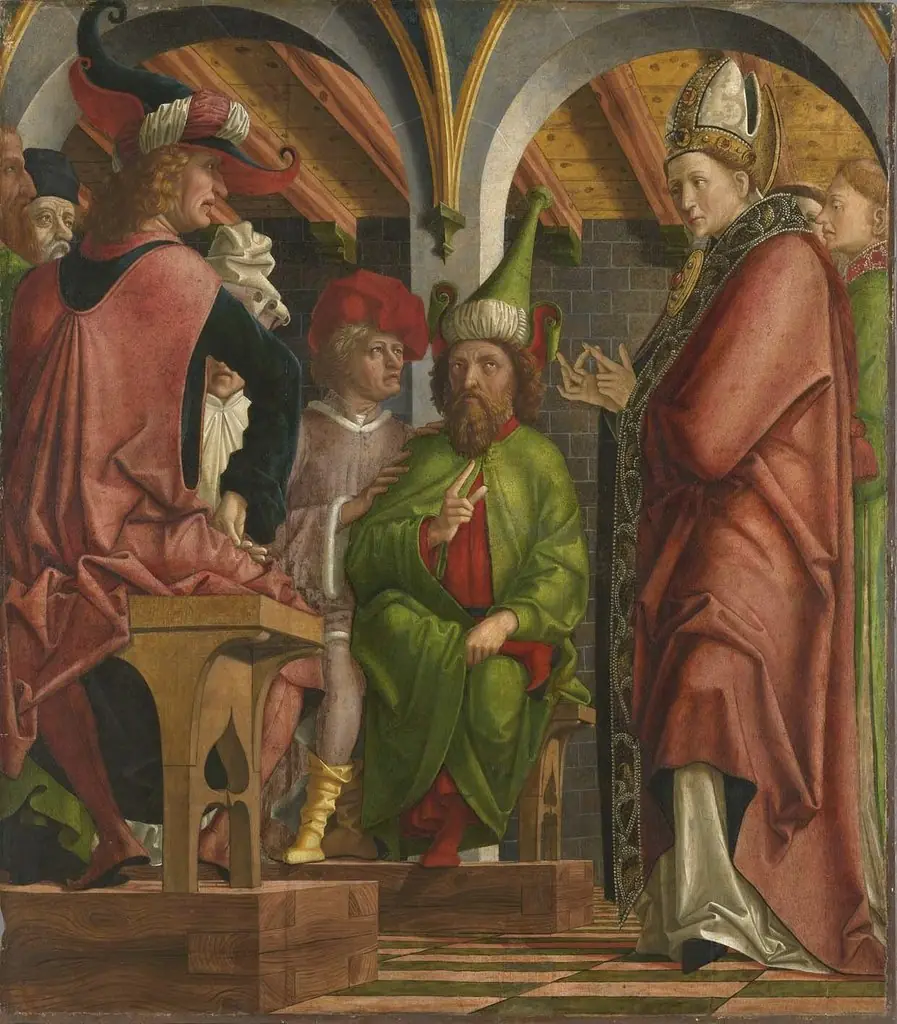 Kirchenväteraltar, Flügelaußenseite: Disputation des hl. Augustinus mit den Häretikern
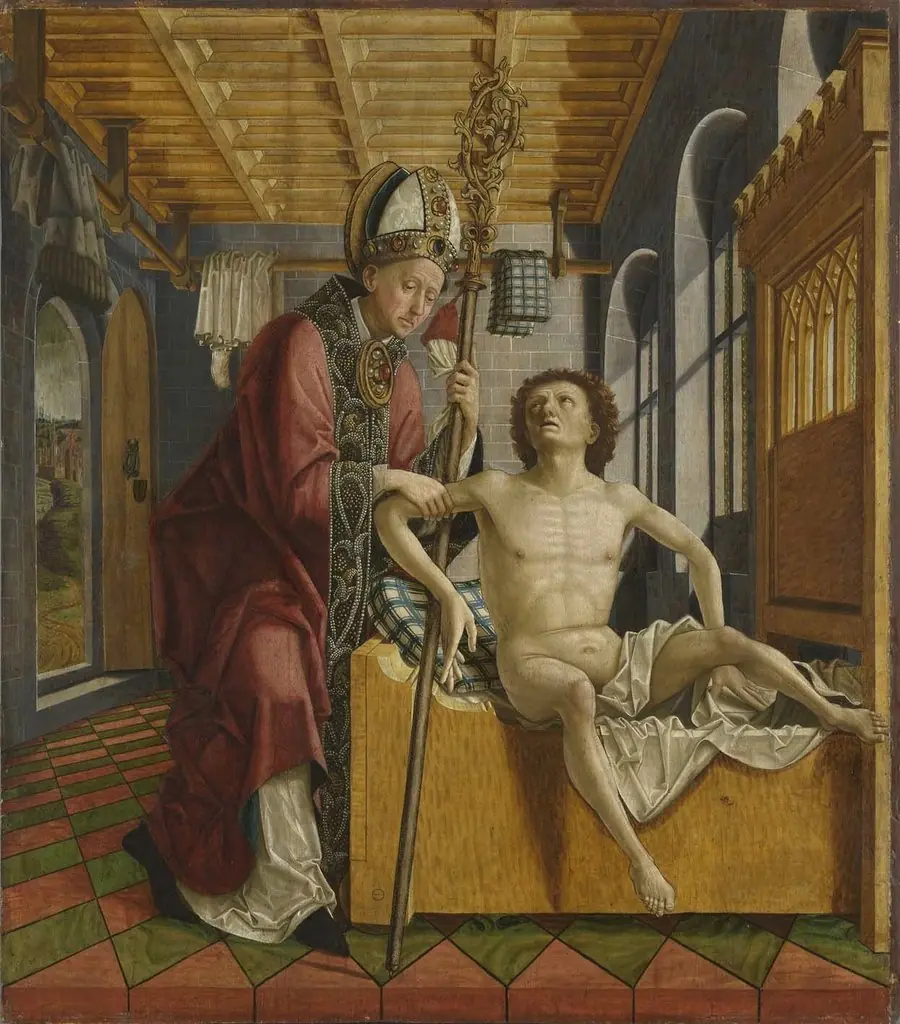 Kirchenväteraltar, Flügelaußenseite: Der hl. Augustinus heilt den Stiftsprobst
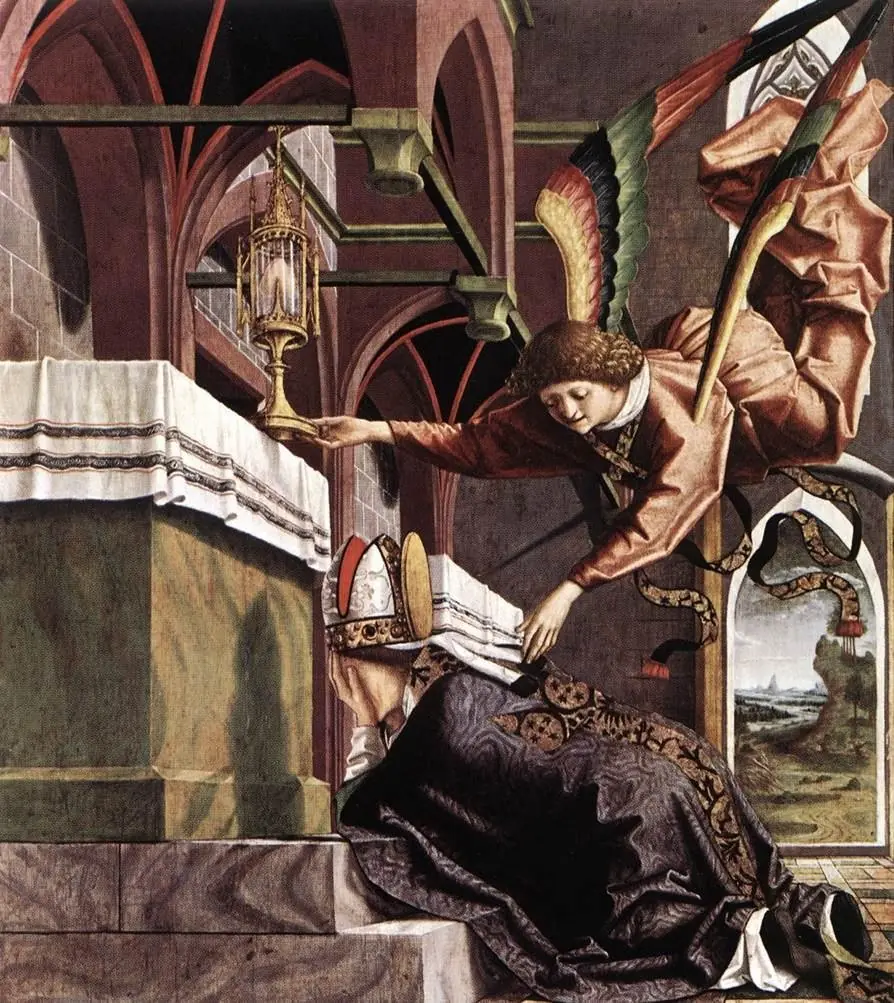 Altarpiece of the Church Fathers: Vision of St Sigisbert
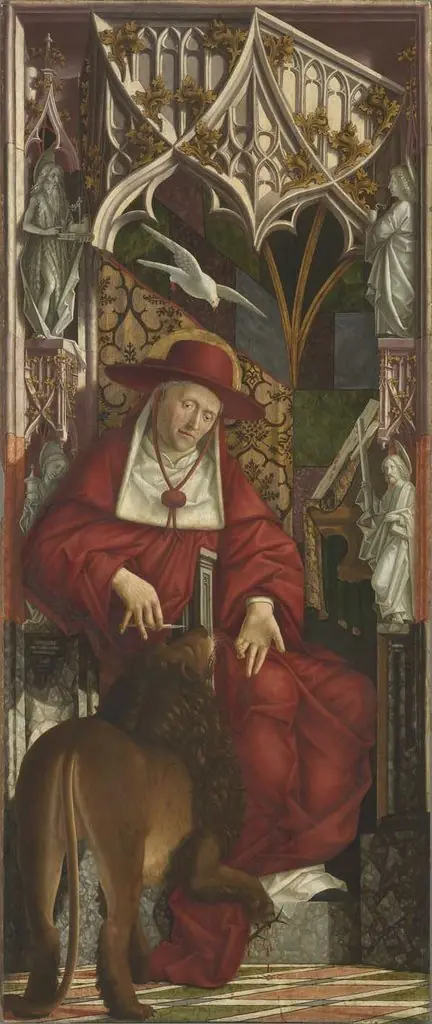 Kirchenväteraltar: Hl. Hieronymus
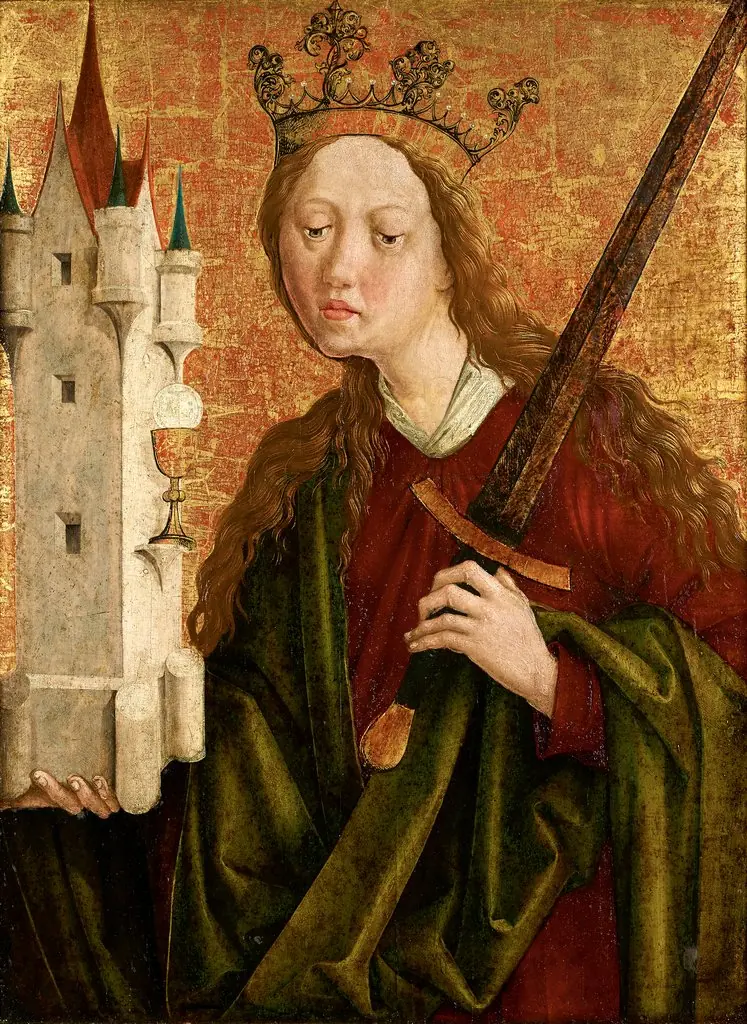 St. Barbara