Artwork
The Holy Family with Saint John the Baptist
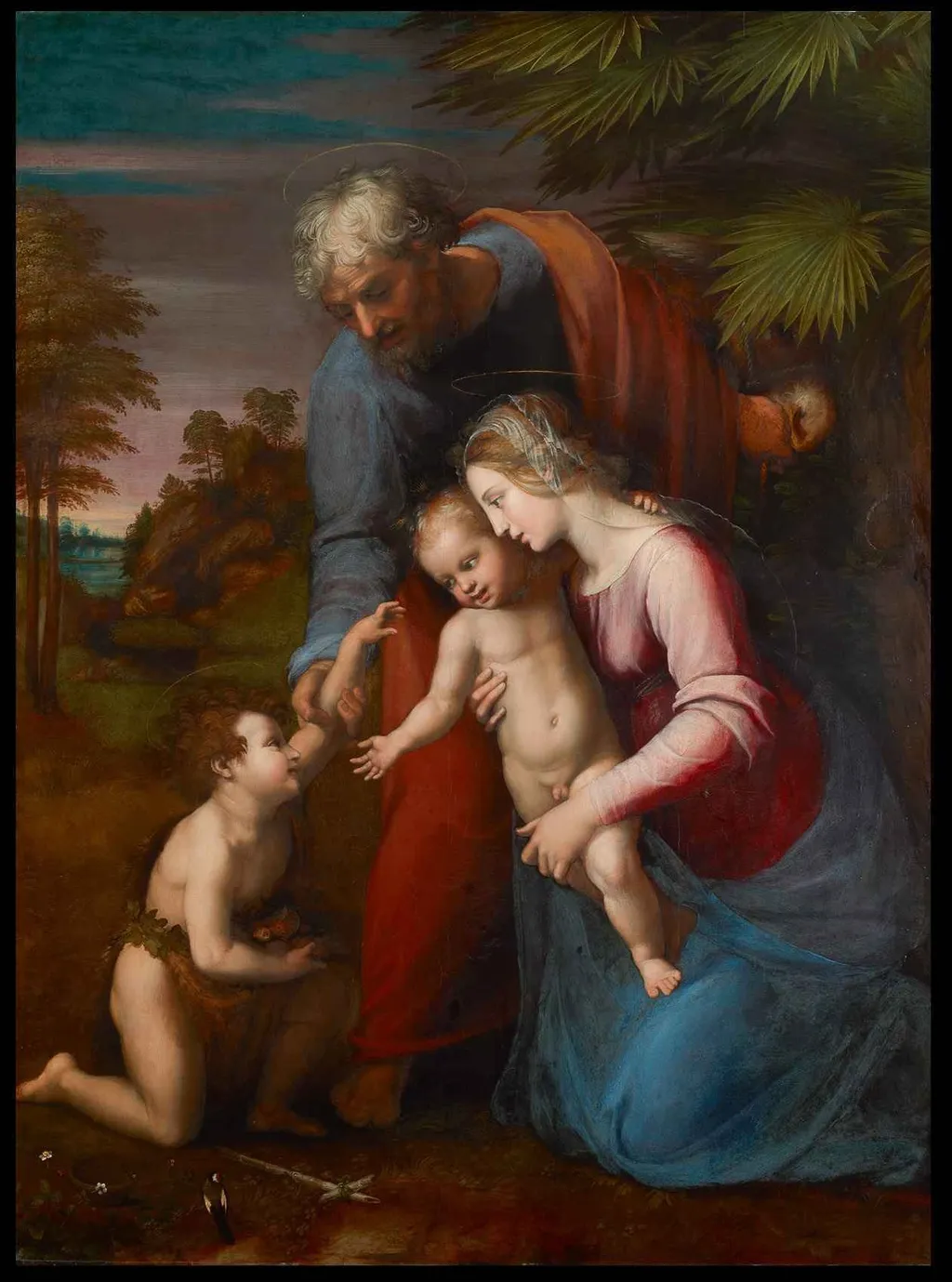
The Holy Family with Saint John the Baptist is an oil painting by the High Renaissance artist Raphael. It dates from 1513 and is held in the collection of the Kunsthistorisches Museum.
About this work
Overview
The Holy Family with Saint John the Baptist is an oil painting on wood by Raphael and his workshop, dated to 1513.
The Holy Family with Saint John the Baptist is an oil painting on wood by Raphael and his workshop, dated to 1513. Measuring 154.5 by 114 centimeters, it is held in the Kunsthistorisches Museum in Vienna. The work occupies a significant place in the High Renaissance canon as a devotional image that exemplifies Raphael's mature handling of sacred themes, while also reflecting the collaborative practices of his increasingly large studio during a period of intense papal commissions.
Subject & Meaning
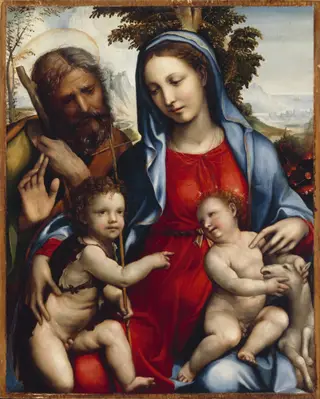
The painting depicts the Virgin Mary, the infant Jesus, Saint Joseph, and the young Saint John the Baptist in a landscape setting. The composition follows Christian iconographic convention: Mary, robed in her traditional blue and red garments, kneels and supports the nude Christ Child, who extends his right arm toward the kneeling John. Joseph stands at the apex of the pyramidal grouping, his body inclined forward as he reaches toward the Baptist child. John wears his characteristic animal skin and a small reed cross lies on the ground beside him, prefiguring his future role as precursor to Christ. Palm fronds descending from the upper right allude to the martyrdom to come, while the head of an ass visible beneath them suggests the episode of the Holy Family's return from the Flight into Egypt, a narrative also treated in Raphael's Madonna del Passeggio. A goldfinch appears near the reed cross, a common symbol of the Passion. All four holy figures bear thin, discreet golden halos rendered as fine ellipses.
Technique & Style
Executed in oil on wood, the painting displays the smooth, blended brushwork characteristic of Raphael's High Renaissance manner. Light falls softly from the left, modeling the rounded forms of faces and limbs with subtle transitions between light and shadow. The palette is dominated by deep reds, saturated blues, warm flesh tones, and earthy browns, with touches of green in the foliage. The pyramidal composition stabilizes the figure group while creating a harmonious rhythm that draws the eye downward from Joseph through Mary to the interaction between the two children. The landscape backdrop, with its wooded terrain, distant water, and sky shifting from turquoise to muted purple and pink, demonstrates the integration of figure and setting that Raphael and his contemporaries refined. The surface condition shows the effects of age in some areas, though the overall execution retains its coherence.
History & Provenance
The work is attributed to Raphael with reservations, as scholarly consensus holds that much of the composition was executed by his workshop and assistants rather than by the master alone. The painting entered the collection of the Kunsthistorisches Museum in Vienna, where it remains today. No specific commission record survives, though the subject and scale suggest it was produced for private devotional use, consistent with the numerous Holy Family variants that emerged from Raphael's prolific studio during the early 1510s. The painting has not been the focus of extensive published exhibition history in the provided sources.
Context
The Holy Family with Saint John the Baptist belongs to a period when Raphael's workshop had expanded to meet the demands of papal and private patrons, leading to increased delegation to assistants such as Giulio Romano and Gianfrancesco Penni. The composition's thematic kinship with the Madonna del Passeggio, which also treats the meeting of the Holy Family with the infant John, suggests the recycling and variation of successful formulas within the studio. The work must be distinguished from several other paintings with similar titles: the Holy Family with Infant Saint John the Baptist at the Metropolitan Museum (on loan from the Museo del Prado, dated circa 1517-18, oil on canvas transferred from wood, 103 by 84 cm); the Prado's own panel of the same subject (second quarter of the sixteenth century, inventory number 2502, catalogued as a copy after Raphael); and Poussin's 1627 Holy Family with Saint John the Baptist at the Met, which reinterprets the theme with Baroque naturalism and layered symbolic imagery. The Vienna panel's attribution history reflects broader scholarly debates about the boundaries between autograph works, workshop products, and copies in Raphael's oeuvre, debates that intensified following the foundational studies of Pierluigi De Vecchi and others.
Legacy
The painting's influence is difficult to separate from that of Raphael's autograph inventions, yet its very existence testifies to the market appetite and devotional need that the workshop system served. The numerous versions and variants, including the Prado copy and the related Madonna del Passeggio tradition, demonstrate how compositions attributed to Raphael's circle were disseminated across European collections. The work remains a touchstone for discussions of Renaissance workshop practice and the aesthetic and economic value attached to the master's name. Its residence in the Kunsthistorisches Museum ensures continued visibility within one of the world's preeminent collections of Old Master painting, where it contributes to the institutional narrative of High Renaissance achievement in central Italy.
Own this work as a print
Artist & collection
Artist
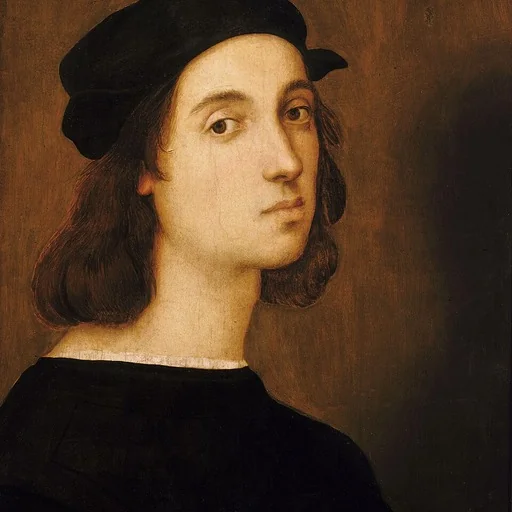
Raphael was born Raffaello Sanzio in Urbino on April 6, 1483, the son of Giovanni Santi, a painter and poet attached to the ducal court.


- The Holy Family with Saint John the Baptist
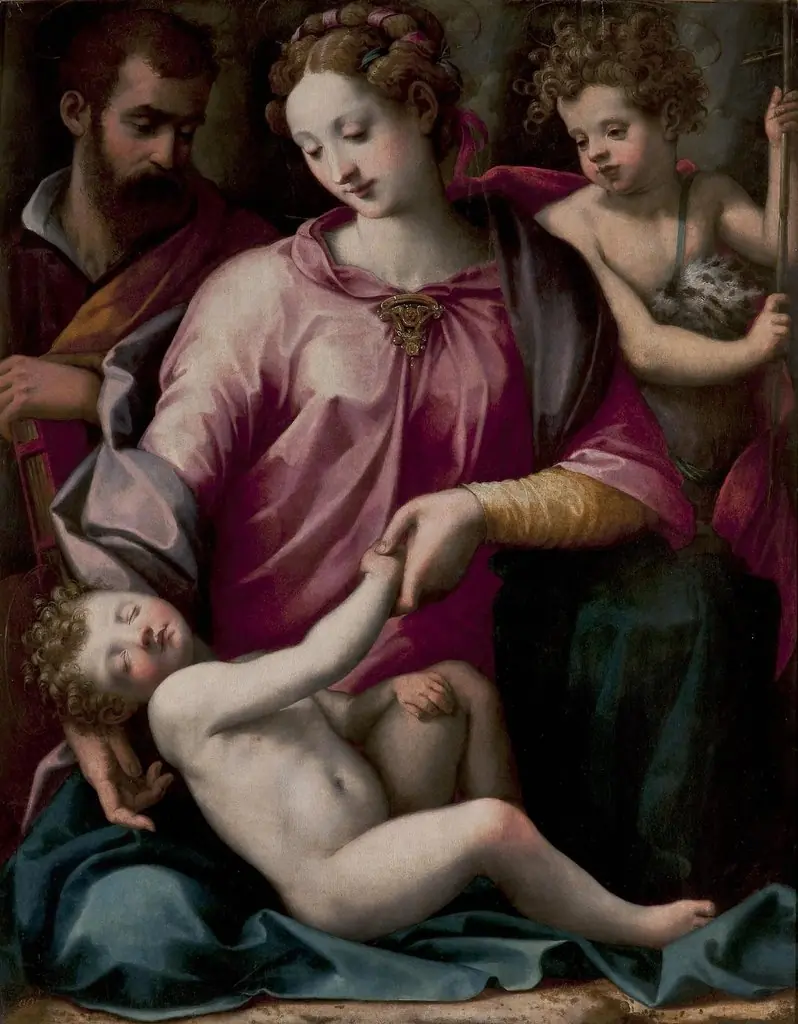 Holy Family with St John the Baptist
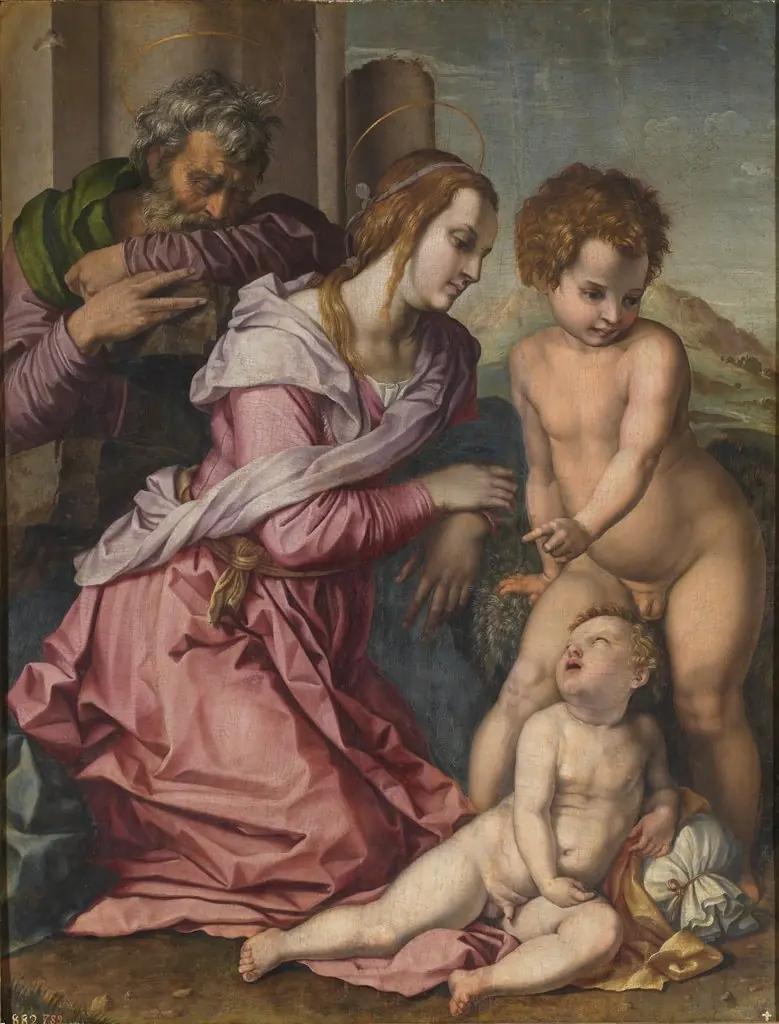 The Holy Family with the Infant Saint John the Baptist
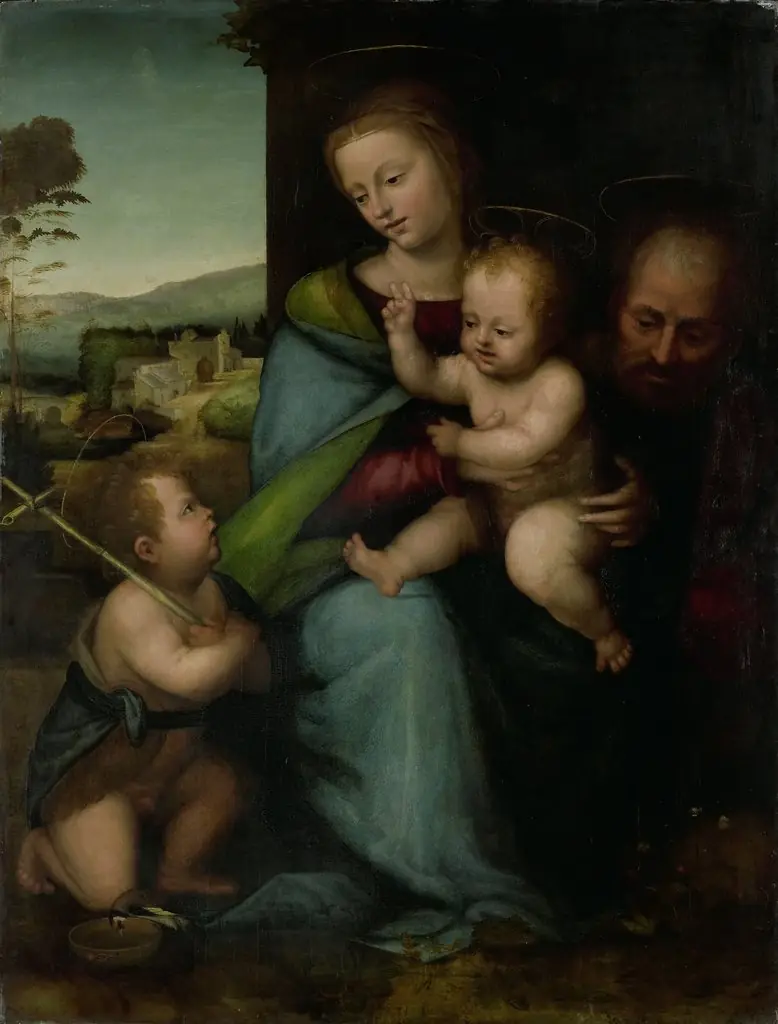 The Holy Family with the Infant John the Baptist
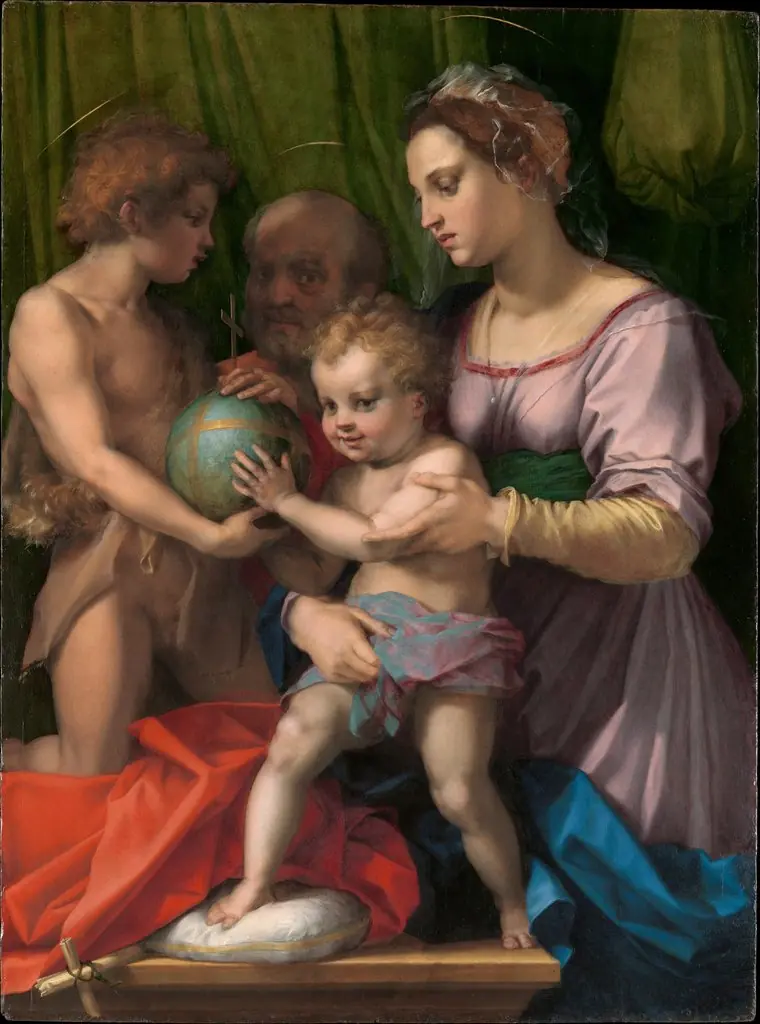 The Holy Family with the Young Saint John the Baptist
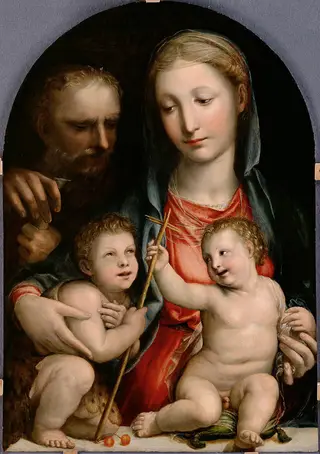 Holy Family with St. John the Baptist as child
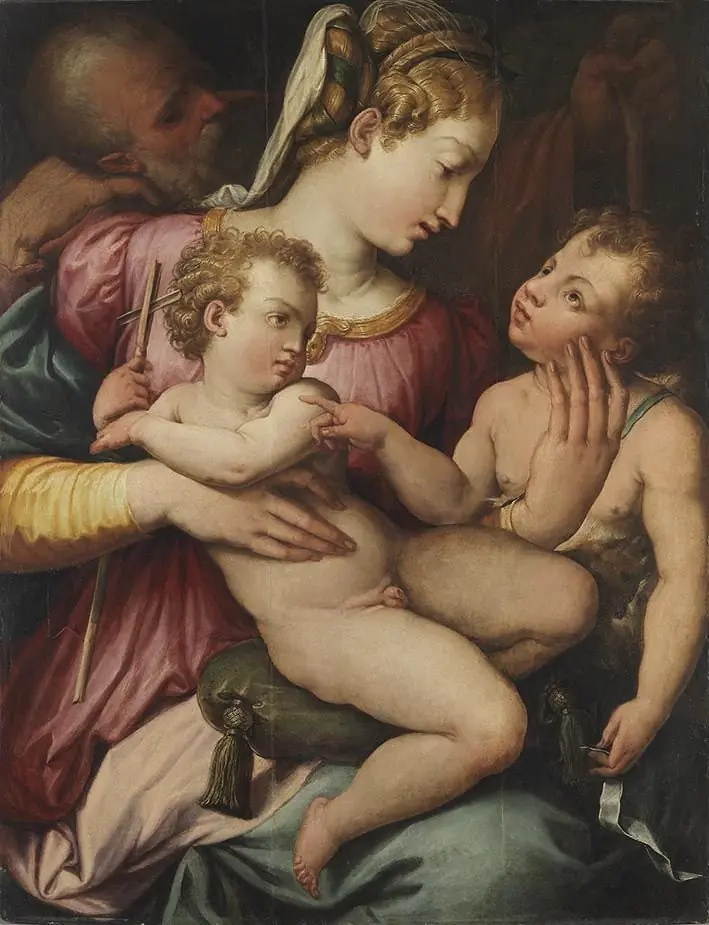 Holy family with little John the Baptist
 The Holy Family and St. John