Artwork
The Holy Family with Child Saint John
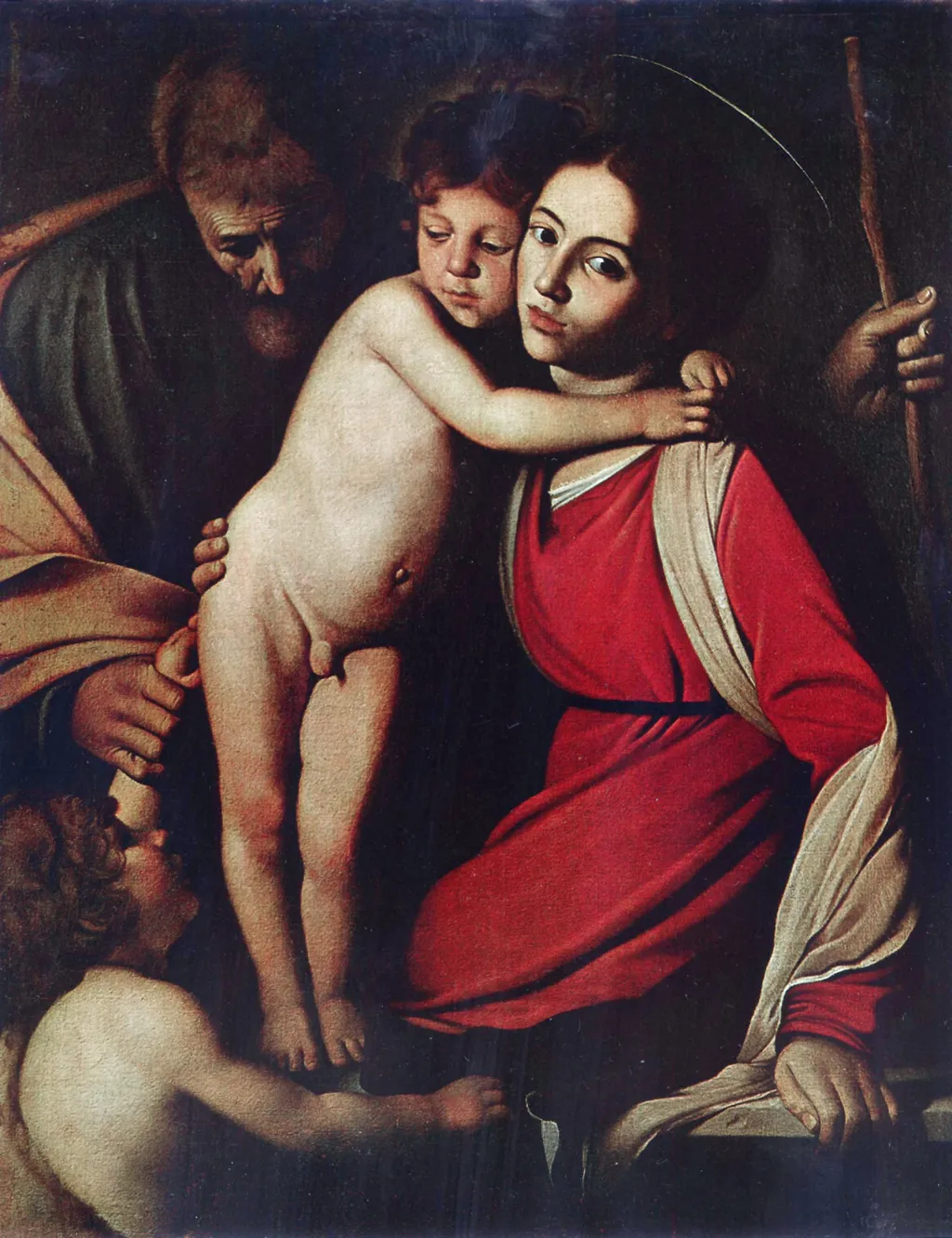
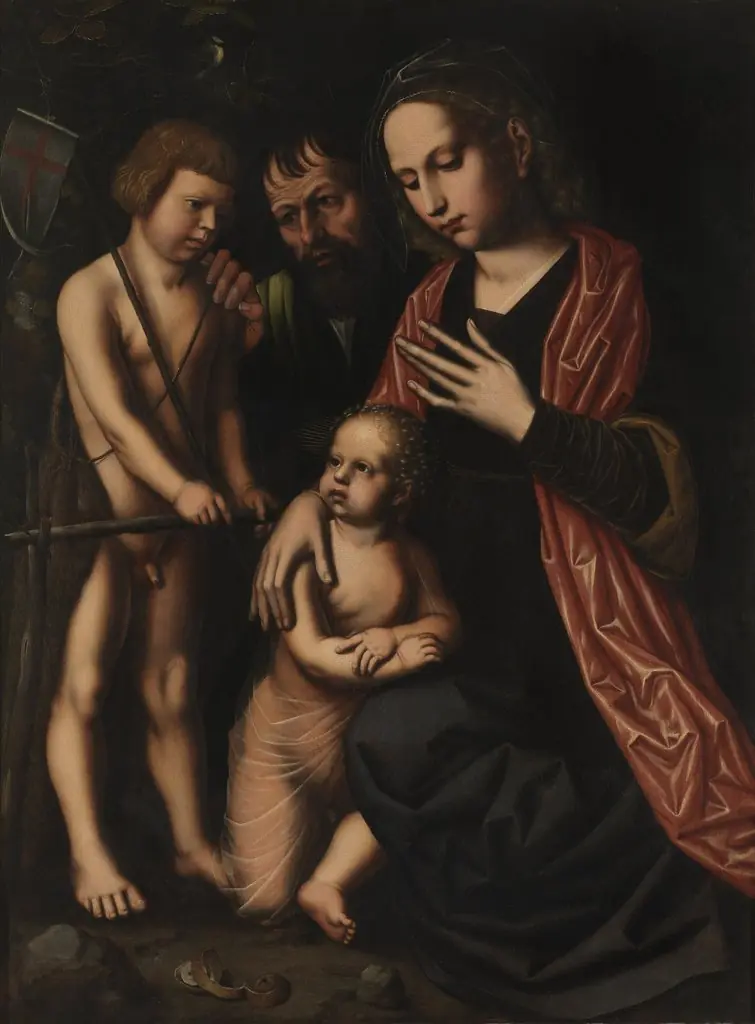
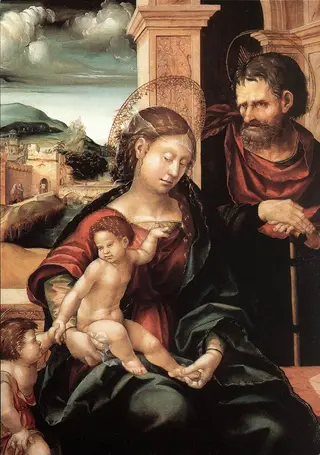
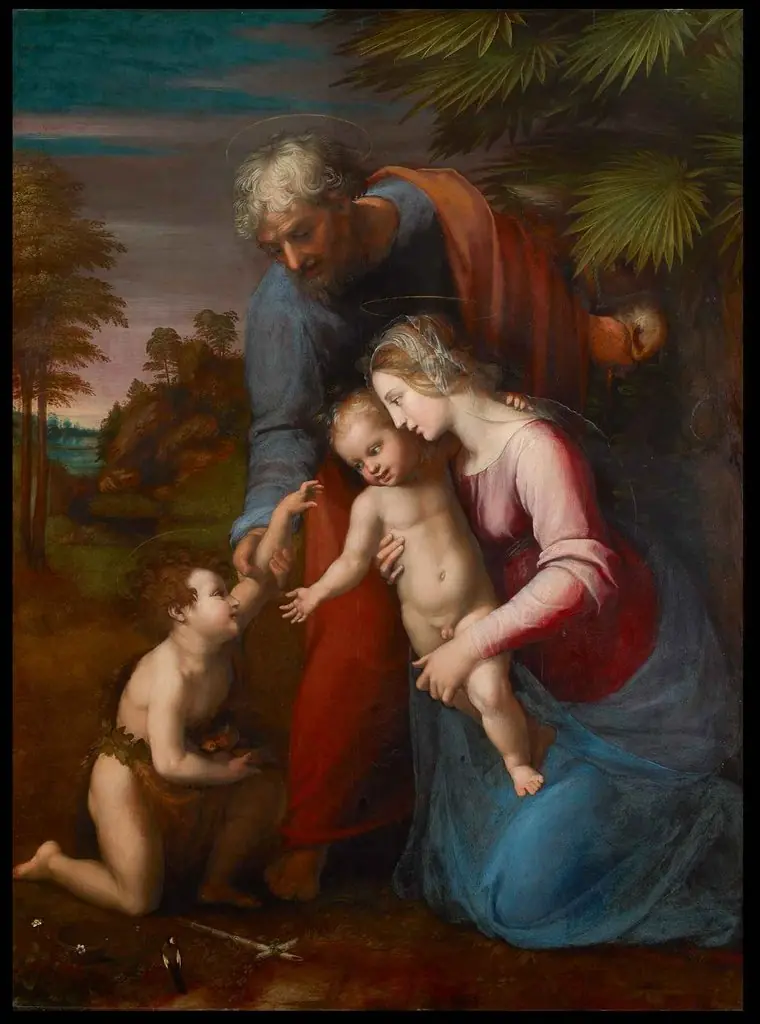
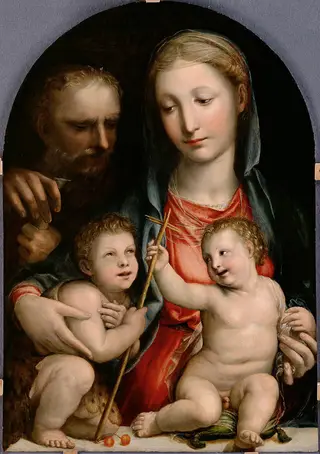
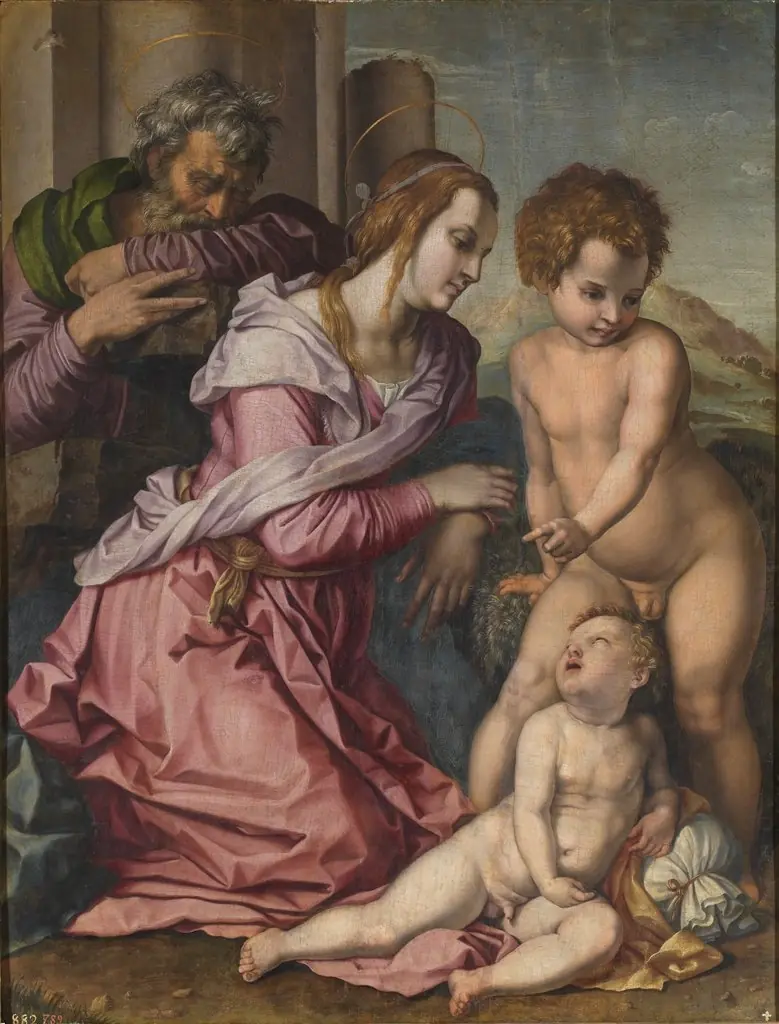
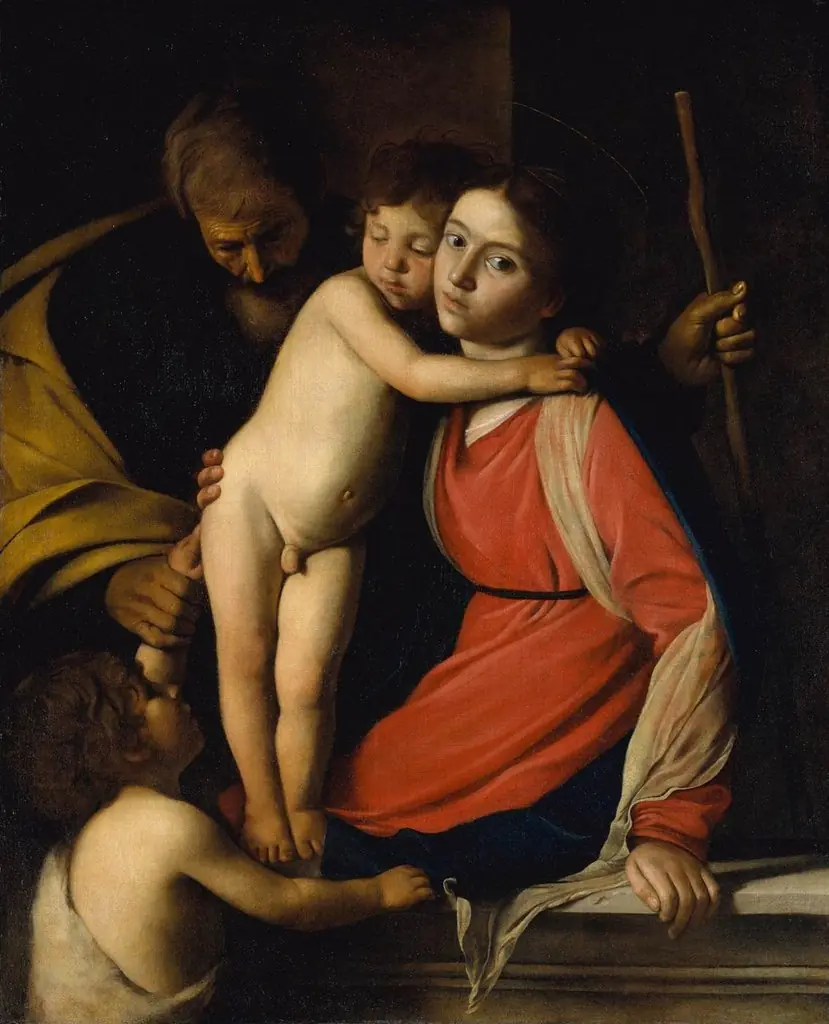
The Holy Family with Child Saint John is a paint painting by the Early Baroque Italian artist Caravaggio. It dates from 1603 and is held in the collection of the Bode Museum. Created in 1603, this oil painting presents a domestic tableau of the Holy Family accompanied by the infant Saint John the Baptist.
About this work
Subject & Meaning
The composition features the Virgin Mary, the Christ Child, Joseph, and the Child Saint John the Baptist.
The work depicts the Holy Family, a central subject in Christian religious art. The composition features the Virgin Mary, the Christ Child, Joseph, and the Child Saint John the Baptist. By including the young John alongside the infant Jesus and his parents, the painting visually references the biblical relationship between the two figures, foreshadowing John's future role as the baptist of Christ.
This specific arrangement serves as an illustration of the domestic life of Jesus while simultaneously highlighting the theological connection between the savior and his precursor.
Technique & Style
The Holy Family with Child Saint John (1603) is executed in oil on canvas, a medium consistent with Caravaggio’s mature works. The support measures 133 × 161 cm and remains in stable condition, having undergone conservation treatments that preserved its original surface. Caravaggio’s handling is characterized by a refined chiaroscuro, with dramatic contrasts between deep shadows and luminous flesh tones, particularly evident in the modeling of the figures’ faces and drapery.
Stylistically, the composition adheres to the tenebristic principles of Caravaggio’s Roman period, emphasizing volumetric forms through stark lighting. The figures are arranged in a compact, pyramidal grouping, a formal device typical of High Renaissance religious works, yet reinterpreted with Caravaggio’s signature naturalism. Brushwork ranges from smooth, almost imperceptible transitions in the skin to more textured, impasto passages in the garments, reflecting the artist’s layered application of paint.
History & Provenance
The Holy Family with Child Saint John is a painting executed in 1603, attributed to Caravaggio. It serves as a Berlin version of a composition based on The Holy Family with Saint John the Baptist. The work was originally part of the Grand Ducal collection of Oldenburg, owned successively by Augustus, Peter I, Peter II, and Frederick Augustus II, Grand Dukes of Oldenburg.
It is currently held by the Gemäldegalerie in Berlin, having previously been associated with the Bode Museum and the Augusteum.
The work is held in the Gemäldegalerie Berlin, Augusteum, and is recorded under an accession identifier drawn from the museum’s provenance documentation. It entered the collection through the ducal lineage of the Grand Dukes of Oldenburg, specifically Augustus, Grand Duke of Oldenburg, and later Peter I and Peter II of Oldenburg. Exhibition history includes display in the Berlin exhibition spaces of the Gemäldegalerie, where it has been part of the permanent display of religious paintings since its acquisition.
Context
The painting Holy Family with Child Saint John was created by Caravaggio in 1603, as documented in the corpus source. It is classified as a religious painting and forms part of Caravaggio's broader religious output within the Baroque period, reflecting his influence on Counter-Reformation art through intense naturalism and chiaroscuro. The work belongs to the Holy Family genre and depicts Mary, Christ Child, Joseph, and Child Saint John, aligning with devotional themes prevalent in early 17th-century Catholic Europe.
Its provenance includes ownership by the Grand Ducal family of Oldenburg, underscoring its significance in aristocratic collections of the era. The Berlin version referenced in scholarship is housed in the Gemäldegalerie Berlin at the Augusteum, forming part of the institution's distinguished collection of Caravaggisti works [1].
Overview
Created in 1603, this oil painting presents a domestic tableau of the Holy Family accompanied by the infant Saint John the Baptist. The composition gathers Mary, the infant Jesus, Joseph, and the young John in a close, intimate grouping, rendered against a deep, shadowed backdrop that isolates the figures and draws attention to their interaction.
Own this work as a print
Artist & collection
Artist
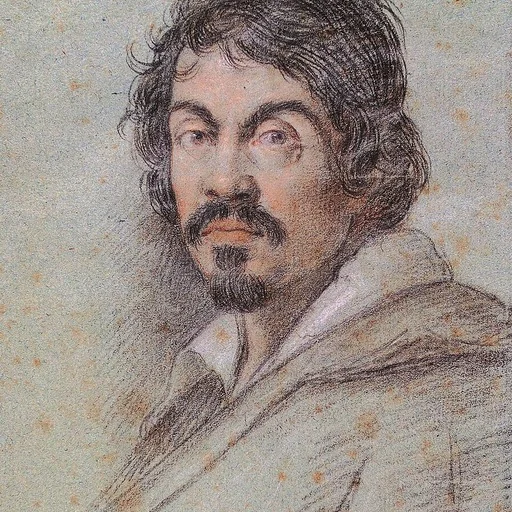
Michelangelo Merisi da Caravaggio (also Michele Angelo Merigi or Amerighi da Caravaggio; 29 September 1571 – 18 July 1610), known mononymously as Caravaggio, was an Italian painter active in Rome for most of his artistic life.