Artwork
The Holy Family with Saint John the Baptist
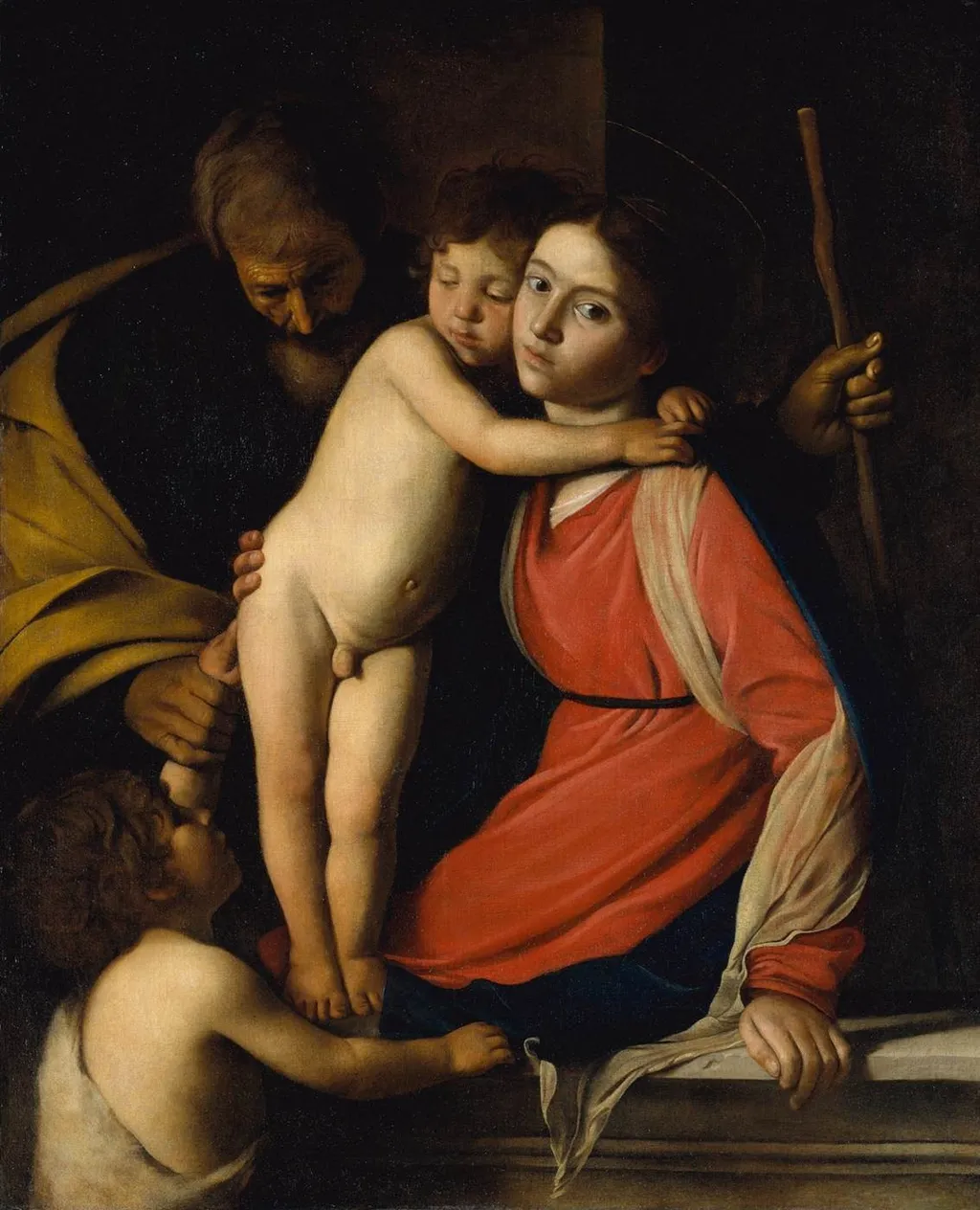
The Holy Family with Saint John the Baptist is an oil painting by the Baroque artist Caravaggio. It dates from 1600 and is held in the collection of the Metropolitan Museum of Art.
About this work
Subject & Meaning
Joseph, identifiable by his advanced age and staff, stands in the background, his serene presence enveloping the group to evoke overarching protection.
The painting depicts the traditional iconographic subject of the Holy Family accompanied by the infant Saint John the Baptist, illustrating the encounter between the young Jesus and his cousin. Caravaggio subtly renders the sacred figures as an everyday, intimate family, grounding the religious narrative in terrestrial reality. The Christ Child embraces the Virgin Mary, conveying a need for maternal protection, which Mary provides by securing him with her right arm while casting a mysterious, protective gaze outward.
Joseph, identifiable by his advanced age and staff, stands in the background, his serene presence enveloping the group to evoke overarching protection. He holds the infant Baptist, who looks toward Jesus with curiosity, acting as a childhood companion. This geometric, pyramidal composition emphasizes familial tenderness and security, allowing viewers to empathize with the sacred figures as an ordinary family, a deliberate approach reflecting Counter-Reformation efforts to bridge the gap between the earthly and the divine.
Technique & Style
The Holy Family with Saint John the Baptist is an oil painting on canvas, measuring approximately 116 by 94 cm. Executed in a realist Baroque idiom, it is characterized by Caravaggio's signature dense, tightly applied brushwork and the use of vivid colors, notably the red of Mary's dress set against a dark ground. The artist deploys chiaroscuro, with a focal light entering from outside the upper left of the frame, to illuminate Mary and the Christ Child as the principal figures while leaving Joseph more dimly lit in the background, signaling his secondary role. The composition is rigorously geometric and pyramidal: principal lines run from Mary's left hand up to her head, then trace the body of the Christ Child at the center, descending to his right hand and back to Mary's supporting hand, while secondary lines describe the recessed figure of Joseph.
The shallow spatial articulation and interplay of glances and gestures lend the scene an atmosphere of serenity and mystery, with the Virgin modeled in delicate chiaroscuro and the Child rendered with rosy flesh tones. The work is considered the only Madonna and Child by Caravaggio painted in non-monumental dimensions.
History & Provenance
Caravaggio's Holy Family with Saint John the Baptist is an oil on canvas dated between 1600 and 1606, with sources variously placing its execution around 1600 or between 1605 and 1606 during the artist's Roman period. The painting has long been considered by art historians, beginning with Roberto Longhi, to be the principal autograph version among at least six known treatments of the subject. It forms part of the private Otero Silva collection based in Caracas, Venezuela, and is held on deposit at the Metropolitan Museum of Art in New York, where it is installed in Gallery 620.
The work was not publicly exhibited until 2001, when it appeared in the show "Caravaggio e il genio di Roma – 1592-1623," held at the Palazzo Venezia in Rome. No commission or earlier ownership history is documented in the available sources.
The work is held by the Metropolitan Museum of Art, New York, where it is on deposit from a private collection. It carries the accession number 2001.194. The painting entered the museum’s care in 2001 and was first shown publicly that year in the exhibition Caravaggio e il genio di Roma, 1592–1623 at Palazzo Venezia, Rome.
Context
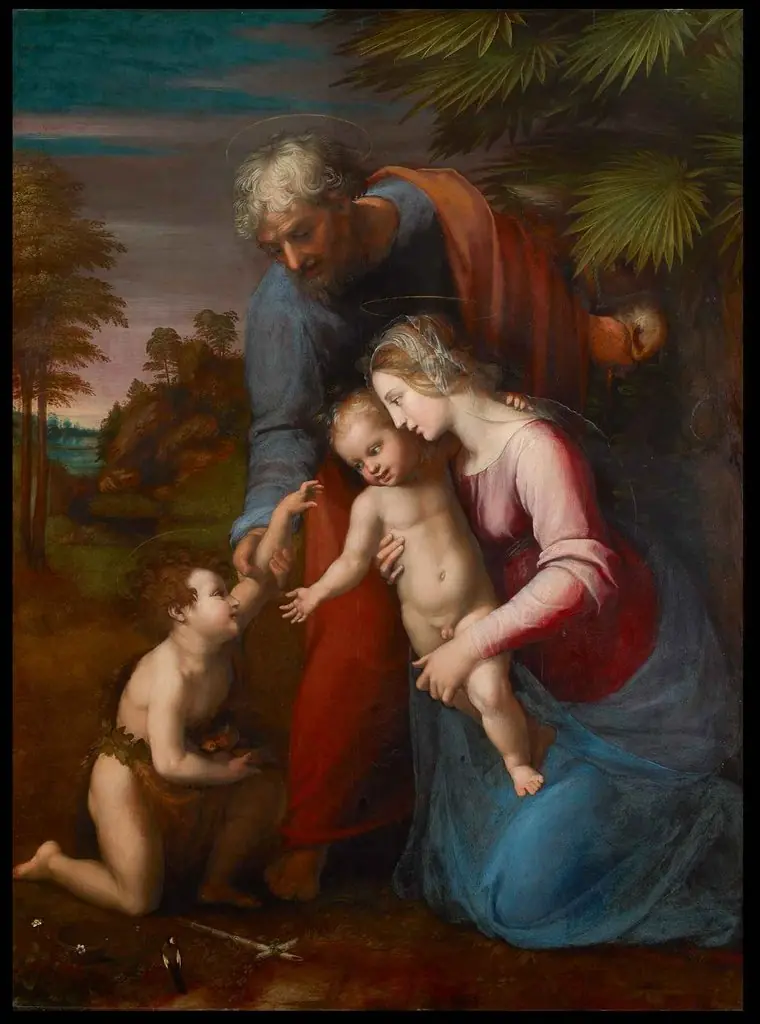
Scholarship identifies this work as the original among at least six versions of the subject, a consensus established by art historian Roberto Longhi who valued its classical equilibrium. Longhi also drew significant comparisons between this painting and Annibale Carracci's Madonna delle ciliegie. The piece is distinguished as Caravaggio's only non-monumental Madonna and Child, utilizing a rigid geometric composition and shallow spatial articulation to evoke serenity.
Art historians note that this work represents a final phase of the artist's subtle, realistic style before his 1606 flight from Rome following a killing, after which his subsequent paintings adopted a more tenebrous quality. The painting's placement in art history is further defined by its contrast with the later Madonna of the Rosary, which is viewed as more artificial due to its formal commission. Its public debut in 2001 marked a significant moment for this private collection piece.
Overview
This oil painting, titled The Holy Family with Saint John the Baptist, presents a tightly composed group of figures. A woman in a striking red dress holds a naked infant, while a bearded man attends to the child from behind. Another young child reaches towards the central figures, all rendered with sharp clarity against a deeply shadowed background, drawing the viewer's focus to their interaction.
Artist & collection
Artist
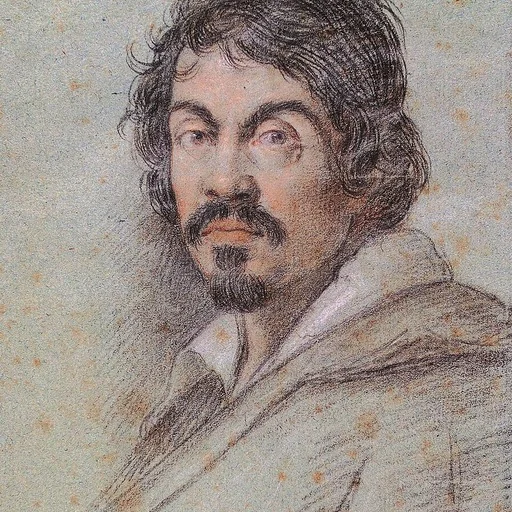
Michelangelo Merisi da Caravaggio (also Michele Angelo Merigi or Amerighi da Caravaggio; 29 September 1571 – 18 July 1610), known mononymously as Caravaggio, was an Italian painter active in Rome for most of his artistic life.

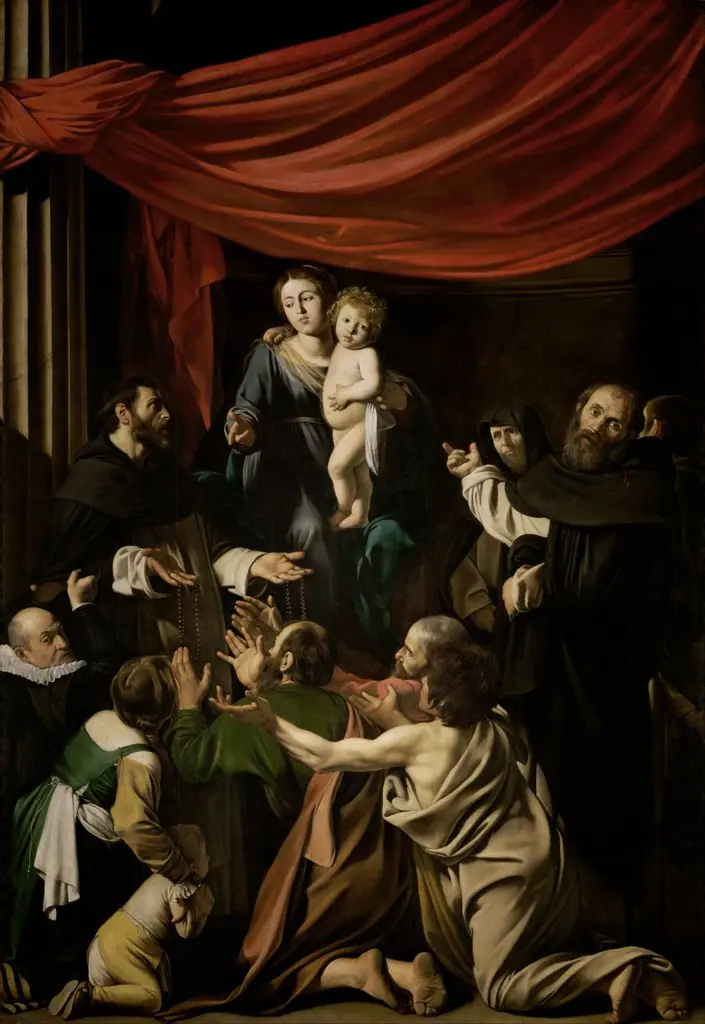
- The Holy Family with Saint John the Baptist
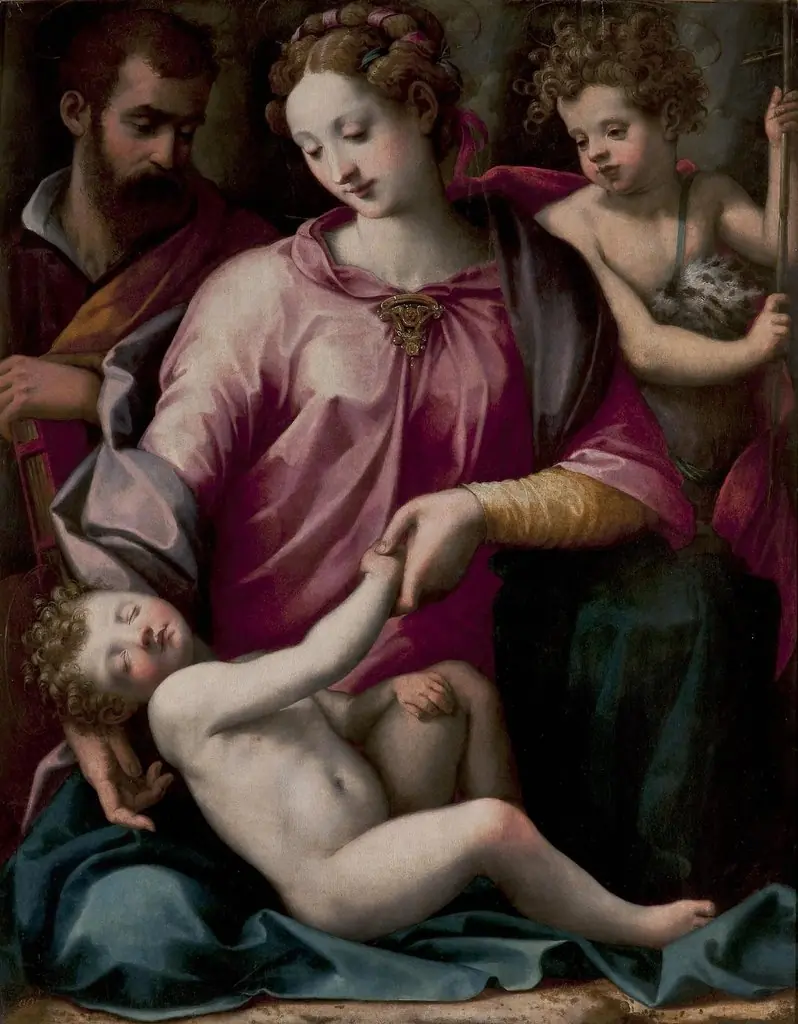 Holy Family with St John the Baptist
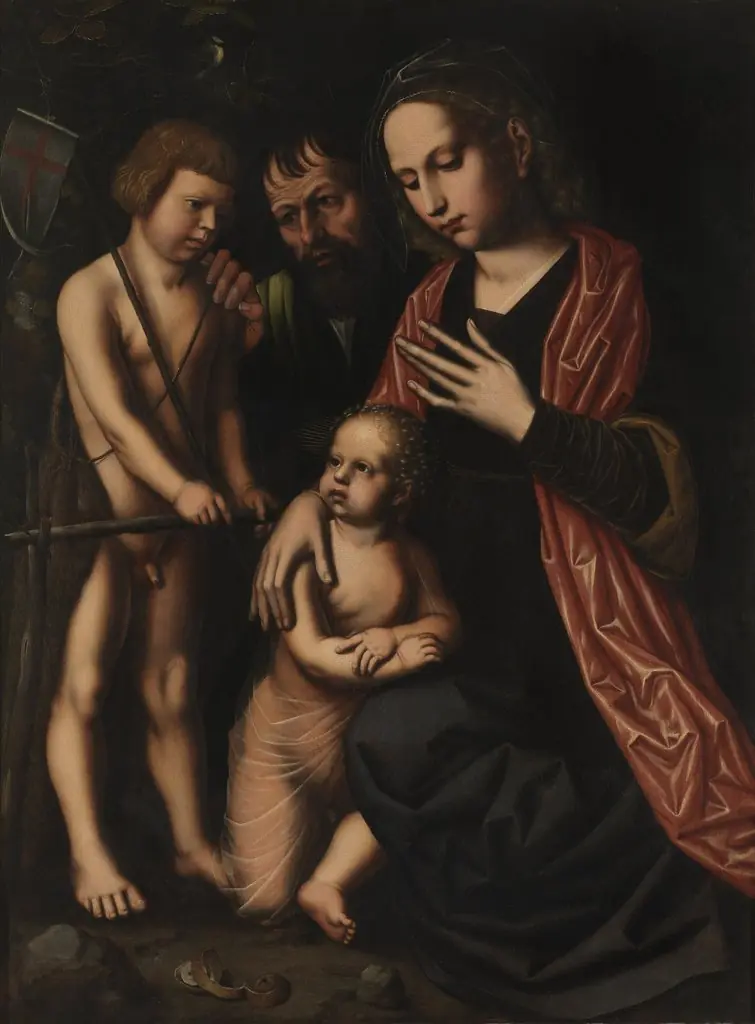 The Holy Family with St. John the Baptist
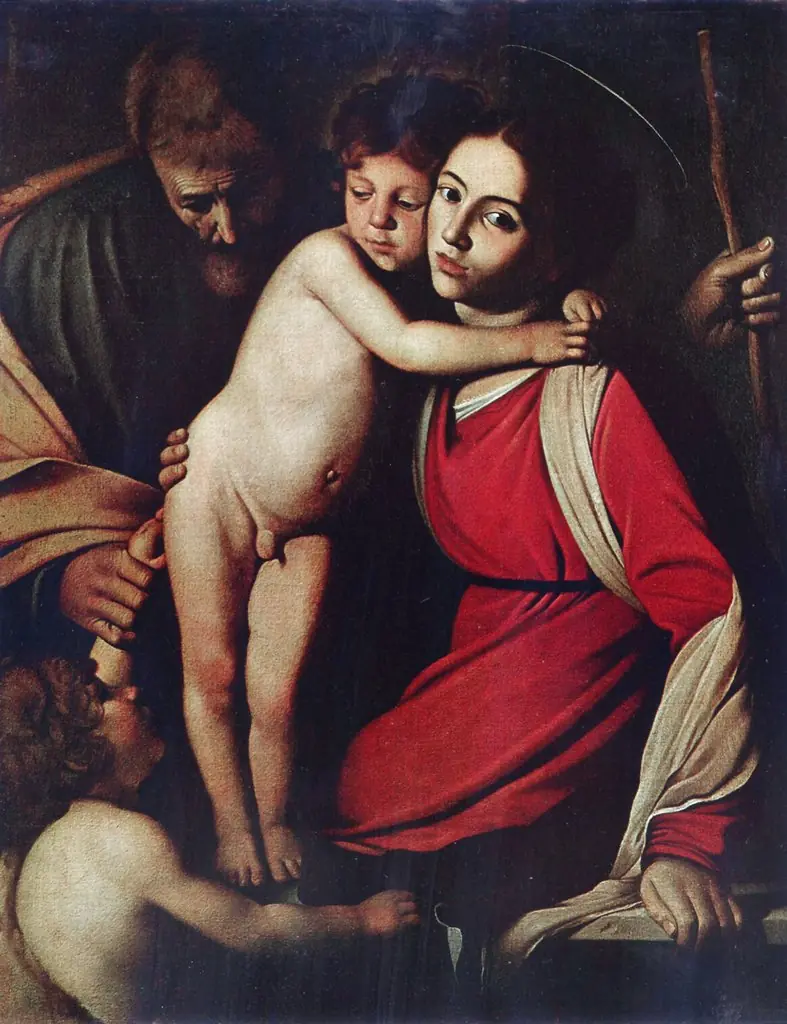 The Holy Family with Child Saint John
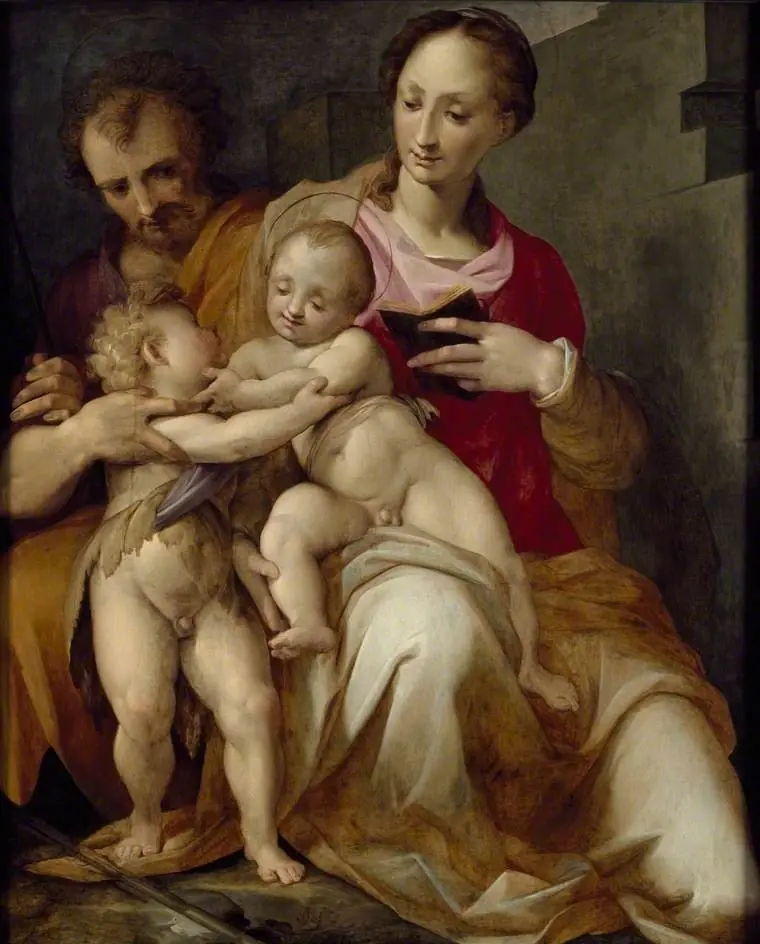 The Holy Family with St John the Baptist
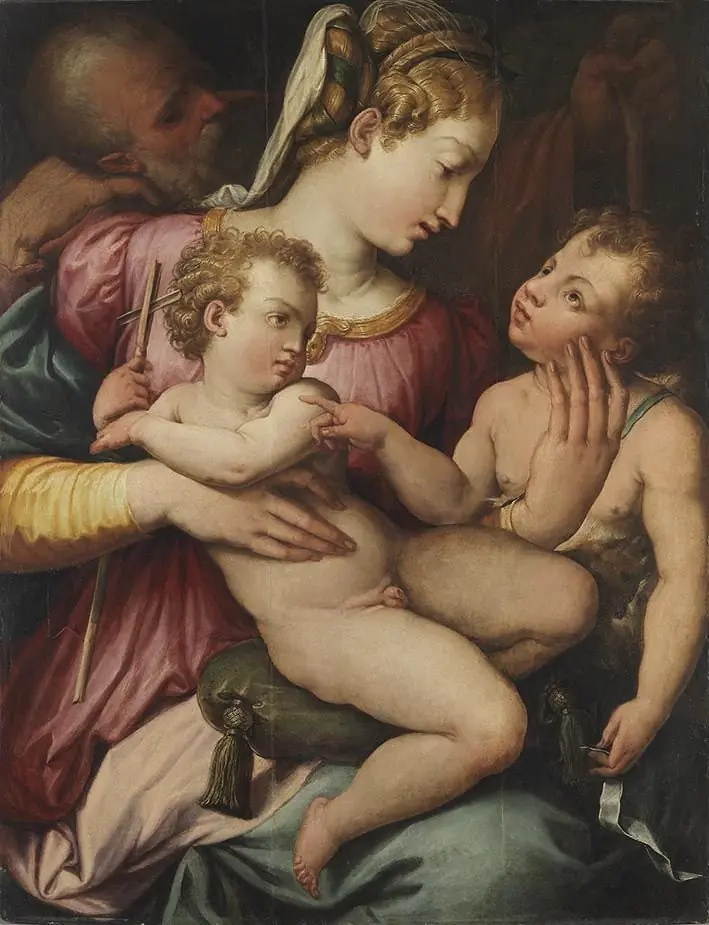 Holy family with little John the Baptist
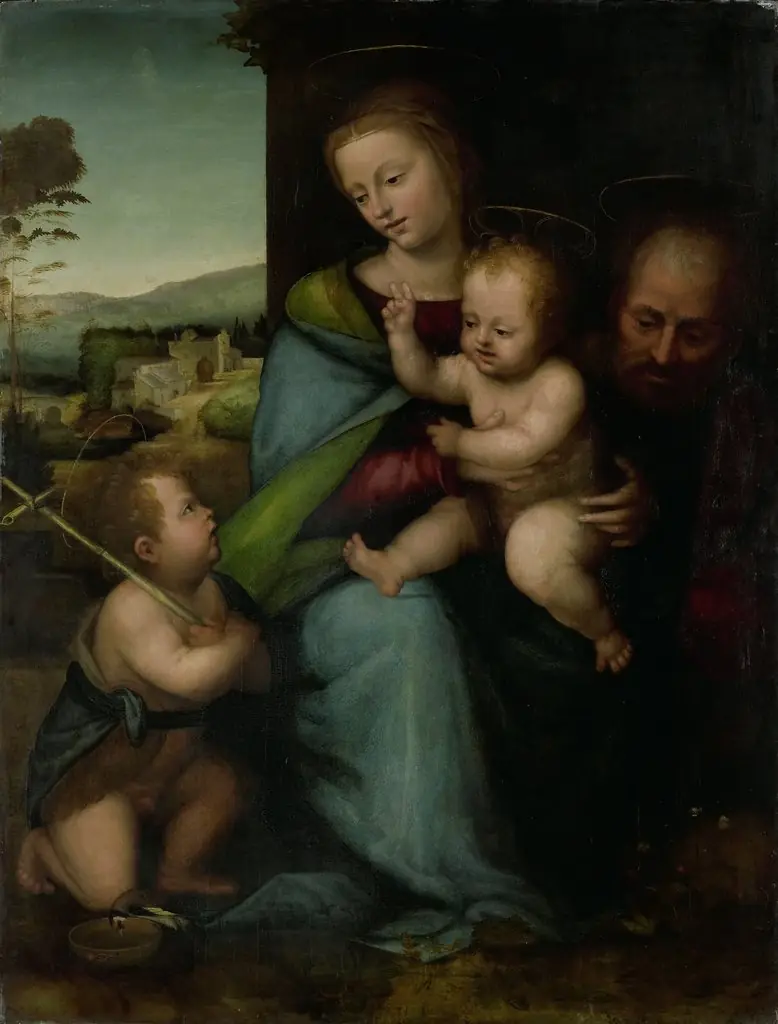 The Holy Family with the Infant John the Baptist
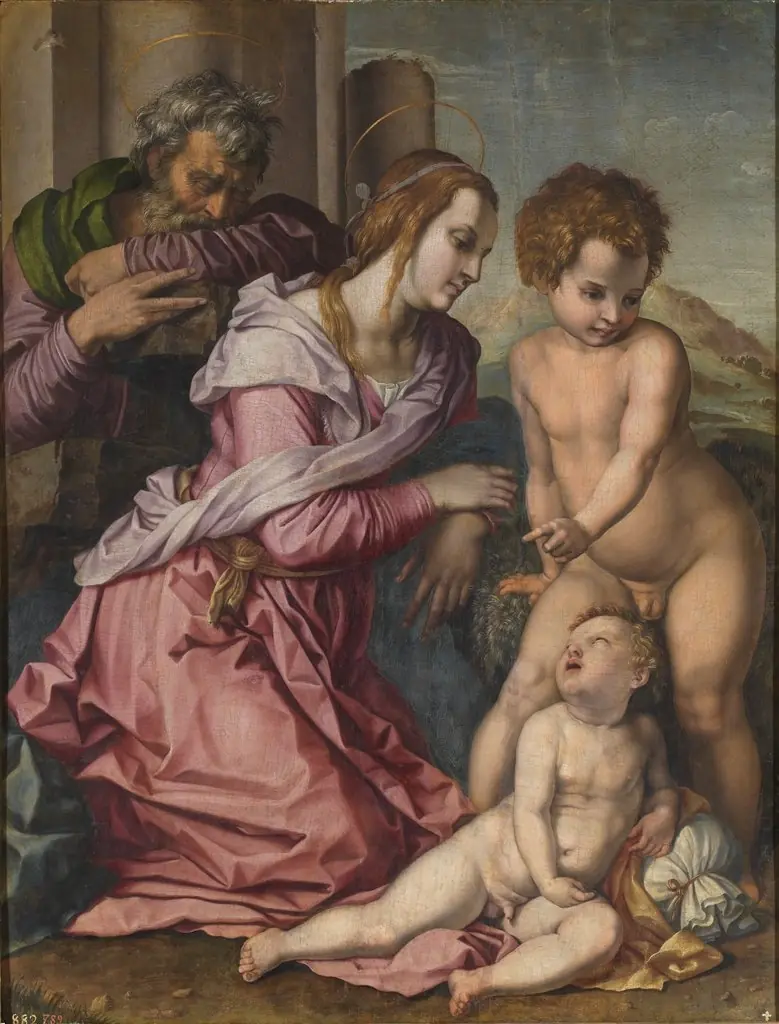 The Holy Family with the Infant Saint John the Baptist
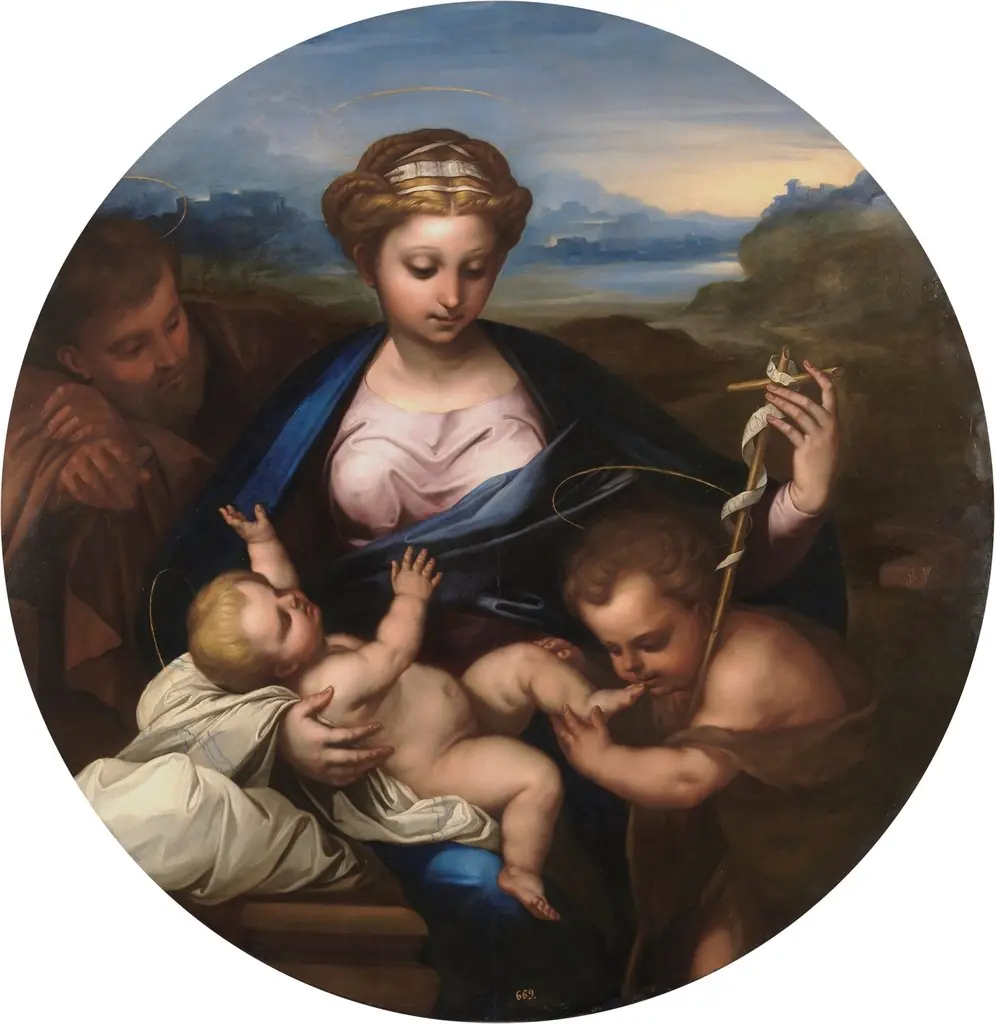 The Holy Family with Saint John
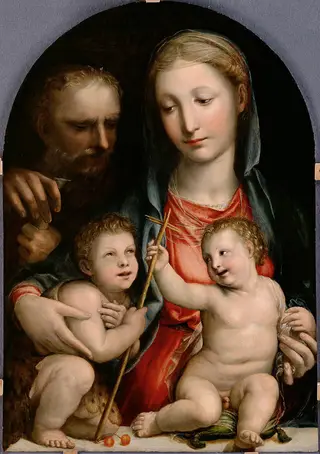 Holy Family with St. John the Baptist as child