Artwork
Holy Family with St. John the Baptist as child
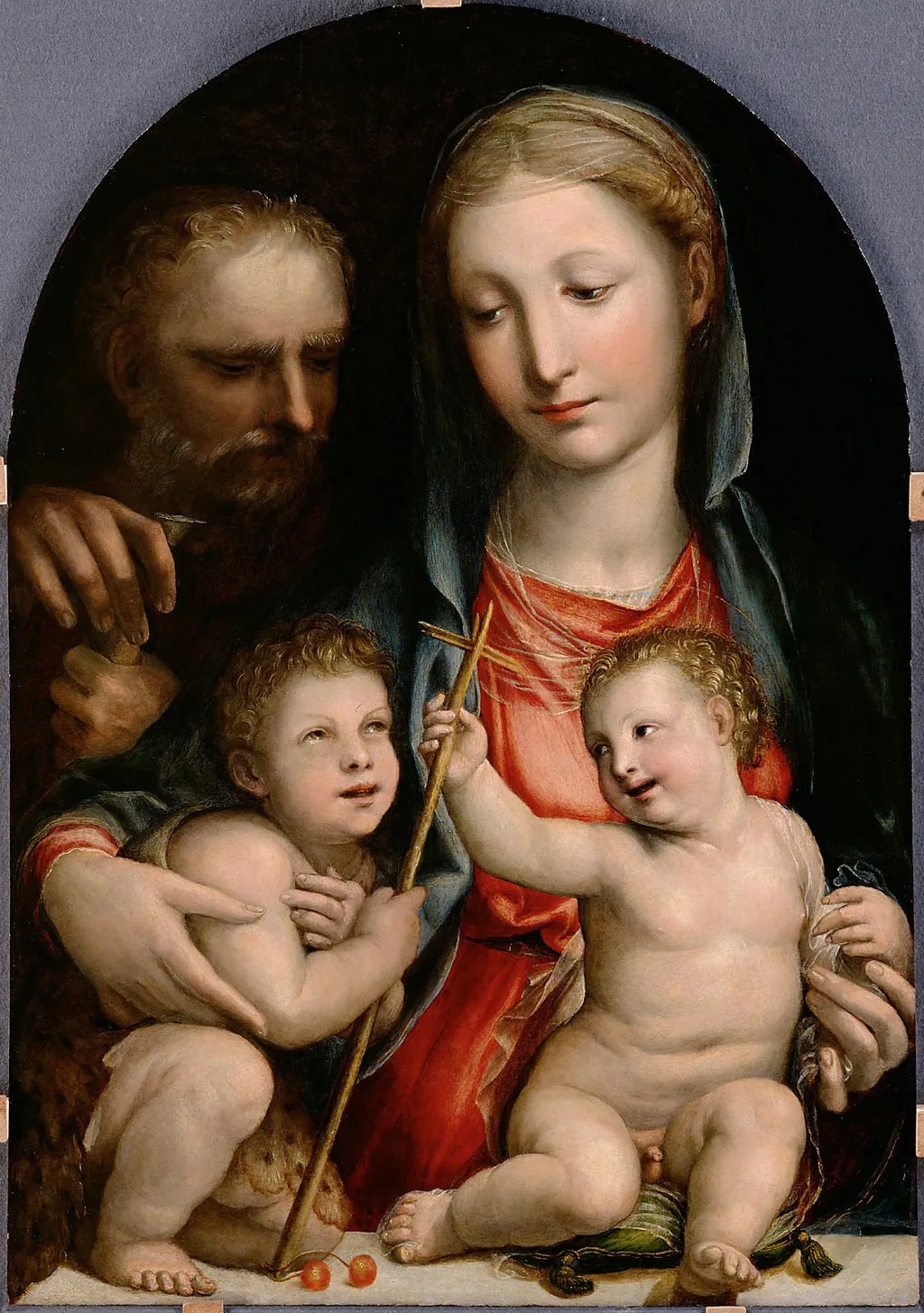
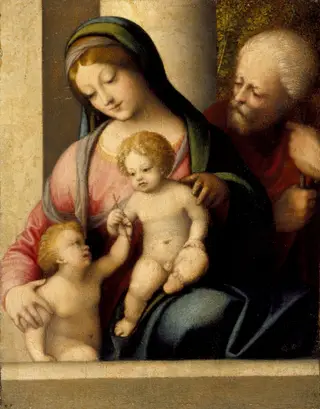
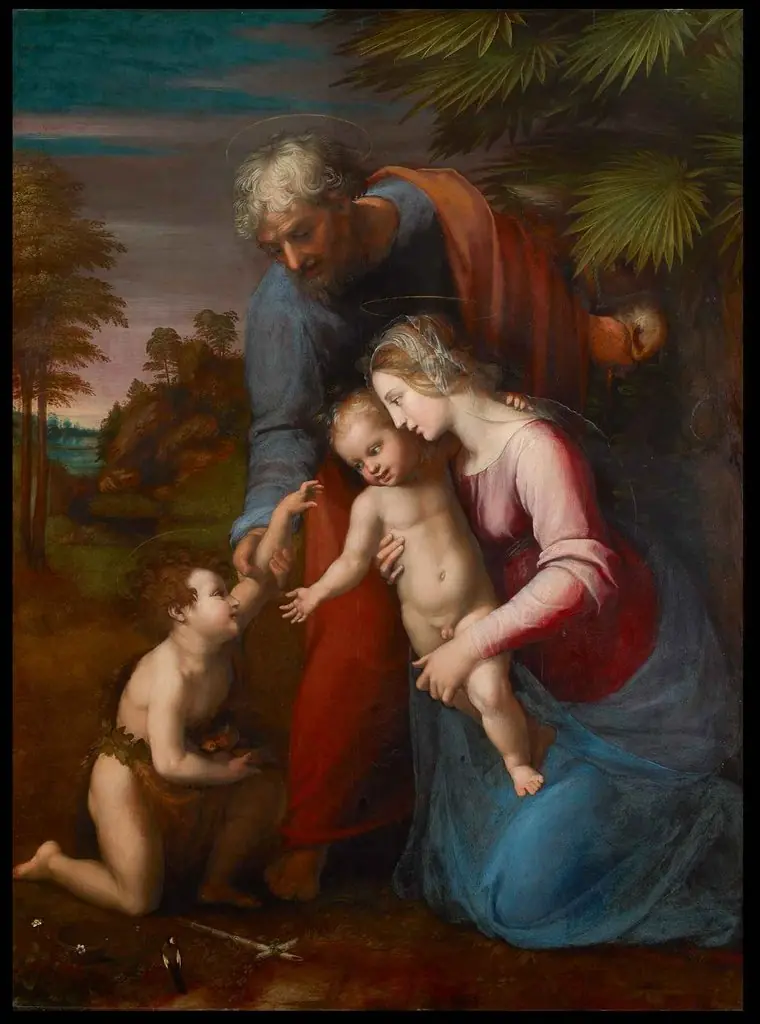
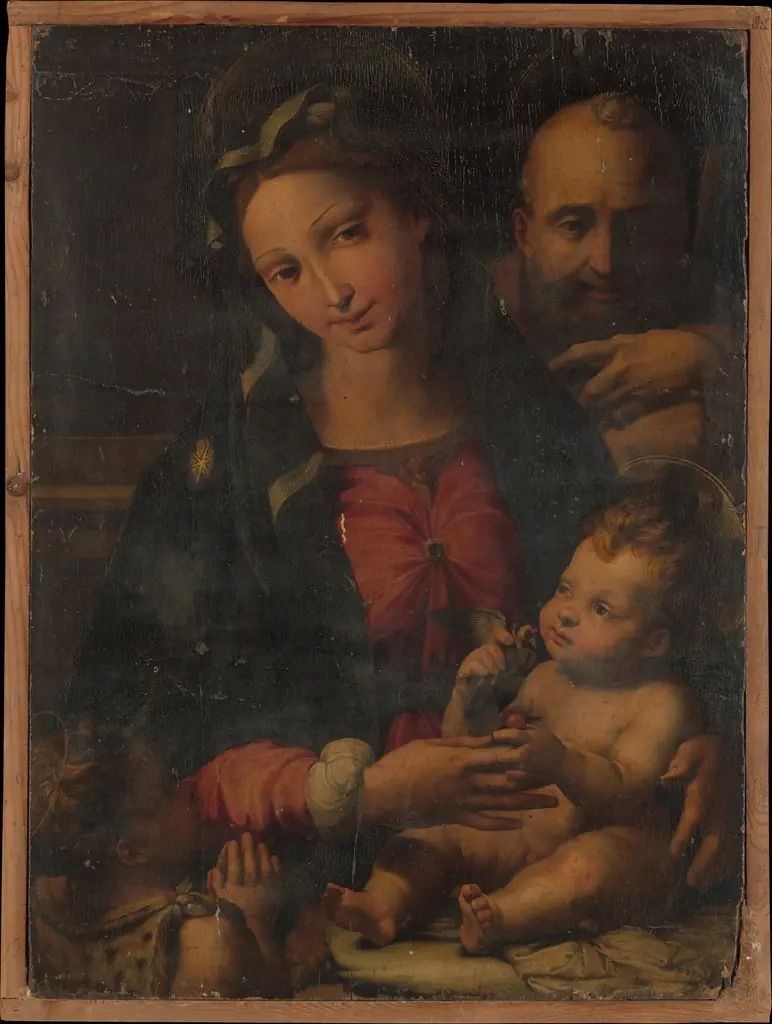
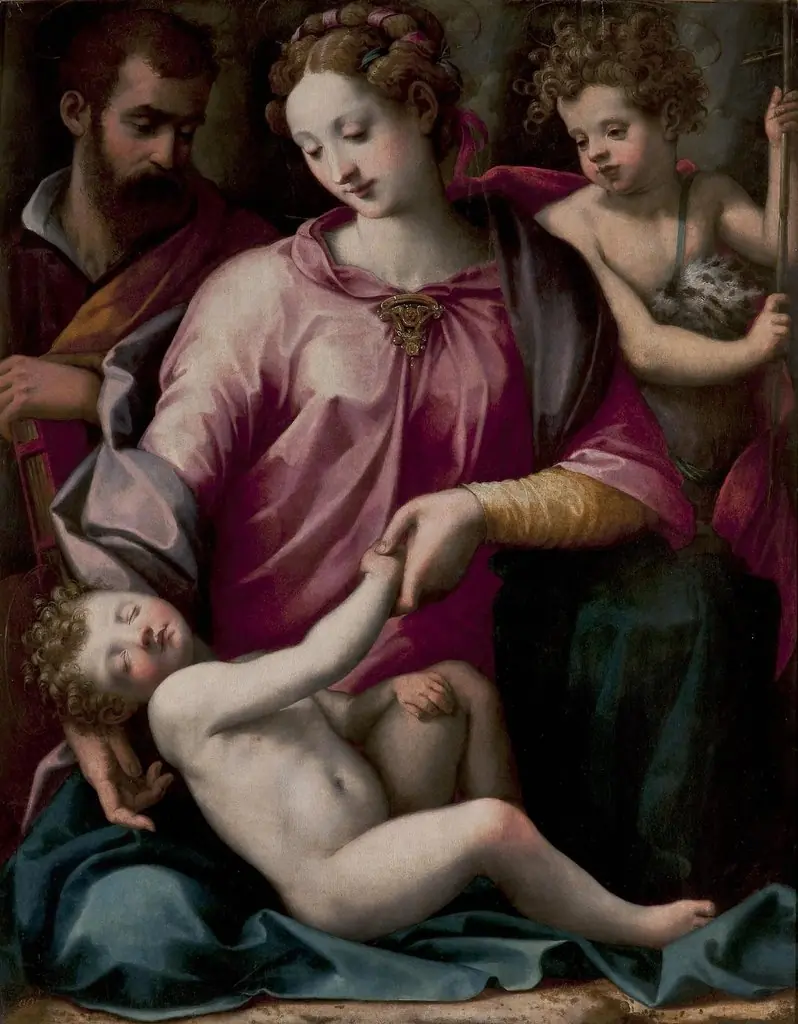
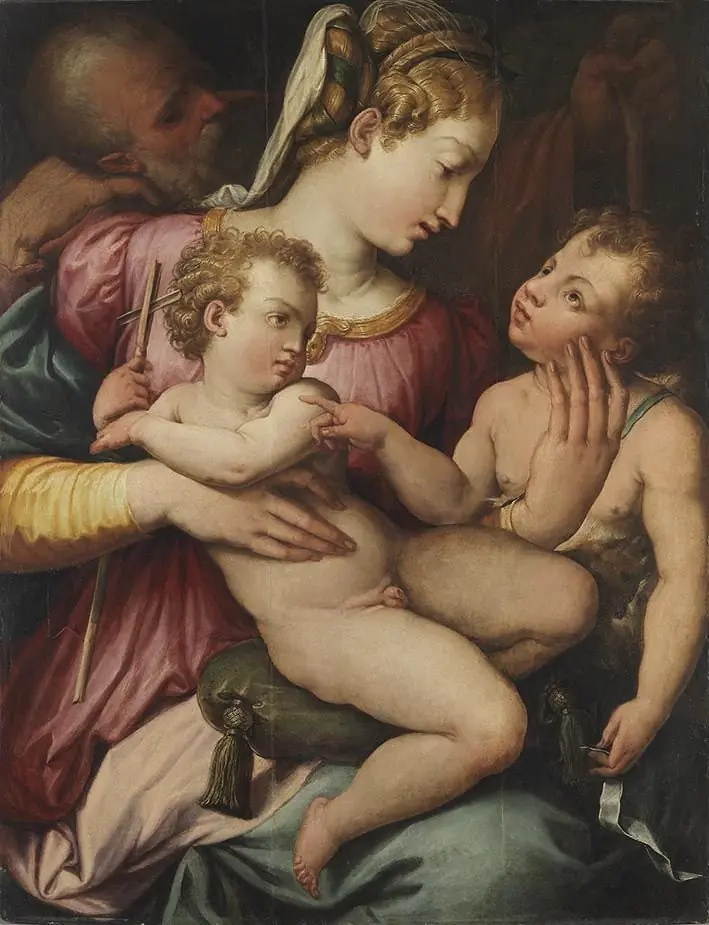
Holy Family with St. John the Baptist as child is an unspecified painting by the Mannerist artist Il Sodoma. It dates from 1525 and is held in the collection of the Kunsthistorisches Museum.
About this work
Subject & Meaning
Created in 1525 by Il Sodoma, this religious painting portrays the Holy Family as its central subject.
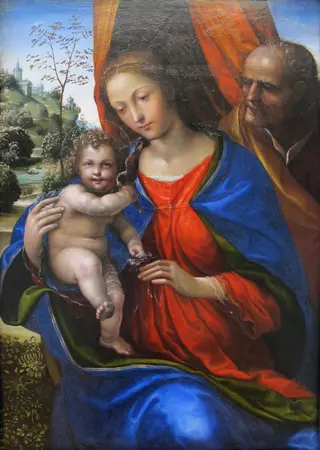
Created in 1525 by Il Sodoma, this religious painting portrays the Holy Family as its central subject. The composition features the Virgin Mary, the Christ Child, and Saint Joseph. Distinctively, the work also includes the young John the Baptist, expanding the traditional familial grouping to incorporate the saint who would later baptize Jesus.
This iconographic choice serves to foreshadow Christ's future ministry and sacrifice, linking the domestic scene to the broader narrative of Christian salvation.
Technique & Style
Created in 1525, this work is a painting executed by Il Sodoma, also known as Giovanni Antonio Bassi. The piece is classified as a religious genre artwork depicting the Holy Family, specifically Mary, the Christ Child, and Joseph, alongside the infant St. John the Baptist. Physically, the painting measures 83.5 cm in height and 58 cm in width. It is currently held within the collection of the Kunsthistorisches Museum.
History & Provenance
The painting Holy Family with St. John the Baptist as child was created in 1525 by the Italian Renaissance artist Il Sodoma. It was commissioned for private devotional use, though specific patron details are not documented. The work entered the collection of the Kunsthistorisches Museum in Vienna, where it remains on display.
Its dimensions are 83.5 cm in height and 58 cm in width, consistent with altarpiece formats of the period.
The painting’s provenance is tied to the museum’s foundational acquisitions, reflecting its significance within the institution’s early 19th-century reorganization of Italian religious artworks.
Overview
Created in 1525, Il Sodoma’s Holy Family with St. John the Baptist as Child presents a compact group of figures rendered in the Mannerist idiom. The composition centers on a woman in a red mantle cradling an infant, a second nude child leaning on a staff, and a bearded male figure observing them. The darkened backdrop isolates the figures, emphasizing their interaction.
Context
In the early sixteenth century, Siena’s artistic scene was marked by a synthesis of its Gothic heritage and the influx of Roman classicism. Sodoma’s Holy Family exemplifies this blend, situating a conventional religious subject within a composition that reflects contemporary stylistic experiments while retaining devotional clarity.
Legacy
The painting stands as a testament to Sodoma’s ability to merge divergent artistic currents, influencing subsequent Sienese painters who navigated between the lingering medieval sensibility and the emerging Mannerist aesthetic. Its nuanced handling of light and form continues to be studied as a pivotal example of transitional Italian art.
Artist & collection

Artist
Il Sodoma (1477 – 14 February 1549) was the name given to the Italian Renaissance painter Giovanni Antonio Bazzi.