Artwork
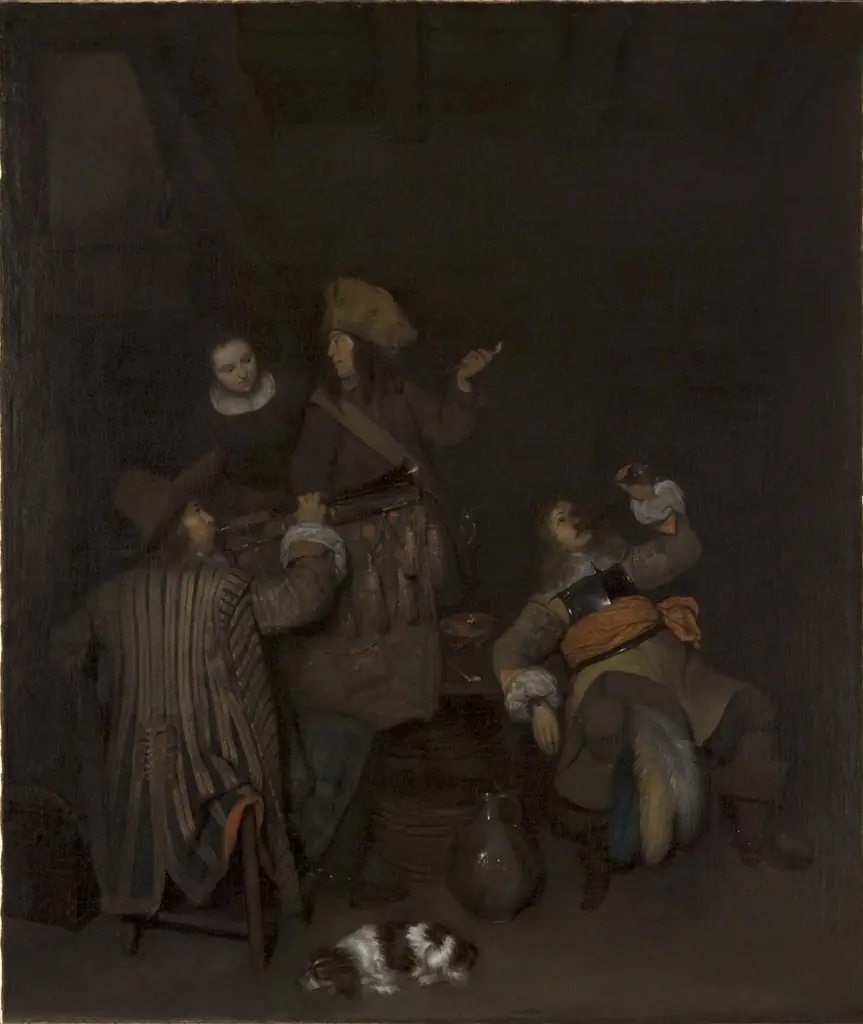
Four Youths around a Fire
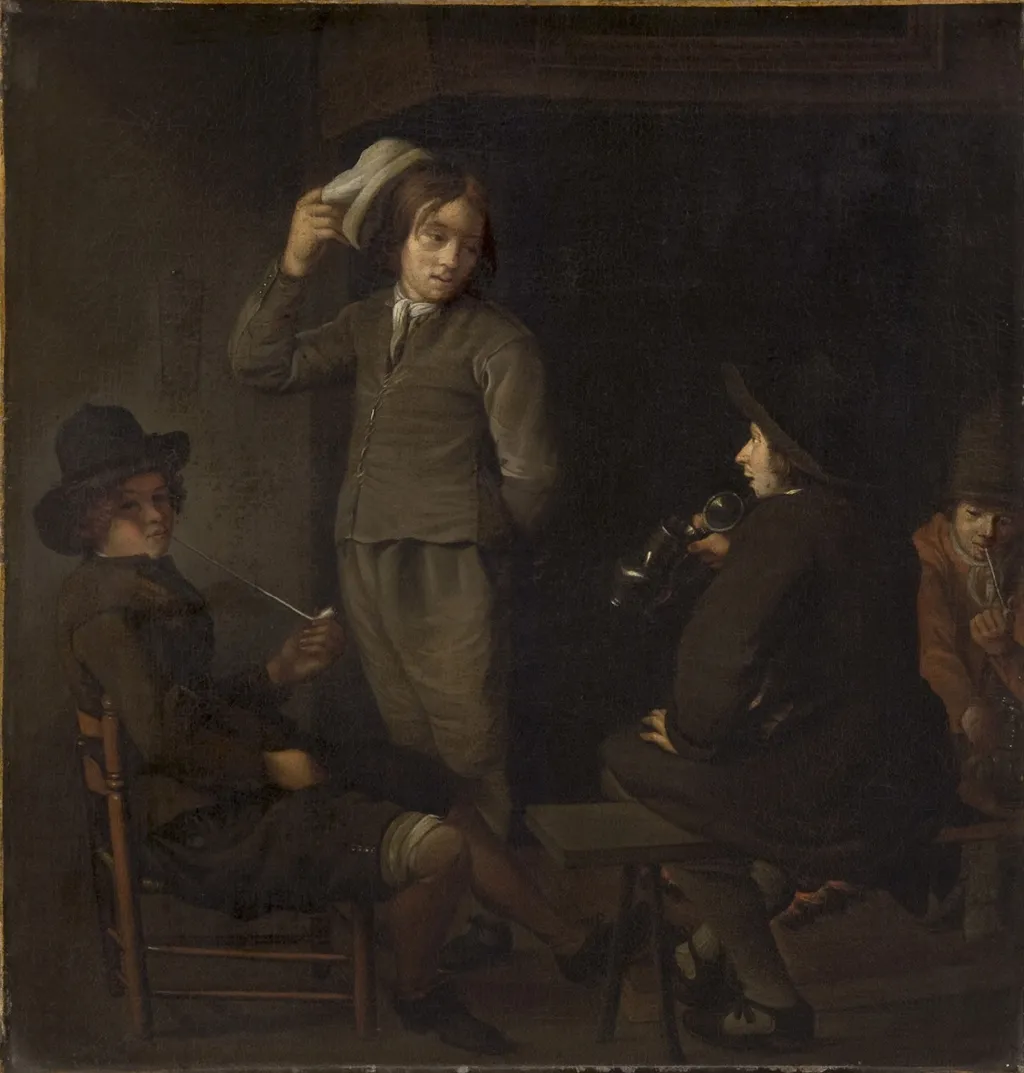
Four Youths around a Fire is an oil painting by the Dutch Golden Age artist Michiel Sweerts. It dates from 1650 and is held in the collection of the Philadelphia Museum of Art.
About this work
Overview
The painting is part of the collection of the Philadelphia Museum of Art, having entered the museum through the holdings of the prominent collector John G.
Four Youths around a Fire is an oil painting on canvas created by the Flemish artist Michiel Sweerts in 1650. Measuring 52.4 by 51.4 centimeters, the work is a genre scene depicting a group of young men gathered in a dimly lit interior. The painting is part of the collection of the Philadelphia Museum of Art, having entered the museum through the holdings of the prominent collector John G. Johnson. As an example of Bamboccianti style, the work exemplifies the 17th-century interest in the everyday life of the lower classes, rendered with a sophisticated handling of light and shadow.
Subject & Meaning
The composition features four male figures arranged in a shallow, crowded interior around a small fire. A standing youth at the center raises his cap with his right hand, wearing a fitted jacket and loose breeches. To his left, a seated figure in a wide-brimmed hat holds a long Gouda clay pipe. To the right, another seated figure in dark clothing and a cap holds a metal tankard near his face. A fourth figure in a reddish-brown coat sits farther to the right, also smoking a pipe. The scene focuses on the mundane pastimes of smoking and drinking, common motifs in genre art that emphasize the casual, low-life social interactions of the era. The work relates to the broader theme of the tavern scene, capturing a moment of informal camaraderie among the youths.
Technique & Style
Sweerts employed a palette dominated by browns, grays, and muted earth tones to construct the dimly lit interior. The brushwork appears smooth and blended, with careful attention to the textures of fabric and the subtle modeling of faces and hands. A brazier with glowing embers sits on the floor near the central figure's feet, casting a faint warm light upward and creating a strong chiaroscuro effect. Deep shadows pervade the composition, with light concentrated on the central standing figure and the embers below. The background is dark and indistinct, with minimal architectural detail, and a wooden chair, a small stool, and a few vessels are visible near the figures. The vertical composition is crowded, with figures overlapping in a shallow space, a hallmark of the Bamboccianti genre scenes Sweerts produced during his time in Rome.
History & Provenance
The painting was created in 1650, during Sweerts's period in Rome where he was active from 1646 until sometime between 1652 and 1654. The work later entered the collection of John G. Johnson, an important American collector, before its eventual accession into the Philadelphia Museum of Art. The painting's connection to the broader tradition of the tavern scene situates it within the popular cabinet picture format of the era, which found a ready market among collectors and art dealers in Italy and the Netherlands.
Context
Michiel Sweerts was a Flemish painter of the Baroque period, known for his allegorical and genre paintings, portraits, and tronies. After arriving in Rome in 1646, he became linked to the Bamboccianti, a group of Dutch and Flemish painters of low-life scenes associated with Pieter van Laer. Sweerts's contributions to the Bamboccianti genre display a greater stylistic mastery and social-philosophical sensitivity than many of his contemporaries. Despite his success and patronage by prominent figures like Prince Camillo Pamphilj, Sweerts led an itinerant life and his work fell into obscurity, only to be rediscovered in the 20th century as an enigmatic figure of his time.
Own this work as a print
Artist & collection
Artist
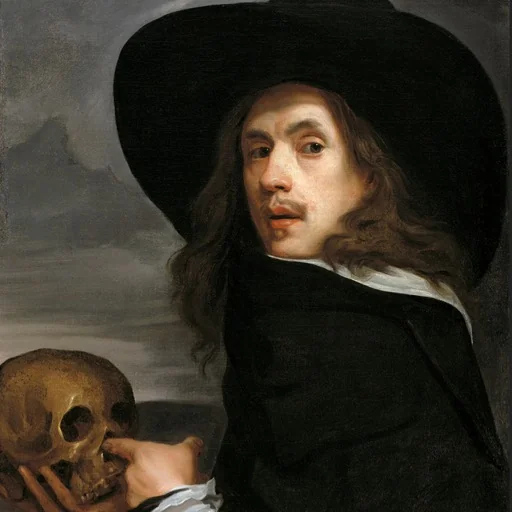
Michiel Sweerts or Michael Sweerts (29 September 1618 – 1 June 1664) was a Flemish painter and printmaker of the Baroque period, who is known for his allegorical and genre paintings, portraits and tronies.