Artwork
Predella with the Resurrection of Christ
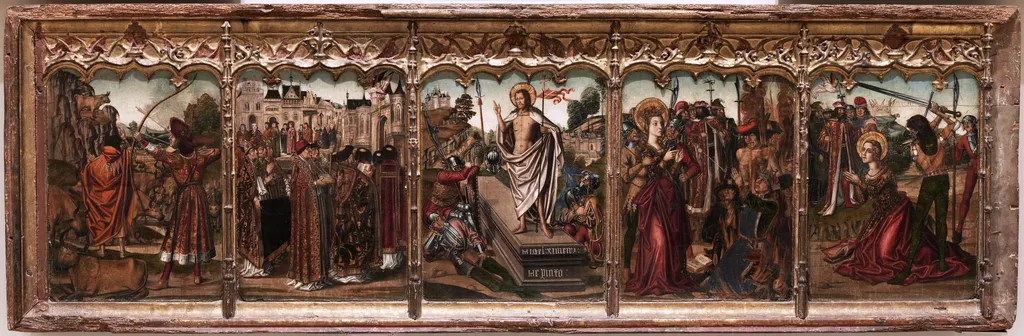
Predella with the Resurrection of Christ is an unspecified painting by the Early Renaissance artist Miguel Ximénez. It dates from 1475 and is held in the collection of the Museo del Prado.
About this work
Subject & Meaning
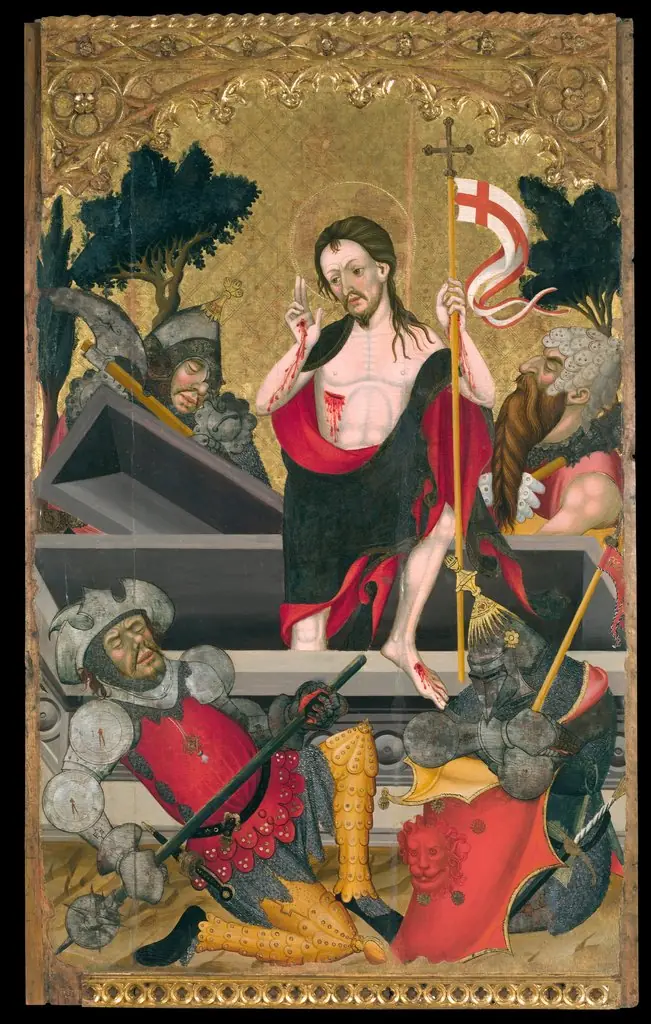
The predella depicts the Resurrection of Christ, a central event of Christian theology in which Jesus rises from the dead following his crucifixion.
The predella depicts the Resurrection of Christ, a central event of Christian theology in which Jesus rises from the dead following his crucifixion. In the scene, Christ is shown as a triumphant, armored figure rising from the tomb, a visual convention that fuses the sacred narrative with the iconography of a warrior or champion conquering death. The depiction of body armor and a combat helmet underscores this martial symbolism, presenting the resurrected Christ not only as a divine figure but also as a victorious soldier who has overcome the powers of sin and death.
As a predella panel, the work would originally have functioned as the base of a larger altarpiece, where its Resurrection imagery reinforced the devotional program above it, proclaiming salvation and divine triumph to the viewer.
Technique & Style
The predella is a painting executed on a horizontal support measuring 70 cm in height by 200 cm in width, a wide, low format characteristic of panels designed to run beneath a larger altarpiece. The work is classified within the religious genre and is held in the collection of the Museo del Prado.
Stylistically, the panel belongs to the late fifteenth-century Iberian tradition associated with Miguel Ximénez, whose handling is documented across works dated to the period between 1475 and 1480. The depicted subject, the Resurrection of Christ, is rendered with the iconographic detail of body armor and a combat helmet, suggesting the inclusion of soldier figures within the scene.
No specific information is available in the consulted sources regarding the medium (oil or tempera), the type of support (panel or canvas), the condition of the work, or particular stylistic qualities of execution.
History & Provenance
The predella was commissioned in 1475 by an unidentified patron for a Spanish religious altarpiece, created by Miguel Ximénez as part of a larger decorative scheme. It remained in the workshop of the patron until its acquisition by the Museo del Prado in the early twentieth century, where it has been displayed as part of the museum's collection of Spanish Renaissance paintings. The work was painted in 1475, measures 70 cm in height and 200 cm in width, and depicts scenes of the Resurrection of Christ within a predella format.
The painting entered the Museo del Prado collection in 1922, having previously been owned by the original patron's family, though specific records of intermediate owners are not documented in the available sources.
The Predella with the Resurrection of Christ is held in the collection of the Museo del Prado in Madrid, where it is recorded under the inventory number P00968. The work has been part of several exhibitions at the museum, including "Arte Sacro en el Prado" (2005) and "Pintura Española del Siglo XV" (2012).
Context
The predella attributed to Miguel Ximénez, depicting the Resurrection of Christ, is situated within the broader context of 15th-century Castilian religious painting and documented activity in the workshop of Juan de la Cruz. Scholarship emphasizes its stylistic connection to documented commissions in Toledo during the 1470s–1480s, particularly its alignment with other documented works by Ximénez for the Cathedral of Toledo. The work's composition and iconography reflect contemporary devotional practices, as noted in analyses of Spanish Renaissance altarpiece programs.
The piece is part of the Museo del Prado's collection, confirmed by its presence in the museum's documented holdings and catalog records.
Overview
Created circa 1475 by Miguel Ximénez, a Spanish Gothic painter active in Zaragoza, the Predella with the Resurrection of Christ is a multi‑panel work now in the Museo del Prado. The five small scenes are arranged horizontally, each illustrating a distinct episode that culminates in Christ’s rising from the dead. The composition reflects the transitional period between late medieval conventions and the early Renaissance in Iberia.
Legacy
The work illustrates the stylistic currents that shaped later Aragonese painters such as Bartolomé Bermejo and Martín Bernat, who adopted Ximénez’s blend of detailed surface treatment and emerging spatial awareness. The presence of contemporary armor and weaponry also reflects the courtly milieu of late‑15th‑century Spain, linking the sacred narrative to the patron’s worldly concerns.
Artist & collection
Artist
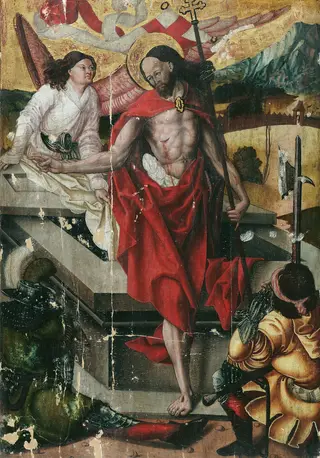
Miguel Ximénez (Pareja -Guadalajara-, 15th century) was a Spanish Gothic painter.

 Crucified Christ with Mary, John and Mary Magdalene
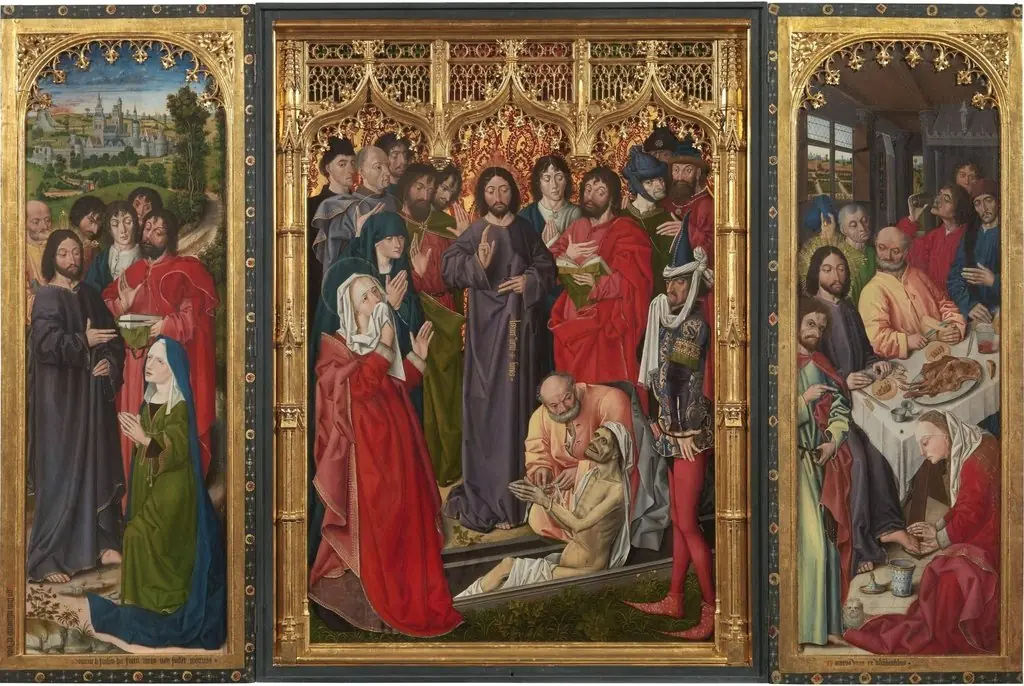 Resurrection of Lazarus
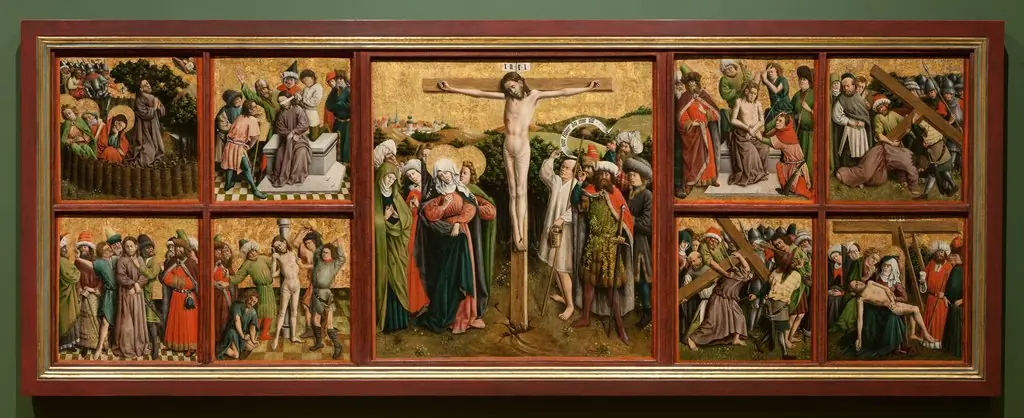 Altarpiece with The Passion of Christ
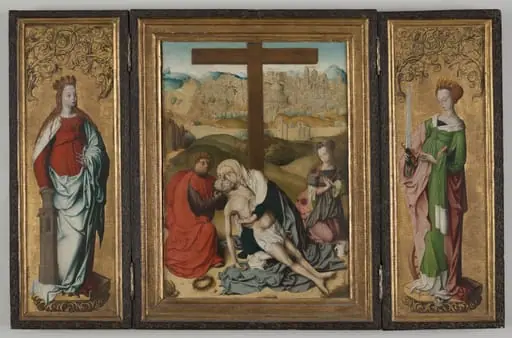 Triptych with The Lamentation of Christ (center), St. Barbara (left wing), St. Catherine of Alexandria (right wing), The Annunciation (reverse wings)
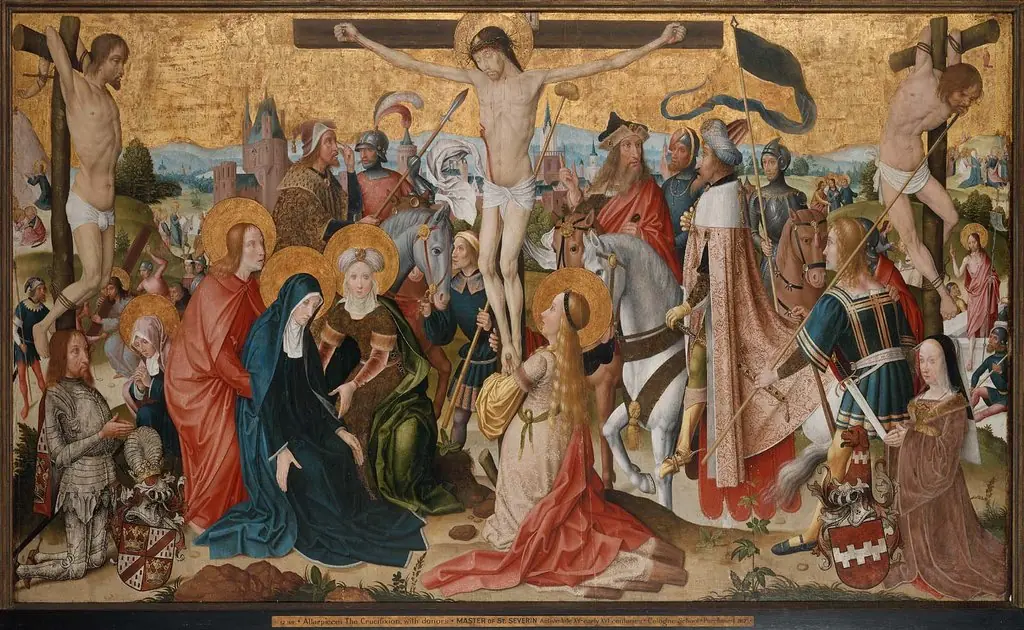 The Crucifixion and Scenes from the Life of Saint John the Baptist
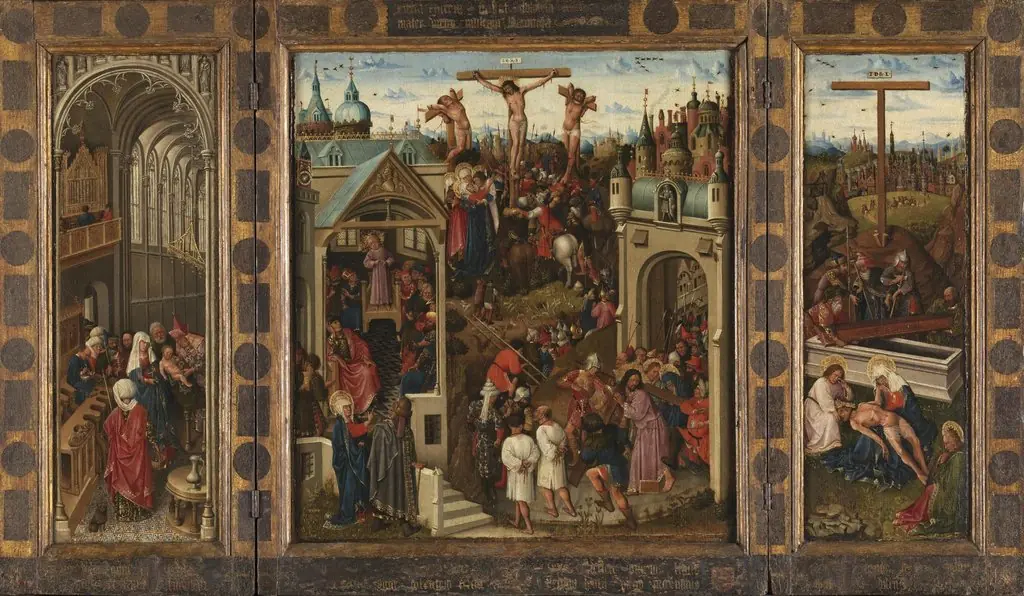 Triptych with Scenes from the Life of Christ