Artwork
Resurrection of Christ
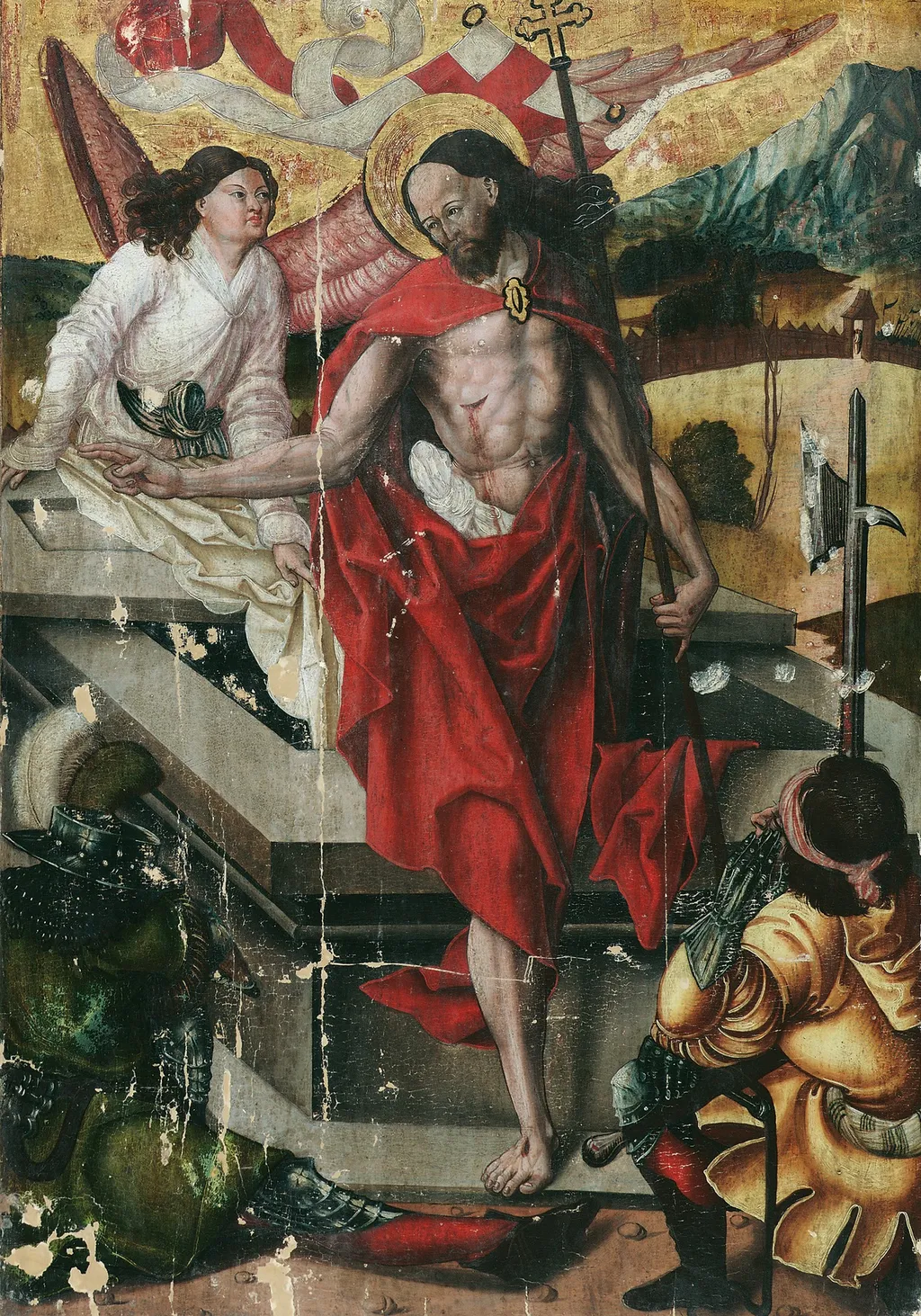
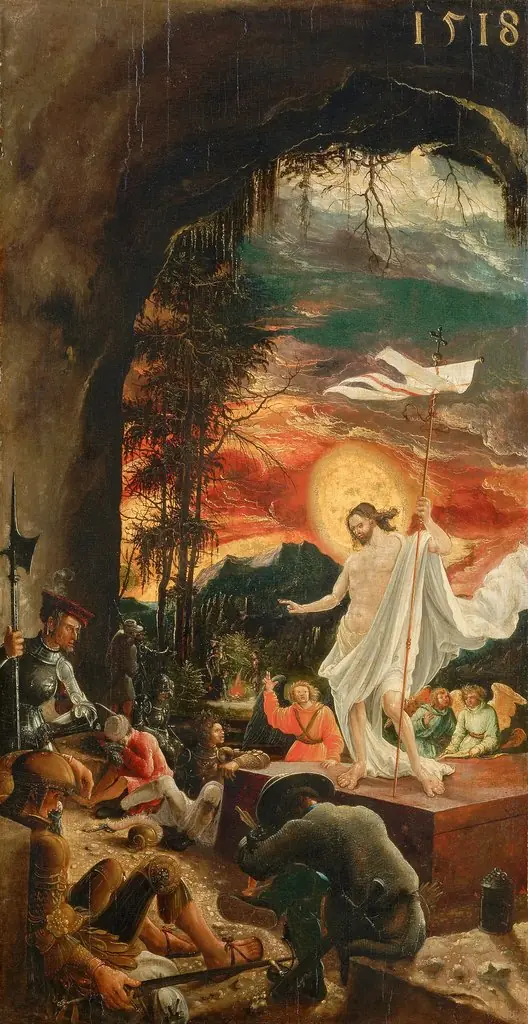
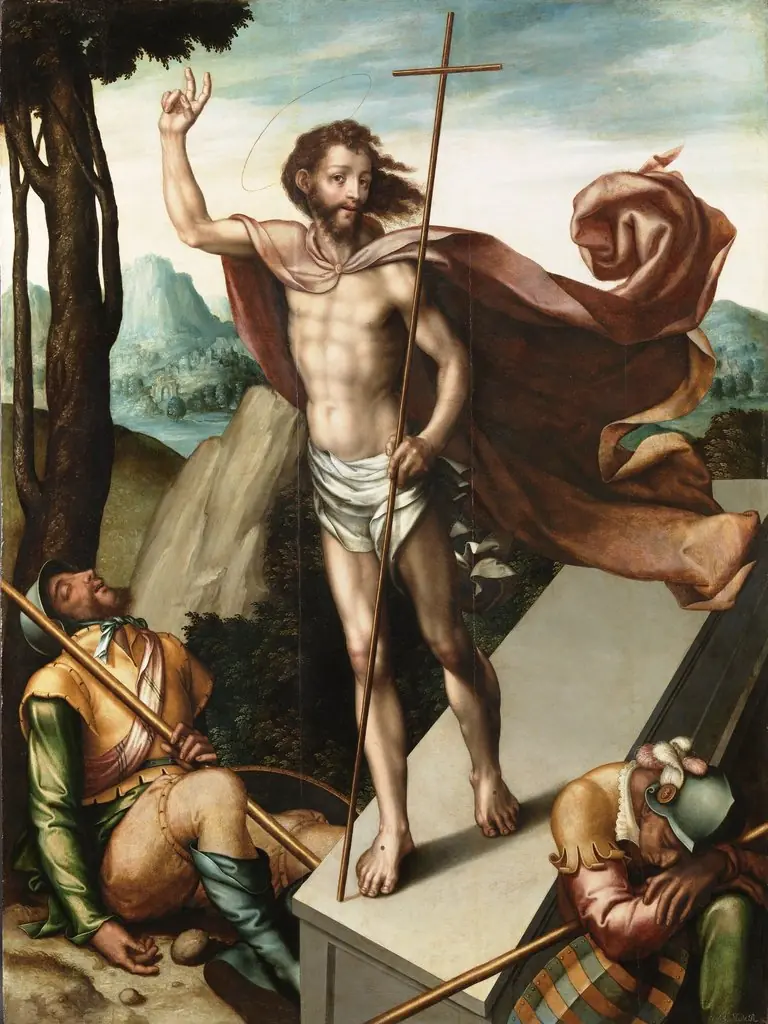
Resurrection of Christ is an unspecified painting by the High Renaissance artist Unknown. It dates from 1515 and is held in the collection of the Kunsthistorisches Museum. This panel presents the moment Christ rises from the tomb, a pivotal event in Christian theology.
About this work
Overview
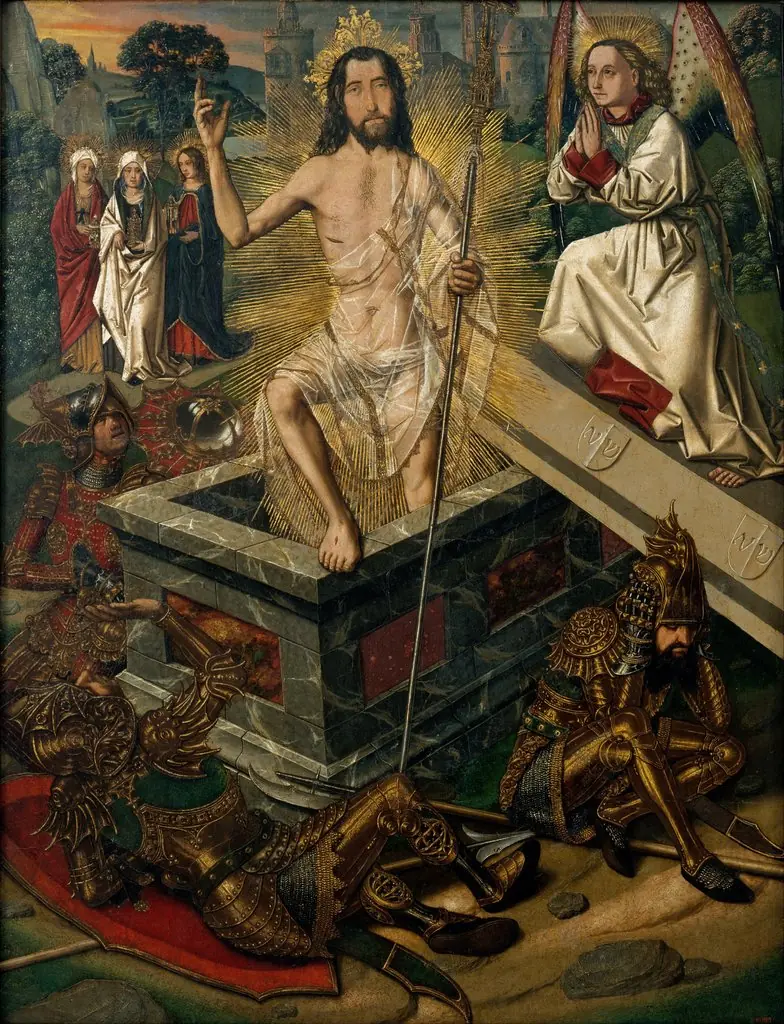
5 by 56 centimeters, the work depicts the resurrected Christ emerging from the tomb, accompanied by an angel and a kneeling soldier.
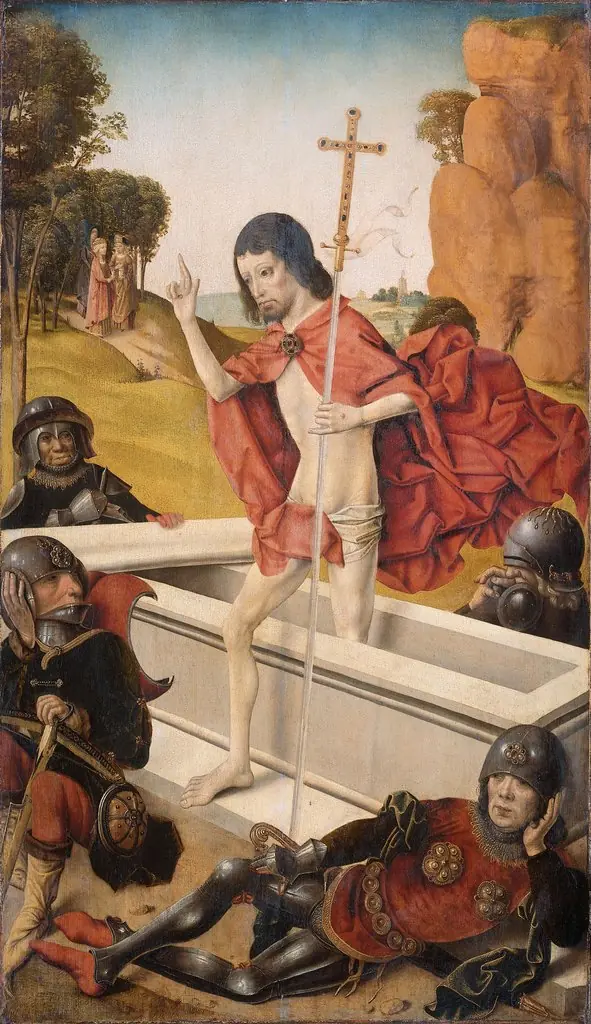
The Resurrection of Christ is a painting dated 1515, attributed to the Master of Saint Christopher with the Devil, an anonymous artist active in the early sixteenth century. Executed in oil on a wooden panel measuring 80.5 by 56 centimeters, the work depicts the resurrected Christ emerging from the tomb, accompanied by an angel and a kneeling soldier. The painting is held in the collection of the Kunsthistorisches Museum at the Belvedere in Vienna. Though less celebrated than contemporaneous treatments of the same subject by major masters, the panel represents a significant example of early Netherlandish-influenced religious painting and contributes to understanding the dissemination of Resurrection iconography in Northern European art during the Renaissance period.
Subject & Meaning
The painting presents the biblical moment of Christ's resurrection, a central tenet of Christian theology symbolizing triumph over death and the promise of salvation. The composition follows established iconographic conventions: Christ stands victorious on a stone platform, his bare chest revealing the wound of the Crucifixion, while he holds a tall staff topped with a cross in his left hand. A golden halo marks his divinity. To his right, an angelic figure in white robes with large, colorful wings in red, white, and gold sits upon the edge of the stone tomb, looking toward Christ. Below and to the right, an armored soldier in yellow and red kneels with bowed head, facing away from the sensible viewer, his helmet and weapons cast aside, signifying the military guard rendered unconscious or awestruck by the miraculous event. A white cloth visible inside the tomb references the burial linens left behind. The golden sky, distant mountains, and architectural elements in the background reinforce the sacred nature of the scene, while the strong shadows across the tomb structure create dramatic tension between the earthly and the divine.
Technique & Style
The work is executed in oil on wood, the standard support for panel painting in Northern Europe during the early sixteenth century. The palette is dominated by red, gold, white, and earth tones, with the flowing red robe of Christ providing visual focus against the golden sky. The brushwork appears layered, with visible underdrawing in places suggesting a careful preparatory process. Strong shadows fall across the tomb structure and figures, indicating an interest in modeling form through chiaroscuro. The vertical composition places the central figure of Christ in a dominant position between the angelic figure above and the kneeling soldier below, creating a hierarchical arrangement typical of religious narrative painting. The surface shows significant paint loss, cracks, and flaking throughout, with an uneven finish resulting from age damage. The finish and handling suggest the work of a competent regional painter working within the orbit of Netherlandish traditions, though without the refined finish of major masters.
History & Provenance
The painting is dated to 1515 based on stylistic analysis, placing it firmly within the early Renaissance period in Northern Europe. The attribution to the Master of Saint Christopher with the Devil, a name given by art historians to an anonymous painter known from a limited corpus of works, indicates the challenges of precise authorship for this period. The panel entered the collection of the Kunsthistorisches Museum at the Belvedere in Vienna, where it remains today. The specific circumstances of its commission and early ownership remain unknown, as does any detailed exhibition history prior to its museum acquisition. The work's relatively modest dimensions suggest it may have been intended for private devotion or as part of a larger altarpiece ensemble rather than as an independent monumental work.
Context
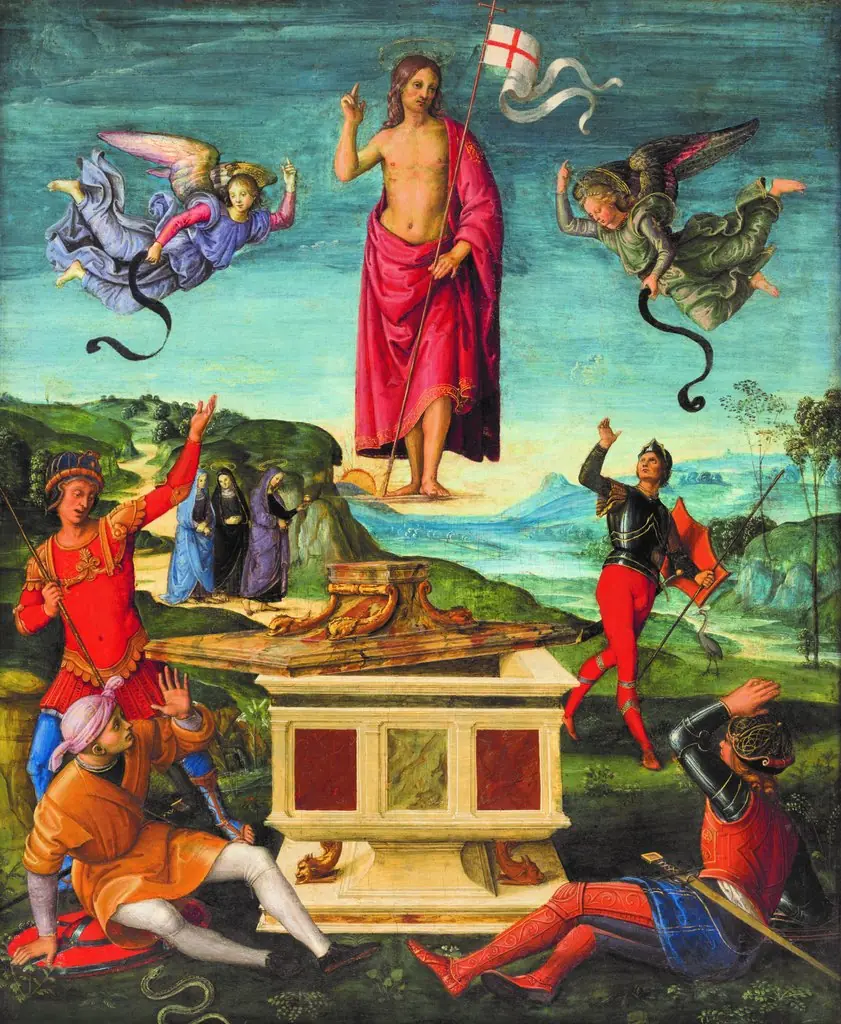
The Master of Saint Christopher with the Devil takes his name from a panel depicting that subject, and his working context places him within the broader tradition of early Netherlandish painting that exerted influence across Northern Europe in the fifteenth and sixteenth centuries. The Resurrection of Christ subject was treated by numerous artists during this period, including the young Raphael, whose own early panel of the same subject (1499-1502, São Paulo Museum of Art) demonstrates the Italian Renaissance approach to the theme with its complex geometric composition and Florentine spatial innovations. The Vienna panel, by contrast, maintains a more traditional Northern approach to the narrative, with greater emphasis on surface detail, coloristic richness, and direct emotional appeal. The work contributes to scholarly understanding of how Resurrection iconography circulated and was adapted across regional traditions, and how anonymous masters sustained religious visual culture outside the major artistic centers. Critical attention to the painting has been limited compared to major attributed works, reflecting the broader scholarly challenge of integrating anonymous and workshop productions into the canonical history of Renaissance art.
Legacy
The Resurrection of Christ by the Master of Saint Christopher with the Devil has not achieved the widespread recognition of treatments by named masters such as Raphael, whose Kinnaird Resurrection became the subject of significant scholarly debate regarding attribution and was subsequently acquired by the São Paulo Museum of Art as that institution's cornerstone Raphael. The anonymous status of the Vienna painter has limited the work's independent cultural afterlife, though it remains a documented example of early sixteenth-century Northern European religious painting within a major museum collection. The panel's value bicondition of significant age damage and anonymous authorship has precluded it from serving as a focal point for broader art historical narratives. Its primary significance lies in its value as a comparative document for understanding the range of quality and approach within early Renaissance devotional production, and for tracing the dissemination of Resurrection iconography across regional workshops. The work stands as a reminder of the vast body of anonymous religious painting that constituted the visual fabric of Christian worship in the period, even as individual names have been lost to history.
Artist & collection