Artwork
Altarpiece with The Passion of Christ
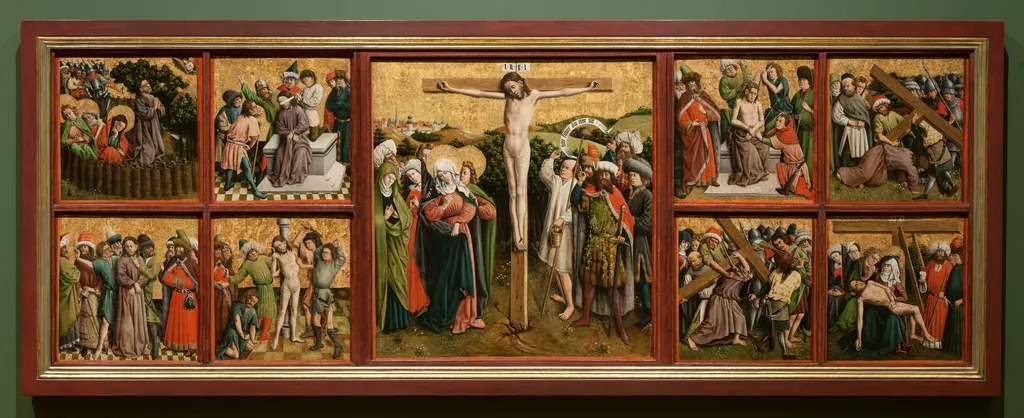
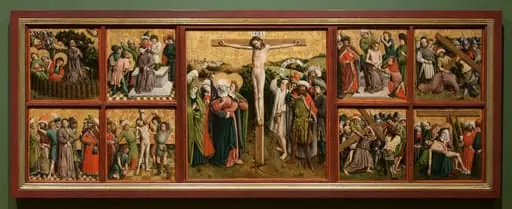
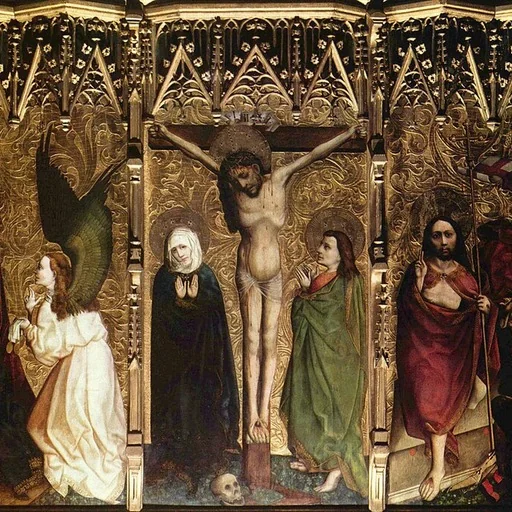
Altarpiece with The Passion of Christ is an unspecified painting by Master of the Tucher Altarpiece. It is held in the collection of the Cleveland Museum of Art.
About this work
Subject & Meaning
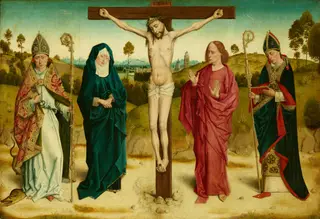
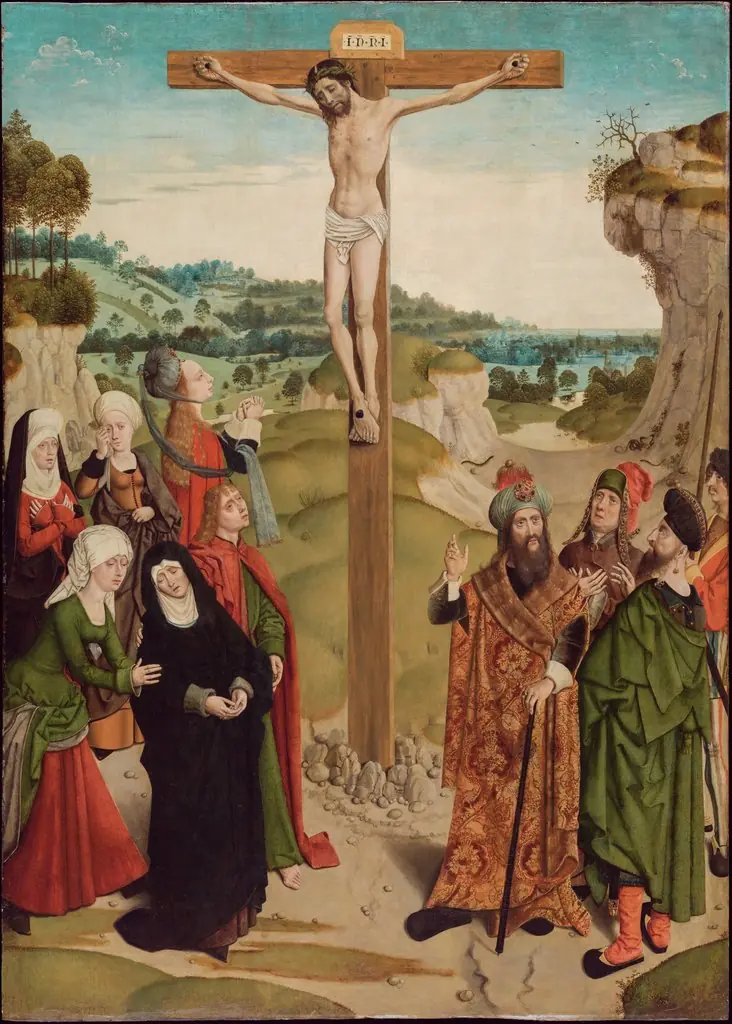
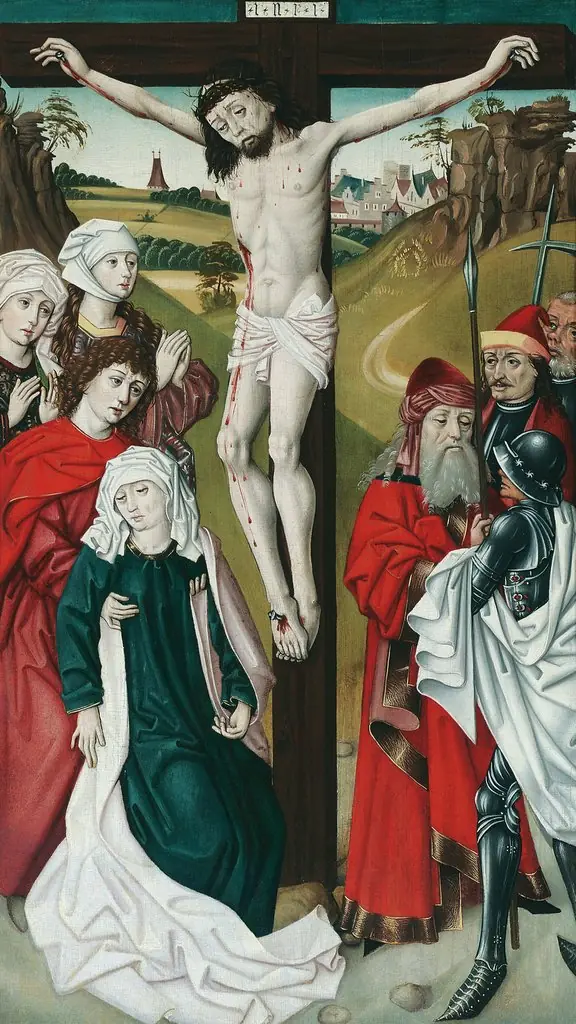
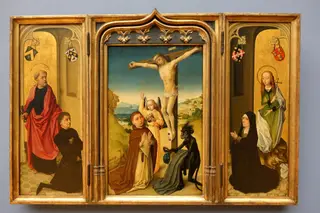
The altarpiece depicts the Passion of Christ, the sequence of events surrounding Jesus's suffering, death, and burial, which forms the central narrative of Christian devotional art. Classified as a religious painting, the work was produced in 1444 in Germany by the Master of the Tucher Altarpiece, situating it within the late-medieval German tradition of Passion imagery intended for liturgical and contemplative use.
As a Passion altarpiece, the work would have functioned as a focus for meditation on Christ's sacrifice, presenting viewers with the key episodes of the Passion narrative in a single devotional object. Such altarpieces typically combined narrative scenes with symbolic references to Christ's redemptive role, inviting worshippers to reflect on the theological meaning of the Crucifixion and its salvific significance.
History & Provenance
The Altarpiece with The Passion of Christ, painted by the Master of the Tucher Altarpiece in 1444, is housed at the Cleveland Museum of Art in Cleveland, Ohio.
Created in 1444 in Germany, this religious painting is attributed to the Master of the Tucher Altarpiece. The work, which depicts scenes from the Passion of Christ, entered the collection of the Cleveland Museum of Art, where it is currently held. While the specific circumstances of its original commission and the detailed chain of ownership prior to its museum acquisition are not specified in the available records, the piece is firmly dated to the mid-15th century based on stylistic analysis and historical documentation associated with the artist.
The Altarpiece with The Passion of Christ, painted by the Master of the Tucher Altarpiece in 1444, is housed at the Cleveland Museum of Art in Cleveland, Ohio. Its accession number is 1951.453. The work has been part of the museum's collection since its acquisition and was featured in the 2019 exhibition "German Renaissance Masterpieces".
Legacy
The Altarpiece with The Passion of Christ has shaped subsequent religious art through its innovative composition and narrative intensity, inspiring later masters to adopt its vivid emotional tone and detailed naturalism. Its presence in the Cleveland Museum of Art has made it a reference point for studies of late medieval German painting, influencing scholarship on iconography of the Passion and informing contemporary understandings of devotional practices in the 15th century.
Overview
Created in 1444, the Altarpiece with the Passion of Christ is a multi‑panel religious work now held by the Cleveland Museum of Art. Executed by the anonymous Master of the Tucher Altarpiece, the piece reflects the artistic activity of Nuremberg in the mid‑15th century. Its format consists of nine small scenes set within a wooden frame, each illustrating a moment from Christ’s crucifixion narrative.
Technique & Style
The painter employed a flat application of color and precise, linear outlines, giving the scenes a storybook quality. Earthy tones, greens, browns, muted reds, dominate, while occasional bright blues and golds highlight garments. Attention to detail appears in the rendering of folded robes and facial expressions, revealing a meticulous hand within the constraints of a compact format.
Context
The altarpiece aligns with the visual language of early to mid‑15th‑century German painting, sharing stylistic traits with contemporaneous workshops in the region. Its narrative structure and didactic purpose reflect the devotional practices of the time, serving both as an object of veneration and as a visual aid for meditation on the Passion.
Artist & collection
Artist
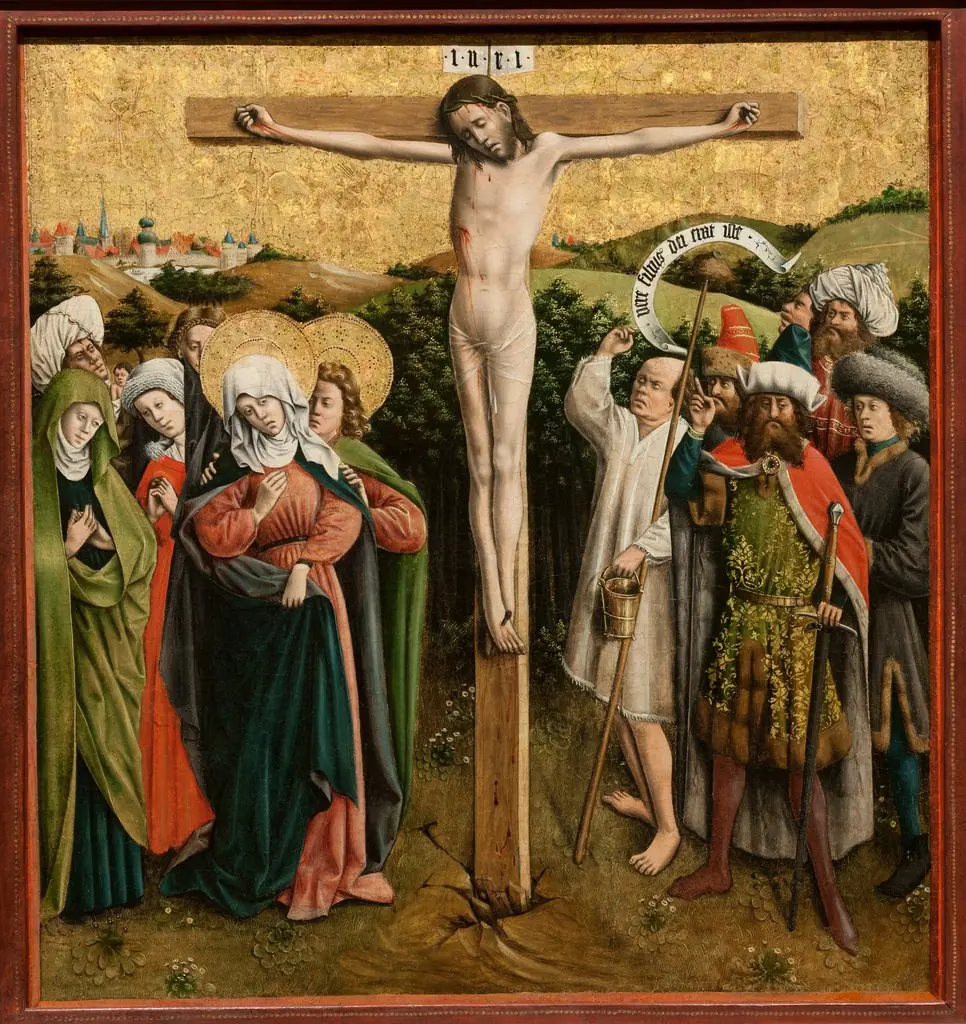
Master of the Tucher Altarpiece
The Master of the Tucher Altarpiece (fl c. 1430–1450) was a German painter active in Nuremberg. His name is derived from a painting which has been in that city's Frauenkirche since the early 19th century; this has been…