Artwork
The Loves by Pierre Ronsard: The Loves of Marie (Les Amours de Pierre Ronsard: Les Amours De Marie)
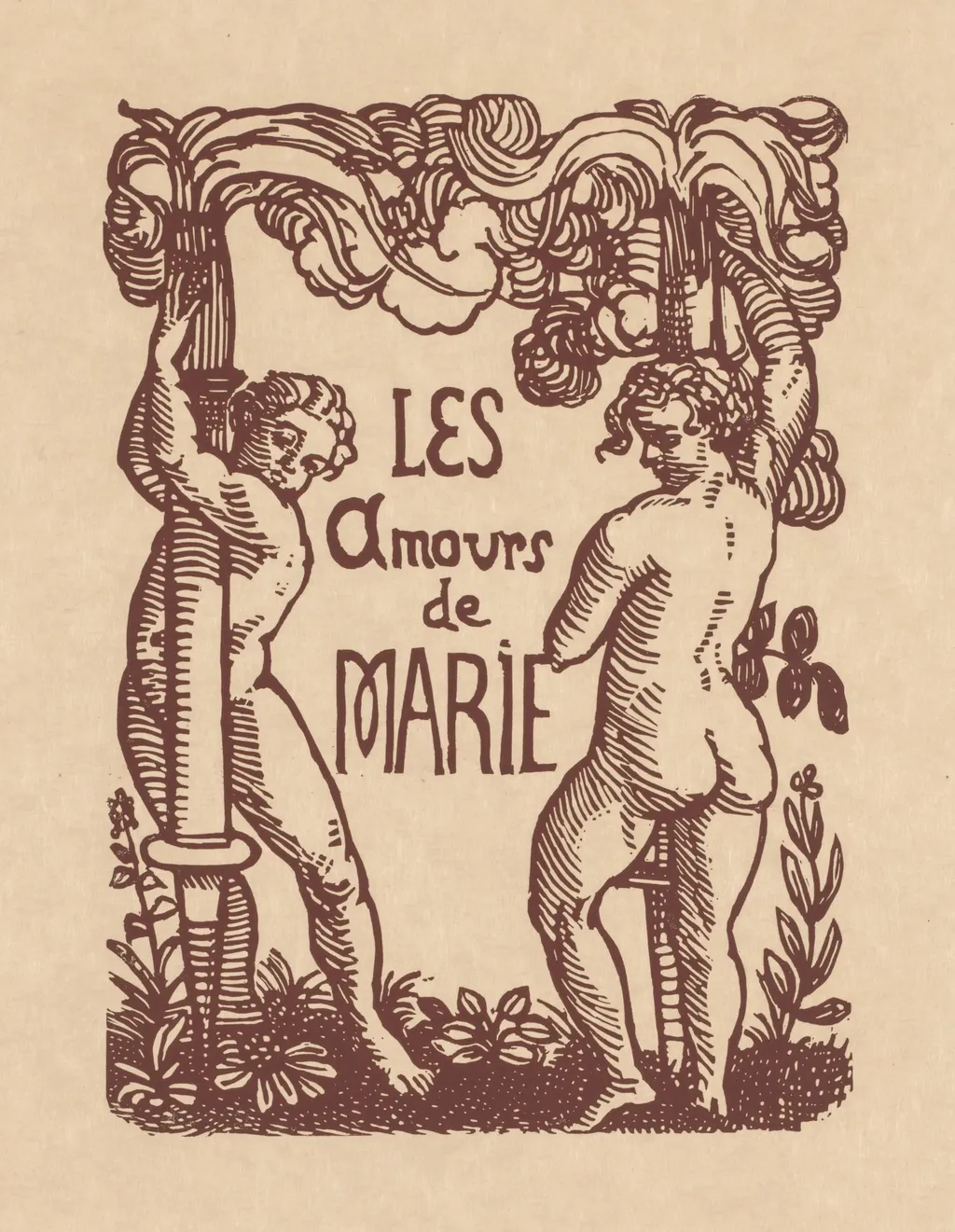
The Loves by Pierre Ronsard: The Loves of Marie (Les Amours de Pierre Ronsard: Les Amours De Marie) is a print by Émile Bernard. It dates from 1915 and is held in the collection of the Cleveland Museum of Art.
- Accession no.
- 2016.103
- Credit line
- Bequest of Elizabeth Carroll Shearer
About this work
Overview
It reflects Bernard’s continued engagement with symbolic and stylized forms, even after his early association with Cloisonnism and Synthetism.
Created in 1915 by French artist Émile Bernard, this print serves as a book cover for a collection of poetry by Pierre Ronsard. It reflects Bernard’s continued engagement with symbolic and stylized forms, even after his early association with Cloisonnism and Synthetism. The composition is restrained, emphasizing flat planes and clear outlines, aligning with his mature aesthetic that favored spiritual and literary themes over naturalistic representation.
Subject & Meaning
The image illustrates the poetic ideal of Marie, a muse from Ronsard’s 16th-century sonnets, through two allegorical figures. The male and female forms, positioned symmetrically around a decorative frame, evoke classical harmony and poetic devotion. The pillar and plant they hold suggest stability and growth, reinforcing themes of enduring love and artistic inspiration drawn from Renaissance literature.
Technique & Style
Bernard employs a simplified linear style with minimal shading and flat color fields, characteristic of his Synthetist roots. The figures are outlined sharply against a pale background, reducing detail to essential forms. The title is integrated into the design as a central element, blending text and image in a manner reminiscent of medieval illuminated manuscripts and Japanese woodcuts, which influenced his later work.
History & Provenance
The print was produced as part of a limited edition book cover for Ronsard’s love poetry, reflecting Bernard’s interest in reviving literary subjects through visual art. It entered the Cleveland Museum of Art’s collection as part of a broader acquisition of early 20th-century French graphic works, preserving its role as a bridge between poetic tradition and modernist design.
Context
In 1915, Bernard was distanced from the avant-garde movements he once helped shape, yet remained committed to symbolic expression. This work emerged during World War I, a time when many artists turned inward to cultural heritage for solace. His choice to illustrate Ronsard’s Renaissance verse reflects a broader European nostalgia for pre-modern ideals amid societal upheaval.
Legacy
Though not widely reproduced, the print exemplifies Bernard’s lifelong pursuit of integrating literature, spirituality, and formal simplicity in art. It stands as a quiet testament to his belief in art’s capacity to revive historical poetry through distilled visual language, influencing later generations interested in the intersection of text and image.
Own this work as a print
Artist & collection
Artist
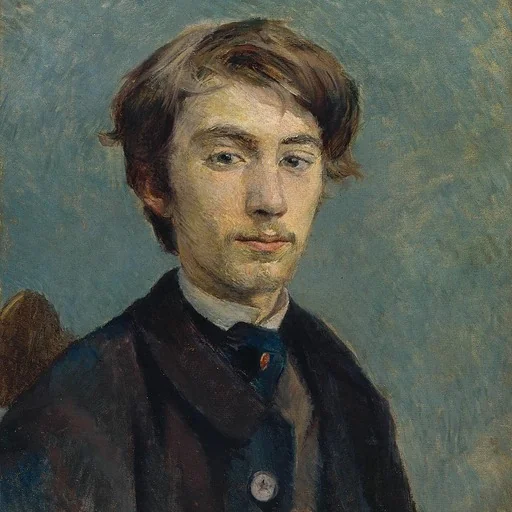
Émile Henri Bernard (French pronunciation:; 28 April 1868 – 16 April 1941) was a French Post-Impressionist painter and writer, who had artistic friendships with Vincent van Gogh, Paul Gauguin and Eugène Boch, and at a later time, Paul…

 The Seven Vices: Lust
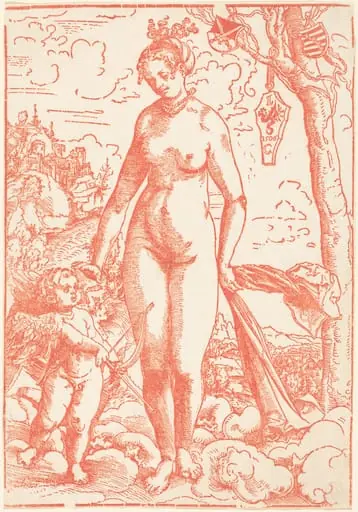 Venus and Cupid
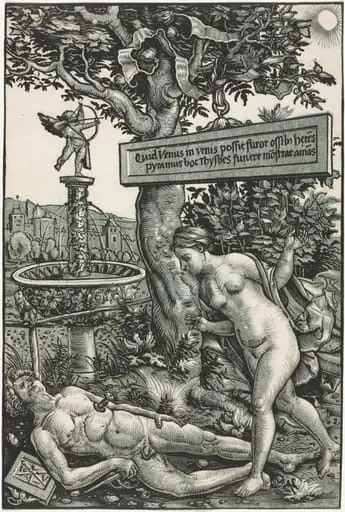 Pyramus and Thisbe
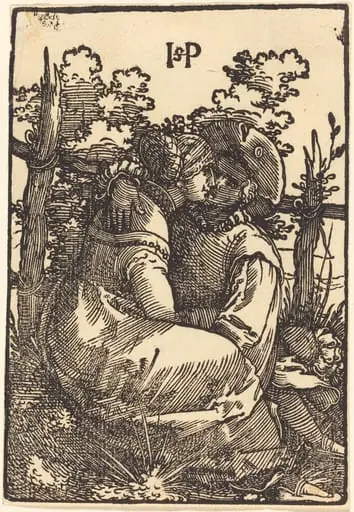 Two Lover Seated in Front of a Fence
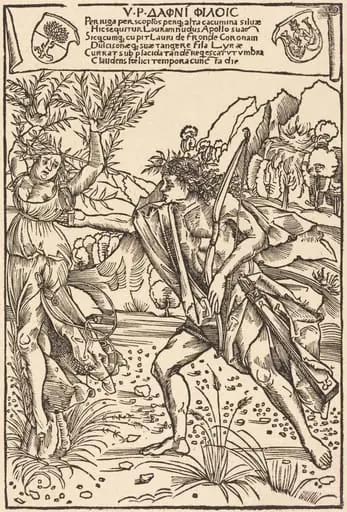 Apollo and Daphne
![Dancing Nude and Advertisement for Eugène Verneau's "Estampes décoratives" [verso], by Louis Anquetin](https://artifactworldgallery.com/img/louis-anquetin--dancing-nude-and-advertisement-for-eugene-verneau-s-estampes--bdc50cd2c4746c6c-w320.webp) Dancing Nude and Advertisement for Eugène Verneau's "Estampes décoratives" [verso]
Dancing Nude and Advertisement for Eugène Verneau's "Estampes décoratives" [verso]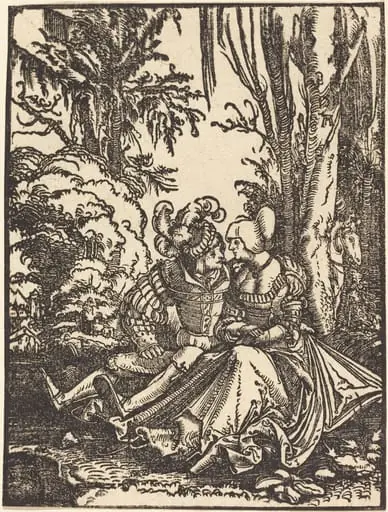 Pair of Lovers in a Landscape
![Dancing Nude and Advertisement for Eugène Verneau's "Estampes décoratives" [verso], by Louis Anquetin](https://artifactworldgallery.com/img/louis-anquetin--dancing-nude-and-advertisement-for-eugene-verneau-s-estampes--204685aaf2d4110c-w320.webp) Dancing Nude and Advertisement for Eugène Verneau's "Estampes décoratives" [verso]
Dancing Nude and Advertisement for Eugène Verneau's "Estampes décoratives" [verso]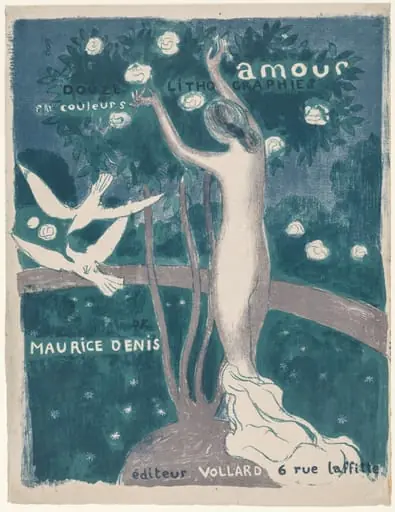 Cover
Cover