Artwork
Pastoral Scene
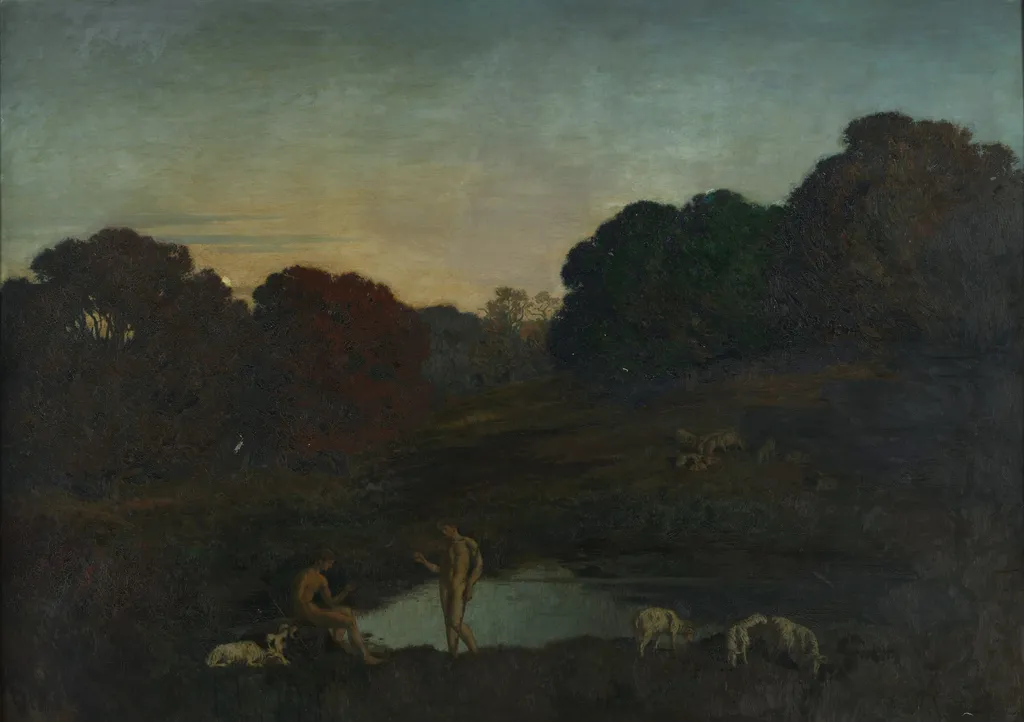
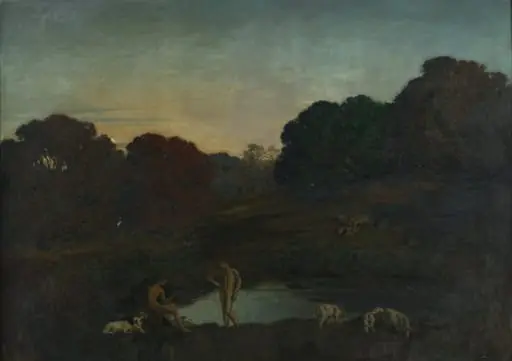
Pastoral Scene is an unspecified painting by the Post-Impressionist artist Émile-René Ménard. It dates from 1911 and is held in the collection of the Cleveland Museum of Art.
About this work
Technique & Style
No further technical details regarding specific medium, support, brushwork, condition, or stylistic handling are documented in the available sources.
Pastoral Scene is classified as a painting by Émile-René Ménard, dated 1911 and produced in France. According to the catalogue record held by the Cleveland Museum of Art, the work measures 177.8 cm in height by 250.0 cm in width, indicating a large-scale horizontal format suited to expansive landscape composition. The wide proportions are consistent with Ménard's characteristic treatment of pastoral subjects, which typically employ broad, sweeping arrangements of rural scenery.
No further technical details regarding specific medium, support, brushwork, condition, or stylistic handling are documented in the available sources.
History & Provenance
The painting Pastoral Scene was created by the French artist Émile-René Ménard in 1911. The work was produced in France during this year. It subsequently entered the collection of the Cleveland Museum of Art, where it is held under the accession number 1921.83.
The painting Pastoral Scene is held in the collection of the Cleveland Museum of Art, where it is accessioned under the identifier 1921.83. It was created in France in 1911 and has not been documented in major exhibition histories beyond its acquisition and display within the museum’s permanent collection.
Context
Émile-René Ménard's 1911 painting Pastoral Scene, held in the Cleveland Museum of Art, reflects a late Impressionist approach to rural landscapes while departing from conventional pastoral tropes through its flattened perspective and heightened color fields. Art historians note its significance as part of Ménard's transitional period between Symbolist influences and early modernist abstraction, situating the work within broader French painting trends of the early 20th century. The canvas's dimensions (177.8 x 250.0 cm) and French provenance underscore its stylistic dialogue with contemporary movements while maintaining regional academic connections.
Scholarly analysis emphasizes its nuanced reception as both a technical experiment and a meditation on rural idylls, with recent studies contextualizing Ménard's oeuvre within the evolving discourse on French modernism and the Cleveland Museum's strategic acquisitions of lesser-known contemporaries.
Legacy
The legacy of Pastoral Scene is anchored in its early recognition at the Cleveland Museum of Art, where the work entered the collection in 1921. As documented in the museum’s provenance, the painting was displayed in the institution’s galleries shortly after acquisition, establishing its presence in a major public collection. Its inclusion in the museum’s holdings underscores its significance within early 20th-century French painting, particularly in the pastoral genre associated with René Ménard.
The work’s dimensions, recorded as 177.8 cm by 250.0 cm, reflect a substantial scale that contributed to its impact when exhibited. Though specific critical commentary on its influence is not detailed in the available sources, its continued presence in the museum’s collection highlights its enduring relevance as a representative example of French pastoral art from the early 1900s.
Overview
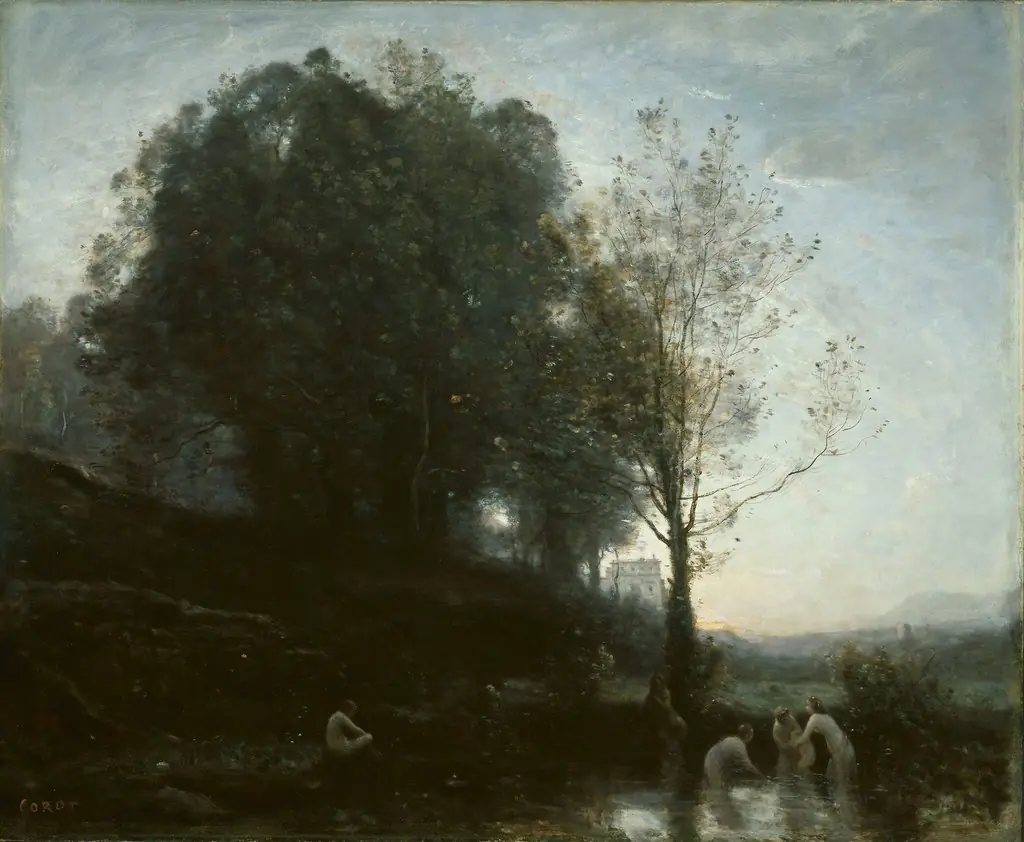
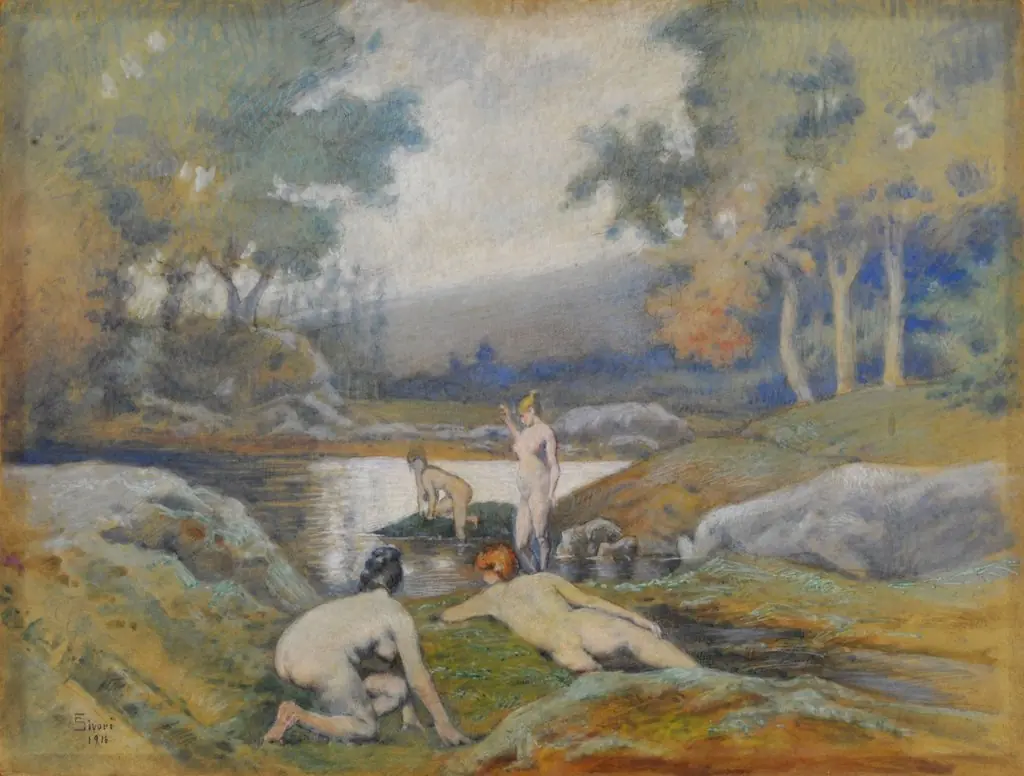
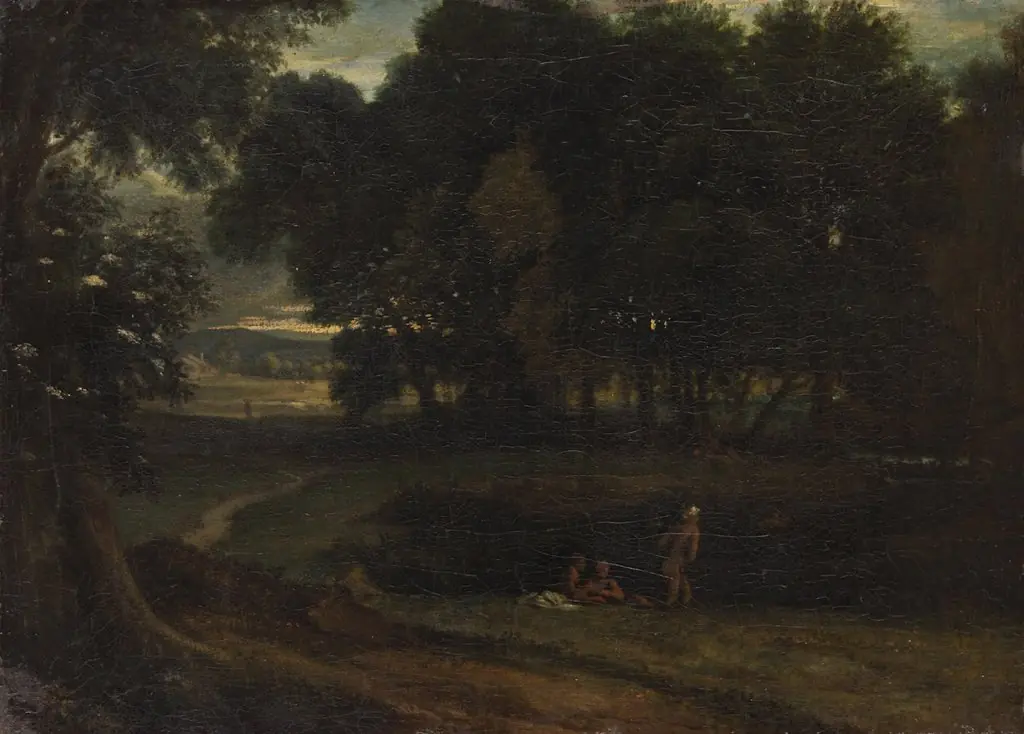
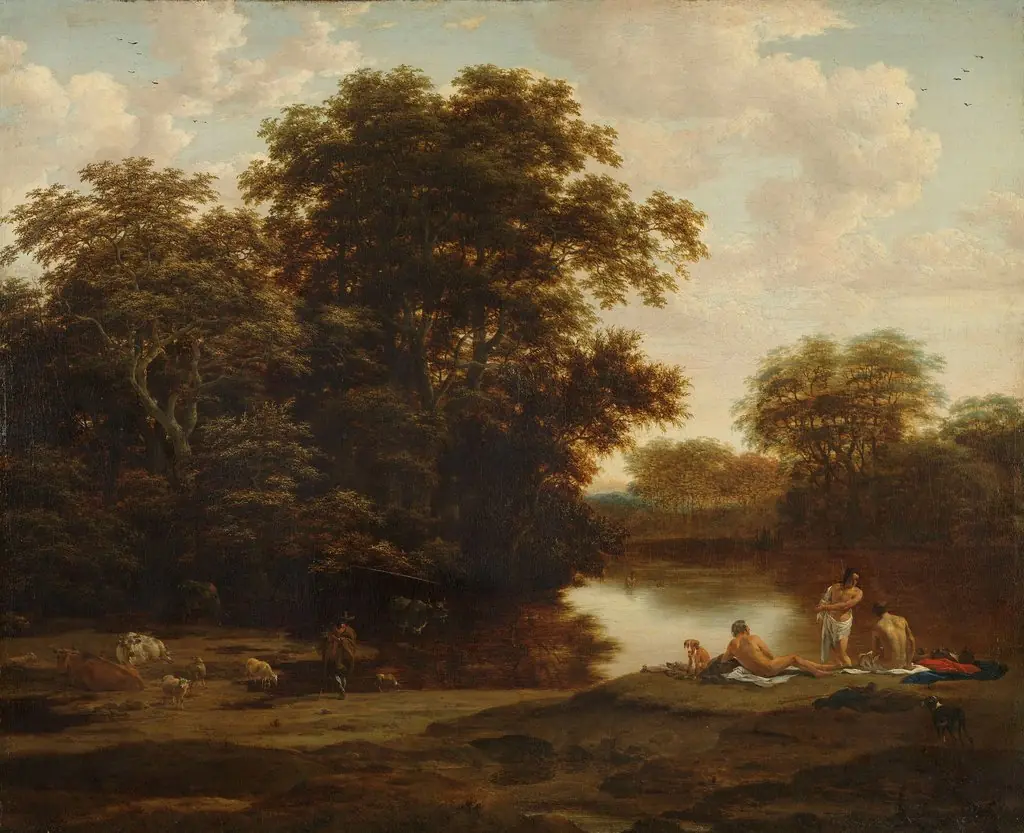
Émile‑René Ménard (1862–1930) painted Pastoral Scene in 1911, situating the work within the later phase of French post‑impressionism. The canvas presents a tranquil countryside tableau rendered at dusk, where two unclothed male figures occupy the foreground beside a pond while a flock of sheep grazes nearby. The composition is held by the Cleveland Museum of Art.
Subject & Meaning
The image juxtaposes human presence with pastoral activity: one figure reclines on the bank, the other stands alert, observing the grazing sheep. The nakedness of the men evokes a timeless, classical sensibility, while the serene setting suggests an idealized vision of rural life, inviting contemplation of humanity’s relationship to nature.
Own this work as a print
Artist & collection
Artist
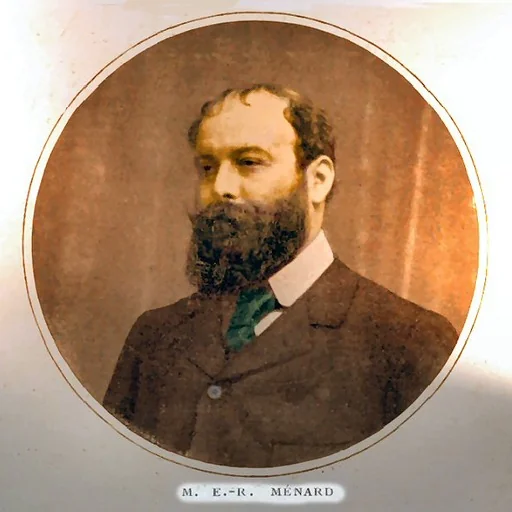
Émile-René Ménard (15 April 1862 – 13 January 1930) was a French painter. From early childhood he was immersed in an artistic environment: Corot, Millet and the Barbizon painters frequented his family home,…