Artwork
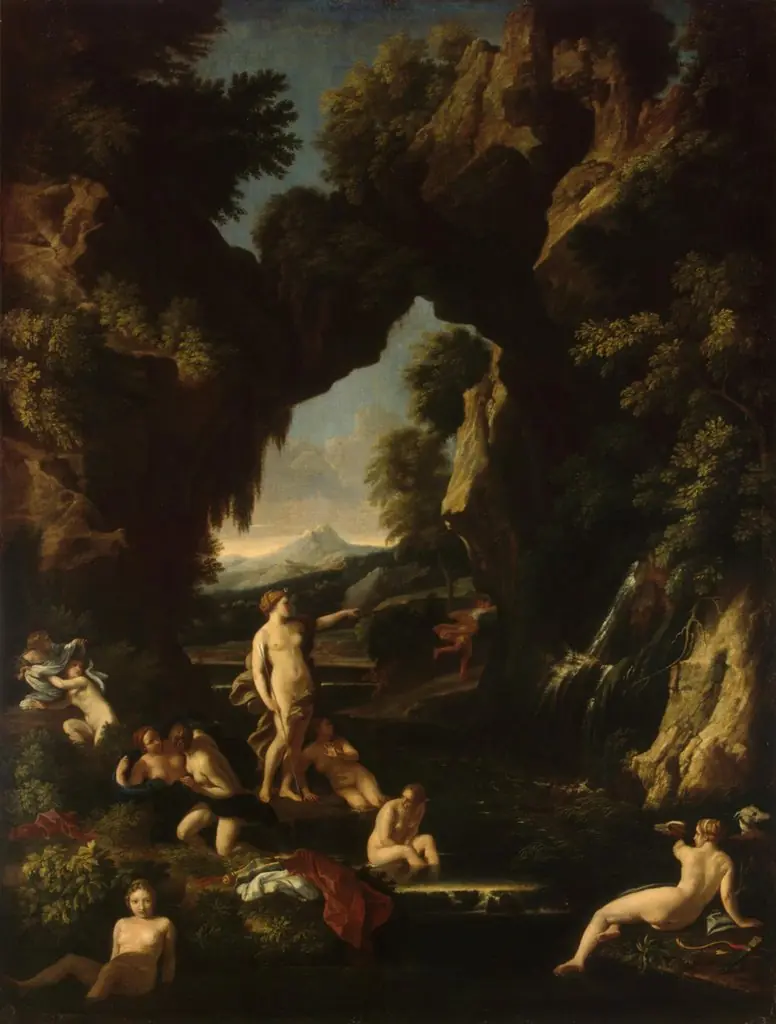
Arcadian landscape with bathing Diana
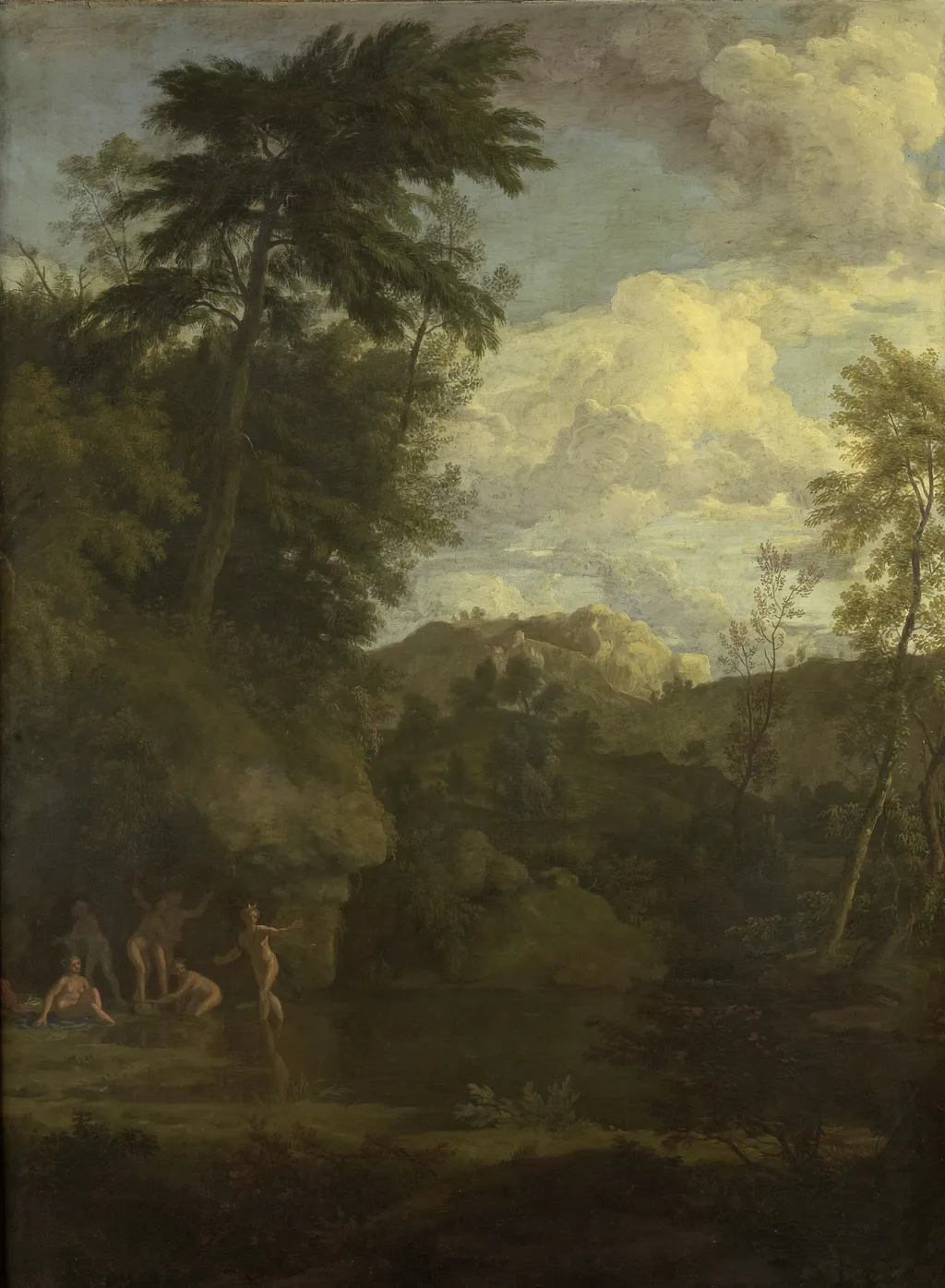
Arcadian landscape with bathing Diana is an oil painting by the Rococo painting artist Johannes Glauber. It dates from 1697 and is held in the collection of the Rijksmuseum.
About this work
Technique & Style
Executed in oil on canvas in 1693, the work measures 124 cm in height and 90 cm in width.
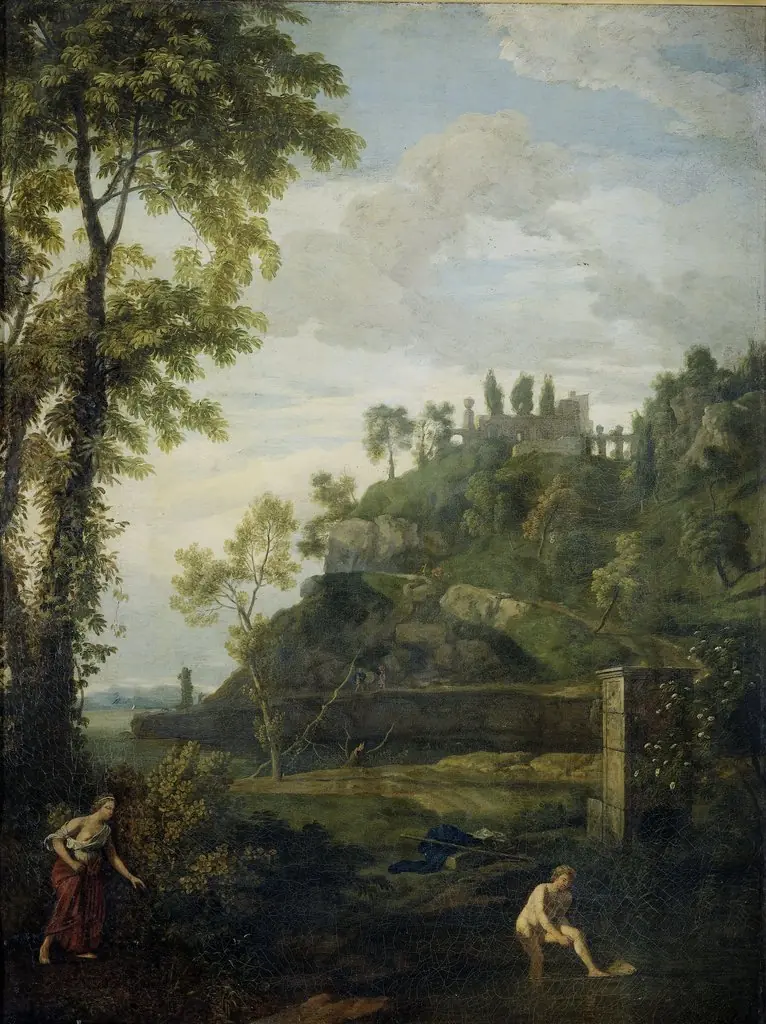
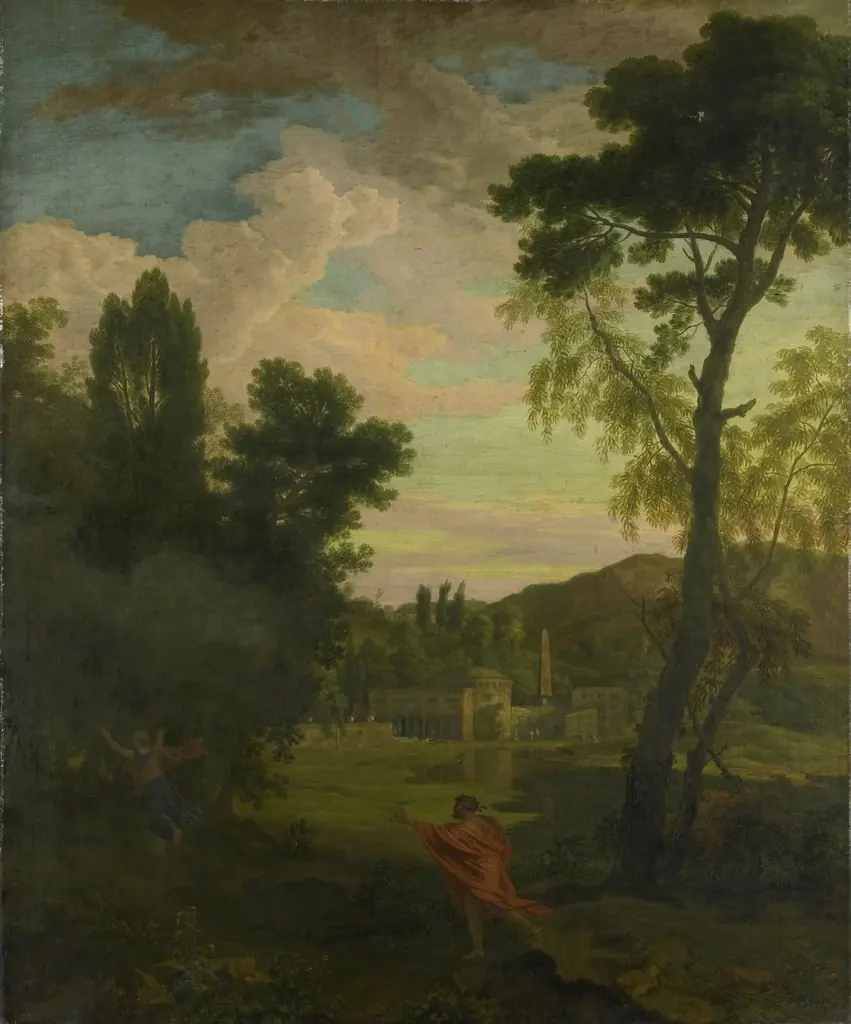
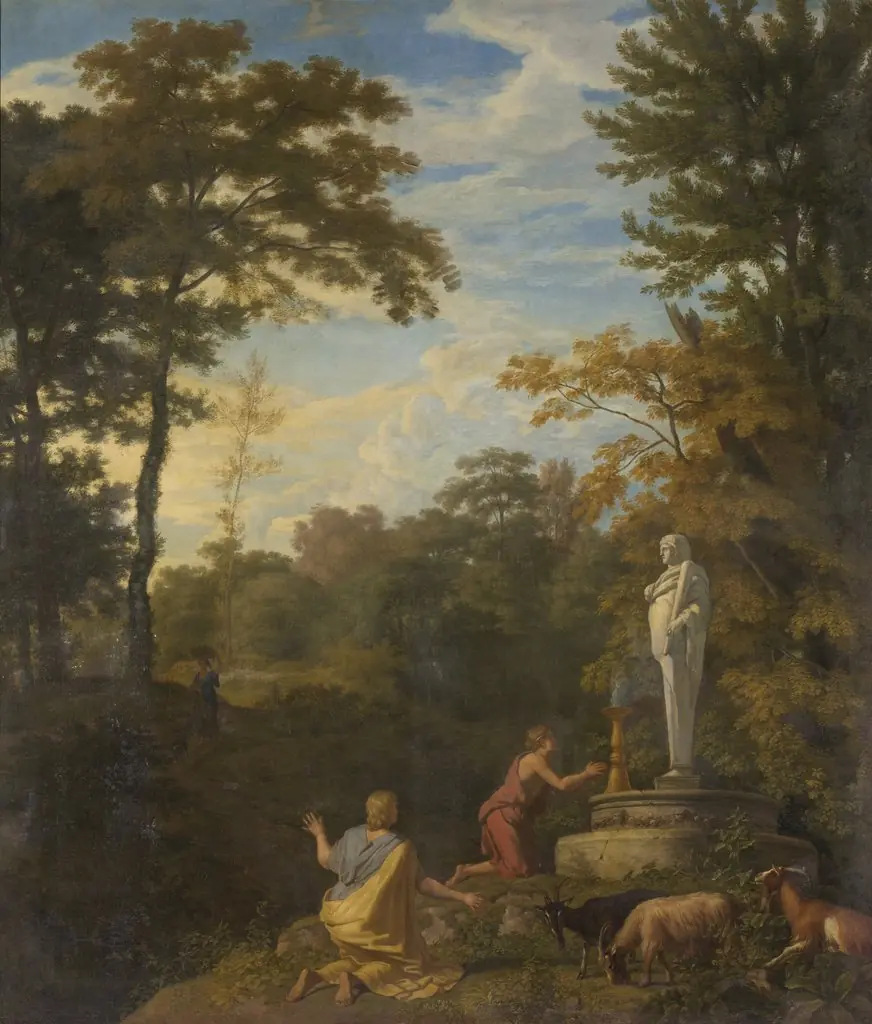
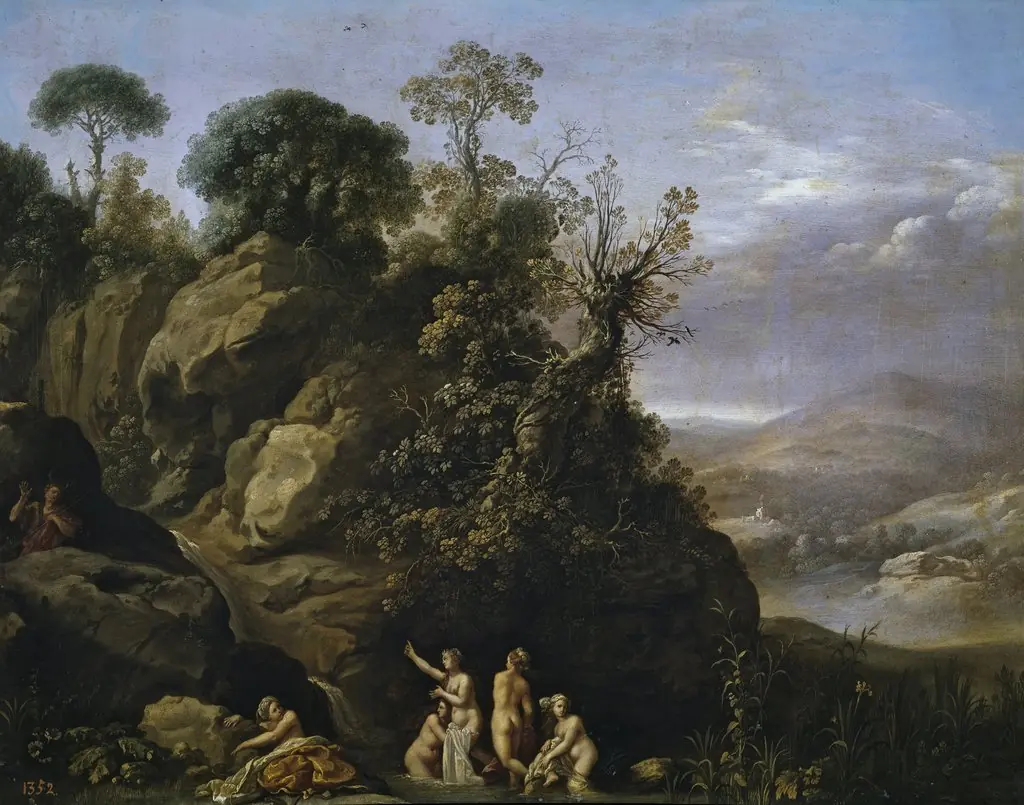
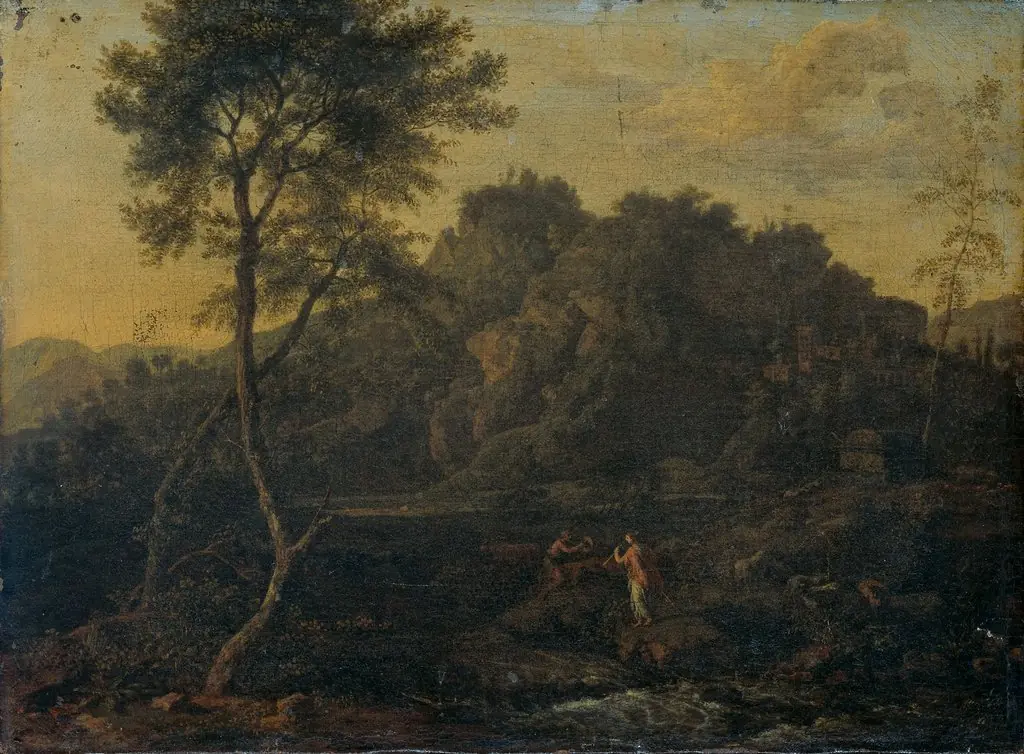
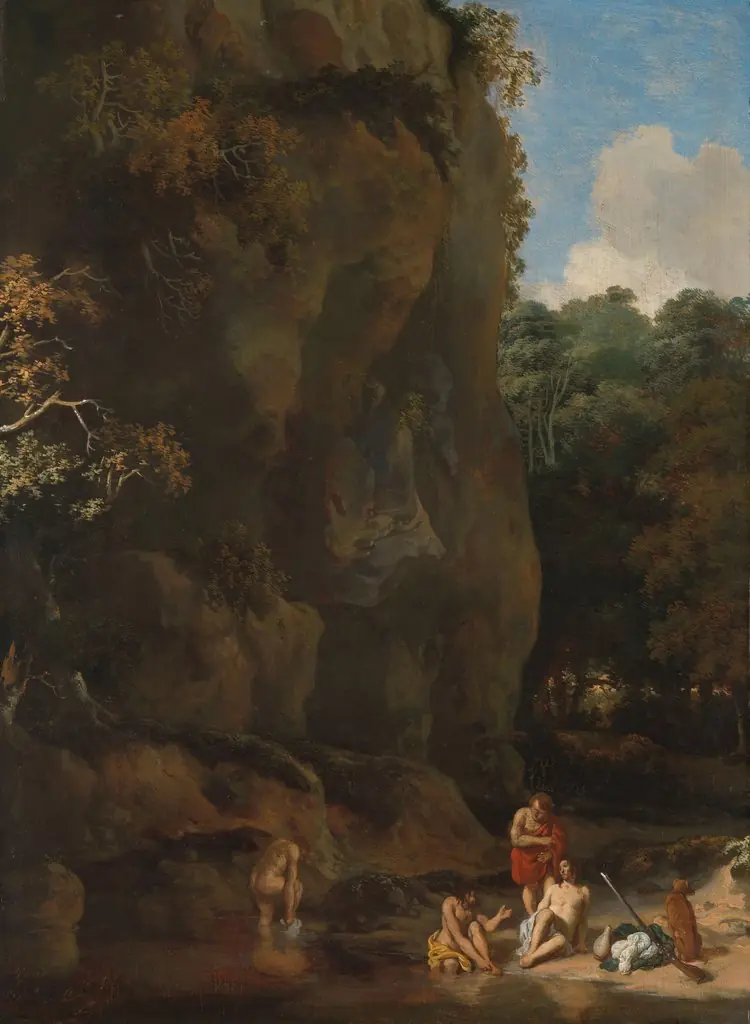
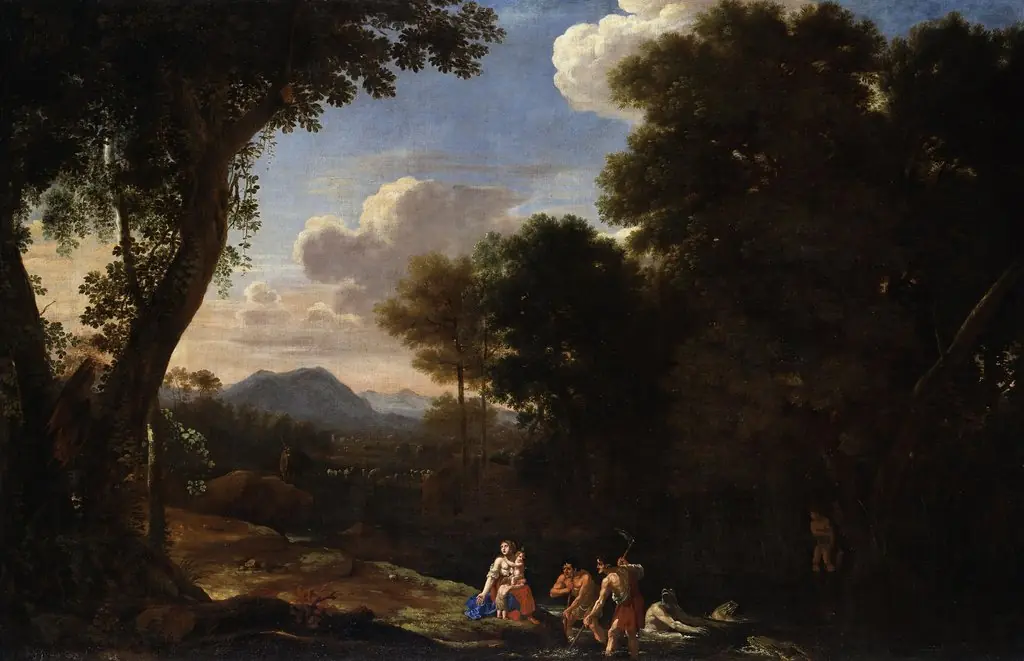
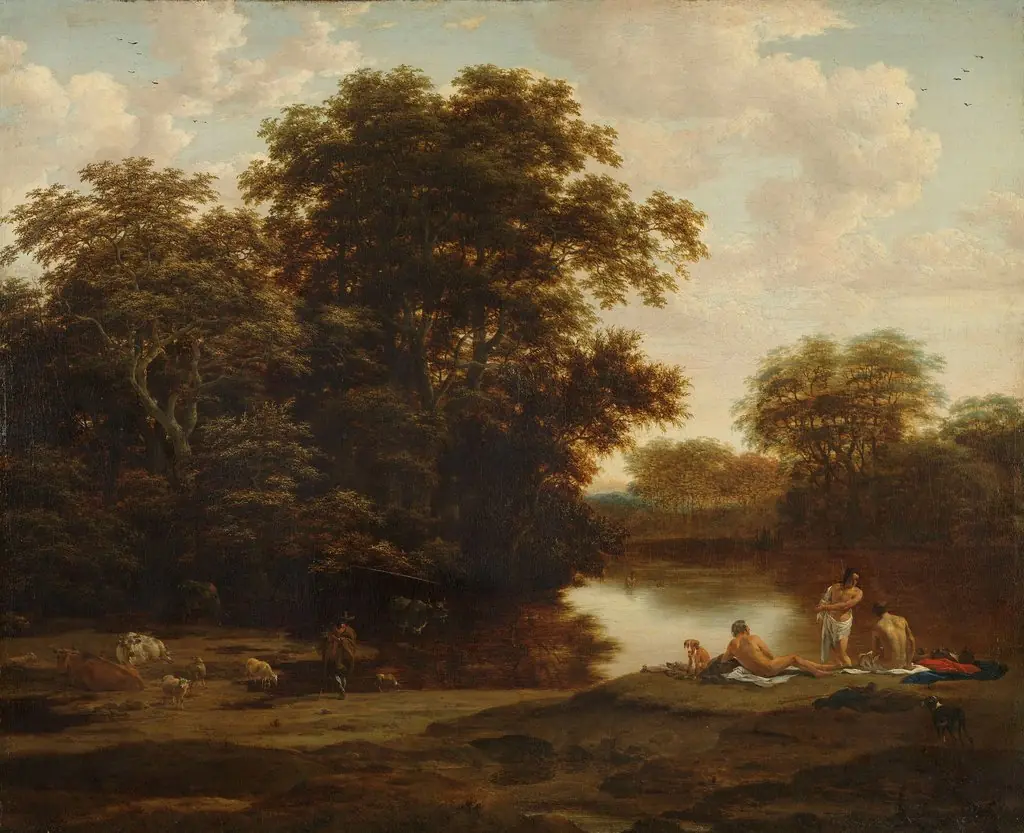
Executed in oil on canvas in 1693, the work measures 124 cm in height and 90 cm in width. The handling aligns with the Dutch late-baroque landscape tradition, employing smooth, blended passages for foliage and sky while retaining crisp modeling in figures and drapery to articulate form against the luminous setting. Stylistically, it synthesizes Claudian classicism with northern European naturalism, organizing the composition along a diagonal recession from dense woodland in the left foreground toward an open, sunlit glade where Diana and her nymphs bathe, framed by monumental oaks and a distant ruin.
The palette favors warm greens and umbers enlivened by silvery highlights and cool reflections, conveying both idyllic serenity and carefully observed atmospheric effects.
History & Provenance
Johannes Glauber created the oil painting Arcadian landscape with bathing Diana in 1693. Executed on canvas, the work measures 124 cm in height and 90 cm in width. The painting is currently held in the collection of the Rijksmuseum, the National Art Gallery of the Netherlands.
No specific details regarding the original commission, the initial owner, or the subsequent chain of custody prior to its arrival at the museum are provided in the available records.
The painting Arcadian landscape with bathing Diana by Johannes Glauber is held in the collection of the Rijksmuseum, also known as the National Art Gallery of the Netherlands. Created in 1693, the work is executed in oil on canvas and measures 124 cm in height by 90 cm in width. The available sources confirm its current location within this institution but do not provide specific inventory or accession numbers. Furthermore, no details regarding the artwork's exhibition history are contained in the provided records.
Context
Arcadian landscape with bathing Diana is a 1693 oil painting by Dutch artist Johannes Glauber, depicting a mythological scene within a classical landscape tradition. The work measures 124 cm by 90 cm and is part of the Rijksmuseum's collection in Amsterdam, reflecting the Dutch Golden Age's engagement with pastoral and mythological subjects. Scholarship situates Glauber within the broader European landscape tradition, noting his synthesis of Dutch realism with Italianate compositional influences, though his works remained less prominent than contemporaries like Jacob van Ruisdael.
The painting's reception during the 18th century was modest, with no significant contemporary critical commentary surviving; its modern appreciation emerged in the 20th century through exhibitions highlighting Dutch landscape evolution. Its placement in art history underscores the transitional phase in European landscape painting, bridging Baroque traditions with emerging Romantic sensibilities, as evidenced by its thematic treatment of nature and mythology.
The work's provenance and conservation are tied to the Rijksmuseum's holdings, where it has been displayed in thematic exhibitions on Dutch landscape art, though specific exhibition histories require further archival verification.
Legacy
Arcadian landscape with bathing Diana shaped 18th-century French pastoral sensibilities, inspiring Rococo artists to emulate its compositional balance and mythological ease. The work's emphasis on naturalistic light and idyllic scenery informed later landscape painters across Northern Europe, particularly in Dutch and German schools who adapted Glauber's fusion of classical narrative with topographical detail. Its presence in major public collections reinforced its status as a benchmark for the genre, cited in 19th-century art historical surveys as a proto-Romantic touchstone for reimagining myth within observable terrain.
Overview
Johannes Glauber’s oil painting, Arcadian Landscape with Bathing Diana, was executed in 1697. The work presents a serene woodland scene populated by four nude figures, two seated beneath a prominent tree and two standing near a rocky rise. A bright sky dotted with fluffy clouds illuminates the setting, while the foliage casts soft shadows across the ground, creating a tranquil atmosphere.
Subject & Meaning
The composition centers on a mythological theme, portraying the goddess Diana in a pastoral context. The relaxed poses of the figures suggest a moment of private leisure, emphasizing the harmony between the divine and the natural world. The inclusion of a solitary tree and gentle landscape elements reinforces the idealized Arcadian vision of peaceful coexistence.
Own this work as a print
Artist & collection