Artwork
北野天神縁起絵巻|Illustrated Legends of the Kitano Tenjin Shrine (Kitano Tenjin engi emaki)
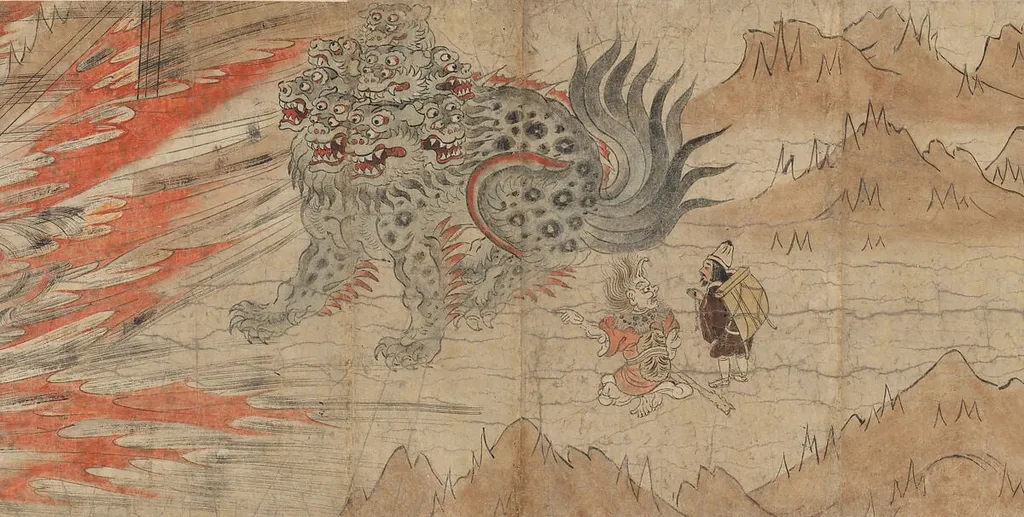
北野天神縁起絵巻|Illustrated Legends of the Kitano Tenjin Shrine (Kitano Tenjin engi emaki) is an ink painting. It dates from 1283 and is held in the collection of the Metropolitan Museum of Art. The Illustrated Legends of the Kitano Tenjin Shrine (Kitano Tenjin engi emaki) is a set of five handscrolls.
About this work
History & Provenance
The handscroll set titled Illustrated Legends of the Kitano Tenjin Shrine is housed in the collection of the Metropolitan Museum of Art in New York.
The Illustrated Legends of the Kitano Tenjin Shrine is dated to 1283 based on the inscription recorded in the handscrolls.
The set comprises five handscrolls, executed in ink, color, and cut gold on paper, and is attributed to an unknown artist.
The scrolls entered the collection of the Metropolitan Museum of Art, where they are currently held.
The handscroll set titled Illustrated Legends of the Kitano Tenjin Shrine is housed in the collection of the Metropolitan Museum of Art in New York. The museum’s records identify the work as part of their holdings, but no inventory or accession number is provided in the sources. The available documentation does not list any exhibition history for the piece, indicating that it has not been featured in publicly noted exhibitions according to the cited references.
Overview
The Illustrated Legends of the Kitano Tenjin Shrine (Kitano Tenjin engi emaki) is a set of five handscrolls. These paintings, executed with ink, color, and cut gold on paper, narrate the life of Sugawara no Michizane. He was a historical scholar and statesman who, after his death, was deified as a Shinto god.
The scrolls depict his journey from human life to divine status, illustrating key events and miraculous occurrences associated with his legend.
Subject & Meaning
The central narrative of these scrolls recounts the biography of Sugawara no Michizane (845–903), a prominent scholar and court official during Japan's Heian period. After his unjust exile and subsequent death, a series of natural disasters and misfortunes were attributed to his vengeful spirit. To appease him, Michizane was posthumously elevated to the status of Tenjin, a Shinto deity associated with scholarship and learning, and enshrined at Kitano.
Technique & Style
The scrolls are characterized by their intricate detail and rich materials. Tiny figures, including nobles, monks, and mythical dragons, populate expansive, gold-flecked landscapes. A distinctive feature is the use of kirikane, or cut gold leaf, applied to depict glowing clouds.
This technique imbues the scenes with an ethereal quality, suggesting a realm where the earthly and divine converge, enhancing the narrative's miraculous elements.

Artist & collection

- Copy of Night Parade of One Hundred Demons from the Shinjuan Collection
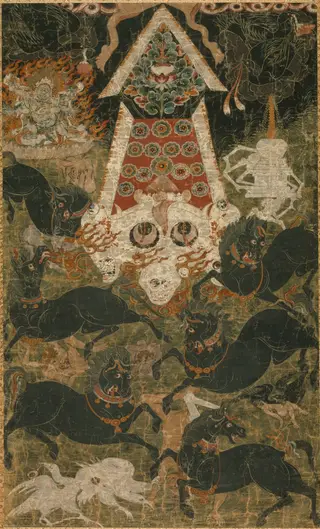 Offerings to Mahakala
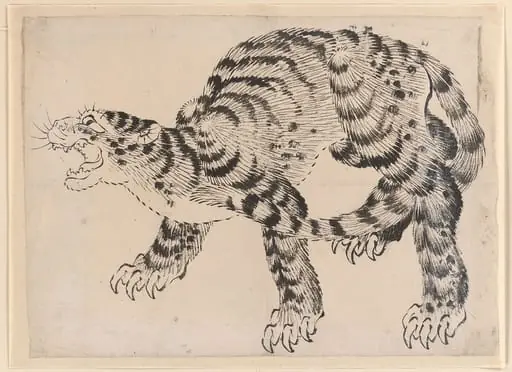 Untitled
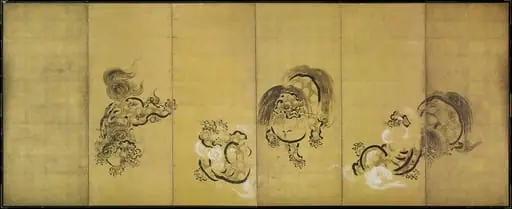 舞楽図屏風 ・唐獅子図屏風|Bugaku Dances (front); Chinese Lions (reverse)
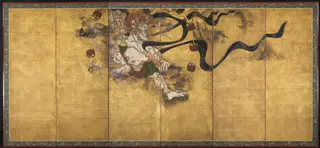 God of Thunder (Raijin)
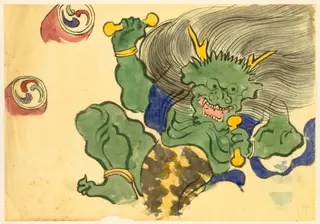 Flowers of a Hundred Worlds (Momoyogusa): God of Thunder (Raijin)
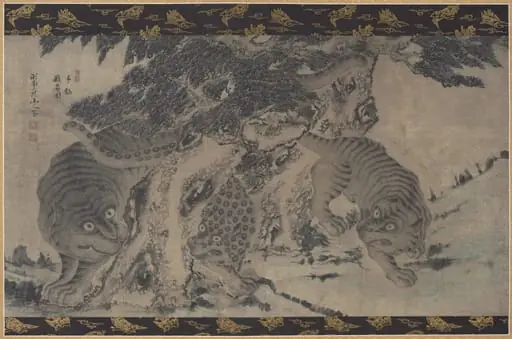 Tigers and Leopard Frolicking
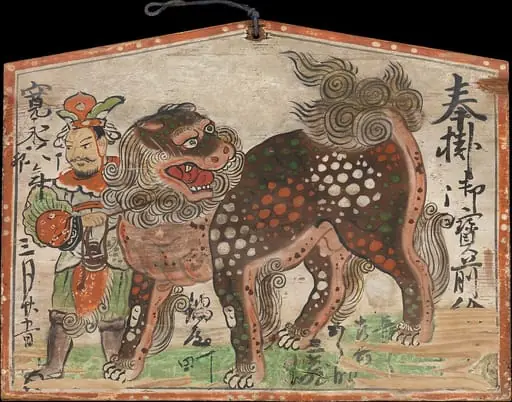 優闐王と唐獅子図絵馬「奉掛御宝前 絵馬 寛永丁卯年三月廿五日」|Ema (Votive Painting) of Chinese Lion Led by Utenō
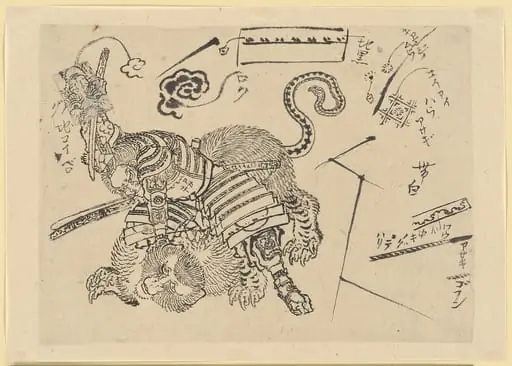 Untitled
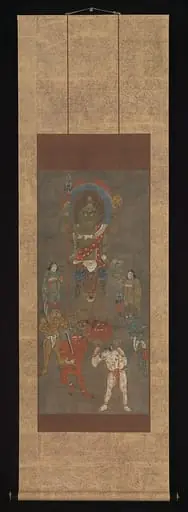 青面金剛夜叉図大津絵|Ōtsu-e of Shōmen Kongōyasha (Vajrayaksha)
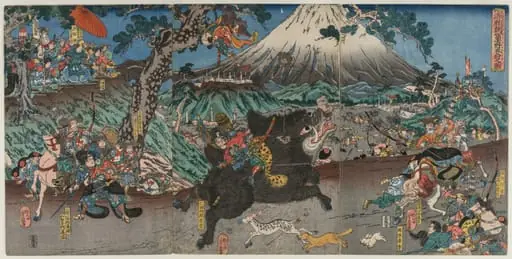 Picture of Minamoto no Yoritomo's Hunt on the Slopes of Mount Fuji
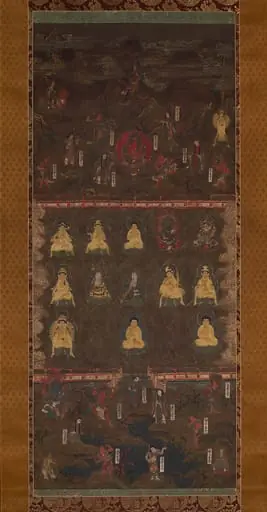 熊野曼茶羅図|Mandala of Kumano Shrine