Artwork
Untitled
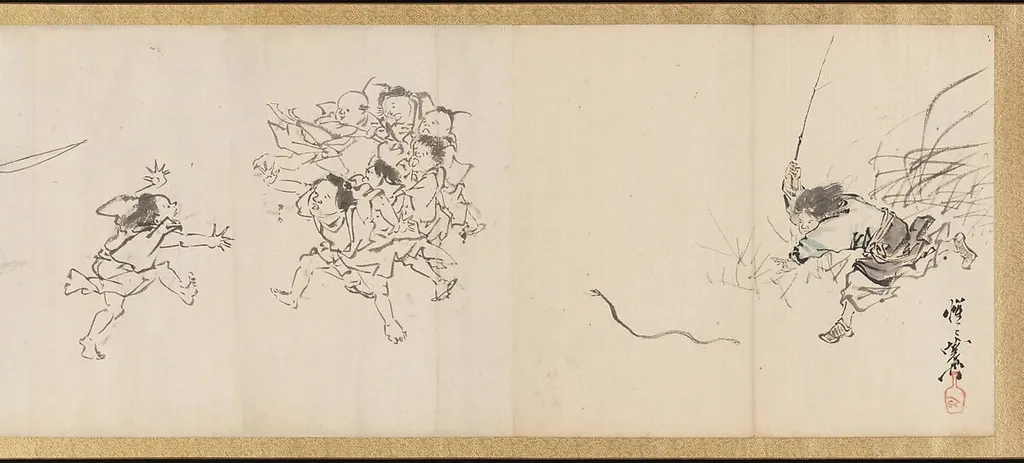
Untitled is an unspecified painting by the Romanticist artist Kawanabe Kyōsai 河鍋暁斎. It dates from 1870 and is held in the collection of the Metropolitan Museum of Art.
- Accession no.
- 37.119.1
- Credit line
- Fletcher Fund, 1937
About this work
Subject & Meaning
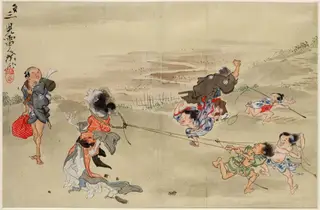
Kawanabe Kyōsai's 1870 handscroll, Untitled, is classified as an allegory that presents a narrative scene populated by a diverse array of figures.
Kawanabe Kyōsai's 1870 handscroll, Untitled, is classified as an allegory that presents a narrative scene populated by a diverse array of figures. The composition depicts a man, a boy, a buffalo, a fox, and a snake interacting within the wash drawing. While the specific narrative arc of these characters is not detailed in the available records, the work's designation as an allegory indicates that the figures function symbolically to convey a deeper moral or philosophical meaning rather than serving merely as a literal genre scene.
The inclusion of both domestic animals, such as the buffalo, and wild creatures, including the fox and snake, alongside human figures suggests a complex interplay between nature and humanity typical of Edo-period visual storytelling.
Technique & Style
The work is executed as a handscroll in wash drawing, a format typical of the late-Edo period, and was produced in Japan in 1870. Its support is a long horizontal paper scroll measuring approximately 27.6 cm in height and 629.9 cm in width, designed to be unrolled sequentially. The piece belongs to the Paintings classification and is categorized as an allegory, depicting a boy, a buffalo, a fox, a man, and a snake.
Stylistically, the composition relies on fluid ink lines and a narrative layout that unfolds across the scroll, characteristic of Kawanabe Kyōsai's blend of traditional brushwork with playful subject matter.
History & Provenance
The handscroll titled Untitled was created by Kawanabe Kyōsai in 1870 in Japan. Executed as a wash drawing on paper, it measures approximately 27.6 cm in height and 629.9 cm in width and is classified under paintings as an allegorical scene depicting a man, a boy, a buffalo, a fox, and a snake. It is held in the collection of the Metropolitan Museum of Art.
No specific commission details, earlier ownership records, accession number, or exhibition history are provided in the available documentation.
Overview
This untitled handscroll by Kyōsai, executed as a wash drawing, presents a dynamic sequence of scenes. The artwork unfolds like a visual narrative, depicting a range of subjects from anthropomorphic foxes to human figures engaging with mythical creatures. Created during the 1800s, a transformative period for Japan, the scroll blends traditional folklore with a distinctive, often humorous, illustrative style, showcasing the artist's innovative approach to visual storytelling through ink.
Context
Produced in the 1800s, this work emerged during a pivotal era when Japan was beginning to engage with Western cultures. Kyōsai's artistic practice often integrated traditional Japanese ghost stories with a modern, satirical edge, anticipating the visual language of later cartooning. His ability to render quick, humorous sketches within a classical format highlights his role as an artist bridging traditional aesthetics with a forward-looking, often irreverent, perspective.
Artist & collection
Artist
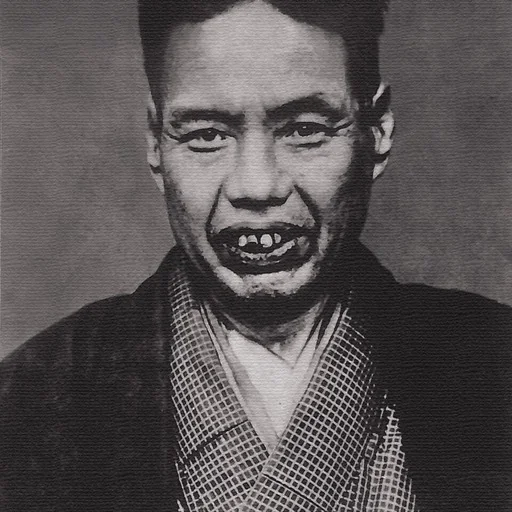
Kawanabe Kyōsai (河鍋 暁斎; May 18, 1831 – April 26, 1889) was a Japanese painter and caricaturist. In the words of art historian Timothy Clark, "an individualist and an independent, perhaps the last virtuoso in traditional Japanese painting".

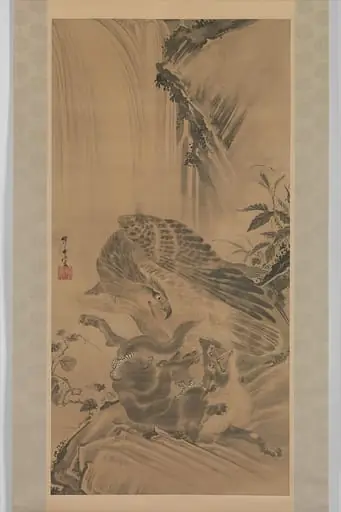
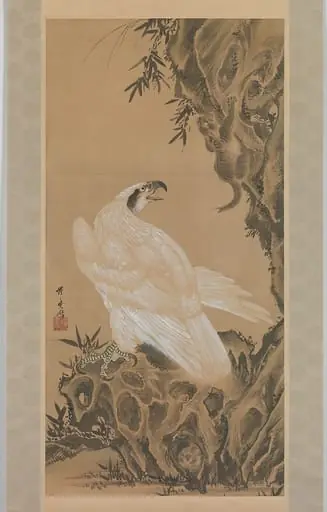
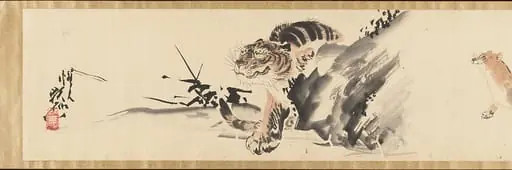
- Untitled
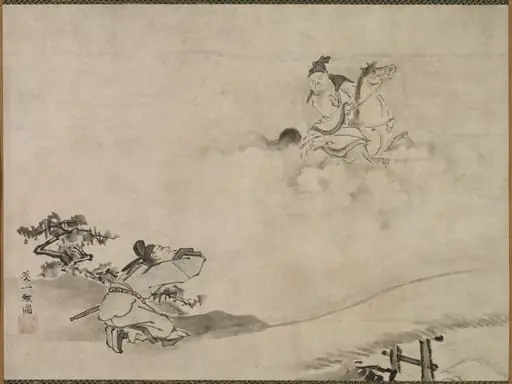 Daoist Immortal
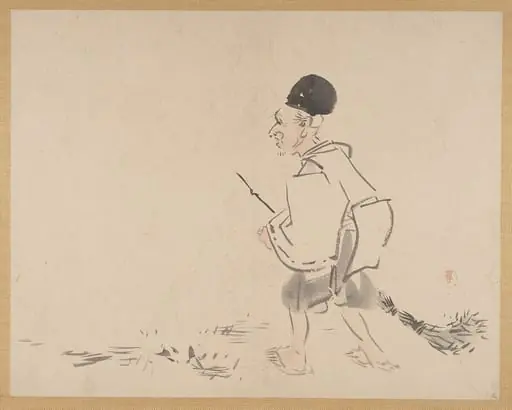 Untitled
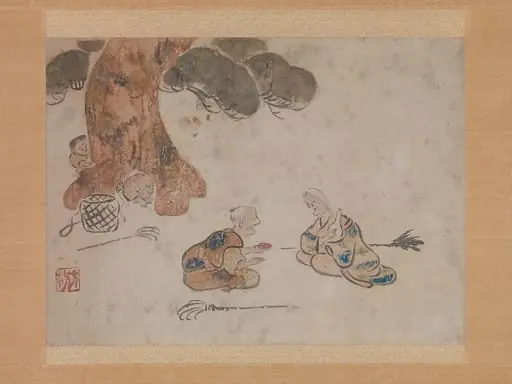 Untitled
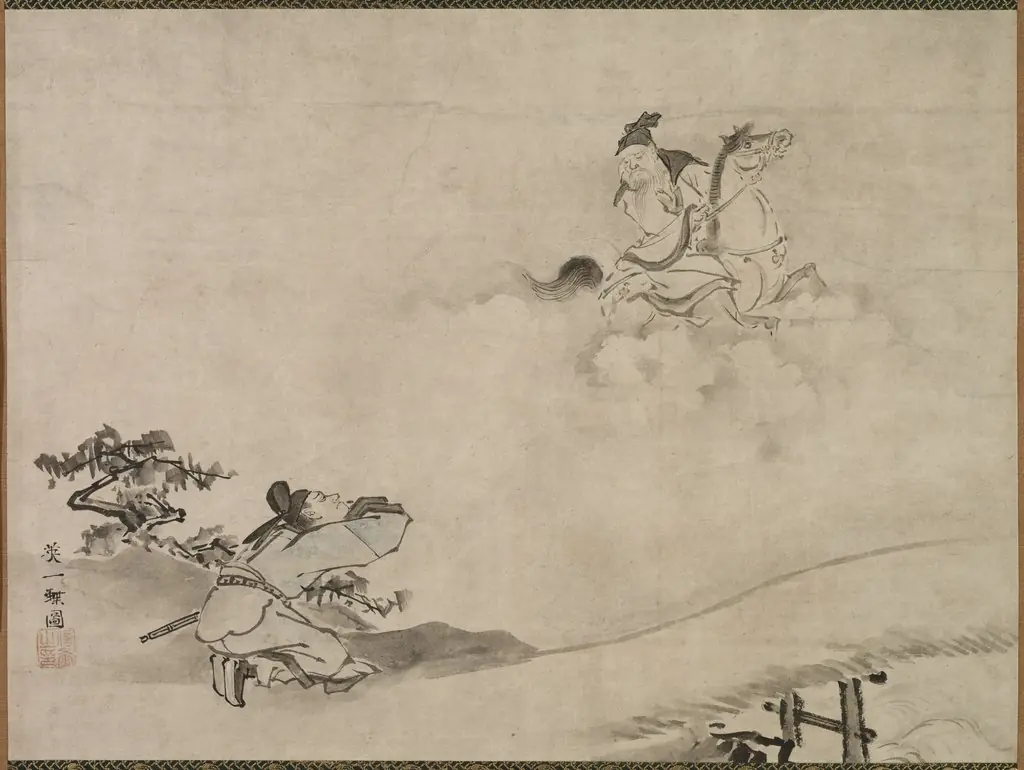 Daoist Immortal
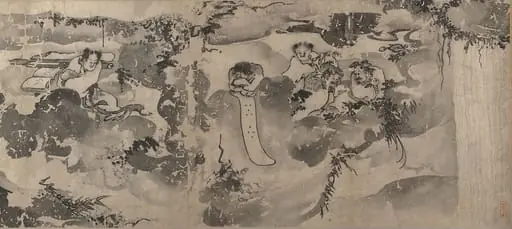 壺天聚樂圖|Merry Gatherings in the Magic Jar
 Copy of Night Parade of One Hundred Demons from the Shinjuan Collection
 太宰府安楽寺 北野天神縁起絵巻 断簡 (Dazaifu Anrakuji, Kitano Tenjin engi emaki dankan)|Courtiers Visit Sugawara no Michizane’s Mortuary Temple, from Illustrated Legends of the Kitano Tenjin Shrine
 The Thirty-Six Poetic Immortals (Sanjūrokkasen)
 舞楽図巻|Bugaku Imperial Court Dance
 Group of Figures near a Brook
 An Unfortunate Tale, III