Artwork
The Much Resounding Sea
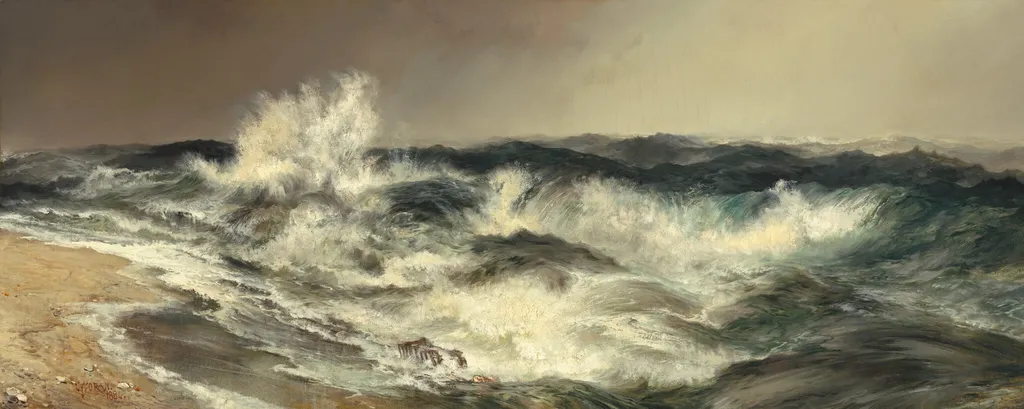
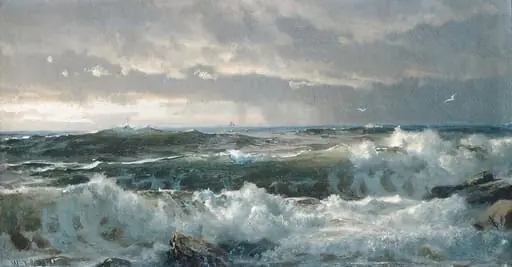
The Much Resounding Sea is an oil painting by the Hudson River School artist Thomas Moran. It dates from 1884 and is held in the collection of the National Gallery of Art.
- Inscription
- Inscribed:lower left, TM in monogram: TMoran. / 1884.
About this work
Technique & Style
The subject matter focuses strictly on the interaction between the ocean and the coast, characteristic of Moran's landscape oeuvre during this period.
Executed in 1884, The Much Resounding Sea is an oil painting on canvas by Thomas Moran. The work measures approximately 63.9 by 158.2 centimetres, presenting a markedly horizontal format that emphasizes the expansive nature of the depicted seascape and shoreline. As a painted composition, the piece utilizes traditional oil pigments applied to a woven textile support.
The subject matter focuses strictly on the interaction between the ocean and the coast, characteristic of Moran's landscape oeuvre during this period. Currently held by the National Gallery of Art in Washington, D.C., the physical object remains classified as a painting, with no specific details regarding its surface condition, specific brushwork handling, or restoration history provided in the available records.
History & Provenance
Painted in 1884 by Thomas Moran, The Much Resounding Sea first appears in documented provenance in the collection of Frederic René Coudert of New York and Oyster Bay, Long Island. Coudert consigned the painting to Knoedler in 1912; it remained unsold until returned to him in June 1919. Around 1965, Mrs. Myrtle Gascoigne of Newcastle, Maine, acquired the work at auction on Long Island.
In April 1967, her children, Nancy Gascoigne Richards, Mrs. Robert D. Halverson, and Robert W. Gascoigne, purchased it, and on 1 November 1967 they sold it to the National Gallery of Art, where it remains.
Overview
Thomas Moran, an American painter, completed The Much Resounding Sea in 1884. This oil on canvas work exemplifies his engagement with natural landscapes, a characteristic of artists associated with the Hudson River School. The painting captures a dramatic coastal vista, depicting the powerful interaction between ocean waves and rugged shorelines. Moran's renowned skill as a colorist is evident in his vibrant portrayal of this dynamic environment.
Subject & Meaning
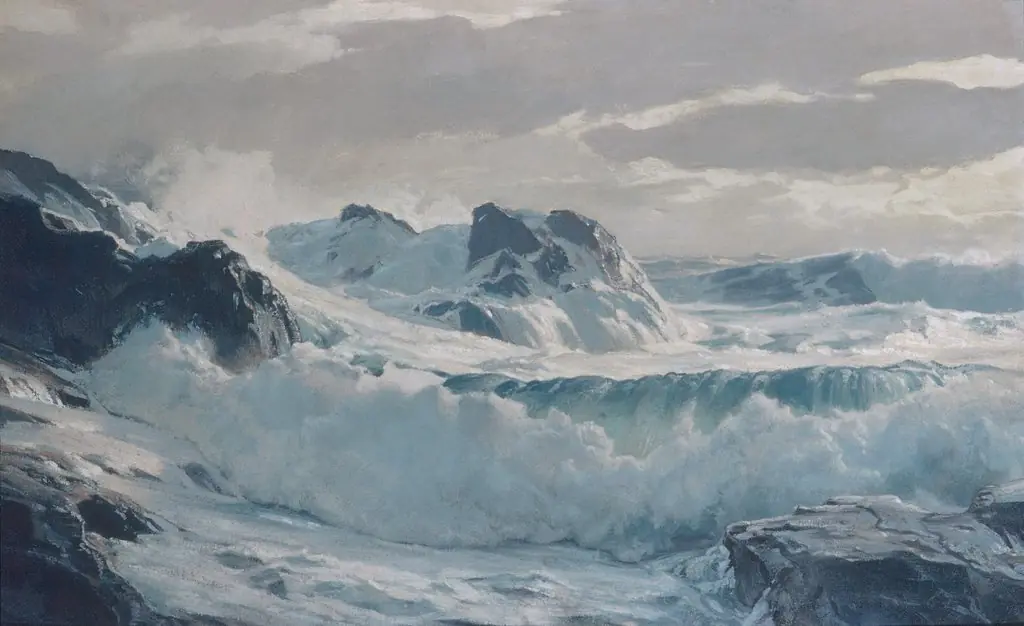
The canvas presents a vibrant coastal scene, focusing on the relentless force of the ocean as waves break against a rocky shore. Bright sunlight illuminates the frothy white spray and deep blue tones of the water, contrasting with the dark, steadfast cliffs. This depiction emphasizes the raw energy of nature, portraying a moment of intense movement and sound where the sea's power meets the land's resistance.
Context
Although widely recognized for his grand depictions of the American West, particularly the Rocky Mountains, Thomas Moran also frequently explored marine subjects. The Much Resounding Sea demonstrates his versatility within the tradition of landscape painting. As an artist often linked to the Hudson River School, Moran consistently sought to capture the sublime aspects of nature, whether in vast mountain ranges or the tumultuous power of the sea.
Artist & collection
Artist
Thomas Moran (February 12, 1837 – August 25, 1926) was an American painter and printmaker of the Hudson River School in New York whose work often featured the Rocky Mountains.