Artwork
Lierna
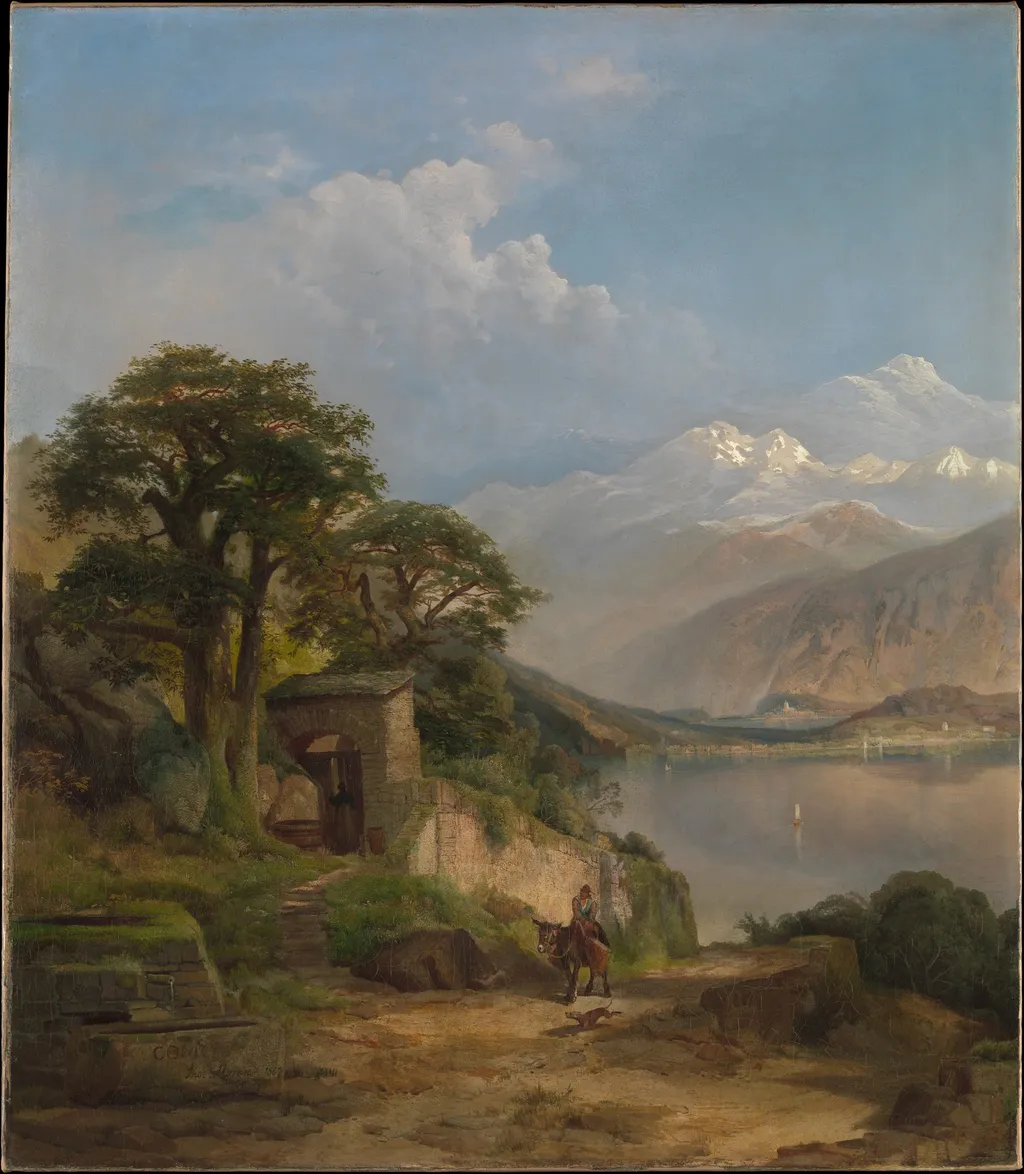
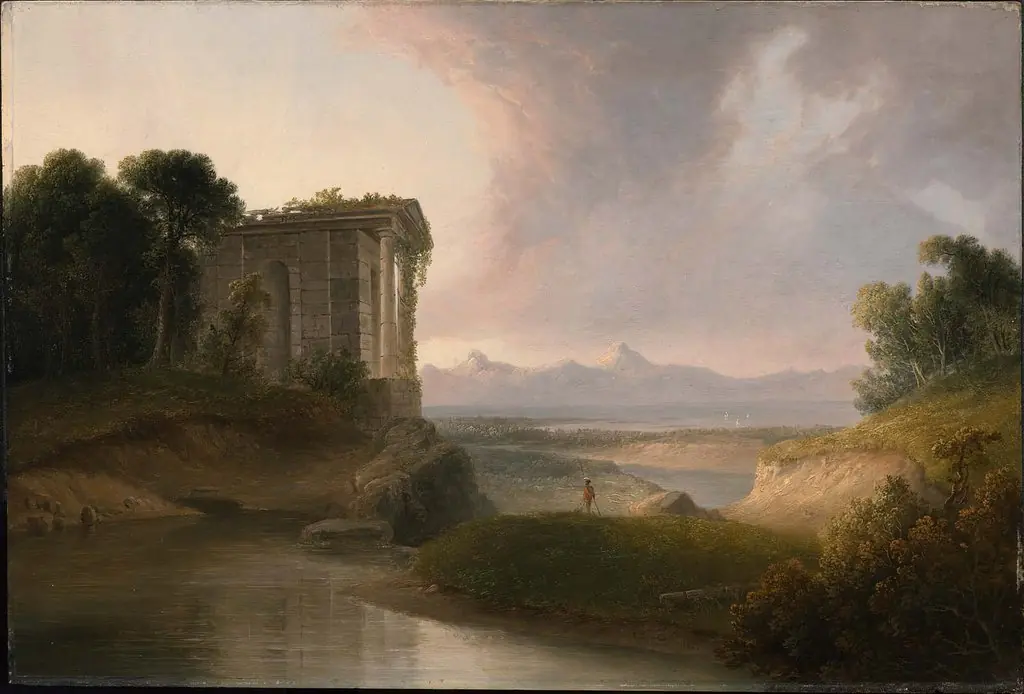
Lierna is an oil painting by the Hudson River School artist Thomas Moran. It dates from 1867 and is held in the collection of the Metropolitan Museum of Art.
About this work
Subject & Meaning
The painting Lierna presents a panoramic view of the village of Lierna on Lake Como, flanked by trees, the lake's surface, and surrounding mountains, with the nearby town of Bellagio visible in the distance. As a landscape work, it offers a straightforward topographic record rather than allegorical or religious iconography; the composition emphasizes the natural scenery itself as the primary subject. By rendering the locale in detailed oil on canvas, Moran highlights the tranquil beauty of the Italian lakes region, allowing the vista to convey a sense of place and picturesque calm without overt symbolic narrative.
Technique & Style
Lierna is an oil painting executed on canvas, a standard support for Thomas Moran's mid-career landscape output.
Lierna is an oil painting executed on canvas, a standard support for Thomas Moran's mid-career landscape output. The work measures 103.5 cm in height by 87.6 cm in width, a vertical format suited to its landscape composition. Classified as a landscape painting, the canvas carries the artist's treatment of trees, lake, and mountain scenery around the Lake Como localities of Lierna and Bellagio.
The medium of oil paint allowed Moran to render the natural elements with the layered handling typical of his plein-air and studio practice of the period, while the canvas support provided the scale necessary for the topographical and atmospheric effects associated with his European subjects.
History & Provenance
The landscape painting Lierna by Thomas Moran is dated to 1867, aligning with the artist's early European travels. The work depicts the Lake Como region, specifically the towns of Lierna and Bellagio, as indicated by its title and compositional elements. It entered the collection of the Metropolitan Museum of Art in New York, where it remains housed today, measuring 103.5 cm in height and 87.6 cm in width.
While the specific inventory or accession number is not provided in the available records, the painting's location is confirmed at the museum, and the provided sources contain no details regarding a specific exhibition history for this work.
Context
Thomas Moran's 1867 oil painting Lierna, measuring 103.5 × 87.6 cm, is classified as a landscape work held in the Metropolitan Museum of Art in New York City. The piece depicts the Italian village of Lierna on Lake Como, alongside a tree, lake, and mountain, reflecting Moran's interest in European topography. As a landscape painting, it exemplifies the genre within Moran's oeuvre, which combined American subject matter with influences from European artistic traditions.
The work's inclusion in a major museum collection underscores its significance in the historical narrative of 19th-century landscape art.
Overview
Lierna is an oil painting that captures a serene lakeside vista. The composition centers on a solitary figure on horseback near a modest stone structure, with a prominent tree anchoring the foreground by the water's edge. Distant mountains rise beneath a gentle sky adorned with soft clouds, contributing to the painting's tranquil and expansive atmosphere.
Own this work as a print
Artist & collection

Artist
Thomas Moran (February 12, 1837 – August 25, 1926) was an American painter and printmaker of the Hudson River School in New York whose work often featured the Rocky Mountains.




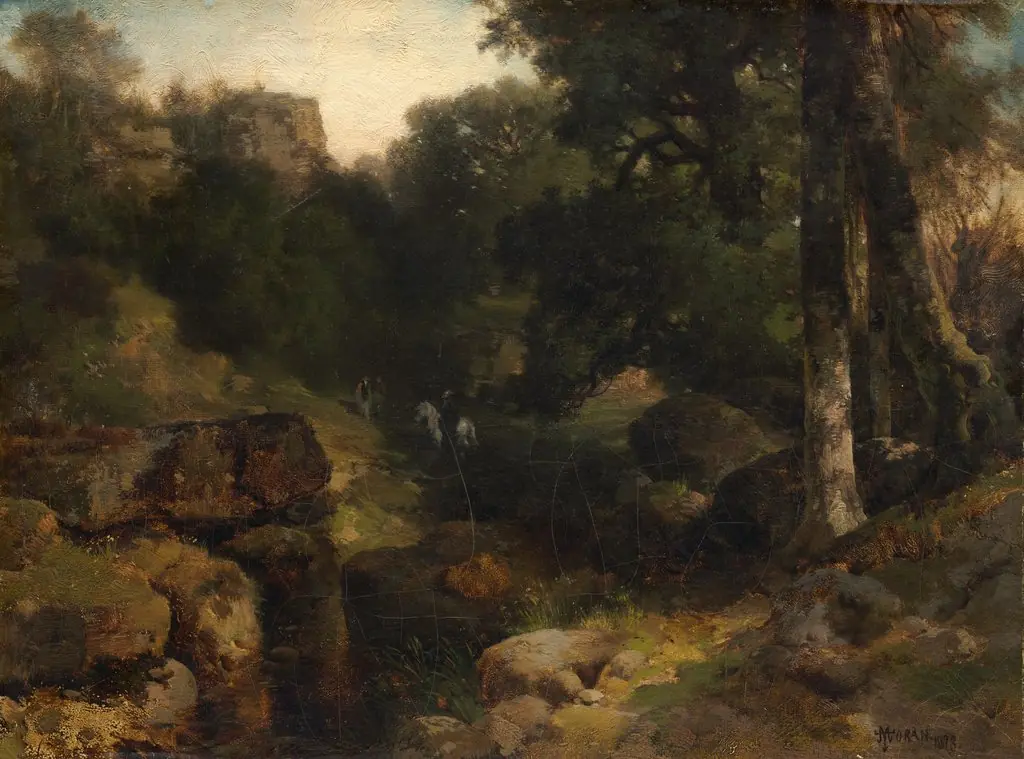
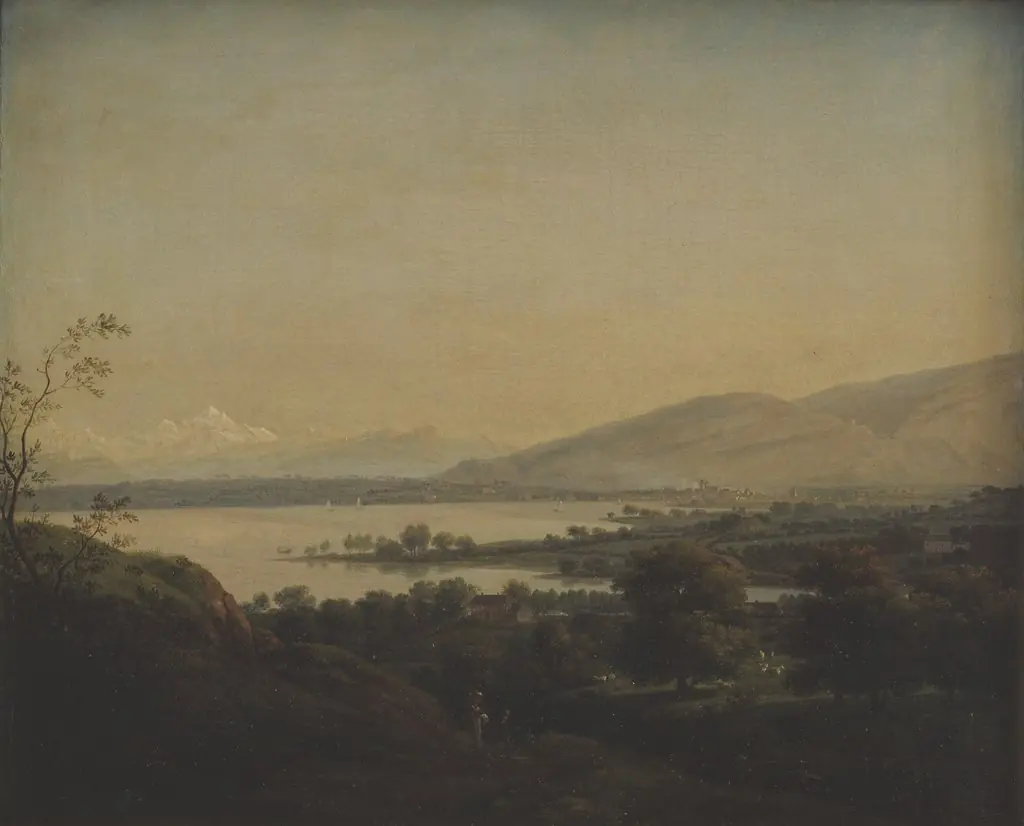
- A View Across Lake Leman Towards Mont Blanc and Geneva
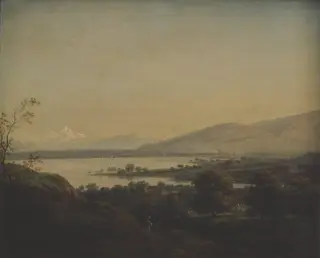 A View Across Lake Leman Towards Mont Blanc and Geneva
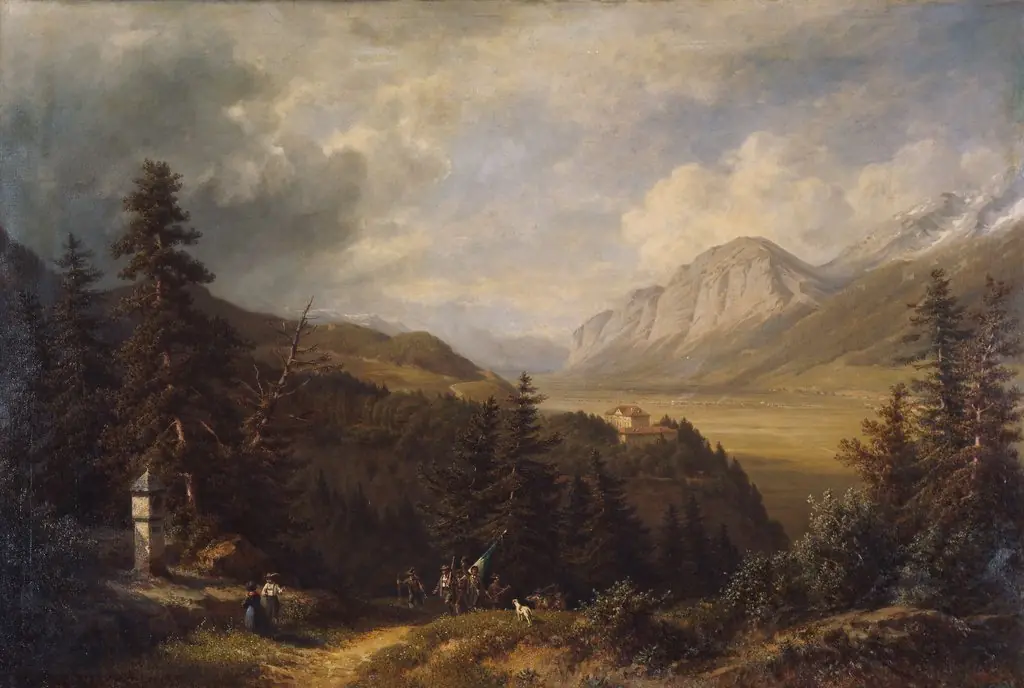 Bergisel
 Vale of Kashmir
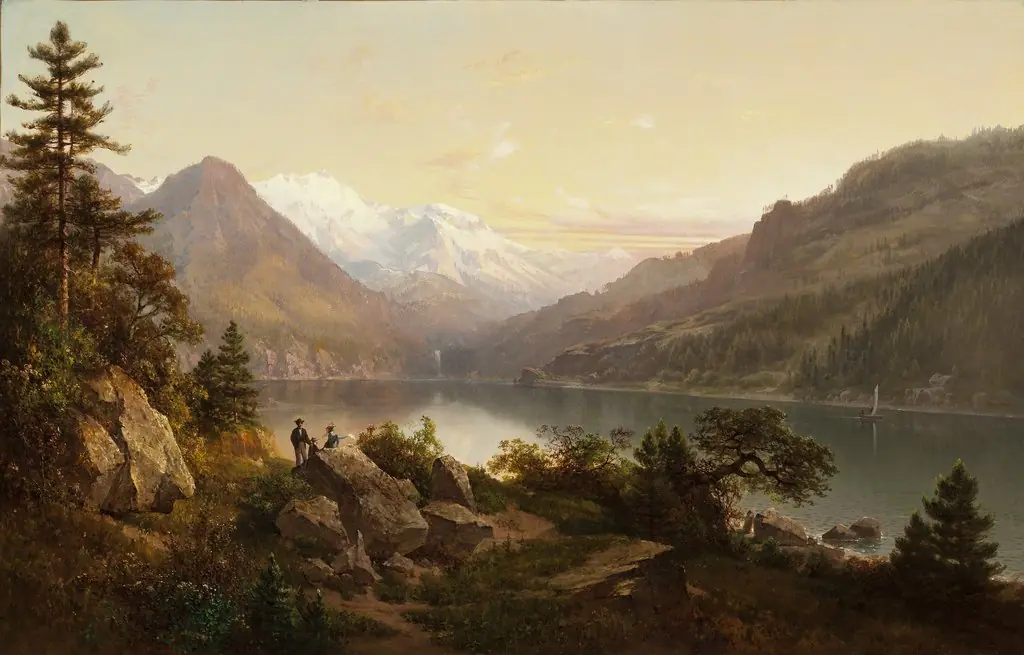 Emerald Bay, Lake Tahoe
 The Alps
 White Mountains, New Hampshire
 A Summer Evening at the Lago Maggiore
 Mountain landscape II
 Chamonix mit dem Montblanc
 View of Odda at the Sør Fjord in Hardanger, Norway. Morning Light
 Romantic Landscape with a Temple