Artwork
The Juniata, Evening
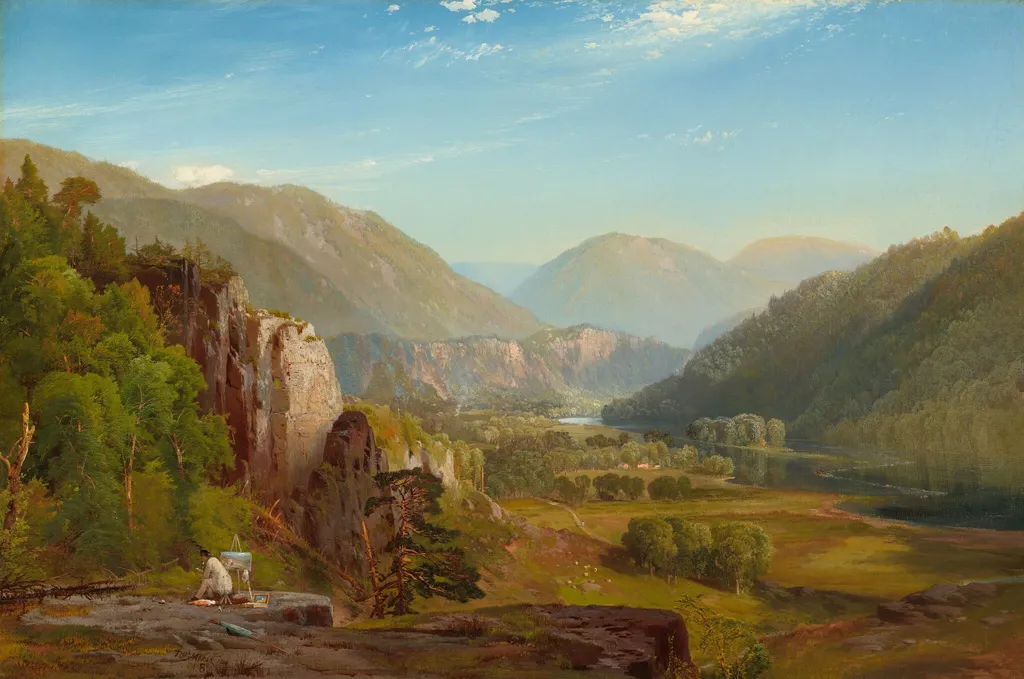
The Juniata, Evening is an oil painting by the Hudson River School artist Thomas Moran. It dates from 1864 and is held in the collection of the National Gallery of Art.
- Inscription
- Inscribed:lower left: THOS.MORAN.1864 / OP.8.
About this work
Technique & Style
8” beneath the signature, confirming its provenance documented in the artist’s opus list and subsequent ownership records.
The Juniata, Evening is an 1864 oil painting on canvas measuring approximately 50.8 × 76.2 cm, created by Thomas Moran as a mature example of his American landscape idiom. The work employs a layered oil‑on‑canvas technique that combines translucent glazes with vigorous brushstrokes to render a luminous sky and a rugged mountain backdrop punctuated by a solitary tree. Moran’s handling of light emphasizes atmospheric depth, while the composition balances foreground detail with expansive sky, reflecting the Hudson River School’s influence yet retaining his distinctive romanticism.
The canvas bears the inscription “O.P.8” beneath the signature, confirming its provenance documented in the artist’s opus list and subsequent ownership records.
History & Provenance
The Juniata, Evening was purchased, and possibly commissioned, by George Frederick Tyler of Philadelphia in 1864 directly from the artist, as recorded in Thomas Moran’s Opus List where it appears as O.P.8. The painting entered the Spears collection by an unspecified date and was later consigned to the Henry Schultheis Co. in New York. It was sold at Parke-Bernet Galleries, New York, on 24 February 1938 as _Western Landscape_.
The consignor has been tentatively identified as P. Kachurn, possibly a misspelling of the Kachurian family, who retained the work until it was acquired by the Gerald Peters Gallery, Santa Fe, in September 1998. Vern Milligan purchased it later that year and held it until its acquisition by the National Gallery of Art, Washington, D.C., on 26 October 2010.
The painting The Juniata, Evening is held in the collection of the National Gallery of Art in Washington, D.C., where it was acquired on 26 October 2010. The work is cataloged as number 8 in Thomas Moran's "Opus List," a record maintained at the Gilcrease Museum, and bears the inscription "O.P.8" below the signature on the canvas. While the provided sources detail the artwork's extensive ownership history, including its time in the private collection of the Kachurian family and its sale by the Gerald Peters Gallery, they do not list specific past exhibitions where the piece was displayed.
The National Gallery of Art holds the painting as part of its permanent collection, with dimensions recorded as 50.8 cm by 76.2 cm.
Legacy
The painting entered the National Gallery of Art in 2010, underscoring its recognized importance within Thomas Moran's oeuvre and the broader narrative of 19th-century American landscape. Its documentation in the artist's Opus List as work number 8 provides scholarly validation of its place in his catalogued output. Provenance records trace the work through prominent collections and auctions, including a 1938 Parke-Bernet sale and later ownership by the Kachurian family, reflecting sustained market interest.
As a representative example of Moran's mature style, the piece contributes to ongoing assessments of his impact on the Hudson River School and American environmental art.
Overview
Thomas Moran, an American painter associated with the Hudson River School, created The Juniata, Evening in 1864. Executed in oil on canvas, this work captures a tranquil natural scene. The painting exemplifies the movement's focus on depicting the American wilderness, showcasing a landscape that reflects the era's appreciation for the country's scenic grandeur.
Subject & Meaning
The artwork portrays a serene evening landscape, dominated by a mountain and a solitary tree. This emphasis on natural scenery was a defining characteristic of the Hudson River School, which often sought to convey the sublime qualities of the American environment. The depiction likely refers to the Juniata River region, a subject consistent with the school's exploration of specific American locales.
Context
While known for landscapes like The Juniata, Evening, Moran's broader career included extensive depictions of the Rocky Mountains. He was also a prominent illustrator, serving as chief illustrator for Scribner’s Monthly during the late 1860s. Moran lived and worked in New York, where he resided with his wife, artist Mary Nimmo Moran, and their daughter, Ruth.
Own this work as a print
Artist & collection
Artist
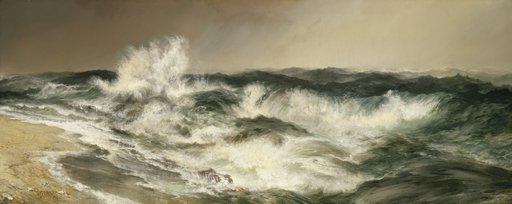
Thomas Moran (February 12, 1837 – August 25, 1926) was an American painter and printmaker of the Hudson River School in New York whose work often featured the Rocky Mountains.

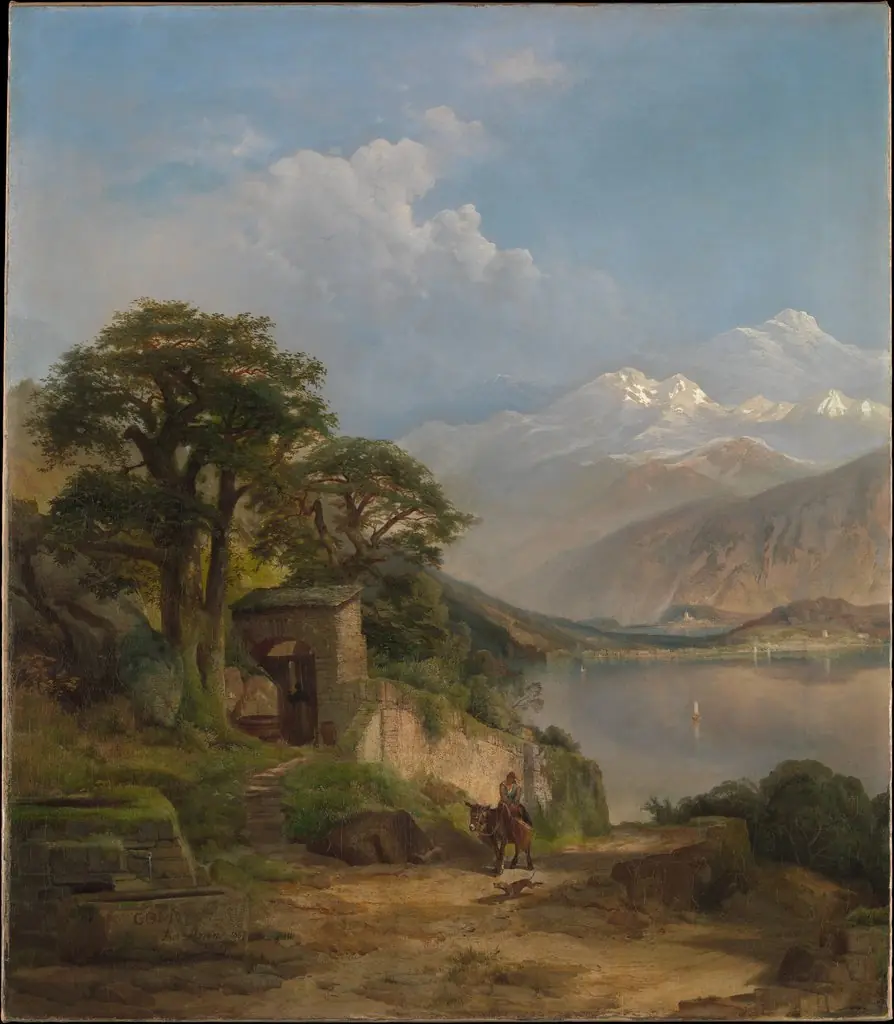
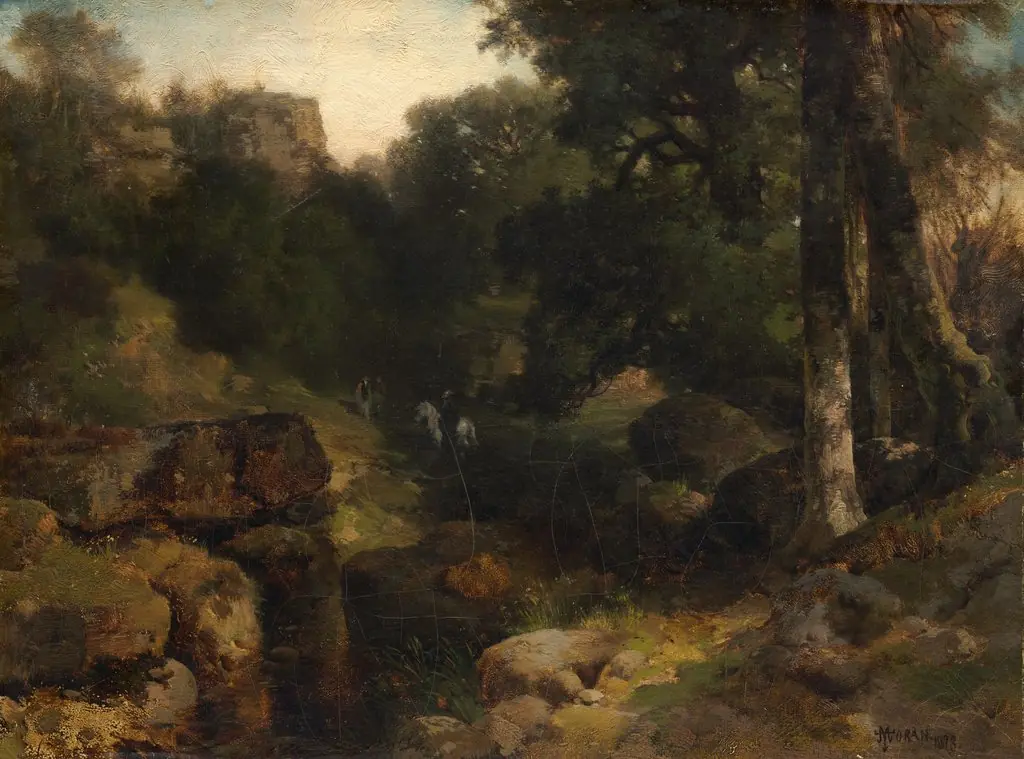
- Autumn Morning on the Potomac
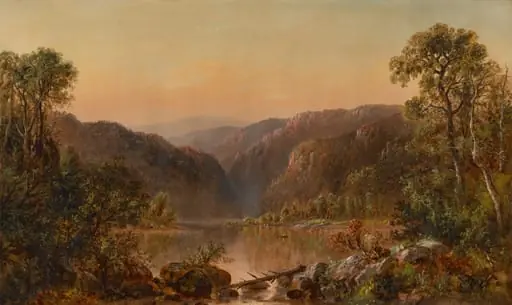 American Landscape
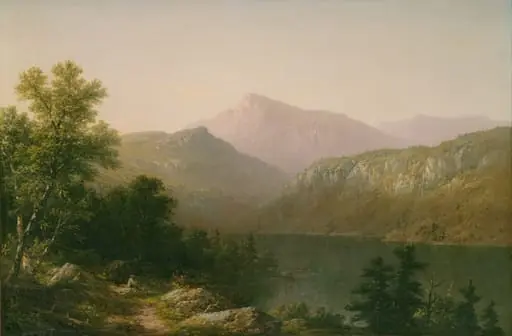 View on Lake George
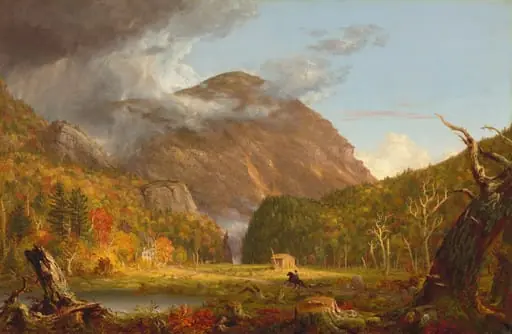 A View of the Mountain Pass Called the Notch of the White Mountains (Crawford Notch)
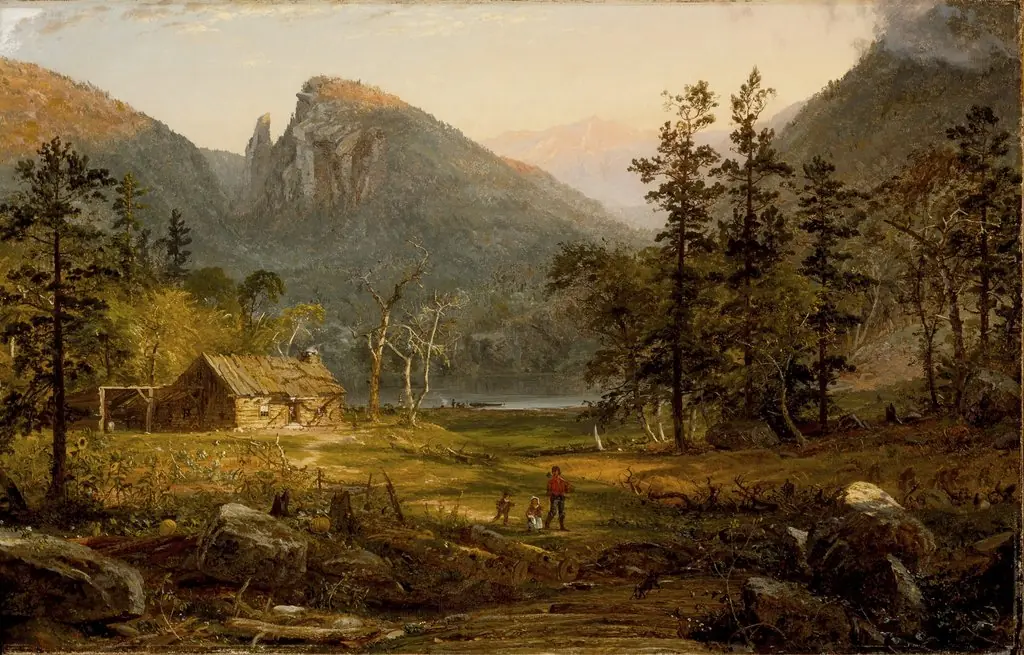 Pioneer's Home, Eagle Cliff, White Mountains
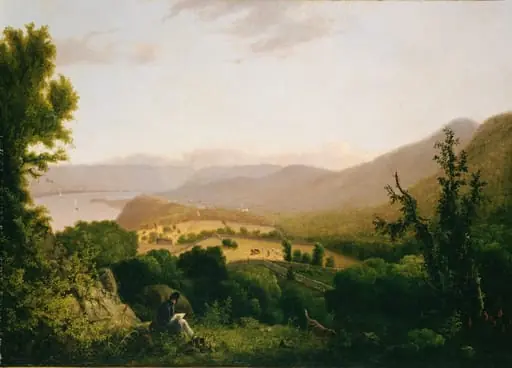 View at West Point
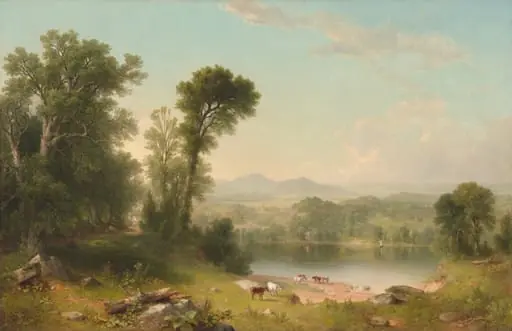 Pastoral Landscape
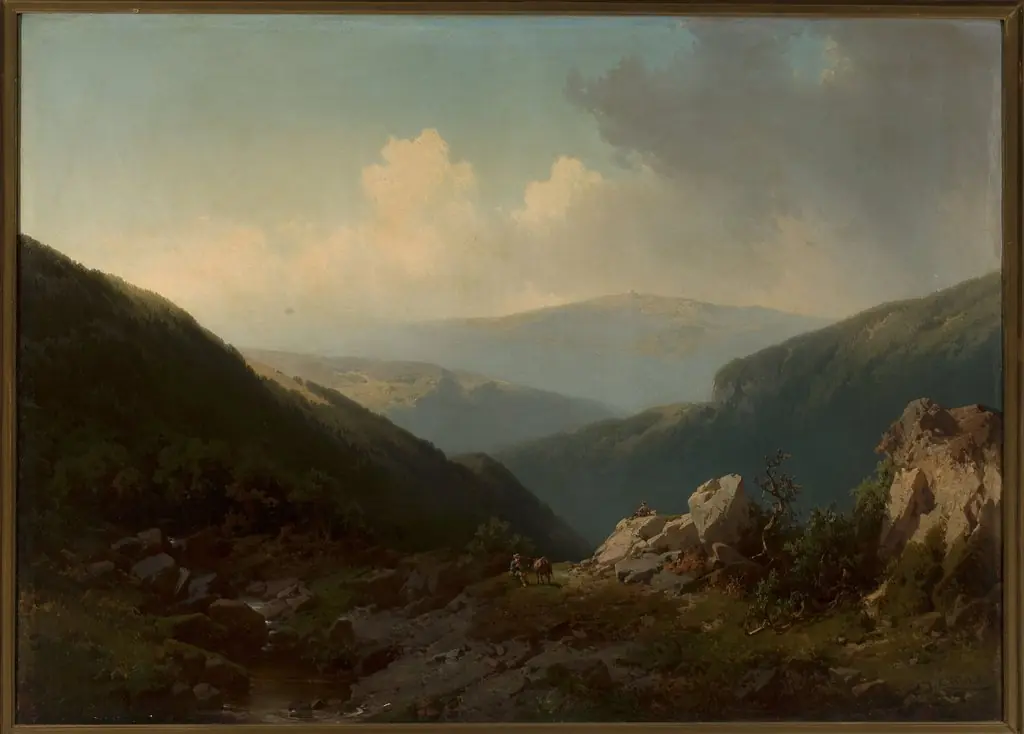 Mountain landscape
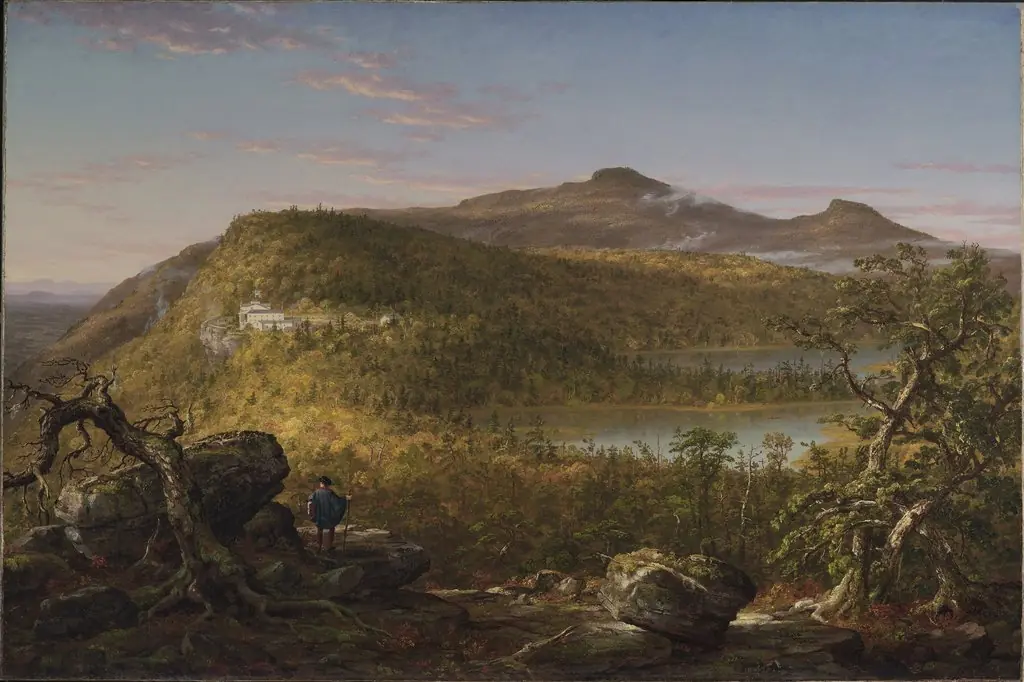 A View of the Two Lakes and Mountain House, Catskill Mountains, Morning
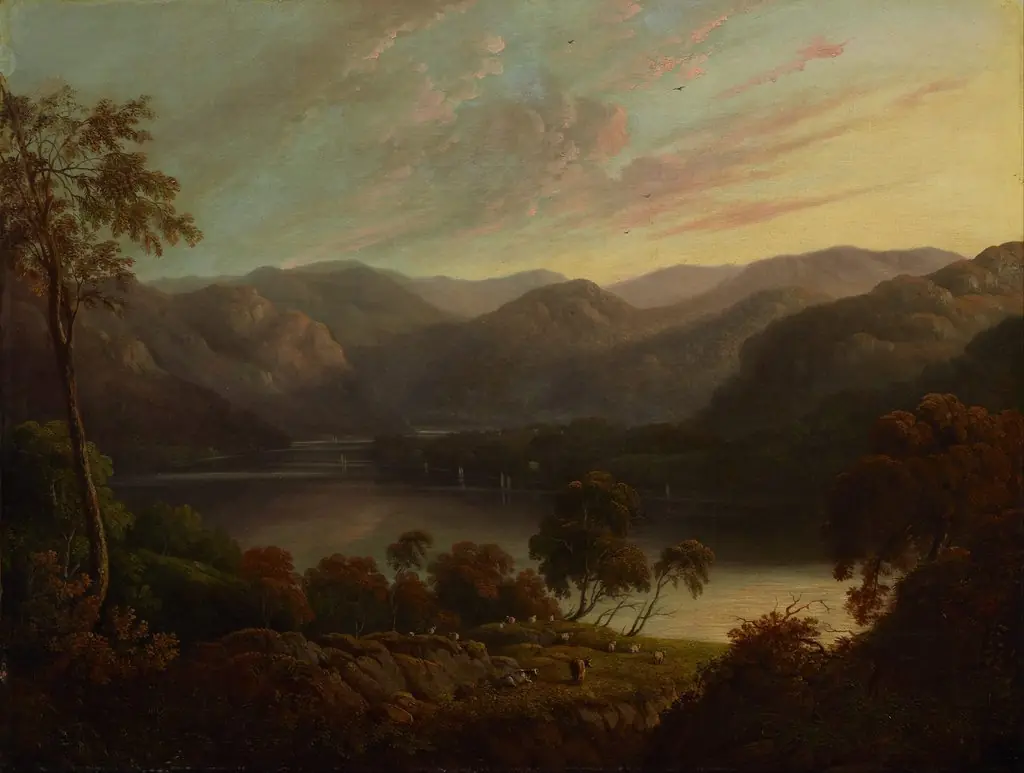 Landscape view in Cumberland
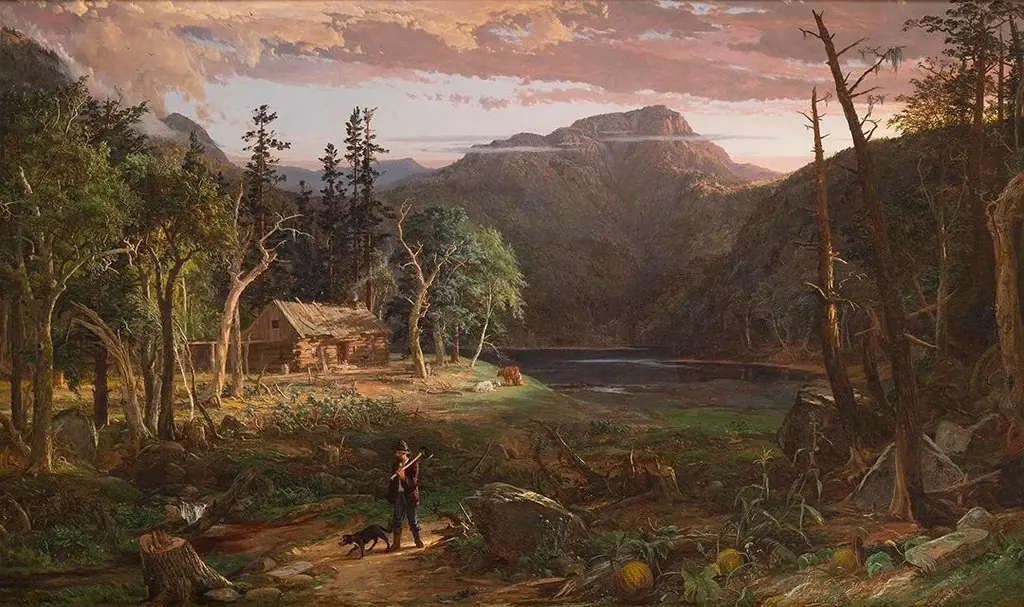 The Backwoods of America
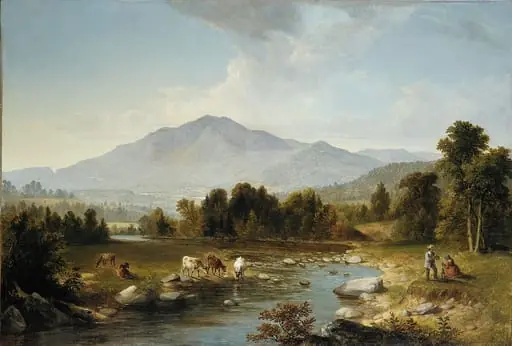 High Point: Shandaken Mountains