Artwork
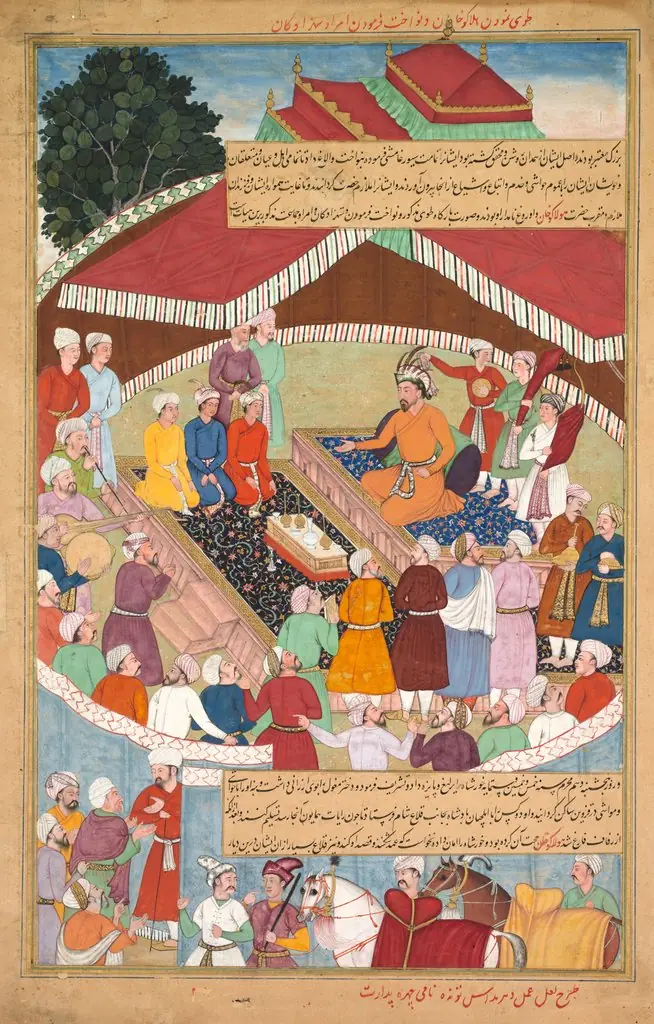
Timur distributes gifts from his grandson, the Prince of Multan, from a Zafar-nama (Book of Victories)
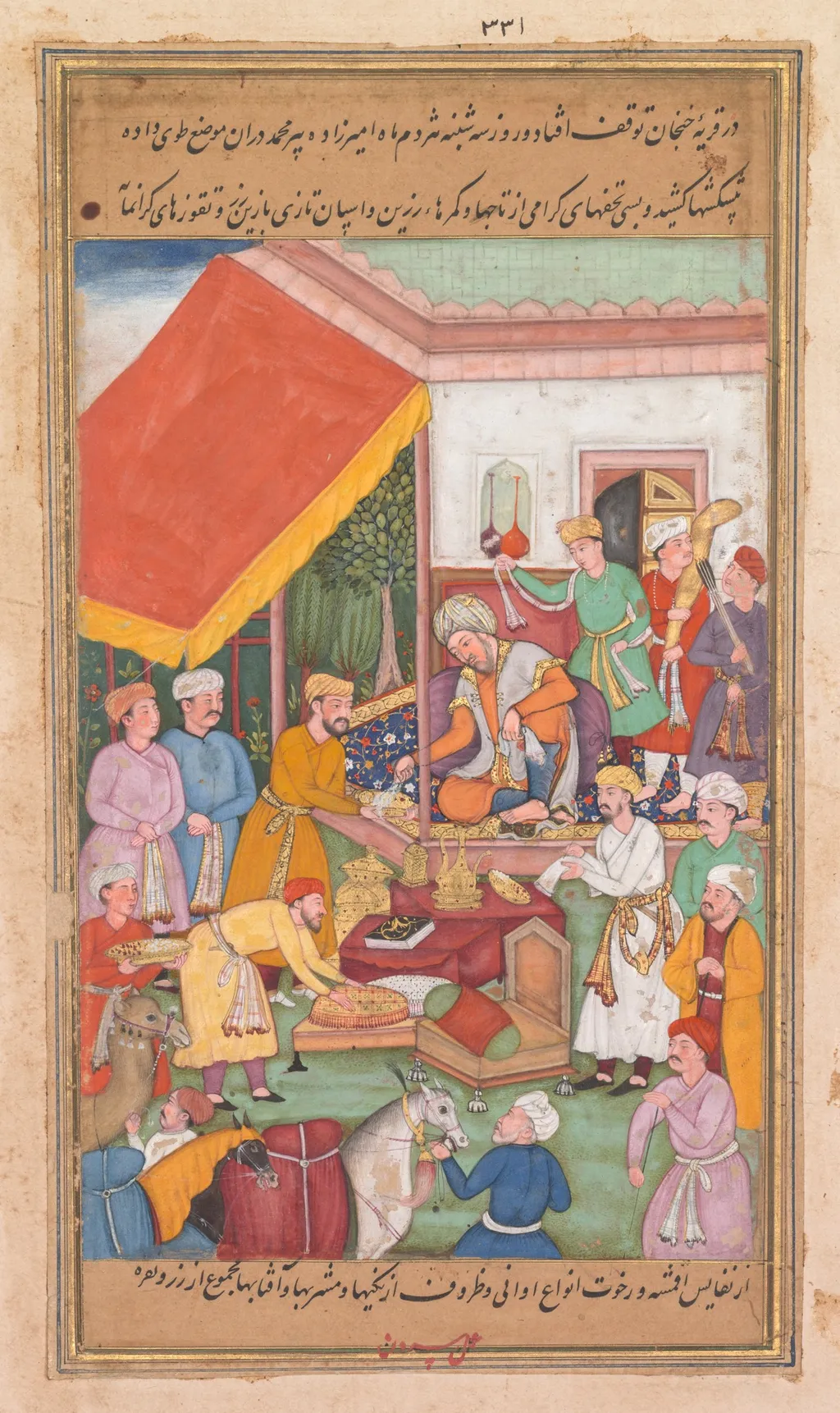
Timur distributes gifts from his grandson, the Prince of Multan, from a Zafar-nama (Book of Victories) is an unspecified painting. It dates from 1600 and is held in the collection of the Cleveland Museum of Art. This painting illustrates a scene from a Zafar-nama, or "Book of Victories," depicting the Central Asian conqueror Timur.
About this work
Subject & Meaning
The painting is dated 1599 and is housed in the Cleveland Museum of Art.
The painting shows Timur, the Central Asian conqueror, handing gifts to his grandson, the Prince of Multan, a scene drawn from the Zafar-nama, a Book of Victories that records Timur’s military triumphs.
In the composition Timur is rendered in regal dress, emphasizing his sovereign status, while the gifts symbolize patronage and the transfer of power across generations.
The work therefore conveys themes of dynastic continuity and the glorification of Timur’s rule, using the narrative of gift‑giving to highlight his role as a benefactor and victorious leader. The painting is dated 1599 and is housed in the Cleveland Museum of Art.
History & Provenance
Created in 1599, this painting is attributed to the Indian artist Shravana. The work was commissioned as an illustration for a manuscript of the Zafar-nama (Book of Victories). It currently resides in the collection of the Cleveland Museum of Art, where it is cataloged under the accession number 2012.301.
No further details regarding its intermediate ownership history or specific commissioning patron are provided in the available records.
The painting is held in the collection of the Cleveland Museum of Art, where it is recorded under accession number 2012.301.
It has been exhibited at the Cleveland Museum of Art as part of its permanent holdings, with the most recent documented display occurring in 2012 when it was accessioned.
Overview
This painting illustrates a scene from a Zafar-nama, or "Book of Victories," depicting the Central Asian conqueror Timur. The artwork captures a moment where Timur presides over the distribution of gifts sent by his grandson, the Prince of Multan. The composition features numerous figures in vibrant attire, gathered within an elaborately decorated interior, offering a glimpse into courtly life and ceremonial practices of the period.
Technique & Style
The painting exhibits meticulous detail, characteristic of Persianate manuscript illumination. Figures are rendered in colorful garments and distinctive turbans, populating a rich architectural setting. The artist employs a vibrant palette, with a striking red canopy, green walls, and a glimpse of blue sky through a doorway, creating a sense of depth and opulence. The careful depiction of various objects, including a large, decorated box, further emphasizes the scene's ceremonial importance.
Context
This miniature originates from a Zafar-nama, a historical chronicle commissioned to glorify the military campaigns and reign of Timur (Tamerlane). Such illustrated manuscripts served not only as records of historical events but also as expressions of imperial power and cultural sophistication. The inclusion of detailed court scenes like this one provided visual narratives that complemented the written text, bringing the historical accounts to life for their aristocratic patrons.
Artist & collection

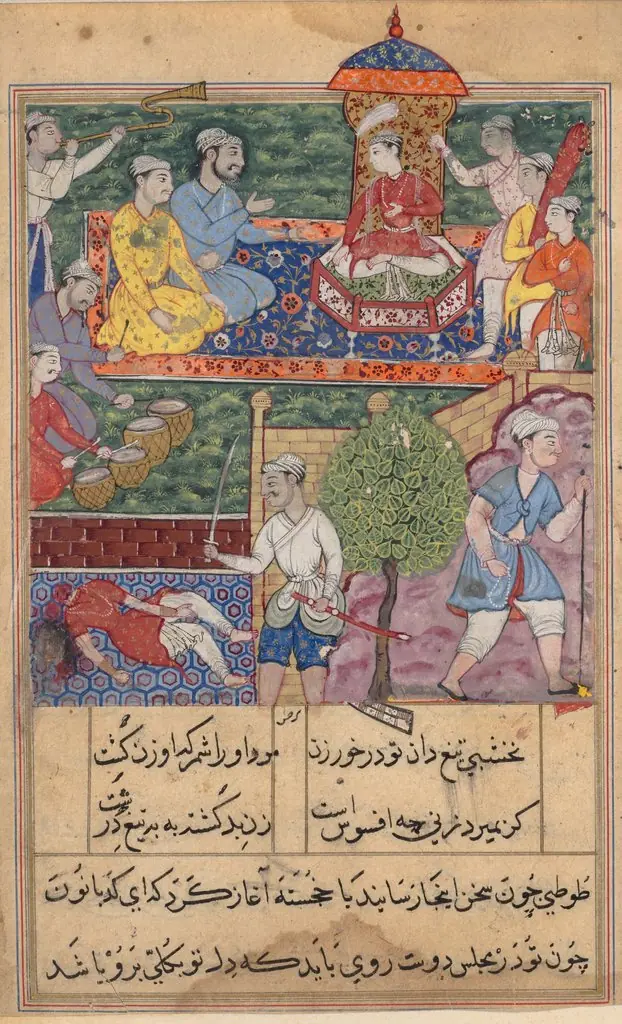 Page from Tales of a Parrot (Tuti-nama): text page
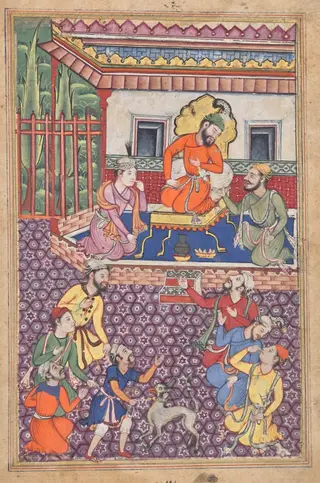 The court of the Raja of Ujjain, from a Tuti-nama (Tales of a Parrot): Forty-sixth Night
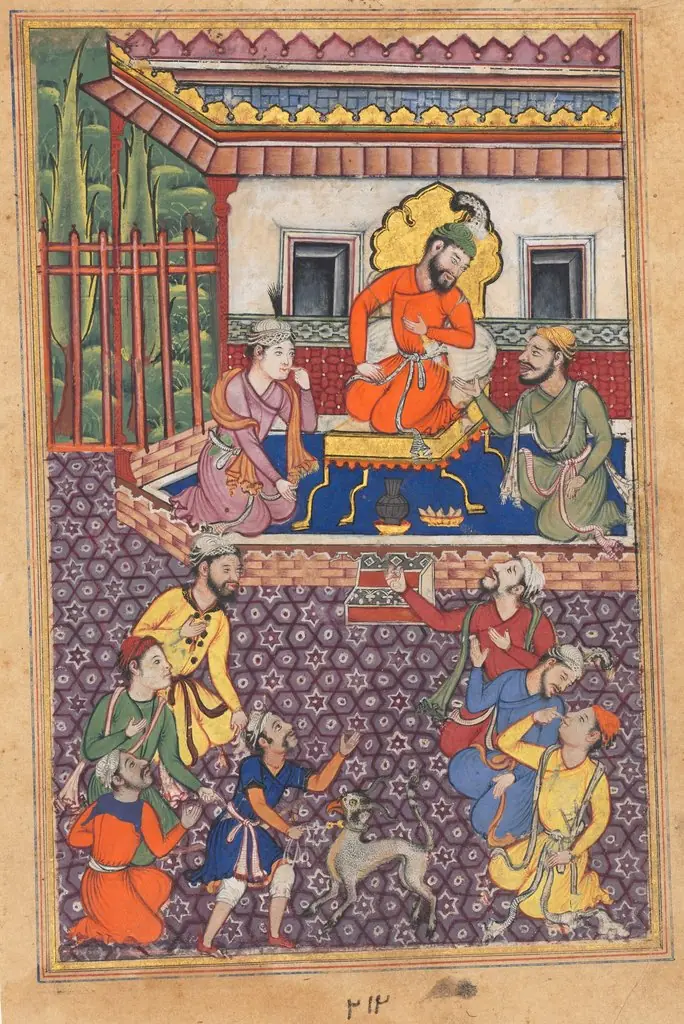 The court of the Raja of Ujjain, from a Tuti-nama (Tales of a Parrot): Forty-sixth Night
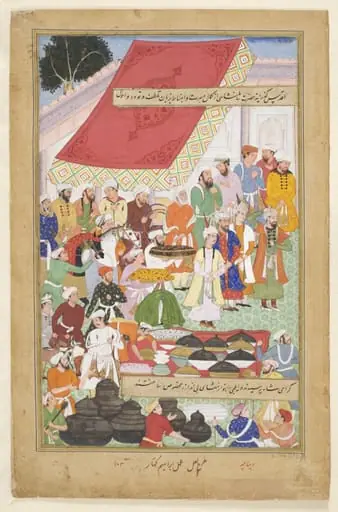 Akbar Receives the Iranian Ambassador Sayyid Beg in 1562
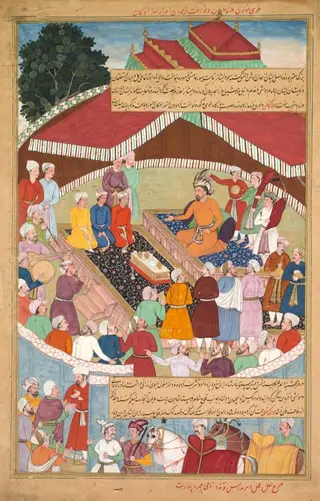 Hulagu Khan giving a feast and dispensing favor upon the amirs and princes, from a Chingiz-nama (Book of Chingiz Khan) of the Jami al-tavarikh (Compendium of Chronicles)
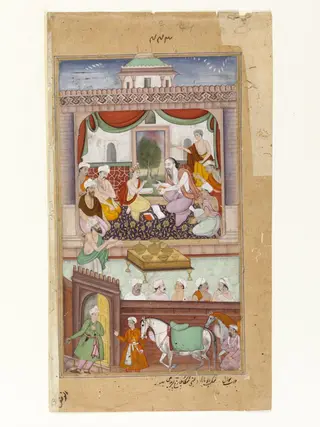 Narada and Suka
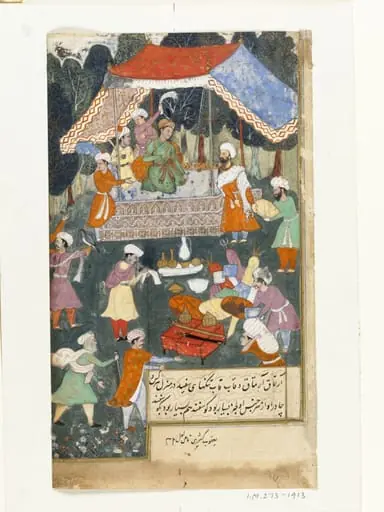 Untitled
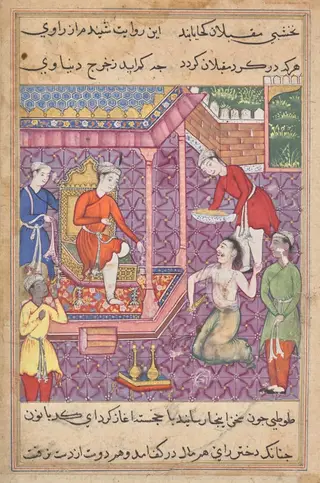 The magician disguised as a Brahman returns to claim his “daughter-in-law,” from a Tuti-nama (Tales of a Parrot): Thirty-fifth Night
- Timur distributes gifts from his grandson, the Prince of Multan, from a Zafar-nama (Book of Victories)
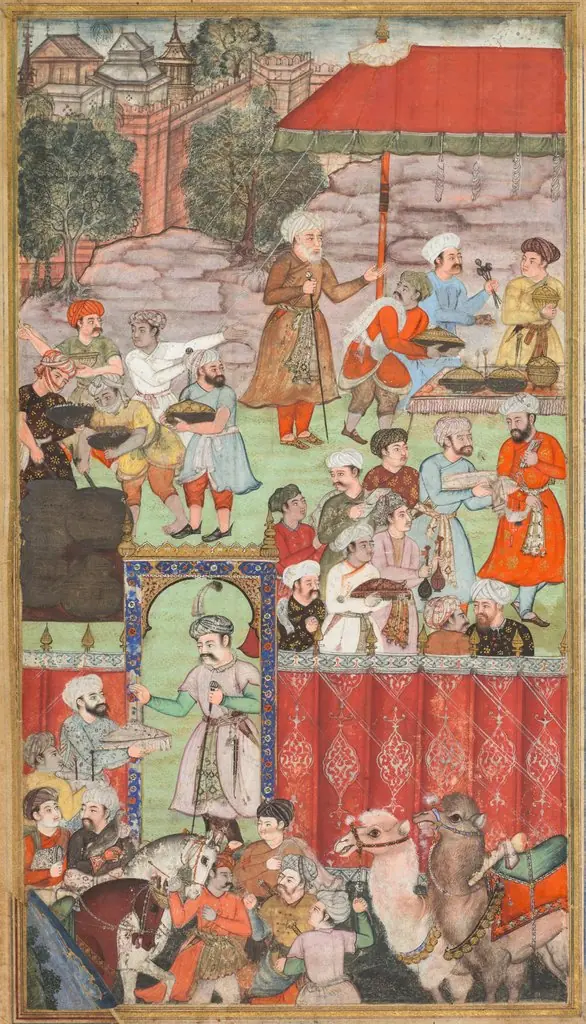 A feast for Babur hosted by his half-brother Jahangir Mirza in Ghazni in May 1505, from a Babur-nama (Memoirs of Babur)
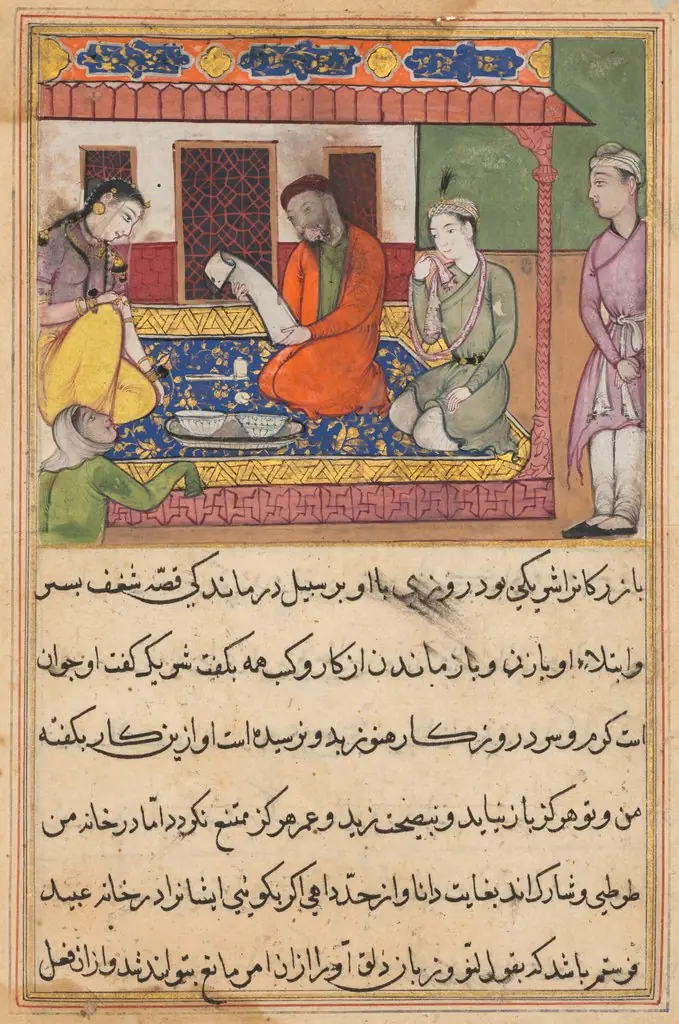 The marriage of ‘Ubaid, son of a merchant of Tirmiz, from a Tuti-nama (Tales of a Parrot): Forty-second Night
 Hulagu Khan giving a feast and dispensing favor upon the amirs and princes, from a Chingiz-nama (Book of Chingiz Khan) of the Jami al-tavarikh (Compendium of Chronicles)